




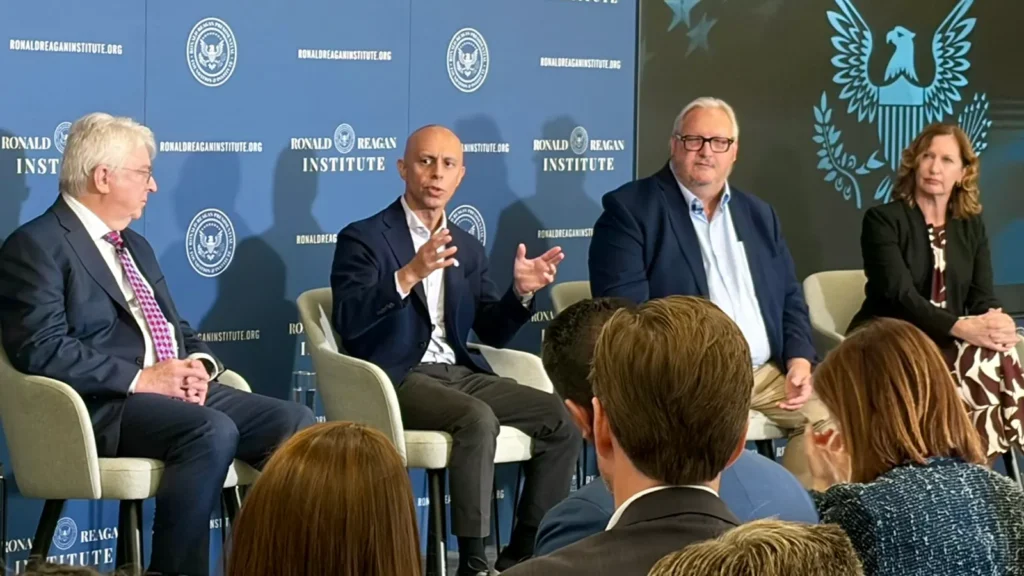
The American educational landscape is currently navigating a period of profound structural evolution, defined by both unprecedented opportunities for institutional reform and complex systemic hurdles. As the nation prepares to commemorate its 250th anniversary, education leaders, policymakers, nonprofit executives, and researchers gathered in Washington, D.C., for the annual Reagan Institute Summit on Education. Throughout the multi-day conference, speakers examined the intersection of academic outcomes, equitable access to quality schools, economic readiness, and the accelerating integration of artificial intelligence into classrooms.
While the discussions highlighted considerable optimism regarding a rising generation of civically engaged and motivated students, they also underscored persistent structural vulnerabilities. Panelists debated the urgent need to move away from legacy operational models, expand viable school choice mechanisms, and establish robust regulatory frameworks to govern emerging technological tools. These conversations arrive at a critical juncture for U.S. public policy, as federal and state entities grapple with shifting workforce demands, post-pandemic academic recovery, and mounting public expectations for accountability and measurable student success.
Evolution of the K-12 Experience and the Demand for Systemic Modernization
Opening sessions at the summit focused heavily on the philosophical and structural state of K-12 education. Panelists expressed a shared confidence that modern students possess a heightened awareness of community responsibility and civic duty, noting that today’s youth demonstrate a distinct desire to contribute meaningfully to society.
Kirsten Baesler, assistant secretary at the U.S. Department of Education’s Office of Elementary and Secondary Education, shared observations from her visits to K-12 classrooms nationwide. Baesler noted that students are increasingly shouldering a greater sense of purpose. However, she cautioned that navigating toward academic excellence and achieving upward mobility requires rigorous personal investment.
"Attendance matters. Effort matters. All of those things matter, and it shouldn’t be an easy pathway to achieve the American dream," Baesler remarked during her address.
To cultivate this ethos of rigorous engagement, Baesler argued that school systems must dismantle outdated instructional frameworks. She criticized the entrenched, one-size-fits-all approach—specifically pointing to the traditional 50-minute class period—arguing that a rigid paradigm is ill-equipped to serve a diverse population of approximately 54 million children. Instead, she advocated for educational environments anchored by high-quality educators, robust opportunities for inquiry, and active intellectual debate.
Echoing these sentiments regarding systemic economic alignment, Stephen Moret, president and CEO of the Strada Education Foundation, emphasized that educational institutions must reliably deliver tangible pathways to economic opportunity. Moret, whose nonprofit focuses on bridging the gap between education and modern career demands, noted that public and policymaker expectations are shifting toward accountability and consistent return on investment for students and families.
Navigating the Promise and Peril of Artificial Intelligence in Education
A dominant theme across multiple panels was the disruptive and transformative potential of artificial intelligence. As school districts nationwide attempt to formulate cohesive policies regarding generative AI, Summit participants weighed the delicate balance between technological adoption and ethical risk management.
Moret expressed confidence in human adaptability, asserting that human ingenuity will ultimately guide the integration of advanced technologies for societal benefit. While acknowledging that AI introduces complex public policy challenges—ranging from data privacy and algorithmic bias to academic integrity—Moret maintained an optimistic outlook on its long-term economic and educational utility.
Baesler echoed this balanced perspective, advocating for proactive institutional engagement rather than defensive prohibition. "I don’t think we should be threatened by it, but I do think we should take it seriously and understand our responsibility as society," she stated, emphasizing that educators must guide students toward responsible, ethical digital citizenship.
Education analysts note that the rapid deployment of AI tools in classrooms creates an acute need for professional development. Teachers require specialized training to effectively leverage personalized learning algorithms while safeguarding student data privacy and mitigating the risk of widening the technological divide between resource-rich and underfunded districts.
The Expansion and Evolution of School Choice in the United States
Shifting focus from classroom operations to structural delivery models, a dedicated summit panel explored the rapid growth, operational realities, and future trajectory of school choice programs across the United States.
Over the past three decades, the school choice movement has expanded dramatically. Panelists universally acknowledged that the proliferation of alternative educational models—including public school open enrollment, specialized charter institutions, private school voucher or tax-credit programs, homeschooling networks, and emerging microschools—has fundamentally reshaped the American educational marketplace.
Data presented during the sessions by Robert Enlow, president and CEO of EdChoice, revealed that private school choice options now operate in 34 states, the District of Columbia, and Puerto Rico, encompassing a total of 75 distinct programs. This localized growth is poised to be significantly augmented by forthcoming federal policy shifts. A newly previewed federal school choice program is scheduled to launch next year, introducing a tax-credit mechanism that allows taxpayers to receive federal tax credits in return for donations made to scholarship-granting 501(c)(3) organizations. These entities will manage and distribute financial scholarships to support students across public, private, and home-based educational environments.
Advocates argue that these mechanisms inject healthy, market-driven incentives into stagnant educational systems. Jorge Elorza, CEO of Democrats for Education Reform, asserted that school choice empowers families and drives institutional responsiveness.
"It does introduce a healthy level of competition," Elorza said. "It creates a system that is more student-centered, creates a system that’s more innovation-serving, creates a system that’s more simple to adapt to the changing needs of society."
Similarly, Jim Blew, an advisor to the Federal Scholarship Tax Credit Coalition, emphasized that the efficacy of any school choice architecture relies on two foundational pillars: transparent, accessible information for parents regarding their choices, and strict accountability standards to ensure participating schools deliver high academic performance.
Cautionary Perspectives and the Enduring Role of Traditional Public Schools
Despite the widespread enthusiasm for educational pluralism, summit panelists offered important caveats regarding the implementation and equitable distribution of choice programs. Several speakers underscored that the mere availability of choice does not automatically equate to high-quality education, reiterating that evidence-based pedagogical practices and rigorous classroom instruction remain paramount regardless of the school’s governance model.
Robin Lake, director of the Center on Reinventing Public Education, provided a pragmatic assessment of the sector’s current trajectory, framing the expansion of alternatives as a dynamic balancing act between risk and opportunity.
"The thing about choice is it’s risk and opportunity, and it’s up to us to design to maximize the opportunity and minimize the risk," Lake stated. She urged state-level policymakers to prioritize active listening, engaging directly with families and students to identify unmet needs and operational gaps.
Furthermore, Lake cautioned against overlooking the foundational role that traditional neighborhood public schools continue to play in American communities. Acknowledging that the vast majority of families will continue to rely on traditional public education, she stressed that policy architectures must support both alternative models and neighborhood districts.
"We have to recognize that districts are not going to magically vanish," Lake observed, emphasizing the necessity of sustained investment in comprehensive public school improvement alongside alternative options.
Broader Implications and Future Outlook for U.S. Education Policy
The dialogues at the Reagan Institute Summit on Education reflect a broader, transitional phase in American education policy. As federal, state, and local leaders navigate the post-pandemic educational landscape, the push-and-pull between systemic modernization and foundational stability remains acute.
The intersection of expanding school choice mechanisms, evolving workforce demands, and the integration of artificial intelligence presents both a roadmap for innovation and a series of complex equity challenges. Policymakers face the delicate task of designing regulatory frameworks that foster innovation, protect vulnerable student populations, and ensure equitable resource distribution across disparate zip codes.
As states begin implementing new federal tax credit programs and refining their localized choice models, the ultimate metric of success will rest on empirical student outcomes. Observers note that accountability, transparency, and sustained educator support will determine whether these structural reforms successfully bridge the gap between educational access and long-term economic mobility for the nation’s children.