


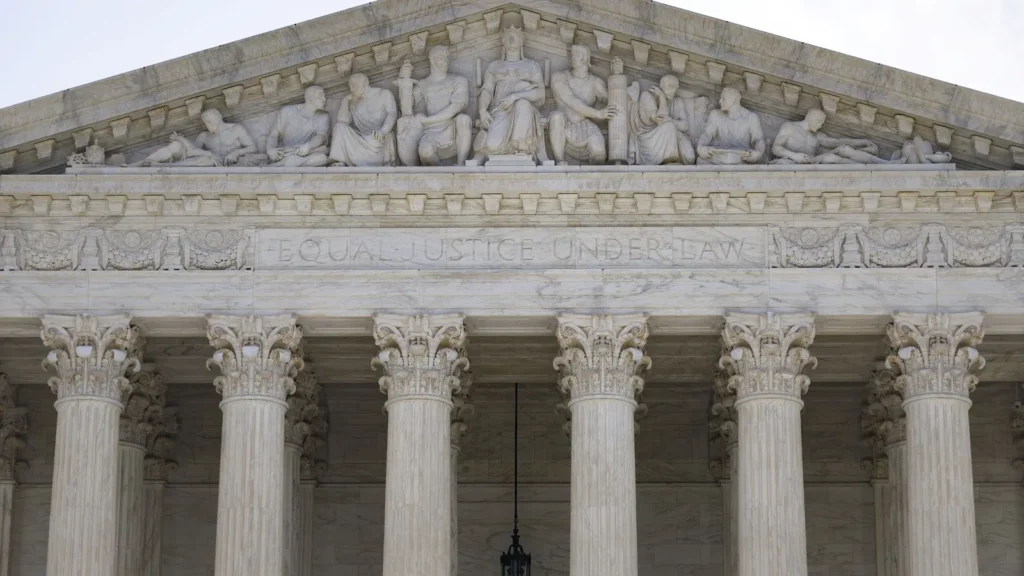
The legal landscape surrounding public education equity and admissions standards faces a watershed moment as the Supreme Court of the United States prepares to review a high-stakes constitutional challenge. On October 19, 2026, the nation’s highest court formally agreed to take up the case Association for Education Fairness v. Montgomery County Board of Education. This upcoming proceeding centers on Maryland’s Montgomery County Public Schools and poses a fundamental question regarding how plaintiffs must prove allegations of racial discrimination under the Equal Protection Clause of the 14th Amendment. The outcome of this litigation stands to reshape K-12 admissions policies nationwide, impacting how districts balance competitive academic standards with institutional diversity initiatives.
Main Facts and Core Dispute
At the heart of the litigation is a major policy overhaul enacted by Montgomery County Public Schools (MCPS) regarding its highly competitive magnet middle school STEM programs. In an effort to broaden student demographics and increase diversity within these elite academic tracks, the district modified its admissions criteria. Prior to the changes, entry heavily relied on standardized testing and objective academic metrics. The revised framework introduced holistic evaluations, which proponents argued would capture a broader, more representative pool of talented students by mitigating socioeconomic and cultural testing biases.
However, the policy shift drew immediate and fierce opposition. A coalition of Asian American parents, represented by the Association for Education Fairness (APEF), filed a federal lawsuit alleging that the new admissions framework functionally amounted to racial balancing. According to the plaintiffs, the structural adjustments disproportionately and negatively impacted Asian American students, causing what they described as a drastic decline in enrollment rates across the district’s flagship STEM programs.
The legal question before the Supreme Court is narrow yet profound: When plaintiffs allege that a public school admissions policy is racially discriminatory under the 14th Amendment, must they demonstrate that the policy harmed a specific racial group’s enrollment rate when compared directly to the size of that group’s applicant pool? Alternatively, do lower legal thresholds suffice to establish a prima facie case of discrimination? The justices’ eventual ruling will establish a definitive evidentiary standard for evaluating civil rights claims in public education admissions across the country.
Chronology of the Legal Battle
The trajectory of Association for Education Fairness v. Montgomery County Board of Education reflects a protracted judicial struggle through the federal court system, underscoring the deep polarization surrounding merit-based admissions versus equity-driven systemic changes.
The dispute began when MCPS formally implemented the revised admissions protocols for its magnet middle school programs, prompting immediate outcry from affected families. Recognizing the shifting demographic trends within the program rosters, APEF organized and subsequently filed a federal lawsuit against the school board, arguing that the revised criteria violated the Equal Protection Clause of the 14th Amendment by implementing de facto racial quotas or preferences.
Following initial district court proceedings, the case moved to the United States Court of Appeals for the Fourth Circuit. In a decision that favored the school board, the appellate court analyzed the evidentiary burdens required to prove discriminatory intent and disparate impact in public school settings. The Fourth Circuit ultimately ruled in favor of the district, concluding that the plaintiffs had failed to sufficiently prove that the admissions policy intentionally discriminated against Asian American students under the applicable legal standards.
Undeterred by the appellate ruling, legal counsel for the Association for Education Fairness petitioned the Supreme Court of Canada—correction, the Supreme Court of the United States—to grant a writ of certiorari. On October 19, 2026, the high court officially accepted the petition, setting the stage for oral arguments and a final decision during the current October 2026 term.
Broader Legal Context and Federal Civil Rights Shifts

The Supreme Court’s decision to hear the Montgomery County case arrives amid a broader nationwide reassessment of civil rights enforcement, educational equity initiatives, and administrative guidance. The federal government’s posture on K-12 civil rights has experienced notable policy fluctuations over successive presidential administrations, creating a complex regulatory environment for local school boards attempting to navigate compliance.
Parallel to the Supreme Court’s docket developments, the federal regulatory landscape saw significant shifts regarding minority protections. In a recent notice, the Trump administration identified a total of seven federal guidance and resource documents concerning K-12 civil rights enforcement that it declared "not enforceable" moving forward. These abandoned documents, originally issued by the Departments of Education and Justice during the Obama and Biden administrations, were primarily designed to protect and promote educational accessibility for English language learners, Black students, and other marginalized populations.
Legal scholars note that the simultaneous dismantling of administrative guidance documents and the judicial scrutiny facing local magnet programs signal a pivotal transition point for civil rights law in education. Districts nationwide are increasingly caught between federal mandates, shifting administrative priorities, and intense local community debates over the definition of fairness in academic selection.
Stakeholder Perspectives and Reactions
The Supreme Court’s acceptance of the case has galvanized advocacy groups, educational administrators, and legal experts on both sides of the debate, drawing intense national attention.
Proponents of the Montgomery County school board’s policies argue that holistic admissions processes are essential for correcting historical inequities and ensuring that high-performing students from all socioeconomic and cultural backgrounds have equitable access to rigorous academic opportunities. Education equity advocates contend that relying solely on standardized test scores creates systemic barriers that entrench segregation and fail to measure a student’s true academic potential or intellectual curiosity. From this perspective, the board’s changes represented a lawful, measured attempt to foster inclusive learning environments that reflect the diverse communities districts serve.

Conversely, the plaintiffs and their supporters view the policy changes as an unconstitutional system of racial engineering that unfairly penalizes high-achieving students based on their racial background. Representatives for the Association for Education Fairness maintain that academic admissions must remain strictly merit-based, rewarding individual achievement and objective performance rather than utilizing criteria designed to engineer specific demographic outcomes. Asian American community leaders have increasingly voiced concerns that holistic review processes can function as proxies for intentional caps or discrimination against specific ethnic groups, echoing arguments previously raised in high-profile collegiate admissions litigation.
Implications for K-12 Education Nationwide
The implications of the Supreme Court’s pending decision extend far beyond the borders of Montgomery County, Maryland. Public school districts across the United States operate hundreds of magnet programs, selective enrollment high schools, and gifted-and-talented tracks that utilize various combinations of testing, GPA thresholds, teacher recommendations, and holistic reviews.
If the Supreme Court establishes a stringent evidentiary standard that makes it easier for plaintiffs to challenge diversity-driven admissions policies, numerous school districts may be forced to abandon holistic reviews and revert entirely to race-neutral, test-based selection criteria. Conversely, a ruling that upholds the flexibility of local school boards to implement equity-focused admissions models could embolden other districts to pursue aggressive structural reforms aimed at diversifying elite academic programs.
Furthermore, educational legal analysts point out that the decision will likely influence how districts handle broader policy initiatives related to student assignment, disciplinary practices, and resource allocation. As school administrators await the high court’s ruling during the 2026–2027 term, the educational community remains on high alert, recognizing that the resulting legal precedent will permanently define the boundaries of equity and constitutional rights in American public education.