

The ongoing discourse surrounding educational reform in the United States often centers on the introduction of new technology, standardized testing benchmarks, and increased budgetary allocations. However, a recent analysis of pedagogical practices in Denmark, as highlighted by educator and author Pernille Ripp, suggests that the most effective path toward improving teacher retention and student outcomes may lie in structural subtraction rather than additive reform. Ripp, who transitioned from a career in U.S. public education to the Danish school system, argues that the professionalization of the teaching workforce through trust-based systems provides a viable blueprint for American school districts looking to mitigate the current burnout crisis.
Historical Context and the Shift in Educational Philosophy
For over a decade, Ripp has been a prominent voice in the American pedagogical landscape, frequently critiquing the systemic pressures that she argues stifle the love of reading and learning. Her recent move from the United States to Denmark has provided a unique, longitudinal case study of two divergent educational philosophies. While the U.S. model has been increasingly characterized by "high-stakes accountability"—a trend that gained significant momentum following the No Child Left Behind Act of 2001 and subsequent iterations like the Every Student Succeeds Act—Denmark has moved in the opposite direction.
In the United States, the average public school teacher faces a complex web of pacing guides, scripted curricula, and standardized reporting requirements. Data from the National Center for Education Statistics (NCES) indicates that teacher attrition rates have reached record highs in recent years, with nearly 44% of new teachers leaving the profession within their first five years. The primary drivers cited in exit interviews include excessive workload, lack of administrative support, and the feeling that their professional expertise is being superseded by top-down mandates.
The Danish Approach: A Model of Professional Trust
The Danish education system, by contrast, operates on a principle of decentralization. Recent policy shifts in Denmark saw the national government reduce its list of core educational goals from several hundred to approximately ten broad, age-based competencies. This shift places the responsibility of instruction directly into the hands of classroom teachers.
This decentralization is not merely administrative; it is fundamental to the culture of the school. In Danish institutions, teachers are viewed as autonomous professionals. There are no national pacing guides that mandate exactly what should be taught on any given day. Instead, teachers utilize their local knowledge and understanding of their specific student population to design a curriculum that meets broad national benchmarks. This autonomy allows for rapid responsiveness—if a particular lesson plan is not resonating with students, a teacher can pivot without the need for bureaucratic approval or committee oversight.
Quantitative and Qualitative Data on Teacher Workload

A comparative analysis of working conditions reveals a significant disparity between the two nations. While the standard U.S. teacher contract typically demands a 40-hour work week, the actual time spent on tasks outside of direct instruction—such as administrative compliance, data entry, and lesson planning—often inflates this figure significantly.
In the Danish model, the standard work week is strictly managed. Teachers typically spend 20 hours per week in direct instruction, leaving the remaining time for deep, undisturbed preparation. Physical workspaces are also distinct; in many Danish schools, teachers are provided with private, office-style workspaces that are strictly protected from interruptions. This structural separation of "teaching time" and "prep time" is a key factor in reducing cognitive load and preventing the professional fatigue that plagues many U.S. educators.
Furthermore, the management of staff absenteeism differs markedly. While U.S. teachers are often required to draft detailed lesson plans for substitutes—a task that adds immense pressure during times of illness—Danish schools utilize a pool of permanent, on-site substitutes. These individuals are familiar with the school culture and the student body, ensuring that the burden of planning does not fall on a teacher who is physically or mentally unwell.
Developmental Autonomy and the Student Experience
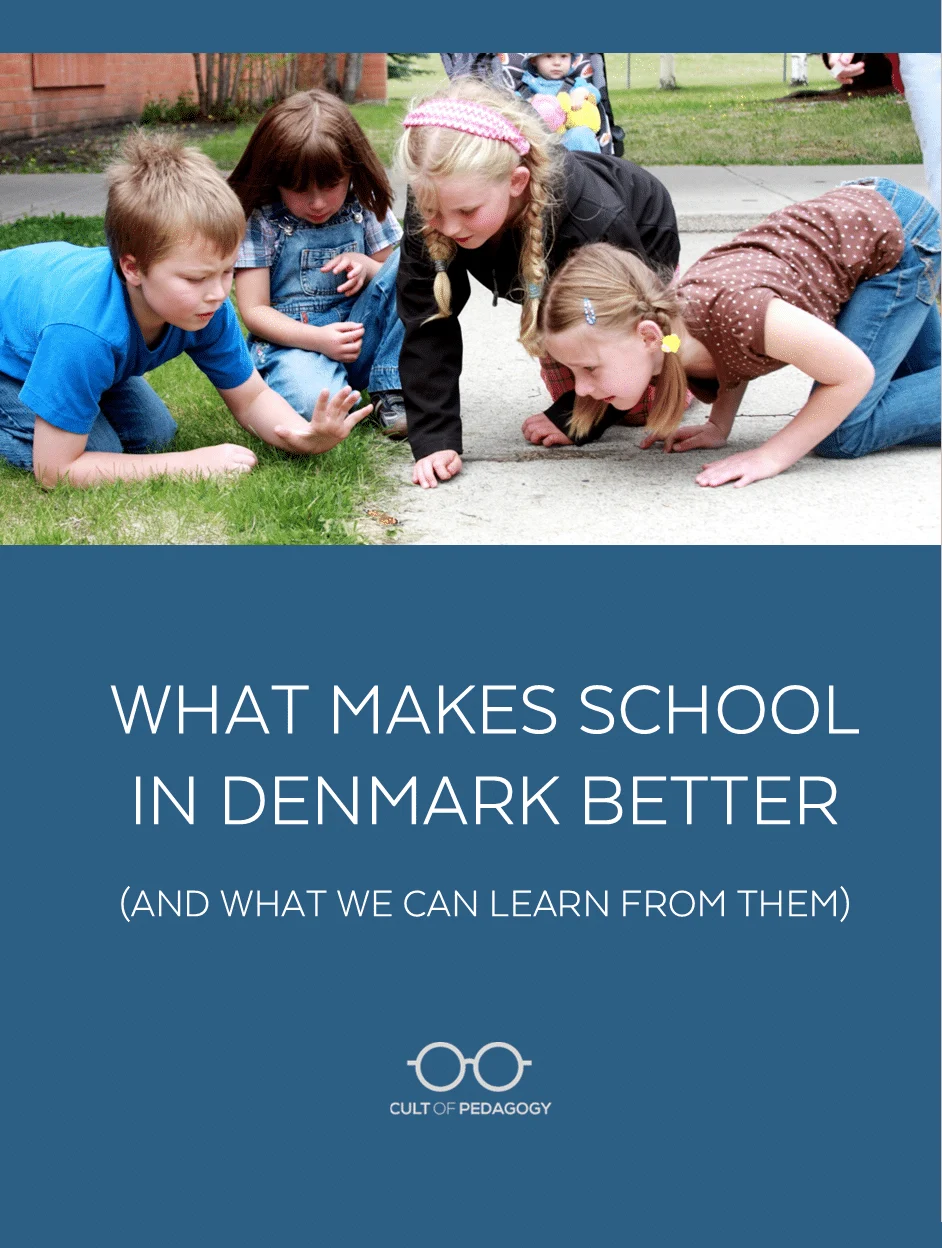
The impact of this trust-based system extends beyond the faculty room and into the student experience. In Denmark, the pedagogical approach emphasizes developmental autonomy. Students are encouraged to take responsibility for their own materials, such as managing their own backpacks and supplies, from a very early age.
This philosophy carries over into the physical environment. Danish school design often prioritizes regulation through movement rather than control through restriction. Outdoor time is viewed as a fundamental necessity rather than a reward for good behavior. This includes "risky play"—the idea that children should be allowed to engage in activities that involve minor physical risk, such as wrestling or snowball fights, under the supervision of adults who prioritize safety without suppressing the developmental benefits of physical agency.
Data from the OECD’s Programme for International Student Assessment (PISA) suggests that while Denmark maintains competitive academic standards, it does so without the intense, high-pressure atmosphere prevalent in many U.S. school districts. The decision to delay formal grading until the seventh grade and to prioritize play-based learning in the early years reflects a long-term view of student development that prioritizes mental well-being alongside academic mastery.
Implications for U.S. Policy and Practice
The challenge for the U.S. education system lies in the scalability of these practices within a highly fragmented, district-controlled environment. Experts suggest that the "Danish model" does not necessarily require additional funding; rather, it requires a shift in management strategy.

The first step, according to observers of the model, is the auditing of existing policies to identify "subtractions." School districts are encouraged to examine their current requirements for field trips, classroom decorations, and mandatory reporting, and ask: "Which of these restrictions can be removed to free up teacher energy?"
Administrators play a pivotal role in this transition. The act of explicitly communicating trust in teachers—and backing that trust with the removal of unnecessary administrative hurdles—can have an immediate impact on morale. For example, moving away from scripted curricula toward flexible, teacher-led instructional design allows for the differentiation that is often lost in rigid, top-down programs.
Addressing the "Subtractions" in Curriculum
The concept of "doing less to achieve more" is perhaps the most difficult for American districts to adopt, given the intense political and social pressure to show measurable results. However, there is evidence that slowing the pace of instruction can lead to deeper, more durable learning. By focusing on a smaller set of core concepts, teachers can avoid the "mile wide and an inch deep" problem that often characterizes modern curricula.
Teachers who find themselves in restrictive environments are encouraged by advocates to practice "intentional slowing." By choosing to spend more time on units that capture student interest and intentionally cutting peripheral requirements, educators can reclaim a sense of agency. This approach, while potentially risky in the short term, is framed as a long-term strategy for professional sustainability.
Conclusion: A Path Forward
The comparative analysis of U.S. and Danish schools highlights a critical reality: the current crisis in American education is as much about professional culture as it is about pedagogy. The "Danish way" offers a compelling alternative that prioritizes the humanity of both teachers and students. By moving away from a system of constant surveillance and toward one of professional trust, school districts may find that they can improve the quality of education without the need for increased spending or the implementation of new, complex programs.
Ultimately, the transition toward a more humane and effective school system requires the courage to dismantle the layers of bureaucracy that have accumulated over decades. If a system is created by people, it can be changed by people, and the evidence suggests that the most impactful changes may be those that allow teachers to focus on the essential work of teaching, and students to focus on the essential work of growing.