


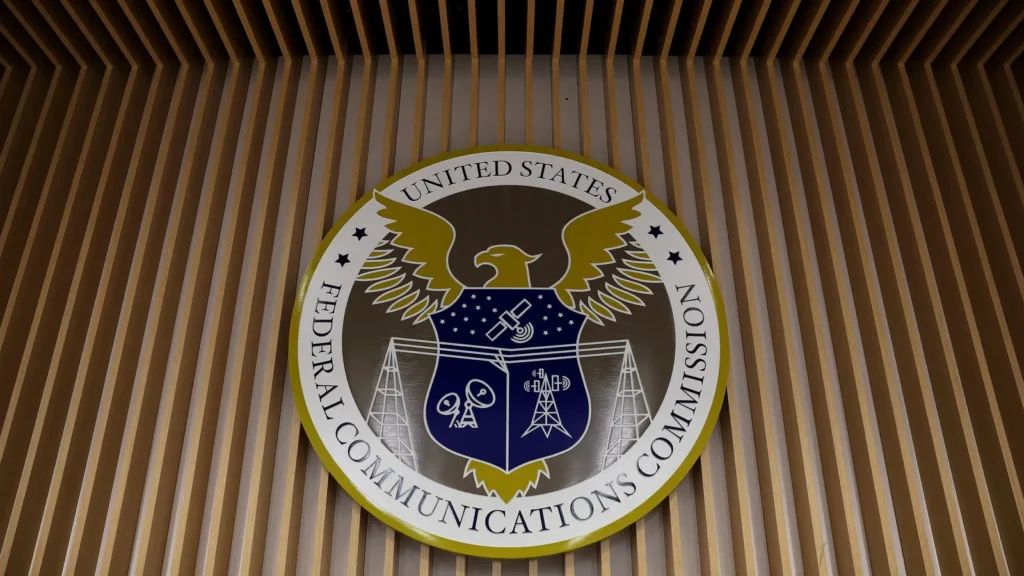
Education administrators, district technology officers, and municipal leaders across the United States have mobilized in defense of the federal E-rate program following a recent policy review initiated by the Federal Communications Commission. The three-decade-old initiative, which provides critical discounts on internet and telecommunications services to schools and libraries, faces an uncertain future as the regulatory agency weighs significant structural overhauls, budget limitations, or a complete termination of the program.
With the public comment period closing, the debate has brought to light deep tensions between federal efforts to rein in consumer telecommunications fees, growing national anxieties over youth screen time, and the stark financial realities facing local school districts. While proponents of the review argue that widespread connectivity renders the legacy program obsolete and burdensome to everyday ratepayers, public educators warn that dismantling E-rate would cripple foundational school infrastructure and shift insurmountable financial burdens onto local property taxpayers.
The Origins and Evolution of the E-Rate Program
Established under the Telecommunications Act of 1996 and officially launched in 1997, the E-rate program—formally known as the Schools and Libraries Program of the Universal Service Fund—was designed to bridge the digital divide long before high-speed broadband became a ubiquitous utility. Administered by the Universal Service Administrative Company under the direction of the FCC, the program provides discounts ranging from 20% to 90% on telecommunications, internet access, and internal connections to eligible schools and libraries, with higher discounts directed toward economically disadvantaged and rural communities.
Over the past thirty years, E-rate has fundamentally transformed the American educational landscape. In its early years, the program focused primarily on establishing basic telephone service and dial-up or early broadband connections in classrooms. As technology advanced, the program evolved to fund Wi-Fi networks, fiber-optic infrastructure, and wide-area network connections capable of supporting the massive data demands of modern digital learning environments. According to data analysis compiled by AASA, The School Superintendents Association, alongside the Association of Educational Service Agencies and the Pennsylvania Digital Trust Hub, E-rate accounted for approximately $10.5 billion in federal funding distributed to school districts between 2021 and 2025 alone, positioning it as the fifth-largest stream of federal financial support for K-12 education.
The FCC Proposal and the Trigger for the Current Debate
The current controversy stems from a proposed rule issued by the FCC that reexamines the necessity and scope of the E-rate program. Prompted in part by escalating public and legislative concerns over the proliferation of digital devices in classrooms, student screen time, and corresponding declines in student mental health and academic metrics, the FCC’s inquiry questions whether continuous federal subsidization of school internet access remains justifiable.
Furthermore, the federal agency’s proposal specifically asks whether the E-rate program should be "limited or sunsetted" entirely, citing the "extensive connectivity" that now blankets the nation’s educational institutions compared to the landscape of the late 1990s. The review also brings renewed focus to the funding mechanism behind E-rate: the Universal Service Fund. Financed through a mandatory fee levied on consumers’ interstate and international telecommunications bills—often seen as a distinct line item on household telephone and VoIP bills—the fund has faced mounting criticism from taxpayer advocacy groups over the cumulative financial pressure placed on everyday citizens.
District Leaders Push Back Against Proposed Overhauls
When the public comment window closed, the FCC docket was flooded with thousands of filings from school districts, educational associations, and municipal leaders detailing the catastrophic impacts that losing E-rate funding would entail. Far from viewing the program as an optional subsidy for digital textbooks, educational technologists and superintendents argued that network infrastructure is now inextricably linked to the physical safety, regulatory compliance, and day-to-day operational integrity of modern schools.
Brian Thompson, executive director of technology infrastructure and operations for Albuquerque Public Schools—New Mexico’s largest school district—captured the sentiment of many cash-strapped educational bodies in his filing. Thompson detailed the intense fiscal pressure facing his district, noting that a persistent decline in student enrollment has resulted in a loss of 20,000 students since 2018. This demographic shift has triggered a $40 million drop in state funding for fiscal year 2027 and left the district grappling with a looming $16.1 million budget deficit.
Having received $129 million in E-rate funds since the program’s inception, Albuquerque Public Schools is currently attempting to right-size its facilities and programs. Thompson warned the FCC that cutting the program would not reduce connectivity requirements; rather, it would simply transfer the cost ledger. "Eliminating E-Rate would not eliminate connectivity costs," Thompson wrote. "It would shift them to an already constrained education budget, where they would compete with teachers, instructional programs, student services, safety, and facilities."
Similar warnings emanated from Fairfax County Public Schools in Virginia, which has received an average of $1.79 million annually in E-rate support over the past decade. In its official submission, the district emphasized that school networks have evolved far beyond instructional tools. "Just as a school cannot open its doors without power or water, a modern facility cannot operate safely or legally without functional network infrastructure," the district stated. "Attendance systems, emergency communications, state testing compliance, and environmental controls are all network dependent."
This perspective was reinforced by Michelle Bourgeois, chief technology officer at St. Vrain Valley Schools in Colorado, which has secured approximately $18.2 million in E-rate funding since 1998. Bourgeois argued that policymakers must separate the ongoing debate surrounding student screen time policies from the fundamental necessity of institutional networking. "Reducing student screen time does not eliminate the need for the network," Bourgeois noted. "A student may not be using a device at all while a school is relying on its network for a door access system, a security camera, a visitor check-in system, a fire safety system, communications, or other essential operations."
Arguments for Reform and Financial Scrutiny
Despite the unified pushback from the public education sector, proponents of the FCC’s review maintain that a comprehensive reassessment of the program is long overdue. Critics of the current federal funding structure argue that federal programs must adapt to changing fiscal realities and demonstrate clear, measurable returns on investment.
Daniel Lyons, a professor and associate dean at Boston College Law School, argued in his public comments that the FCC has historically failed to establish a clear empirical link proving that E-rate spending directly improves educational outcomes. Lyons pointed out that despite pouring billions of dollars into school broadband connectivity over nearly three decades, the commission lacks a systematic, outcomes-based performance metric to evaluate the program’s educational efficacy.
Given the growing body of research associating excessive student screen time with behavioral challenges, anxiety, and declining standardized test scores, Lyons suggested that the FCC should institute a rigorous performance measurement framework. Only by evaluating whether funding genuinely enhances student achievement can the commission responsibly right-size the program and report accurate findings back to Congress.
In addition to academic and administrative critiques, fiscal conservatives have raised concerns regarding the sustainability of the Universal Service Fund and potential redundancies with newer federal initiatives. Thomas Schatz, president of the nonprofit Citizens Against Government Waste, pointed to the rising financial burden placed on consumers via the USF telecommunications fee. Schatz advocated for a streamlined federal approach, suggesting that the FCC eliminate broadband funding streams that overlap with other major federal investments, such as the $42.45 billion Broadband Equity, Access, and Deployment (BEAD) program. Managed by the National Telecommunications and Information Administration, the BEAD program distributes substantial grants to states specifically designed to build out and expand broadband infrastructure in unserved and underserved regions nationwide, leading some analysts to question whether legacy universal service funds require modernization to prevent administrative duplication.
Broader Implications for Local Taxpayers and Educational Equity
The ongoing deliberations over the future of the E-rate program arrive at a precarious crossroads for American public education. Across the nation, thousands of school districts are facing the impending expiration of federal pandemic-era relief funds—commonly known as Elementary and Secondary School Emergency Relief or ESSER funds—which previously cushioned school budgets against inflation, rising operational costs, and declining state revenues.
If the FCC elects to significantly curtail or eliminate E-rate, the financial blow will land heaviest on rural and low-income school districts that lack the local tax base to absorb sudden infrastructure expenditures. While affluent suburban districts might possess the municipal wealth to offset lost federal subsidies through local property tax increases, economically disadvantaged districts would likely be forced to make agonizing trade-offs between maintaining core network infrastructure, retaining classroom teachers, and supporting vital student services.
Furthermore, the outcome of this regulatory review will establish a significant precedent for how federal agencies evaluate legacy technology programs in an era of rapid digital evolution. As the FCC reviews the extensive public record submitted by educators, legal scholars, and taxpayer advocates, the ultimate decision will determine whether high-speed school connectivity continues to be treated as a shared national responsibility or whether the financial burden of maintaining the digital classroom infrastructure will be definitively passed down to local communities.