

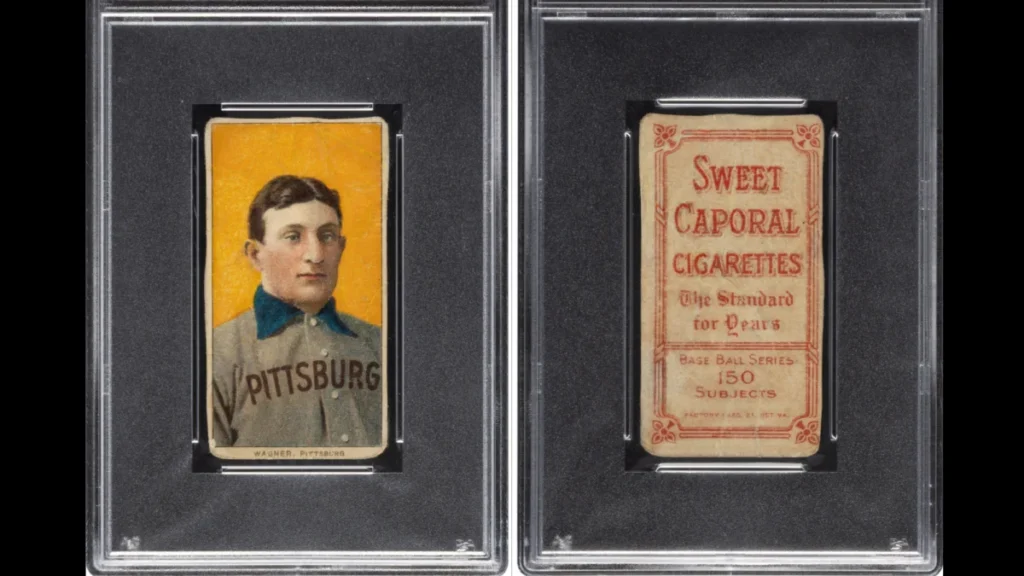
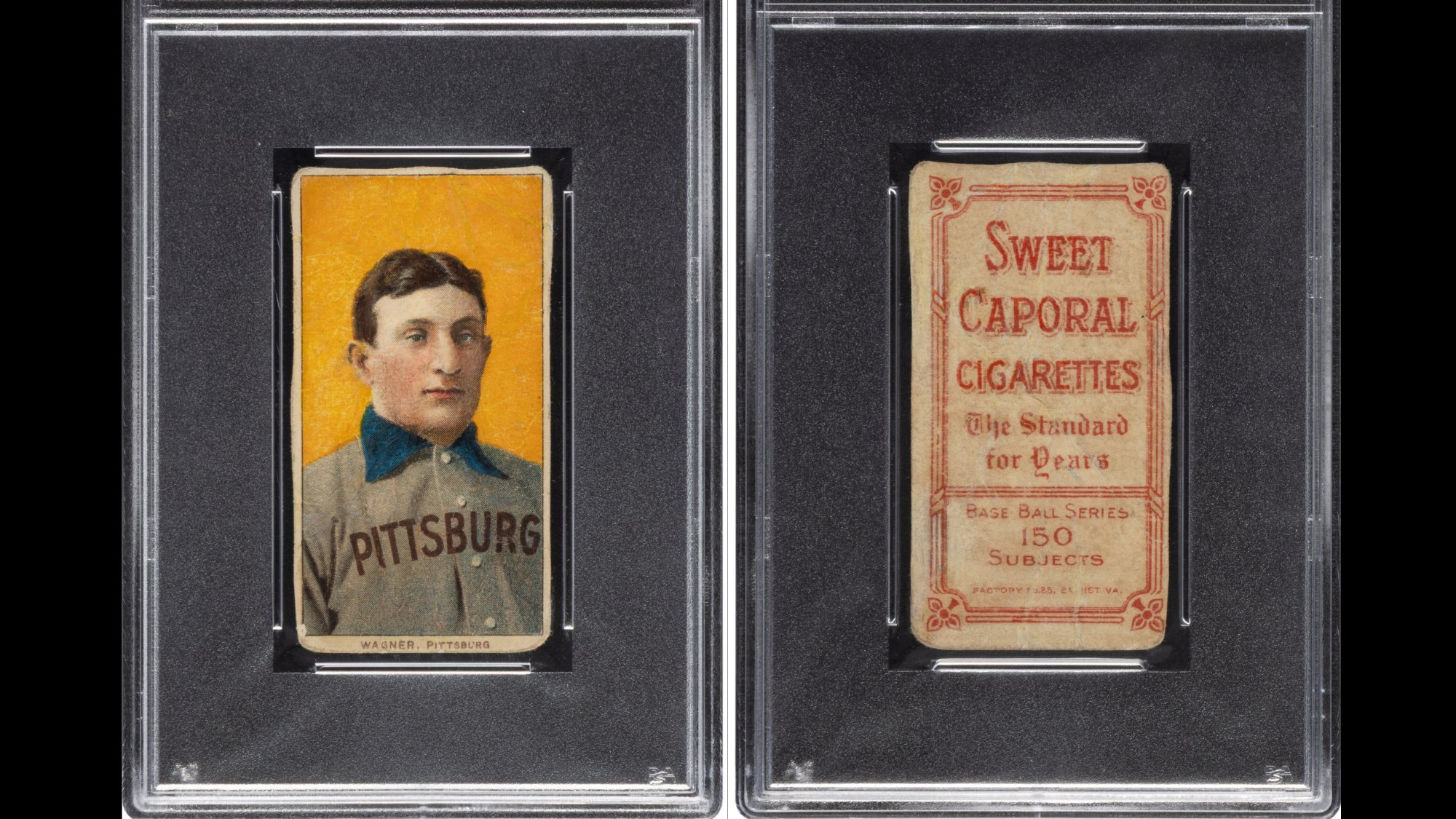
Bidding for one of the rarest and most coveted artifacts in sports memorabilia history has officially crossed the seven-figure threshold. The legendary 1909-11 T206 White Border Sweet Caporal Honus Wagner baseball card has drawn intense interest in its ongoing auction through Heritage Auctions, with the current bid standing at $1,025,000 and days remaining before the gavel falls on October 25. Auction house executives project that the final sale price could reach or exceed $3 million, aligning with skyrocketing valuations for premier pre-war sports collectibles over the past decade.
Often dubbed the "Holy Grail" of the hobby, this specific specimen is graded PSA Authentic (Restored). It represents only the sixth time Heritage Auctions has brought a T206 Honus Wagner to the public block. The auction underscores a broader, multi-year economic boom in high-end sports cards, where institutional investors, wealthy collectors, and museums routinely compete for scarce pieces of Americana.
Anatomy of a Legend: The History of the T206 Wagner
To understand the astronomical value of the T206 Honus Wagner, one must examine both the history of the card and the towering legacy of the player it depicts. Johannes "Honus" Wagner, famously nicknamed the "Flying Dutchman" due to his exceptional speed and German heritage, is widely regarded as one of the greatest all-around baseball players in Major League History. The son of a German immigrant coal miner, Wagner played 21 seasons in the majors from 1897 to 1917, spending the vast majority of his career as a legendary shortstop for the Pittsburgh Pirates.
During his storied career, Wagner captured eight National League batting titles—a record in the NL—and finished with a career batting average of .327, 3,420 hits, and 723 stolen bases. When the National Baseball Hall of Fame opened its doors in Cooperstown, New York, in 1937, Wagner was part of the historic inaugural class alongside Babe Ruth, Ty Cobb, Christy Mathewson, and Walter Johnson. Nearly 130 years after his professional debut, his reputation as the premier shortstop of the dead-ball era remains unblemished.
The collectible bearing his likeness, however, owes its extreme scarcity not just to time, but to controversy. Issued by the American Tobacco Company (ATC) as part of the massive T206 white border set distributed between 1909 and 1911, the Wagner card was packed inside brands such as Sweet Caporal and Piedmont.
According to sports historian consensus and enduring baseball lore, Wagner was a staunch non-smoker and reportedly objected to having his image used to market tobacco products to minors—or, alternatively, sought financial compensation for the use of his name and likeness that the tobacco company was unwilling to pay. Consequently, Wagner demanded that production of his card be halted.
Because the production run was truncated almost immediately after it began, only a tiny fraction of the cards ever entered circulation. Estimates suggest that fewer than 60 authentic examples of the T206 Wagner survive today in various conditions, ranging from pristine to heavily damaged or altered.
Chronology of Record-Breaking Sales
The journey of the T206 Honus Wagner from an obscure tobacco insert to a multi-million-dollar asset spans over a century of sports memorabilia evolution.
- 1909–1911: The American Tobacco Company manufactures and distributes the T206 card set. Production of the Honus Wagner card is abruptly halted following objections from the player, restricting its distribution to a negligible number.
- 1985: A prominent specimen, later known as the Gretzky-McNall Wagner, is purchased by hockey legend Wayne Gretzky and Los Angeles Kings owner Bruce McNall for $451,000 at a Sotheby’s auction, capturing mainstream media attention and redefining the value ceiling for sports cards.
- 2000s–2010s: As the sports memorabilia market professionalizes with third-party grading services like PSA (Professional Sports Authenticator) and SGC (Sportscard Guaranty Corporation), individual T206 Wagner cards begin routinely breaking million-dollar records. A graded copy sells for $2.8 million in 2007 and $3.12 million in 2016.
- 2021: A pristine-grade T206 Wagner shatters all previous records by selling for a staggering $6.6 million in a private transaction, establishing sports cards as a legitimate alternative asset class.
- Early 2024: A 1909-11 T206 Piedmont Honus Wagner (SGC Authentic) trades hands at Heritage Auctions for more than $5.8 million, proving that market demand remains remarkably robust even for restored or lower-grade examples.
- October 2026: The current Heritage Fall Sports Catalog Auction features the PSA Authentic (Restored) Sweet Caporal Wagner, which rapidly eclipses the $1 million mark ahead of its October 25 closing date.
Official Reactions and Market Analysis
Industry experts have long viewed the T206 Wagner as the ultimate barometer for the health of the high-end sports memorabilia market. Chris Ivy, Director of Sports Auctions at Heritage Auctions, emphasized the card’s foundational significance to the hobby.
"The T206 Wagner is the foundational trophy of baseball card collecting," Ivy noted in a statement released ahead of the auction. "It transcends sports memorabilia; it is a historical artifact from the golden age of baseball that commands reverence from both seasoned collectors and mainstream investors alike."
Market analysts point out that while the broader economy experiences fluctuations, premier tier-one assets—items with undeniable scarcity, historical significance, and iconic status—consistently attract aggressive capital. Unlike modern trading cards, which are often produced in large quantities and subject to speculative manufacturing trends, pre-war vintage cards like the T206 set possess a finite, diminishing supply. Every discovery, loss, or restoration of a T206 Wagner directly impacts the remaining pool of available collectibles, driving long-term value appreciation.
Furthermore, the involvement of third-party authentication has brought unprecedented transparency to the market. Even though the current auction piece features restoration, professional grading provides buyers with verifiable baseline documentation regarding its authenticity and condition history, mitigating the risks historically associated with high-value secondary market transactions.
Broader Impact and Implications for Collecting
The performance of the T206 Honus Wagner in the current Heritage auction carries several key implications for the future of the collectibles industry:
- Institutionalization of Collectibles: As multi-million-dollar transactions become increasingly normalized, sports memorabilia is drawing the attention of wealth managers, family offices, and private equity funds looking to diversify portfolios outside of traditional equities and real estate.
- Museum-Quality Preservation: With prices soaring into the millions, many of these cards are eventually acquired by deep-pocketed collectors who ensure secure, climate-controlled storage, effectively removing them from active circulation for decades.
- Heightened Scrutiny on Vintage Authentication: The immense financial stakes associated with cards like the T206 Wagner have elevated the standards of forensic examination, leading to advanced scientific techniques in detecting trimming, coloring, and structural restoration.
As the countdown clock ticks toward the final moments of bidding on October 25, all eyes in the sports collecting world remain fixed on Heritage Auctions. Whether the final hammer price achieves the anticipated $3 million threshold or exceeds expectations, the enduring allure of Honus Wagner ensures that his legendary card will continue to define the pinnacle of sports history preservation for generations to come.