



The landscape of English Language Arts (ELA) education often grapples with a fundamental challenge: fostering genuine student engagement with complex texts. While books, stories, articles, poems, and textbooks remain the bedrock of conveying information and developing critical literacy, the traditional modes of interaction can, at times, lead to student disinterest and a perception of the content as "dry" or merely a requirement. This persistent issue, where students exhibit a lack of enthusiasm for text-based assignments, is precisely what veteran high school English teachers Brian Sztabnik and Susan Barber aim to address. Their extensive experience, honed over a decade of community building with fellow ELA educators online through social media chats and their popular blog, Much Ado About Teaching, revealed a widespread struggle among teachers to design lessons that truly captivate their students.
Recognizing this critical need, Sztabnik and Barber embarked on a mission to curate and develop innovative pedagogical strategies. This culminated in their recent publication, 100% Engagement: 33 Lessons to Promote Participation, Beat Boredom, and Deepen Learning in the ELA Classroom, a resource designed to revitalize ELA instruction. The book offers a practical compendium of approaches engineered to transition students from passive recipients of information to active participants in their learning journey. Recently, on the Cult of Pedagogy podcast, the authors unveiled three exemplary, low-tech, and kinesthetically engaging strategies from their book, each crafted to encourage students to move beyond their desks and interact dynamically with course material. These methods are broadly applicable to any classroom where text interaction is central to the curriculum, promising a noticeable uplift in student involvement and analytical depth.
The Pervasive Challenge of Student Disengagement in ELA
For decades, educators have observed varying levels of student engagement across subjects, with ELA often presenting unique hurdles. A 2015 Gallup Student Poll, for instance, indicated that student engagement tends to decline as they progress through school, dropping from 74% in fifth grade to 32% by eleventh grade. While this data encompasses all subjects, ELA, with its emphasis on reading and textual analysis, can be particularly susceptible to waning interest if instructional methods do not actively involve students. Traditional approaches, such as silent reading followed by worksheets or lectures on literary analysis, can inadvertently alienate students who struggle with sustained focus or who perceive the material as irrelevant to their lives. The core issue, as identified by Sztabnik and Barber, is not the texts themselves, but often the mode of interaction. When students are merely required to absorb and recall, rather than to grapple, manipulate, and construct meaning, boredom can set in, hindering deep learning and the development of higher-order thinking skills.

The digital age has further complicated this dynamic. While technology offers myriad tools for engagement, it also competes for students’ attention, often making traditional classroom activities seem less dynamic. Sztabnik and Barber’s emphasis on low-tech, active strategies is a deliberate counterpoint, leveraging physical interaction and collaborative problem-solving to create a different kind of compelling experience that is accessible to all classrooms, regardless of technological infrastructure.
A Decade of Community and Pedagogical Innovation
Brian Sztabnik and Susan Barber are not newcomers to the educational dialogue. Both are highly experienced high school English teachers who, over the past ten years, have leveraged online platforms to foster a vibrant community among ELA educators. Their blog, Much Ado About Teaching, alongside their active participation in social media discussions, has served as a crucible for identifying common challenges and collaboratively exploring solutions. This grassroots approach allowed them to gather insights directly from the teaching trenches, understanding firsthand the daily struggles of their peers in motivating students to engage with texts meaningfully. This continuous dialogue informed their strategic curation process, ensuring that the methods they advocate are not only pedagogically sound but also practical and adaptable for real-world classrooms. Their journey from online collaborators to published authors of 100% Engagement exemplifies the power of professional learning communities in addressing systemic educational challenges. The book itself, published earlier this year, is a direct response to the call from their community for actionable strategies to combat classroom inertia and foster genuine participation.
Strategy 1: Cutting Up Poems – Deconstructing for Deeper Understanding
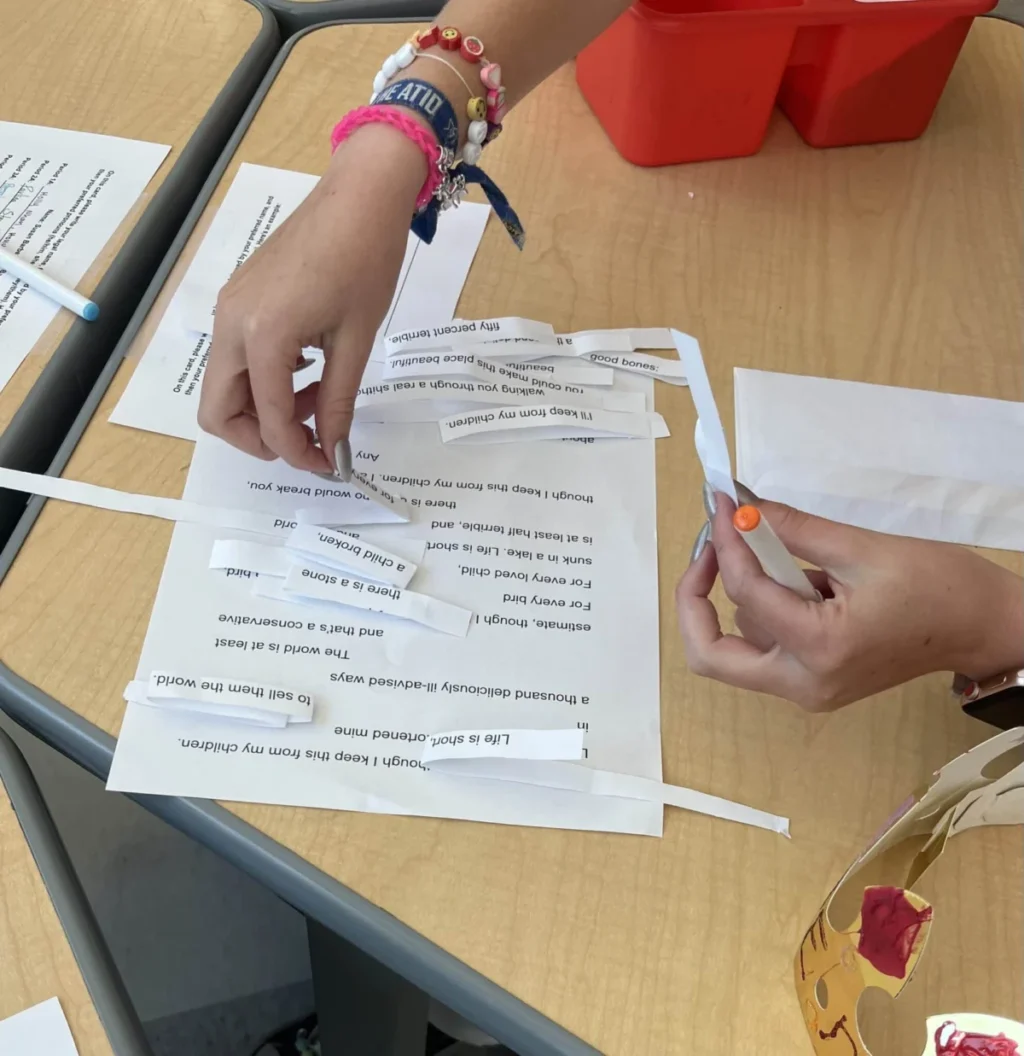
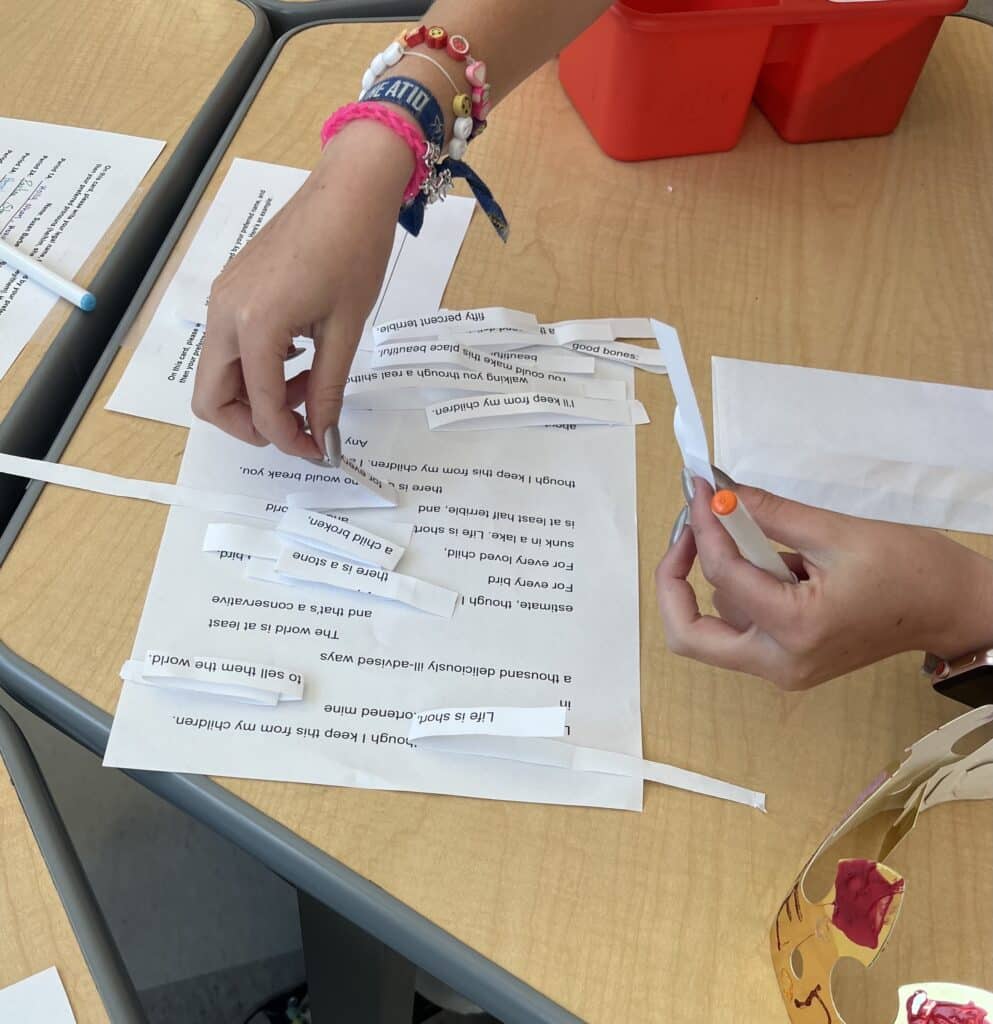
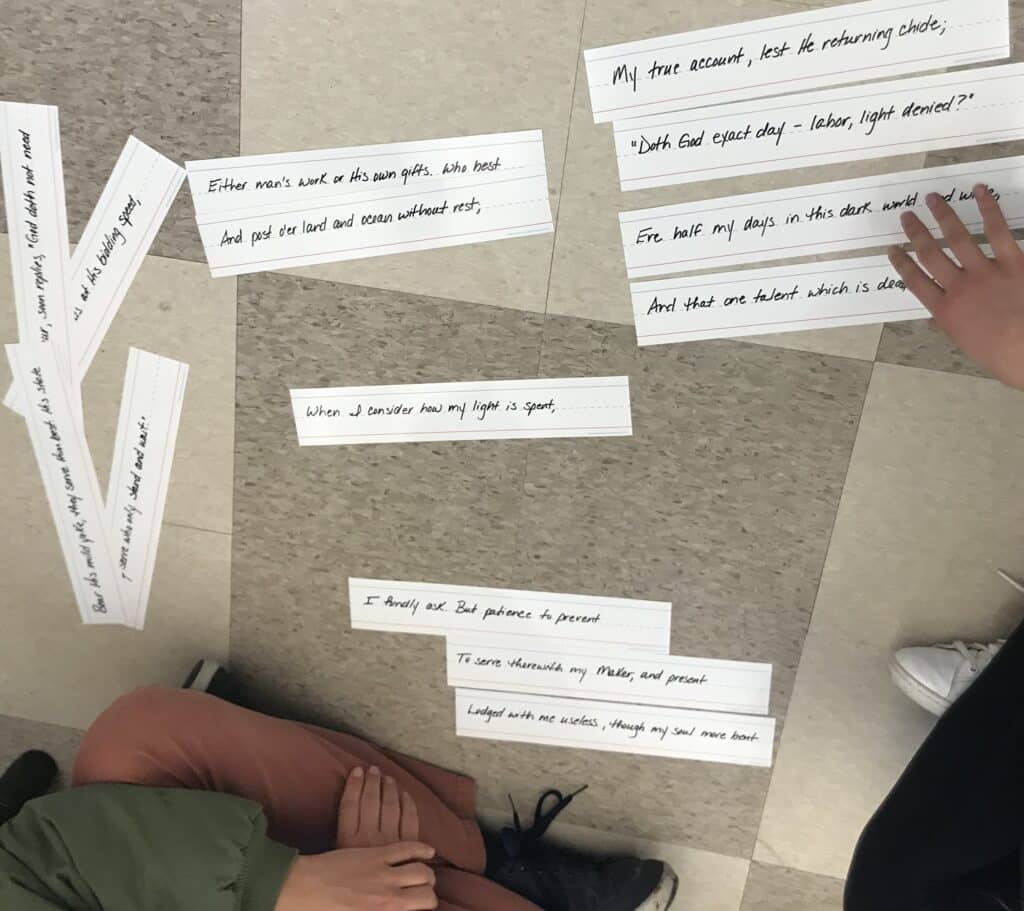
The first strategy, "Cutting Up Poems," ingeniously transforms the often-intimidating task of poetry analysis into an interactive, hands-on puzzle. In this lesson, students are presented with a poem that has been meticulously cut into individual words, phrases, or lines, distributed on separate paper strips. Their primary task is to reconstruct the poem in its original sequence. Following this reconstruction, students engage in a critical annotation of their assembled version, subsequently comparing it to the authentic poem.
Susan Barber elucidates the profound pedagogical impact of this seemingly simple activity: "It’s forcing the students to do a close reading of the poem. If I would have passed out this poem and said, I want you to do a close reading, their eyes would be glazed over." She highlights how the physical act of arranging the strips compels students into an analytical mindset. "They’re having to consider, Does this make sense if it goes here? Well, this is a capital letter, so it may not go in the middle of those sentences, or this is a comma here, that may not fit right there. And so students are already thinking about this poem analytically, and having really good discussion. They’re reading closely." Barber playfully refers to it as a "teacher trick," underscoring its effectiveness in subtly guiding students toward rigorous textual analysis without the overt instruction that can sometimes trigger resistance.
The implications of "Cutting Up Poems" extend beyond mere reconstruction. It inherently promotes:
- Kinesthetic Learning: The physical manipulation of words engages a different part of the brain, enhancing memory and comprehension for many learners.
- Collaborative Inquiry: When done in groups, students must articulate their reasoning, debate possibilities, and justify their choices, thereby refining their understanding of poetic structure, syntax, and meaning.
- Attention to Detail: The need to consider punctuation, capitalization, and the logical flow of ideas forces a granular examination of the text that often gets overlooked in a traditional read-through.
- Overcoming Aversion to Poetry: By framing poetry as a puzzle, the activity can reduce initial anxiety and make the genre more approachable, particularly for students who perceive poetry as overly complex or abstract.
- Metacognition: Students become aware of the strategies they employ to make sense of the text, fostering a deeper understanding of their own reading processes.
This strategy effectively dismantles the passive reception of text, transforming it into an active, problem-solving endeavor that cultivates both engagement and critical analytical skills.
Strategy 2: Inferential Timeline – Charting Narrative Significance
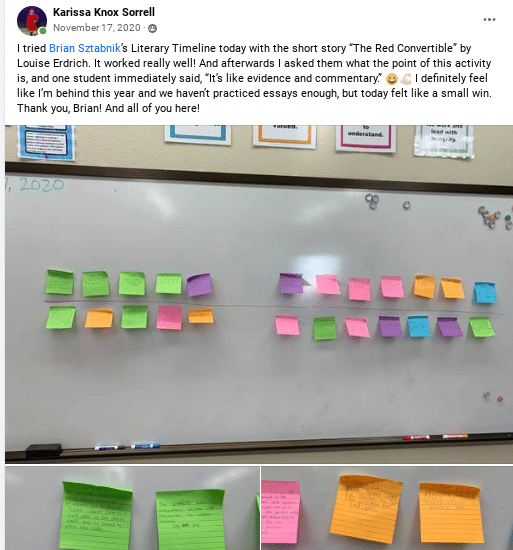
The "Inferential Timeline" strategy provides a dynamic framework for students to engage with narrative texts, particularly novels, by charting key developments and drawing deeper inferences. This lesson begins by dividing a section of a novel among students, with each student assigned a few pages. Each student receives an index card or post-it note. On this card, they are tasked with summarizing the most important event occurring within their assigned pages and supporting this summary with a direct quote from the text. These cards form the top tier of a two-tiered timeline displayed prominently in the classroom.
Brian Sztabnik emphasizes the initial cognitive demands of this stage: "What I’m really asking is to summarize the plot and boil it down to one or two sentences. So this is all about decision-making and cutting out the extraneous details and just focusing on what’s really important. And often it’s either character development or increasing conflict or maybe a symbol finally emerges." This initial phase compels students to distinguish between primary and secondary information, a crucial skill in textual comprehension.
The second tier of the timeline elevates the activity to a higher level of critical thinking. Once the first row of summary cards is complete, students are instructed to select a classmate’s card from the wall. Beneath this chosen card, they add a new card explaining why that particular moment is significant in the broader context of the narrative. Sztabnik explains the collaborative, yet independent, nature of this phase: "It’s collaborative without being collaborative physically. It’s collaborative mentally: They have to look at their classmate’s card, determine what happened, and make an inference about why that event was so important in the grand scheme of those chapters. So here’s where we’re getting to the higher level thinking – we can understand the plot; now we need to draw conclusions."
The lesson culminates in a "gallery walk," where students circulate around the completed timeline, taking notes on the summaries and, more importantly, the inferences made by their peers. This peer-to-peer learning environment enriches individual understanding and exposes students to diverse interpretations of textual significance.
Benefits of the Inferential Timeline include:
- Summarization and Main Idea Identification: Students practice condensing information to its core essence.
- Textual Evidence Integration: The requirement to provide a supporting quote reinforces the importance of backing claims with evidence.
- Inferential Reasoning: The second tier explicitly targets higher-order thinking, pushing students to analyze the impact and meaning of events.
- Collaborative Learning (Indirect): Students build upon each other’s understanding, fostering a collective grasp of the narrative arc.
- Visual Representation of Narrative: The timeline provides a clear, spatial representation of plot progression and thematic development, aiding visual learners.
- Accountability: Each student is responsible for a discrete portion of the text, ensuring comprehensive engagement with the assigned reading.
This strategy moves beyond simple plot comprehension, guiding students towards sophisticated analysis of character, conflict, and theme through a structured, interactive process.
Strategy 3: Text Rendering – Precision in Meaning-Making
The "Text Rendering" strategy is designed to hone students’ ability to extract precise meaning from a passage, moving from broad understanding to granular insight. This activity begins with students engaging with a selected passage of text. Their task is to progressively narrow their focus, making deliberate choices at each step:
- Identify the most important sentence or line within the entire passage.
- From that chosen sentence or line, pinpoint the most important phrase or clause.
- Finally, from that phrase or clause, select the most important single word.
After making their selections, students are required to defend their choices to the rest of the class, articulating their rationale for each progressive narrowing. Following this individual defense, small groups work collaboratively to draw broader conclusions about the passage, synthesizing their individual insights.
Susan Barber developed this lesson to address a specific academic need: "I have trouble every year getting students to narrow their focus when they’re making meaning from the text. They talk in these really big, general ideas, and I would be like, Where did this come from? And they’re like, You know, it’s just there. It has to come from someplace specific in the text. I had to find some activity to get them to take the big ideas to the small." This strategy directly confronts the common student tendency to generalize, forcing them to root their interpretations in concrete textual evidence.
The advantages of Text Rendering are numerous:
- Deep Close Reading: It necessitates an intense, multi-layered examination of the text.
- Analytical Precision: Students learn to identify the most potent elements of a passage that convey its core meaning.
- Argumentation Skills: Defending their choices requires students to articulate logical connections between their selections and the overall message of the text.
- From Macro to Micro Analysis: The structured narrowing process trains students to move between overarching themes and specific textual details, a fundamental skill in literary analysis.
- Vocabulary and Connotation: Focusing on a single "most important word" can lead to rich discussions about word choice, connotation, and its impact on meaning.
- Evidence-Based Reasoning: It reinforces the principle that all interpretations must be traceable back to specific textual elements.
Text Rendering is a powerful tool for developing students’ ability to construct rigorous, evidence-based arguments about textual meaning, preventing vague generalizations and fostering a deeper appreciation for the author’s craft.
Broader Pedagogical Implications and the Value of Active Learning
The strategies championed by Sztabnik and Barber align with a broader shift in educational philosophy towards active, student-centered learning. Research consistently demonstrates that active learning approaches lead to higher student achievement and engagement compared to traditional passive methods. A meta-analysis published in the Proceedings of the National Academy of Sciences (PNAS) in 2014, for example, found that students in traditional lecture courses were 1.5 times more likely to fail than students in courses with active learning. While this study focused on STEM fields, the principles are universally applicable. Active engagement, problem-solving, and collaborative work not only improve content retention but also cultivate critical thinking, communication, and collaboration skills – competencies vital for success beyond the classroom.
Furthermore, the low-tech nature of these strategies offers a significant advantage in an increasingly digital world. They reduce screen time, minimize technological barriers, and emphasize direct human interaction and manipulation of physical materials. This accessibility ensures that all schools, regardless of their budget for educational technology, can implement effective engagement strategies. It also provides a refreshing break from device-heavy instruction, leveraging the tangible world to deepen conceptual understanding.
The 100% Engagement framework, therefore, does more than just offer a collection of lesson plans; it promotes a pedagogical mindset that prioritizes student agency, critical inquiry, and active participation. By making learning an experience of discovery and construction rather than mere reception, these strategies empower students to take ownership of their education, transforming potentially "boring" texts into vibrant arenas for intellectual exploration.
Cultivating a Community of Engaged Educators
Recognizing that pedagogical innovation thrives on collaboration, Sztabnik and Barber have extended their efforts beyond their book. They have established a dedicated Facebook group, "100% Engagement," where educators interested in these practices can connect, share experiences, and learn from one another. This online forum serves as a dynamic professional learning community, facilitating the exchange of ideas, troubleshooting challenges, and celebrating successes in implementing engagement strategies. Coupled with their ongoing work on the Much Ado About Teaching blog, they continue to foster a supportive ecosystem for ELA teachers seeking to enrich their classroom practices.
The publication of 100% Engagement and the accompanying community-building initiatives underscore a vital message: effective teaching is an evolving craft, continuously refined through reflection, innovation, and collaboration. By providing practical, research-backed strategies that are both engaging and intellectually rigorous, Brian Sztabnik and Susan Barber are not just offering lessons; they are contributing to a movement that redefines the student experience in ELA, ensuring that the critical work of reading and interacting with texts remains vibrant, meaningful, and genuinely exciting for every learner.