



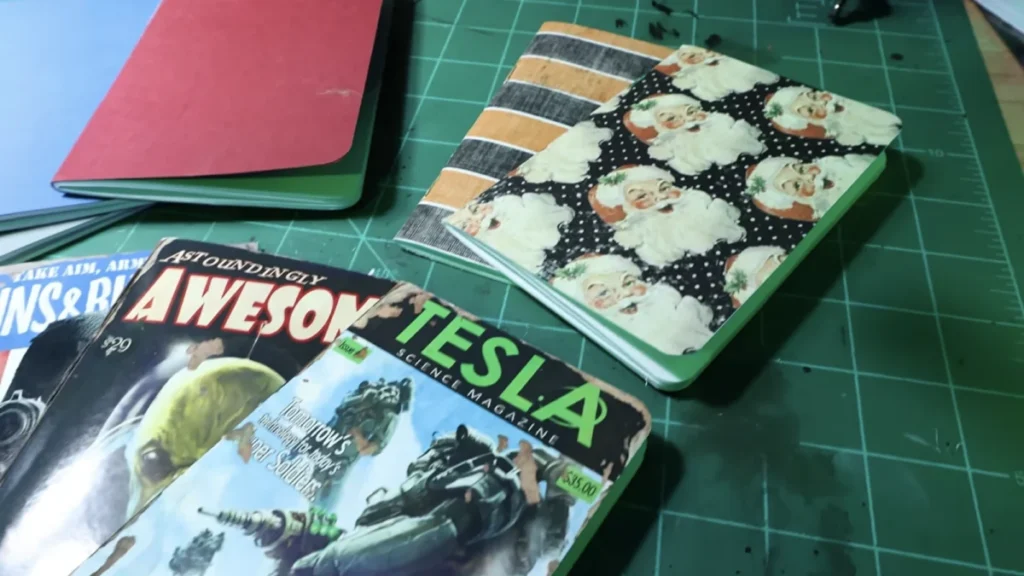
The global resurgence of analog stationery has encountered a persistent economic friction point: premium pricing for disposable paper goods. In an era dominated by high-end e-ink tablets, ergonomic keyboards, and subscription-based productivity applications, a loyal segment of writers, thinkers, and field professionals continues to rely on classic pocket notebooks. However, branded options such as Moleskine or Field Notes have steadily climbed in price, with multi-packs frequently retailing between $13 and $20. For daily note-takers who subject their journals to extreme wear, tear, and frequent loss, this recurring expense becomes unnecessarily burdensome. Challenging this consumer status quo, DIY creators and minimalist advocates are increasingly promoting handmade alternatives, proving that custom-crafted pocket notebooks can be manufactured at home for less than a dollar using basic stationery supplies.
Background Context of the Analog Stationery Boom
The modern appreciation for physical paper notebooks persists despite decades of digital innovation. Market analysts attribute this enduring demand to cognitive benefits associated with tactile writing, including enhanced memory retention, reduced digital distractions, and a tangible sense of organization. Yet, mass-market manufacturers capitalize on this preference by marketing pocket notebooks as luxury lifestyle items rather than utilitarian tools.
Historically, pocket notebooks originated as rugged, functional logs for surveyors, journalists, military personnel, and naturalists. These early iterations prioritized durability, utility, and low production costs. Over the late 20th and early 21st centuries, branding transformed these humble pads into aesthetic commodities. Today, consumers often pay significant markups for embossed covers, branded colors, and specialty paper stocks. This commercialization has inadvertently priced out students, casual writers, and frequent note-takers who require high volumes of paper without the accompanying brand tax.
The Anatomy of a DIY Pocket Notebook
Crafting a personalized notebook requires minimal technical skill and standard household tools. According to recent demonstrations by makers such as YouTube creator Perry Daniels, the manufacturing process relies on basic materials readily available at office supply stores or craft shops: standard printer or sketching paper, a heavy-cardstock cover, durable twine or thread, a sewing needle, and a pair of scissors or a utility knife.

The production sequence is remarkably straightforward. First, several sheets of paper are folded in half to form signatures, which are then nested together inside a cardstock cover. Instead of relying on industrial wire-stitching or adhesive bindings that can crack under pressure, makers use a simple pamphlet stitch. By piercing holes along the spine fold and threading twine through them in a secure pattern, the notebook achieves a flexible, lay-flat binding that withstands heavy daily manipulation.
While basic versions cost mere cents to produce, customization options are vast. Creators can experiment with dot-grid printing templates, recycled cotton paper, rounded corner punches, and custom cover artwork. This level of personalization far exceeds what is typically available in commercial retail packs.
Comparative Cost Analysis and Financial Implications
A rigorous financial breakdown illustrates the stark contrast between commercial notebooks and handmade alternatives. A standard three-pack of premium pocket notebooks typically costs approximately $13, translating to over $4 per individual book. In contrast, purchasing paper, cardstock, and thread in bulk reduces the per-unit cost of a handmade notebook to roughly $0.50 to $0.75, even when factoring in the initial purchase of tools like needles and bone folders.
For enterprise environments, educational institutions, or heavy writers who consume dozens of notebooks annually, the cumulative savings are substantial. Transitioning from retail purchases to self-binding methods can reduce personal stationery expenditures by more than 80 percent. Furthermore, handmade production eliminates packaging waste, shipping emissions, and corporate supply chain markups, aligning with broader sustainability and zero-waste initiatives.
The Durability Factor: Field Testing the Handmade Journal
A common skepticism surrounding DIY notebooks concerns structural integrity. Critics often assume that hand-stitched paper items will quickly fall apart under rigorous field conditions. However, bookbinders note that traditional pamphlet stitches, when executed with waxed linen thread or heavy-duty upholstery cord, often outlast commercial wire staples.

Field journals carried in pockets are routinely subjected to moisture, friction, bending, and temperature fluctuations. When a commercial notebook’s spine fails, pages frequently shed individually. Conversely, a multi-signature stitched notebook distributes stress evenly across the thread network, keeping signatures intact even if the outer cover experiences localized wear. Furthermore, because the financial investment in a handmade notebook is negligible, users report experiencing less psychological hesitation to actually use, bend, or write freely within the pages—an emotional barrier frequently associated with expensive, pristine journals.
Industry Response and the Broader Consumer Shift
While major stationery brands have not officially altered their pricing strategies in response to the DIY movement, retail trends reflect a growing consumer pushback against inflated everyday goods. Online communities dedicated to bookbinding, journaling minimalism, and analog productivity have seen exponential membership growth across platforms like Reddit, YouTube, and specialized crafting forums.
Industry observers suggest that the popularity of DIY stationery mirrors broader DIY trends in food, fashion, and home repair. As economic pressures encourage consumers to reevaluate discretionary spending, basic skills like hand-sewing, papercraft, and mending are experiencing a cultural renaissance.
Broader Impact and Future Outlook
The resurgence of handmade pocket notebooks highlights a fundamental shift in how consumers interact with everyday goods. By decoupling utility from brand-name manufacturing, individuals are reclaiming control over simple tools that support daily productivity and creative expression.
As digital fatigue continues to drive users toward analog alternatives, the market for physical writing tools will likely remain robust. Whether consumers choose to invest in luxury artisanal brands or spend ten minutes crafting their own supplies at a kitchen table, the enduring appeal of pen and paper remains secure. For the budget-conscious writer, the message is clear: exceptional productivity tools do not require an expensive retail receipt—just a stack of paper, a needle, and a bit of thread.