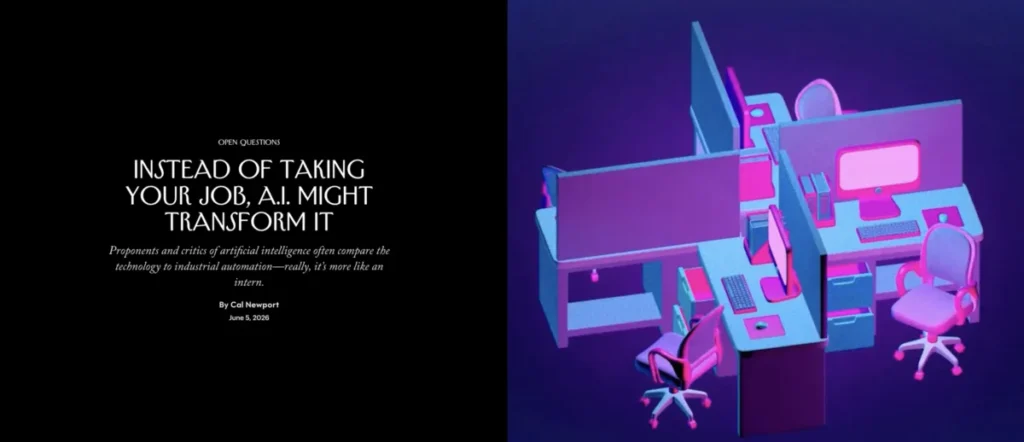




Imagine a scenario: a hiring manager is conducting an interview with a promising Gen Z candidate for an entry-level position. This student, a product of an educational system increasingly grappling with advanced AI, readily demonstrates familiarity with leveraging generative AI tools, a skill deemed critical for the role. However, when the manager presents an AI-generated output and asks the candidate to critically assess its accuracy, biases, or underlying assumptions, the candidate struggles to provide a nuanced evaluation. This unfolding reality underscores a burgeoning concern: while many assume Gen Z to be inherently AI-native and equipped with critical thinking skills, a significant portion appears to be developing only the former, leading to a profound "AI literacy gap."
The rapid proliferation of generative artificial intelligence tools, particularly since the public launch of platforms like ChatGPT in late 2022, has fundamentally reshaped academic and professional landscapes. Initially met with a mix of awe and apprehension, the technology quickly transitioned from a niche curiosity to an omnipresent assistant, impacting everything from essay writing to data analysis. For students, the immediate appeal of AI as a shortcut for tasks like drafting assignments, summarizing texts, or brainstorming ideas was undeniable. This accessibility fostered a generation adept at prompting and generating quick outputs, often utilizing free Large Language Models (LLMs) for surface-level tasks. Yet, this familiarity, while valuable, has often been conflated with true AI literacy—a distinction that is proving critical in the classroom and, increasingly, in the workplace.
The Critical Distinction: Familiarity vs. Literacy
The core of the issue lies in understanding that familiarity with generative AI is not synonymous with literacy. Familiarity implies a user’s ability to operate AI tools, generate content, and understand basic functionalities. AI literacy, conversely, encompasses a much broader and deeper set of skills. It involves the ability to critically evaluate AI outputs for accuracy, bias, and relevance; to understand the ethical implications of AI use; to discern when and how AI can be most effectively integrated into complex tasks; and crucially, to possess the underlying human skills that AI can augment but not replace. These foundational skills—critical thinking, analytical reasoning, nuanced communication, and complex problem-solving—are typically honed through hours of dedicated writing, reading, research, and independent intellectual exertion. When students outsource these fundamental cognitive processes entirely to AI, they risk bypassing the very developmental stages essential for cultivating genuine literacy.
Educators and employers are now confronting the consequences of this distinction. While AI can serve as an invaluable coach or a powerful co-pilot in the learning process, offering feedback on in-process writing, suggesting improvements, or even providing examples of strong prompting techniques, it cannot replace the intellectual heavy lifting required for true mastery. Students who rely on AI to write or edit their work entirely may produce technically sound outputs, but they miss the opportunity to develop their own voice, structure their own arguments, and refine their analytical capabilities. The goal, therefore, must be to leverage AI to make students better writers, communicators, and critical thinkers, rather than allowing it to circumvent the development of these essential human competencies.

The Alarming Rise of AI Misuse in Education
The challenge is further exacerbated by the widespread and often irresponsible use of AI in educational settings. Data from leading academic integrity providers paints a stark picture of the scale of AI misuse. A comprehensive survey conducted by Turnitin and Vanson Bourne revealed that a significant majority—95% of academic administrators, educators, and students—believe AI is being misused in some capacity within education. This widespread perception of misuse is substantiated by concrete data. An analysis of submissions processed through the latest version of Turnitin’s AI detection tool indicates a dramatic increase in AI-generated content. Since October 2023 (a plausible interpretation of the original text’s "October 2025" given the context of previous data), approximately 15% of essay submissions have shown greater than 80% AI-generated writing. This represents a substantial leap from an average of 3% observed when the original AI detector was launched in April 2023. Such figures underscore a clear and urgent need for intervention and re-evaluation of current educational practices.
The implications of these statistics are profound. Not only do they raise serious questions about academic integrity and the validity of assessment, but they also signal a potential degradation of foundational skills among students. If a significant percentage of submitted work is predominantly AI-generated, it suggests that many students are not engaging in the deep learning processes necessary for skill development. This trend risks creating a cohort of graduates who, despite their technological prowess, may lack the critical discernment and analytical rigor required to navigate complex professional challenges or contribute meaningfully to innovation.
A Fragmented Policy Landscape and Institutional Inertia
Adding to the complexity is the fragmented and often contradictory response from educational institutions. Educators, students, and employers alike are struggling to keep pace with the rapid evolution of AI technology, and this struggle is vividly reflected in the absence of coherent institutional policies. Students often receive conflicting messages regarding appropriate AI use: some professors impose outright bans, viewing AI as a form of cheating; others actively encourage its use as a learning aid; and a spectrum of approaches exists in between. This lack of clarity leaves students confused and navigating a pedagogical minefield without a reliable compass.
The 2024 Educause AI Landscape Study highlighted this institutional inertia, revealing that fewer than half of U.S. higher education institutions surveyed reported having a formal, institution-wide AI policy in place. This statistic is alarming, especially considering the pervasive nature of AI in academic life. The absence of clear guidelines creates a vacuum where individual faculty members must make ad-hoc decisions, leading to inconsistency and potential inequity. Currently, there appears to be a predominant focus on the detection and prevention of AI misuse, often through technological solutions, rather than a proactive emphasis on instruction around responsible, effective, and ethical AI integration. This reactive stance, while understandable in the face of immediate threats to academic integrity, is ultimately insufficient to cultivate a truly AI-literate generation.

Stakeholder Perspectives: A Multi-faceted Challenge
The AI literacy gap is not a singular problem but a multi-faceted challenge affecting various stakeholders, each with their own concerns and evolving expectations.
Students are often caught in the middle. Many are motivated by efficiency and the desire to meet academic demands, sometimes under immense pressure. The ease with which AI can generate content makes it an appealing solution, especially when guidelines are ambiguous or when they lack the confidence in their own writing and analytical abilities. They may perceive AI as a tool for success, unaware of the long-term detriment to their skill development. There is also a generational expectation to be technologically proficient, which can inadvertently push them towards over-reliance without critical discernment.
Educators face an unprecedented challenge. They must navigate how to adapt curricula, design assignments resistant to AI outsourcing, and assess student learning in an AI-permeated environment. Many feel unprepared, lacking sufficient training or institutional support to effectively integrate AI into their pedagogy in a responsible manner. Concerns about academic integrity weigh heavily, prompting some to revert to traditional, high-stakes assessments or to ban AI outright, potentially stifling opportunities for legitimate and beneficial AI-assisted learning.
Employers are increasingly vocal about the skills gap they observe in new hires. While they seek candidates who are comfortable with technology and capable of leveraging AI tools, they also demand critical thinking, problem-solving, ethical reasoning, and robust communication skills. The hiring manager anecdote illustrates this perfectly: technical proficiency with AI is valued, but the ability to critically evaluate AI output, understand its limitations, and apply human judgment remains paramount. Companies are realizing that graduates who have outsourced their critical skill development to AI may struggle with the nuanced, complex decision-making required in professional roles.

Administrators and Policymakers within education systems are grappling with the need for strategic leadership. They must balance the imperative to foster innovation and prepare students for an AI-driven future with the responsibility to uphold academic standards and ensure equitable access to quality education. Developing institution-wide AI policies requires careful consideration of pedagogical approaches, ethical guidelines, infrastructure, and faculty development—a complex undertaking that demands resources and a forward-looking vision.
Closing the Gap: Actionable Strategies for Education
The good news amidst these challenges is that the AI literacy gap is not insurmountable; it is eminently closeable. However, it must be addressed systematically and proactively at its source: within classrooms and lecture halls. While employers can and will provide on-the-job training, the foundational skills for AI literacy, critical thinking, and ethical discernment must be firmly established during a student’s formative educational years, rather than being merely bolted on as an afterthought in the workplace.
Here are five actionable practices that educational institutions can adopt to support graduates entering the workforce with stronger, more comprehensive AI skills:
-
Integrate AI Literacy into the Curriculum Explicitly: Beyond simply using AI tools, institutions must embed explicit instruction on AI literacy across disciplines. This includes teaching students how AI works, its capabilities and limitations, common biases in algorithms, data privacy concerns, and ethical considerations. Courses or modules could focus on "prompt engineering for critical thinking," "evaluating AI-generated content," or "ethical AI in practice." This moves beyond mere tool usage to a deeper conceptual understanding.
-
Redesign Assignments for Critical Engagement, Not Generation: Educators need to evolve assignment design to encourage critical engagement with AI rather than passive outsourcing. This means creating tasks that require higher-order thinking skills, unique insights, personal reflection, original research, or complex problem-solving that AI cannot easily replicate. Examples include:
- Requiring students to document their AI usage, including prompts and reflections on AI’s contribution and limitations.
- Designing comparative analysis assignments where students evaluate AI-generated content against human-generated content.
- Focusing on the process of inquiry and argument development, asking students to articulate their reasoning and justify their choices, which AI struggles to do authentically.
- Incorporating oral defenses of written work to ensure original thought.
-
Invest in Comprehensive Faculty Development and Support: Educators are on the front lines, and they need robust training and resources to effectively integrate AI into their pedagogy. This includes workshops on ethical AI use, best practices for assignment design in an AI era, strategies for detecting misuse, and how to teach students to use AI responsibly as a learning tool. Institutions should foster communities of practice where faculty can share experiences, challenges, and successful approaches. This also involves equipping them with AI-powered tools that have guardrails and pedagogical intent, rather than simply detection capabilities.
-
Develop and Communicate Clear, Consistent Institutional AI Policies: Ambiguity breeds misuse. Universities and colleges must develop clear, institution-wide policies on AI use, co-created with faculty, students, and ethical experts. These policies should define acceptable and unacceptable uses, outline expectations for disclosure, and clarify academic integrity standards in the age of AI. Critically, these policies must be communicated effectively and consistently across all departments and courses, providing students with a unified framework for responsible engagement.
-
Emphasize Human Skills as AI Complementors: Education must double down on fostering the uniquely human skills that AI cannot replicate, and indeed, makes more valuable. These include creativity, emotional intelligence, complex interpersonal communication, ethical reasoning, and adaptive problem-solving. AI should be positioned as a tool that enhances these human capacities, allowing individuals to focus on higher-level strategic thinking and innovation, rather than mundane or repetitive tasks. By consciously cultivating these skills, education can ensure graduates are not just AI-users, but AI-masters, capable of directing technology for beneficial outcomes.
The journey to bridge the AI literacy gap will require sustained effort, adaptability, and a collaborative spirit among educational institutions, technology providers, and employers. By shifting focus from mere detection and prevention to proactive instruction and responsible integration, education can empower the next generation not just to navigate an AI-driven world, but to critically shape it. The future workforce demands individuals who are not only familiar with AI’s power but deeply literate in its nuances, ensuring that human ingenuity remains at the forefront of progress.