


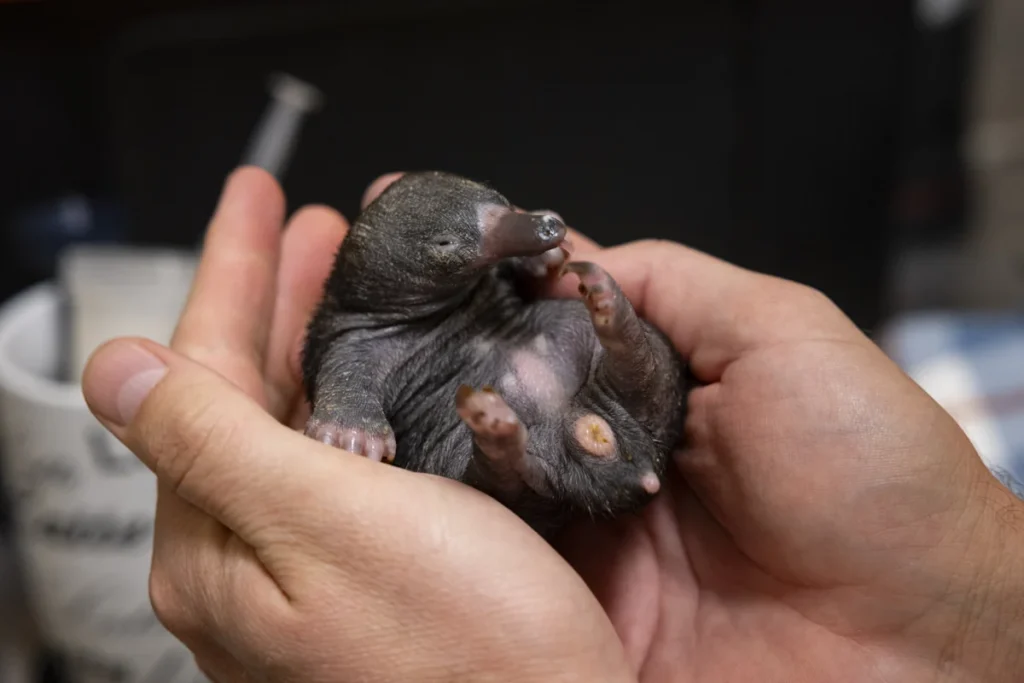
The San Diego Zoo Safari Park has announced a rare and biologically significant event with the birth of twin short-beaked echidnas, marking a major milestone for the institution’s wildlife care and veterinary teams. Kathryn, a resident short-beaked echidna (Tachyglossus aculeatus), successfully produced two offspring, known as puggles, during a single breeding season. While one puggle remains under the care of its mother in a naturalistic nursery burrow, the second sibling has been transferred to the Harter Veterinary Medical Center for intensive hand-rearing after failing to meet critical weight gain milestones. This dual approach to neonatal care provides researchers and veterinarians with a unique opportunity to study the development of one of the world’s most elusive and evolutionarily distinct mammalian groups.
The Biological Significance of the Monotreme Birth
Echidnas, alongside the platypus, belong to the order Monotremata, a group of mammals characterized by the unique reproductive trait of laying eggs rather than giving birth to live young. Native to Australia and New Guinea, these "spiny anteaters" represent a lineage that diverged from the ancestors of placental mammals and marsupials approximately 166 million years ago. Because of their specialized biology, breeding echidnas in a zoological setting is notoriously difficult, making the arrival of twins a rare occurrence that draws international interest from the scientific community.
Unlike many other mammals that are born in a relatively advanced state of development—known as precocial species—echidnas are altricial. This means the young are born in an extremely underdeveloped state, requiring prolonged and intensive parental care to survive. At the time of hatching, an echidna puggle is roughly the size of a jellybean or half of a miniature marshmallow, lacking fur, spines, and functional sight. Their survival depends entirely on the mother’s ability to provide warmth and nutrient-rich milk, which is secreted through specialized mammary patches rather than traditional teats.
Chronology of Development: From Egg to Burrow
The reproductive cycle of the echidna is a marvel of biological adaptation. Following a successful mating, the female echidna develops what is known as a "pseudo-pouch." Unlike the permanent pouches found in marsupials like kangaroos, the echidna’s pouch is a temporary abdominal fold that forms specifically for the incubation of an egg and the early rearing of a puggle.
The timeline of development for Kathryn’s twins followed a precise natural sequence. After an internal gestation period, a single leathery egg is typically deposited into the pouch. For Kathryn, the production of two puggles in a single season represents a high level of reproductive success. The eggs hatch after approximately 10 days of incubation. Upon emerging, the puggles remain in the pseudo-pouch for about two months. During this phase, they are shielded from the environment while they begin the slow process of developing their iconic spines and thick fur.
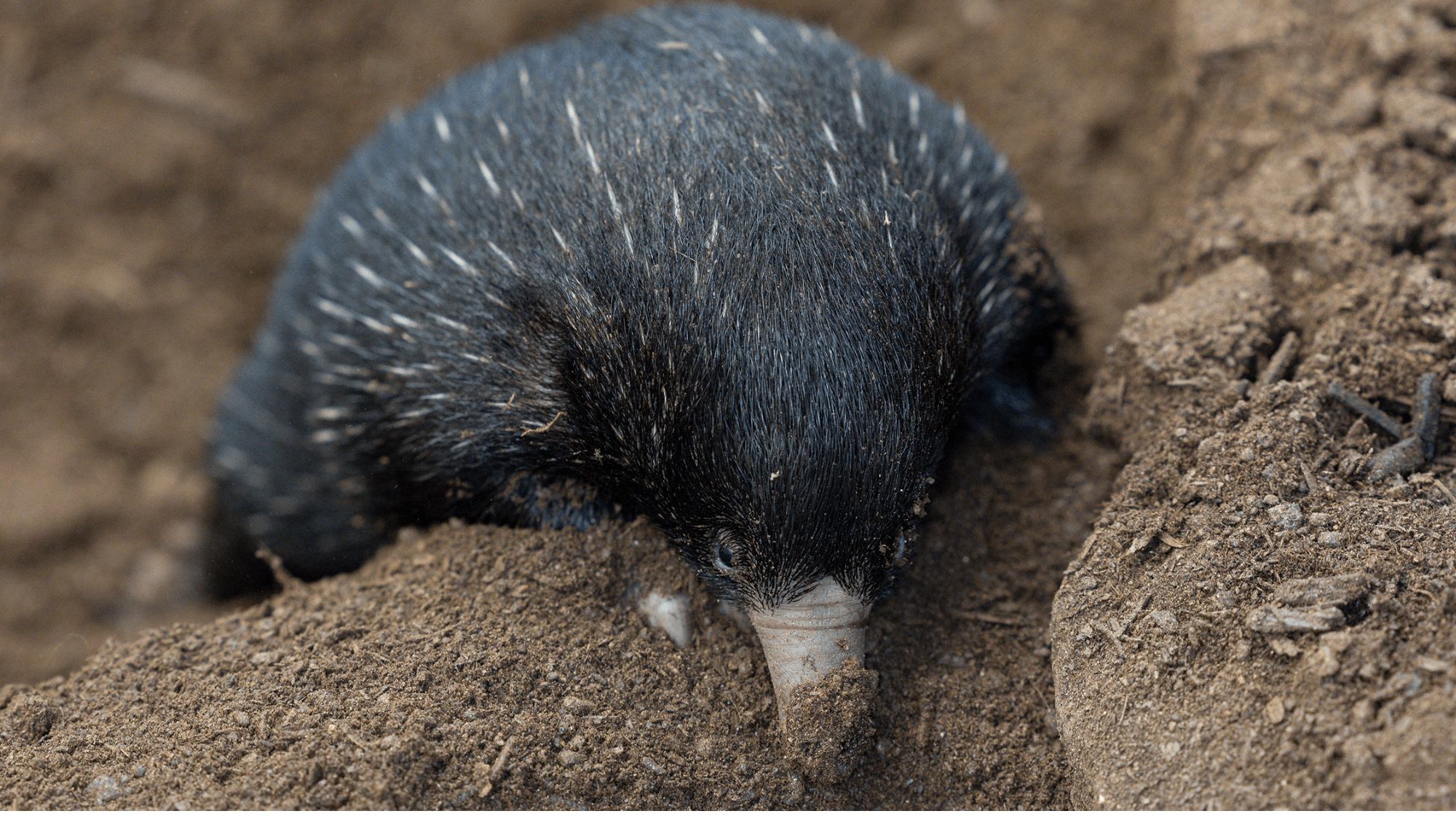
As the puggles grow too large or too "prickly" for the pouch, the mother transitions them to a nursery burrow. In the wild, and within the specialized habitats at the San Diego Zoo Safari Park, the mother echidna digs a deep burrow and places the puggles at the far end. She then engages in a behavior known as "backfilling," where she uses dirt to plug the entrance of the burrow, protecting the young from predators and temperature fluctuations. She returns to the burrow only once every few days to nurse the puggles, a strategy that requires the young to consume massive amounts of milk in a single sitting—sometimes up to 20% of their body weight.
Veterinary Intervention and the Challenges of Hand-Rearing
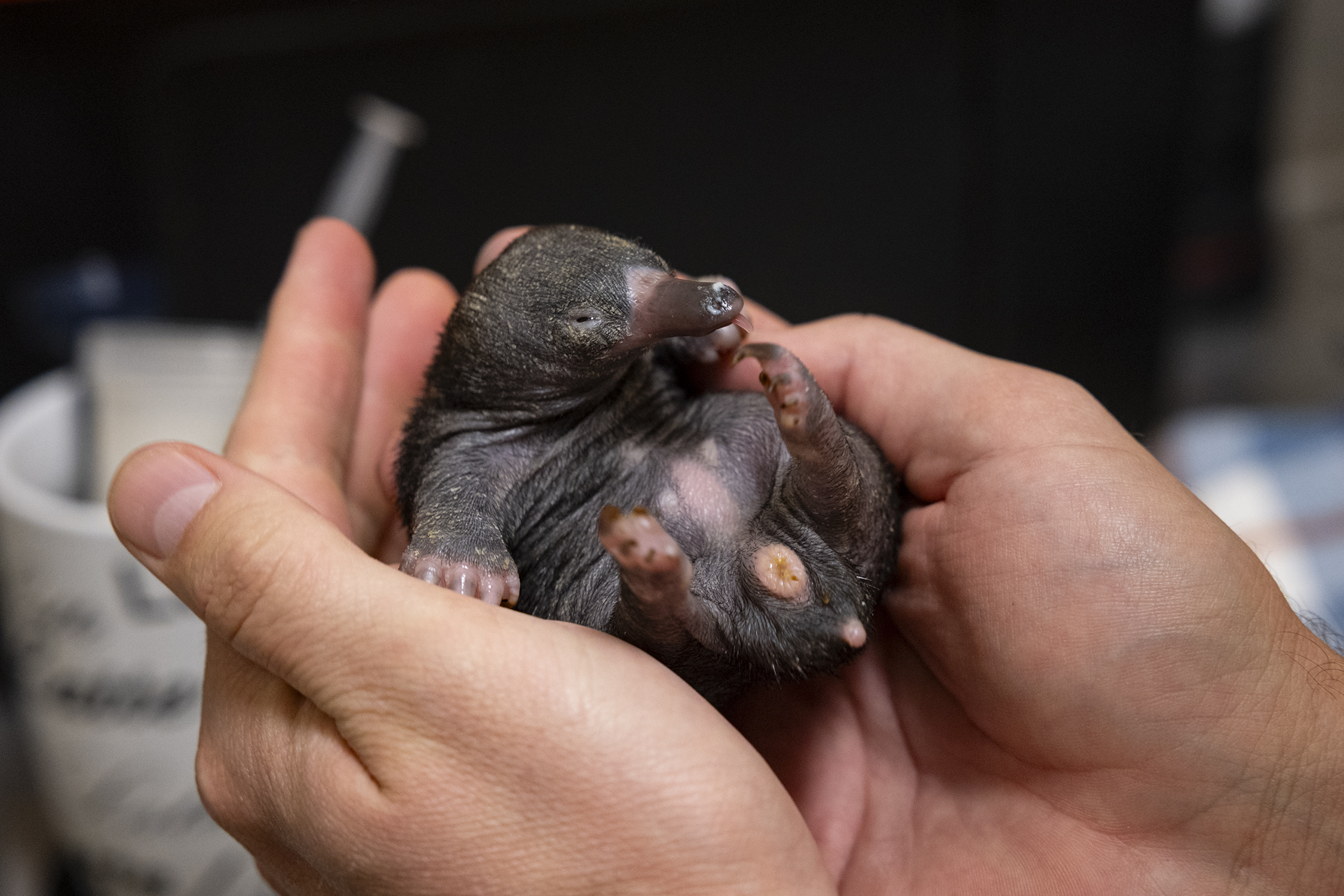
The decision to intervene in the rearing of one of the twins was made after wildlife care specialists noted a disparity in growth rates between the two siblings. In a species where the margin for error in neonatal development is razor-thin, the failure of one puggle to gain weight necessitated immediate medical action. The puggle was moved to the Harter Veterinary Medical Center, where a team of specialists began the arduous process of hand-rearing.
Hand-rearing a monotreme is one of the most complex tasks in veterinary medicine. Because so little is documented regarding the exact nutritional requirements and digestive rates of echidna puggles, the team at the Safari Park employed advanced diagnostic tools to monitor the infant’s health. Clinical veterinarians, including Anthony Cerreta, have utilized regular ultrasound examinations to view the puggle’s stomach in real-time. This allows the team to determine exactly how quickly the puggle is digesting its specialized formula, ensuring that feedings are timed to prevent gastrointestinal distress or malnutrition.
"The puggle that is being hand-reared is having daily checks by veterinarians and a minimum of twice-daily checks by wildlife care specialists," stated Anthony Cerreta, a San Diego Zoo Wildlife Alliance clinical veterinarian. Cerreta noted that the success rate for hand-rearing puggles of this age is historically low, necessitating a cautious and highly interventionist approach. The data gathered from this process—ranging from the caloric density of the formula to the frequency of gastric emptying—will likely contribute to global knowledge bases used by conservationists in Australia and beyond.

Supporting Data and Conservation Context
The short-beaked echidna is currently listed as a species of "Least Concern" by the International Union for Conservation of Nature (IUCN), largely due to its wide distribution across Australia and its ability to adapt to various climates. However, its cousins, the three species of long-beaked echidnas (genus Zaglossus) found in New Guinea, are all listed as Vulnerable or Critically Endangered.
The research conducted at the San Diego Zoo Safari Park serves as a critical "insurance policy" for these more threatened species. By mastering the husbandry and veterinary care of the short-beaked echidna, scientists can develop protocols that may one day be applied to save the Attenborough’s long-beaked echidna or the Western long-beaked echidna from extinction.
Data from the San Diego Zoo Wildlife Alliance highlights the following challenges facing echidna populations in the wild:
- Habitat Fragmentation: Agriculture and urban development in Australia have limited the range of individual echidnas, which are solitary and require large territories for foraging.
- Introduced Predators: While adult echidnas are protected by their spines, puggles in burrows are vulnerable to introduced species such as feral cats, foxes, and dogs.
- Climate Change: As ectothermic-leaning mammals with a low metabolic rate, echidnas are highly sensitive to extreme heat, which can lead to physiological stress and reduced reproductive output.
Institutional Response and Future Implications
The San Diego Zoo Wildlife Alliance has expressed a commitment to the continued monitoring of both puggles. While the sibling in the burrow is being raised naturally by Kathryn, the hand-reared puggle remains in a stable but guarded condition. The goal of the veterinary team is to eventually transition the hand-reared puggle back to a diet and environment that mirrors its natural history, with the hope that both siblings will eventually join the park’s ambassador population.
Lead wildlife care specialist Jennifer LeBeau emphasized the importance of public education in these efforts. By sharing the story of Kathryn and her twins, the park hopes to raise awareness about the unique evolutionary history of monotremes. "Understanding the nuances of the pseudo-pouch and the nursery burrow is vital for our mission," LeBeau noted.
The success of this breeding event also reinforces the San Diego Zoo Safari Park’s status as a premier facility for the study of rare species. The integration of advanced medical technology, such as the ultrasounds used at the Harter Veterinary Medical Center, with traditional husbandry represents the modern frontier of wildlife conservation.
As the puggles continue to grow, the next major milestone will be the emergence of the burrow-reared sibling. This typically occurs when the mother stops backfilling the entrance, signaling that the puggle is ready to begin exploring the outside world and foraging for its primary food sources: ants and termites. For the hand-reared sibling, the path to independence will be more controlled, involving a gradual introduction to solid foods and environmental enrichment designed to stimulate natural behaviors.
The birth of these twins is more than a local success story; it is a contribution to the global understanding of mammalian evolution. By successfully navigating the complexities of monotreme reproduction and neonatal care, the San Diego Zoo Wildlife Alliance provides a roadmap for the preservation of some of the most unusual and ancient creatures on Earth. Accomplishing this in the face of the inherent difficulties of altricial rearing underscores the vital role that modern zoos play in the intersection of science, medicine, and conservation.