

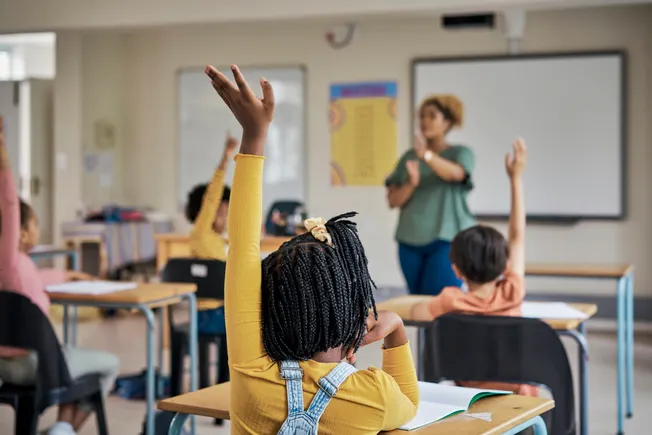
In the dynamic landscape of modern education, the seemingly simple act of asking a question has emerged as a sophisticated pedagogical tool. Far from being a mere conduit for information recall, educators are increasingly recognizing the power of well-crafted questions to ignite curiosity, foster critical thinking, and deepen student understanding. This nuanced approach, often referred to as Socratic questioning or guided inquiry, is not about providing answers but about skillfully navigating students toward their own discoveries. Experts emphasize that the art of questioning is a continuous practice, requiring thoughtful planning, real-time adaptation, and a keen awareness of student responses.
The Foundation of Effective Questioning
At its core, effective questioning serves as a bridge between a student’s existing knowledge and new concepts. David Lampert, an associate dean and associate senior instructional professor, articulated this principle, stating, "A great question is a connector between students’ prior knowledge and the new knowledge we want to engage them with." This connection is vital for making learning relevant and accessible. Lampert further elaborated on the intentionality behind question design: "Then it becomes a matter of aligning what our goals are in any particular segment of class with the questions we want to ask." This highlights the need for educators to have a clear pedagogical objective for each question posed, ensuring it serves a specific purpose in advancing the learning trajectory.
The strategic deployment of questions can also serve as a powerful motivational tool. By conveying a blend of excitement and curiosity, educators can transform passive learners into active participants. This approach aims to spark intrinsic motivation, encouraging students to engage with the material not because they have to, but because they are genuinely interested in finding the answers. The process fosters a sense of intellectual adventure, where the journey of discovery is as valued as the destination of knowledge acquisition.
Navigating the Nuances: Examples in Practice
The practical application of effective questioning was illustrated through a hypothetical scenario presented by Maren Berland, who has a background in science education. She envisioned a lesson on heat transfer where a teacher might ask students why jackets provide warmth. If a student offered a simplistic answer, such as "fuzzy jackets are warm," the teacher’s subsequent questions become crucial. Berland cautioned against responses that might dismiss the student’s contribution, such as simply asking, "What about jackets that have a harder outside?" While this acknowledges the student, it can subtly steer the conversation away from their initial idea.
Instead, Berland proposed a more constructive approach: "What about [fuzzy jackets] makes them warmer?" This question validates the student’s initial observation while prompting deeper analysis. A further refinement, which Berland deemed particularly powerful for fostering long-term engagement and reasoning, would be to encourage direct observation and connection: "Go look at your fuzzy jacket. Let’s think about what you see and what the cold air does when it hits your jacket." This prompts students to connect theoretical concepts to tangible experiences, thereby solidifying their understanding and encouraging them to develop their own explanatory frameworks. This method emphasizes student-centered inquiry, allowing them to build understanding from their own observations and reasoning processes.
The Teacher’s Delicate Dance
Educators often find themselves engaged in a constant, dynamic "dance" within the classroom. This metaphorical dance involves balancing the pre-planned curriculum with the emergent needs and interests of students. Berland described this as a moment-to-moment negotiation between guiding the conversation in a desired direction and adapting to the natural flow of student thinking. The ability to pivot and respond to student input without losing sight of the overall learning objectives is a hallmark of experienced teaching.
A key strategy in this dynamic is to create space for students to challenge each other’s ideas. Berland observed that, particularly in science education, "if you let the kids talk enough, they will challenge each other’s ideas well." This peer-to-peer discourse can be more effective than direct teacher intervention, as it encourages students to articulate their reasoning, defend their perspectives, and learn from their classmates’ viewpoints. This process opens up intellectual avenues without the teacher needing to explicitly direct the conversation, fostering a more organic and student-driven learning environment.
The Importance of Reflection and Adaptation
The effectiveness of questioning is not a static phenomenon; it requires ongoing evaluation and refinement. Lampert stressed the importance of educators keeping a record of the questions they ask and reflecting on student responses. This self-assessment allows teachers to gauge the impact of their questions from both an assessment and motivational standpoint. "Pay attention to how students are responding, both from an assessment perspective but also from a motivational perspective," he advised.
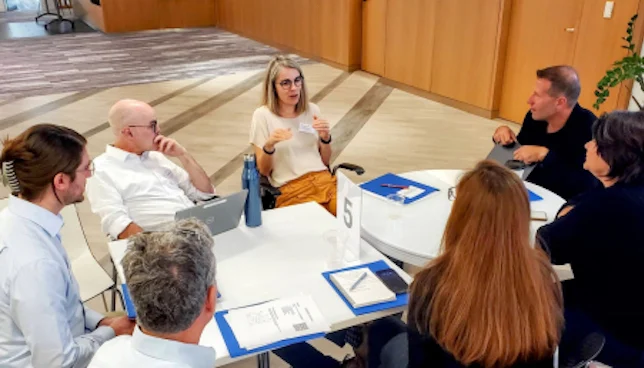
Furthermore, he highlighted the value of external perspectives: "It’s helpful to have colleagues observing, and feed that back to us as another set of eyes in the room." This collaborative approach to professional development can provide invaluable insights into teaching practices and identify areas for improvement that might otherwise go unnoticed. By incorporating feedback from peers, educators can gain a more comprehensive understanding of their classroom dynamics and the impact of their pedagogical choices.
Strategic Questioning for Diverse Goals
The nature of the questions posed must also be aligned with the specific learning goals of a particular lesson or unit. Lampert acknowledged that "Figuring out the precise question to ask at any given moment can be tricky, depends upon the specific goal and requires thoughtfulness." This underscores the cognitive effort involved in effective questioning. He further emphasized the importance of sequencing: "Especially if discussion and interaction are an important part of class, we care about not only the specific questions but also how those are sequenced over the class period, and how we adapt based." This suggests that a series of well-ordered questions, building upon each other, can be more impactful than isolated queries.
In some instances, a pedagogical approach that involves making a claim or assertion and then inviting student responses can be highly effective. Lampert suggested that after posing such a prompt, educators should provide ample time for students to process and formulate their thoughts. Strategies like "free writing, discuss with a partner or in small groups, and then debrief" can be incorporated to ensure students have dedicated "processing time to generate their thoughts." This structured approach ensures that students have the opportunity to engage deeply with the material and develop well-considered responses.
Berland echoed the sentiment that the ideal question is context-dependent. She noted that if an upcoming test is a significant factor, the discussion might be more narrowly focused. However, in such cases, she recommended that educators "telegraph that the next day’s discussion will be more Socratic." This proactive communication helps students understand the expectations and prepare themselves accordingly. "Telling the kids what you will be looking for helps them frame it," she explained. "It also helps you, the teacher, remember what your focus is." This transparency not only benefits students but also serves as a valuable self-regulation tool for the educator, ensuring alignment between pedagogical intent and classroom practice.
Broader Implications for Educational Practice
The insights shared by Lampert and Berland point towards a broader shift in educational philosophy. The emphasis is moving away from a teacher-centric model of knowledge dissemination towards a student-centered approach that cultivates intellectual curiosity and independent thinking. This evolution is supported by research in cognitive psychology and learning sciences, which consistently highlight the benefits of active learning and student engagement. For instance, studies by the National Research Council have emphasized the importance of fostering "productive struggle" in learning, where students grapple with challenging concepts, with the teacher providing guidance and support. The art of questioning is a critical component of facilitating this productive struggle.
The implications of mastering this art extend beyond individual classroom interactions. A generation of students who are adept at asking questions, critically evaluating information, and constructing their own understanding is better equipped to navigate the complexities of the 21st century. They will be more adaptable, innovative, and engaged citizens, capable of tackling novel problems and contributing meaningfully to society. As the educational landscape continues to evolve, the deliberate and skillful use of questioning will undoubtedly remain a cornerstone of effective pedagogy, empowering both educators and students in the pursuit of knowledge and understanding. The ongoing dialogue and professional development surrounding these strategies are crucial for ensuring that educators are equipped with the tools to foster these vital skills in their students.