


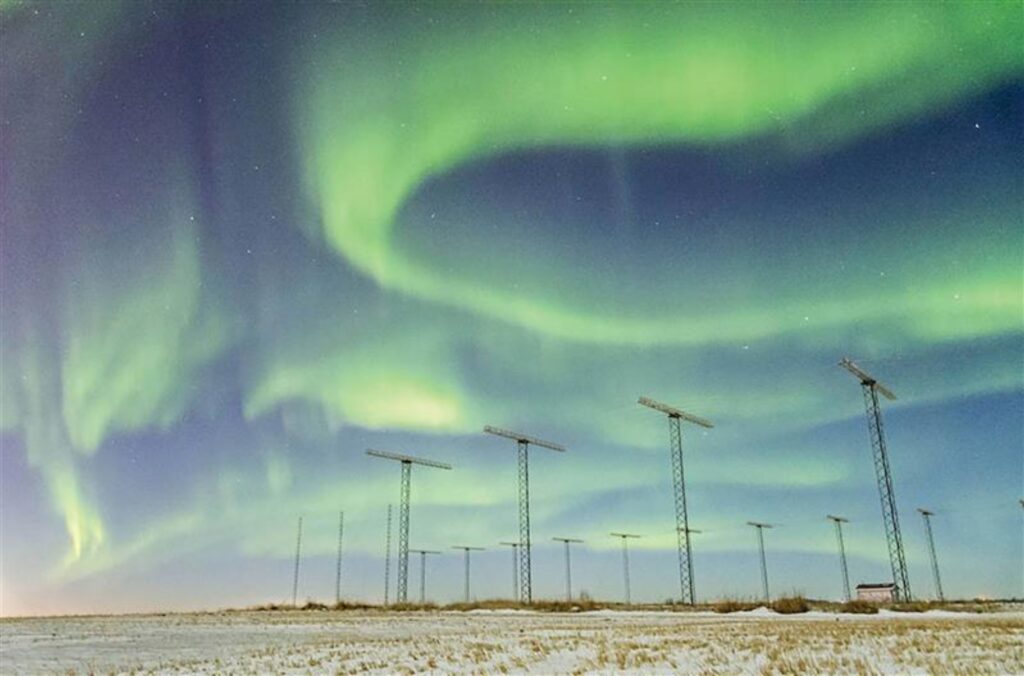
The ethereal dance of the northern lights, painting the Arctic night sky in vibrant ribbons of green, purple, and red, is a phenomenon of breathtaking beauty. Yet, beneath this celestial spectacle lies a growing challenge for Canada’s national security. These dazzling auroral displays, while captivating, can significantly interfere with the radar systems crucial for monitoring air traffic in the vast polar region, a concern amplified by escalating geopolitical tensions.
Escalating Geopolitical Stakes in the Arctic
The strategic importance of the Arctic has surged in recent years, driven by a confluence of factors including climate change, increased accessibility, and the region’s untapped resource potential. Following its invasion of Ukraine in 2022, Russia has demonstrably increased its military presence and assertiveness in the High North, turning its strategic gaze towards the North Pole. While China does not hold Arctic nation status, it is actively expanding its influence, expressing keen interest in the region’s mineral wealth and potential for new shipping routes. Adding to this complex geopolitical landscape, past actions by the United States under the Trump administration, which openly questioned the sovereignty of Canada and Greenland, have strained bilateral relations, leaving Canada to reassess its traditional reliance on its southern neighbour for Arctic defence. This shifting global dynamic underscores the urgency for Canada to bolster its own capabilities and understanding of its northern frontier.
University of Saskatchewan Researchers Address Radar Interference
Amidst these growing security concerns, researchers at the University of Saskatchewan (USask) are making significant contributions to enhancing Canada’s defence capabilities. Scientists Glenn Hussey and Daniel Billett have garnered the attention of Defence Research and Development Canada (DRDC), a federal agency dedicated to advancing national security technologies. Their work focuses on mitigating the disruptive effects of the aurora borealis on radar systems.
“As Canadians, we want to look to the North since people we don’t necessarily trust could be sending planes over the poles towards us,” states Dr. Glenn Hussey, a professor in the faculty of physics and engineering physics at USask. “Obviously, that’s a huge worry.”
The northern lights manifest as “noise” on radar screens, obscuring the distinct signatures of aircraft. For defence officials, the critical risk is that an aircraft’s signal can be lost within a powerful auroral event, effectively rendering its presence invisible. “The military wants to get rid of the atmospheric interference in their data so that they can see where the planes are going,” explains Dr. Daniel Billett, an assistant professor in the same faculty.
SuperDARN: Enhancing Over-the-Horizon Radar Capabilities
A key aspect of their research involves improving the detection of aircraft operating at thousands of kilometres. Standard line-of-sight radars are limited by the Earth’s curvature, typically detecting objects within a range of approximately 200 kilometres. To overcome this limitation, the USask researchers are involved with the SuperDARN (Dual Auroral Radar Network) project. This initiative utilizes high-frequency radio waves that refract in the Earth’s upper atmosphere, enabling “over-the-horizon” radar capabilities. The scientists are developing sophisticated tools to filter radar data, thereby improving the identification of aircraft amidst auroral interference.
“We are helping the military to identify aurora or northern lights radar signatures, which are ‘noise’ to their objective of detecting aircraft,” Dr. Hussey notes. While their research is of keen interest to national defence, the group currently does not have a formal contract with the Canadian military.
A National Effort to Strengthen Arctic Sovereignty
USask’s contributions are part of a broader national effort involving universities across Canada. As threats in the Arctic escalate, Canadian academic institutions are playing a vital role in enhancing national defences, fostering economic development, and improving the quality of life for northern residents.
Gabriel Miller, president and CEO of Universities Canada, emphasizes this crucial role: “Universities are central to strengthening Canada’s defence capability. We have a vital role to play, from developing vaccines that protect troops and civilians during global outbreaks, to advancing clean-energy technologies that reduce military supply-chain risk, to supporting Arctic communities that anchor our sovereignty in the North.”
The Vastness and Challenges of the Canadian Arctic
The sheer scale of the Canadian Arctic presents significant logistical and operational challenges. Spanning over four million square kilometres of land, water, and ice, it is a region characterized by sparse population, with approximately 132,000 residents according to the 2021 census, three-quarters of whom are Indigenous. The majority of military and search-and-rescue resources are stationed thousands of kilometres to the south. Navigational hazards, including icebergs and melting glaciers, further complicate maritime operations in the Arctic Ocean, while the extreme climate—characterized by prolonged sub-zero temperatures and vast expanses of snow—renders the landscape formidable.
Canada’s Renewed Focus on Northern Defence
Despite these challenges, Canada’s military resources in the North are being strategically re-evaluated. Following years of underinvestment, protecting Canada’s Arctic sovereignty has re-emerged as a national priority. The federal government’s recently published Defence Industrial Strategy outlines an ambitious target of increasing defence research by 85 percent and establishes a Science and Research Defence Advisory Council.
Robert Asselin, CEO of U15 Canada, stated in a press release that the new strategy “makes it clear that leading research universities can help Canada respond [to geopolitical risk] by driving innovation and securing sovereign capabilities here in Canada.”
In the fall budget, Prime Minister Mark Carney committed to investing five percent of the gross national product in defence by 2035. This investment extends beyond traditional military hardware, with a portion designated for the research, development, and commercialization of dual-use technologies. “A portion of these funds will be used to support the research, development and commercialization of dual-use, civilian-military technologies,” confirmed Kened Sadiku, a spokesperson for the Department of National Defence. “These include a range of industries, such as aerospace, cybersecurity, quantum and artificial intelligence.”
Dual-Use Technologies and Comprehensive Arctic Research
The concept of “dual-use” is particularly relevant in the Arctic context. Transportation infrastructure, such as airports, serves both civilian populations and military operations. Drones can be employed for scientific research and military surveillance. Similarly, research into thawing permafrost, driven by climate change, benefits both civilian construction projects and military infrastructure development.
Organizations like ArcticNet, based at Université Laval, are championing a holistic approach to Arctic research. With 176 researchers from 40 Canadian universities, ArcticNet encompasses diverse expertise, including biologists, food security experts, geographers, and scientists specializing in the melting of sea ice and glaciers.
“Every complex problem needs a diverse range of expertise,” says ArcticNet’s scientific director, Philippe Archambault. “Changes to the sea ice have an impact on certain species and the people who hunt them in order to live. This jeopardizes their traditional way of living.” He stresses the importance of integrating the priorities of Arctic residents into research efforts.
The Human Dimension of Arctic Security
The critical need to address the well-being of Arctic communities is a consistent theme. Lori Idlout, the Member of Parliament for Nunavut, has repeatedly highlighted this in the House of Commons, stating, “Parliament must look beyond megaprojects in the South. Decades of chronic under-investment means northerners are in overcrowded housing, with limited health services and aging infrastructure. This reality creates security threats. The Arctic cannot be secure if the people who live there are not.”
The Canadian Rangers, a group of reservists with intimate knowledge of the North, often comprised of Indigenous individuals, serve as the military’s eyes and ears. Their effectiveness hinges on the health and economic vibrancy of their communities. Michael Byers, Canada Research Chair in Global Politics and International Law at UBC and an expert on Canadian Arctic sovereignty, points to significant human challenges in the North, including a suicide rate in Nunavut approximately seven times higher than in southern Canada and a persistent threat of tuberculosis due to overcrowded housing and inadequate healthcare.
Dr. Byers argues that improving living conditions and employment opportunities in the Arctic is fundamental to Canadian sovereignty. “If we’re spending all our money on military hardware it would be a huge mistake. When the world looks at the Canadian Arctic and sees healthy communities it will recognize that Canada is taking its Arctic sovereignty responsibilities seriously.” He suggests that Canadian university experts can learn from other Arctic nations like Norway, which adopts a comprehensive approach to northern defence, integrating military strength with economic stability, research, infrastructure, and healthcare.
Navigating Arctic Challenges: From Radar to Ships and Permafrost
The challenges in the Arctic are multifaceted. Russia and China’s actions, while not necessarily indicative of territorial aspirations in the Canadian Arctic according to Dr. Byers, warrant vigilance. Russia’s ongoing actions in Ukraine and broader destabilizing activities, such as alleged espionage and sabotage, underscore the need for robust surveillance. Canada’s three satellites provide crucial monitoring of Arctic waters, complemented by advanced surveillance technologies. However, concerns remain about the phasing out of ground-based navigation aids in favour of satellite GPS, given Russia’s demonstrated capability for jamming satellite signals. Ground-based systems offer a critical backup.
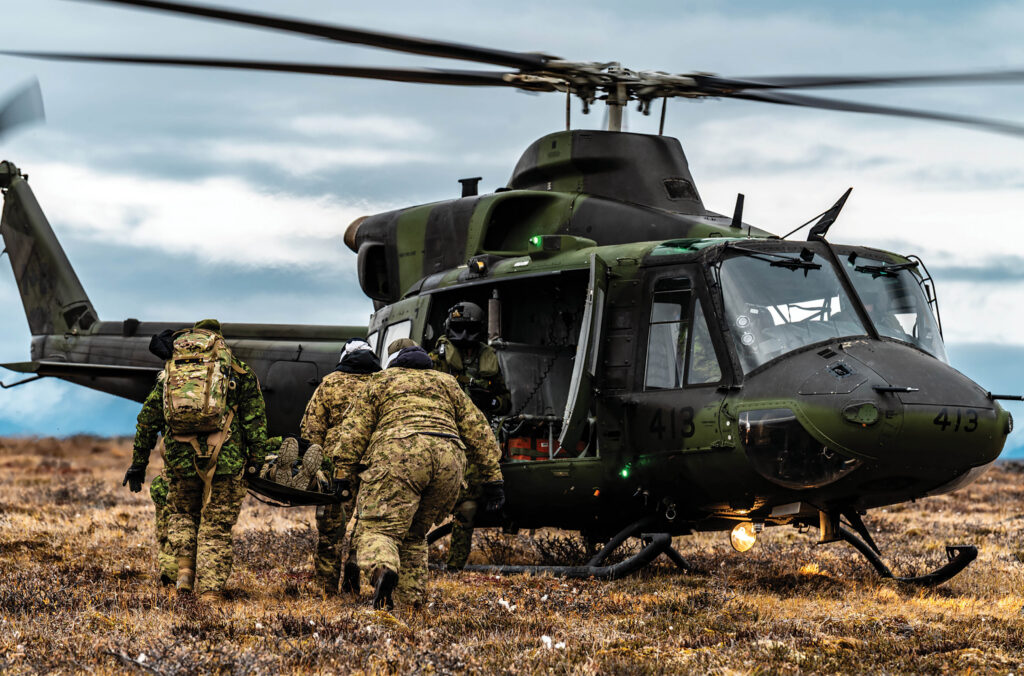
Maintaining shipping channels and providing search and rescue services are paramount responsibilities. The harsh Arctic environment poses risks to residents, researchers, and military personnel. Climate change exacerbates these challenges, with melting ice leading to the formation of hazardous icebergs. Canada’s need for icebreakers to maintain navigation lanes and facilitate search and rescue operations is increasingly evident.
At the University of Alberta, engineering researchers are developing specialized hull coatings for both civilian and military vessels to enhance durability and reduce friction, leading to fuel savings and a lower environmental impact. These projects are part of the University of Alberta’s Centre for Applied Research in Defence and Dual-use Technologies (CARDD-Tech), which also focuses on robotics, AI, quantum sensors, and advanced materials.
The Emergence of Inuit Nunangat University
A significant development poised to bolster Arctic expertise is the planned establishment of the Inuit Nunangat University, set to open its main campus in Arviat, Nunavut, by 2030. As the only Inuit-led university in Canada, it aims to expand with satellite campuses across the Inuit homeland. Spearheaded by Inuit Tapiriit Kanatami (ITK), this initiative has secured substantial funding from private donors and government contributions. ITK President Natan Obed views the university as a “beacon of Arctic innovation” that will strengthen Canada’s Arctic sovereignty by anchoring expertise and development within the region. He emphasizes that the Inuit of Inuit Nunangat must be central to Canada’s Arctic strategy, advocating for both defence investments and the cultivation of internal societal sustainability and pride.
The Evolving Landscape of Warfare: Drones and AI
The global proliferation of unmanned aerial systems (UAS), or drones, is transforming modern warfare, as evidenced by their extensive use in the conflict in Ukraine. Lieutenant-General Michael Wright, commander of Canada’s land forces, has stressed the need for the army to adapt, stating, “The army we have is not the army we need. I want to flood our forces with drones to give soldiers hands-on experience.”
Christian Leuprecht, a national security expert and professor at the Royal Military College (RMC) and Queen’s University, concurs, noting, “Whether warfare is in the air, on the ground or underwater, drones will play a vital role.” The rapid pace of technological advancement in drone technology necessitates a proactive approach. Canadian university researchers are positioned to play a crucial role in developing cutting-edge equipment, artificial intelligence, and related technologies.
Bridging Civilian and Military Research
A key challenge lies in effectively connecting civilian research with defence applications. Dr. Leuprecht points out that many university researchers have limited prior engagement with the Department of National Defence. “The need will be to take civilian research and apply it to defence.” He also cautions about the potential for foreign operatives to steal Canadian technology, citing past incidents involving scientists with alleged ties to China. “These are not just theoretical dangers. They are very concrete problems.”
The vastness and extreme conditions of the Arctic demand innovative, made-in-Canada solutions. Dr. Leuprecht highlights the strength of Canada’s research universities, but also the geographical disconnect between leading institutions in major cities and the military. This "network problem" can hinder collaboration.
Military Universities as Hubs for Defence Expertise
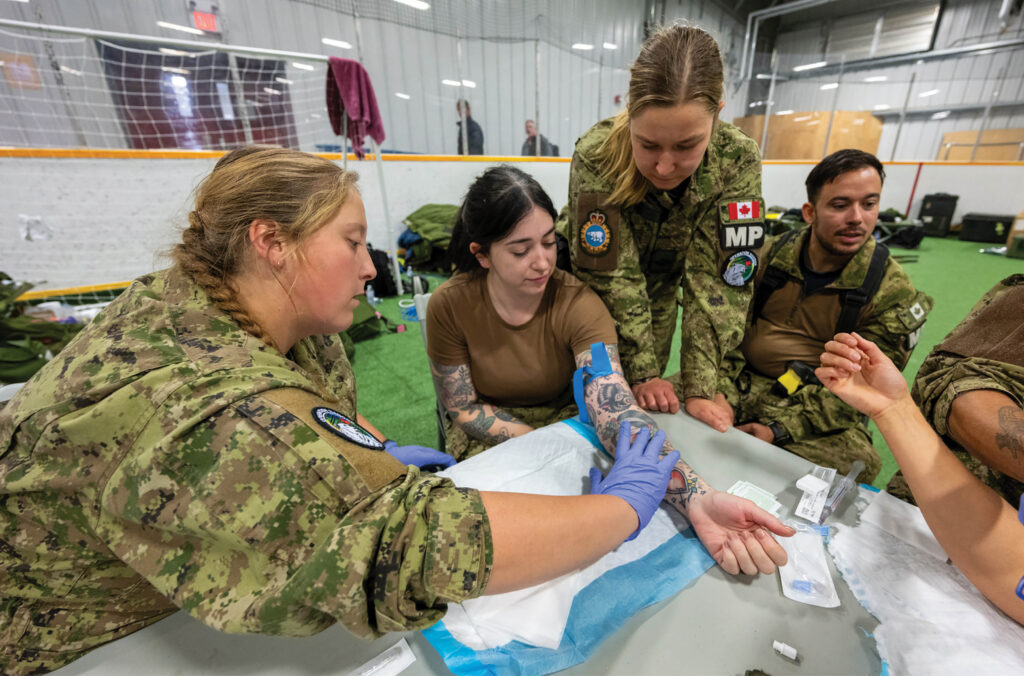
Canada’s military universities, the Royal Military College (RMC) in Kingston and the Royal Military College Saint-Jean (RMC Saint-Jean) in Quebec, are intrinsically linked to defence. These institutions serve as academic centres and training grounds for Canadian Armed Forces officers. RMC, celebrating its 150th anniversary, and RMC Saint-Jean are home to a significant concentration of university-based defence experts.
RMC Principal Jill Scott emphasized the need to “expand and accelerate this work. A strong defence and security enterprise requires investing in a brain trust and a talent pipeline of defence scientists for the future. In our current times, research security is paramount.”
Engineering Solutions for the Arctic Environment
Professors at RMC are tackling critical challenges related to Arctic transportation and infrastructure. Climate change is causing permafrost thaw, threatening vital infrastructure like airport runways and railways, and shortening the season for ice-road trucking. Ryley Beddoe, Canada Research Chair in Permafrost Engineering, and Greg Siemens, a professor in civil engineering, are researching dual-use infrastructure solutions.
Their work includes addressing the aging railway to Churchill, Manitoba, which is susceptible to climate change impacts like sinkholes. They are also developing innovative solutions for the Inuvik-Tuktoyaktuk Highway, including a system that functions like a subterranean freezer to prevent permafrost thaw beneath bridge foundations, thereby preserving the integrity of the infrastructure. This passive cooling system requires no external energy input.
These professors are also educating RMC students and Canadian Armed Forces members on operating in permafrost-affected regions, preparing future military officers for the unique engineering challenges of the Arctic.
Collaborative Approaches to Arctic Sovereignty
Collaboration with Indigenous communities—Inuit, First Nations, and Métis—is deemed essential for addressing defence-related issues and solving complex problems in the Arctic. Dr. Archambault of ArcticNet advocates for increased “flag-waving,” encouraging Canadians to be proud of their nation’s Arctic stewardship and its collaborative approach with Indigenous peoples in research and development.
As Canada navigates the complexities of its northern frontier, the synergy between academic research, technological innovation, and the deep-seated knowledge of Arctic residents is proving to be a cornerstone of its evolving national security strategy. The dazzling northern lights, once merely a natural wonder, now serve as a poignant reminder of the strategic significance of the Arctic and the critical need for Canada to maintain a vigilant and technologically advanced presence in this vital region.