



The Jevons Paradox, a 19th-century economic theory, has experienced a resurgence in public discourse, particularly as society grapples with the profound implications of artificial intelligence (AI). This paradox, named after the influential neoclassical economist William Stanley Jevons, posits a counterintuitive observation: increasing the efficiency with which a resource is used can paradoxically lead to an increase, rather than a decrease, in its overall consumption. While often invoked to calm fears of widespread job displacement due to AI, its lesser-discussed "dark side" warns of significant and often unforeseen negative consequences arising from this surge in demand. Understanding this complex economic principle is crucial for navigating the technological and societal shifts on the horizon.
The Genesis of a Counterintuitive Theory: William Stanley Jevons and "The Coal Question"
The Jevons Paradox was first articulated by William Stanley Jevons in his seminal 1865 work, The Coal Question: An Inquiry Concerning the Progress of the Nation, and the Probable Exhaustion of Our Coal-Mines. Born in Liverpool, England, in 1835, Jevons was a polymath whose contributions spanned economics, logic, and scientific methodology. He was a pioneer in the application of mathematical methods to economic theory and is considered one of the founders of the marginal revolution in economics, alongside Carl Menger and Léon Walras. His work laid much of the groundwork for neoclassical economics, emphasizing utility, marginality, and equilibrium.
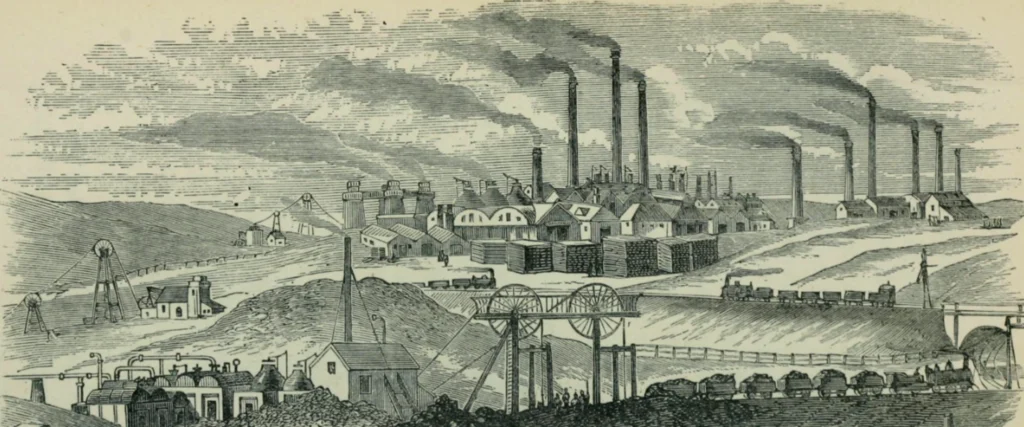
The mid-19th century in Britain was a period of unprecedented industrial expansion, fueled primarily by coal. As the engine of the Industrial Revolution, coal powered factories, railways, and an increasingly urbanized society. However, this rapid growth also ignited fears of resource depletion. Prominent voices raised concerns that Britain’s finite coal reserves would soon be exhausted, threatening the nation’s economic supremacy. It was against this backdrop that Jevons meticulously analyzed the relationship between coal consumption and technological efficiency.
Jevons observed that advancements in steam engine technology, such as those pioneered by James Watt and later improved upon by engineers like Richard Trevithick and George Stephenson, were making engines significantly more fuel-efficient. These innovations meant that less coal was required to generate the same amount of power. Conventional wisdom might suggest that such efficiency gains would lead to a reduction in overall coal consumption, thereby conserving reserves. However, Jevons argued precisely the opposite. He posited that as steam engines became more efficient and thus cheaper to operate, the cost of steam power decreased. This reduction in cost would, in turn, make steam power economically viable for a wider range of applications, stimulating demand across various industries. Factories could expand operations, new industries reliant on steam power could emerge, and transportation networks could proliferate. The net effect, Jevons predicted, would be an increase in the total amount of coal burned, not a decrease.
Historical Validation and Broader Implications
Jevons’s prediction proved remarkably accurate for its time. While England did not face an immediate coal shortage, largely due to advancements in mining techniques and the discovery of new seams, the overall consumption of coal skyrocketed in the decades following his publication. Data from the era confirms this trend: from 1860 to 1900, coal production and consumption in the United Kingdom more than doubled, even as the efficiency of coal-fired technologies steadily improved. The industrial landscape transformed, driven by ever-cheaper and more accessible energy. This historical precedent firmly established the Jevons Paradox as a powerful explanatory framework for understanding the complex interplay between efficiency and resource demand.
Beyond coal, the Jevons Paradox has been observed in various contexts throughout history. For instance, improvements in automobile fuel efficiency, while reducing the amount of gasoline needed per mile, have often contributed to increased driving distances and the proliferation of larger vehicles, leading to higher overall fuel consumption. Similarly, advancements in water-saving technologies in agriculture and residential use, in some regions, have led to more extensive irrigation or increased household water use, rather than a net reduction in water demand, especially where water pricing does not reflect scarcity. These historical patterns underscore the robust nature of the paradox and its broad applicability across different resources and technological innovations.
AI and the Modern Revival of the Jevons Paradox: Jobs and Economic Transformation
The contemporary relevance of the Jevons Paradox is most acutely felt in discussions surrounding the impact of artificial intelligence on the global labor market. The rapid advancements in generative AI, large language models, and automation tools have sparked widespread anxiety about the future of work. Many fear that AI will make human workers so incredibly efficient that it will lead to massive job displacement. The common refrain is, "If one AI-powered programmer can now accomplish the work of five human programmers, then companies will logically downsize their programming teams by 80%." This perspective predicts a significant contraction of the labor market, leading to widespread unemployment and economic disruption.
However, proponents of the Jevons Paradox offer a compelling counter-narrative. They argue that if AI indeed makes certain types of workers dramatically more efficient, the output of their labor will become significantly cheaper. This reduction in the effective cost of services, enabled by AI, could trigger an explosion in demand that far outweighs the initial efficiency gains. Continuing with the programmer example: if the cost of creating software plummets because AI tools allow a single programmer to be five times more productive, then the effective cost of developing applications and tools becomes accessible to a much broader market. Small businesses, non-profits, individual entrepreneurs, and even entirely new categories of organizations that previously couldn’t afford custom software development would now find it economically feasible. This surge in demand for bespoke applications, specialized AI integrations, and new digital services could create entirely new industries and roles, absorbing and potentially exceeding the number of jobs initially made redundant by automation.
Economists and technology leaders are currently divided on which scenario is more likely to unfold. Reports from institutions like McKinsey & Company and the World Economic Forum consistently highlight a dual trend: while some jobs are highly susceptible to automation, new jobs requiring different skill sets are also emerging. The World Economic Forum’s "Future of Jobs Report 2023" indicated that while AI and automation might displace 83 million jobs globally by 2027, they could also create 69 million new ones, suggesting a significant churn rather than outright contraction. Many economists, echoing Jevons’s logic, suggest that historical precedents of technological revolutions (e.g., the agricultural revolution, the industrial revolution, the internet age) have ultimately led to net job creation, albeit with significant shifts in the nature of work. The key lies in the elasticity of demand for the newly efficient services and the innovation capacity of economies to create entirely new applications and markets.
The Dark Side Unveiled: Unintended Consequences of Efficiency
While the prospect of AI leading to job expansion rather than contraction is cautiously optimistic, the Jevons Paradox carries a crucial caveat: the "dark side." This aspect of the paradox warns that suddenly increasing demand for a resource, even if driven by efficiency, can generate unexpected and often negative side effects. These externalities can manifest in environmental degradation, social pressures, and the erosion of well-being, challenging the simplistic notion that efficiency is always inherently good.
Environmental Degradation: A Legacy of the Industrial Age
The most immediate and historically impactful "dark side" of the Jevons Paradox is its environmental toll. Jevons’s own observations on coal consumption offer a stark illustration. The relentless drive for more efficient steam engines, which made coal power cheaper and more accessible, led to an unprecedented increase in coal burning. This surge in industrial activity had profound environmental consequences. Victorian cities like London became synonymous with "pea-souper" fogs, a toxic blend of coal smoke and natural mist, leading to widespread respiratory illnesses and premature deaths. More broadly, the exponential increase in fossil fuel combustion marked the smoky dawn of the era of human-driven climate change. The accumulation of greenhouse gases from industrial emissions, largely fueled by the very efficiency gains Jevons observed, set humanity on a path toward global warming, a crisis whose full ramifications are still unfolding today.
In the contemporary context, the Jevons Paradox extends to the energy demands of the digital age itself. While computing hardware becomes more energy-efficient, the sheer scale of digital activity—from streaming high-definition content to processing vast datasets for AI training—leads to a dramatic increase in overall energy consumption. Data centers, the physical infrastructure of the internet, are massive energy consumers, and their footprint continues to grow exponentially. Even as individual servers become more efficient, the increasing demand for cloud computing, AI inference, and big data analytics means that overall energy usage for these operations is rising, presenting a significant environmental challenge that mirrors Jevons’s original coal dilemma.
The Paradox of Digital Communication: Efficiency Leading to Overload
Another compelling example of the Jevons Paradox’s dark side, particularly relevant to knowledge work, is the advent and proliferation of digital communication tools. The early promises of email, instant messaging platforms like Slack, and video conferencing solutions like Zoom were clear: to make communication more efficient, faster, and more accessible. These tools eliminated geographical barriers, reduced the need for physical meetings, and enabled rapid information exchange, seemingly boosting productivity.
However, the reality has proven to be far more complicated. By making communication incredibly efficient and virtually cost-free, these tools triggered an explosion in the demand for interaction. The ease of sending an email or a Slack message led to an expectation of constant availability and immediate responses. This shift has culminated in what many observers describe as a state of "communication madness." Research from Microsoft’s Work Trend Index and other studies consistently reveal that the average knowledge worker is now interrupted, on average, once every two minutes. These interruptions come in the form of notifications, pings, emails, and meeting requests, fragmenting attention and making sustained deep work increasingly difficult.
The constant barrage of digital communication creates significant cognitive load, diminishes focus, and contributes to burnout. Instead of saving time, many workers find themselves spending an inordinate amount of their day managing their inboxes and responding to notifications, often outside traditional working hours. This unintended consequence of efficiency—a pervasive culture of distraction and digital overwhelm—illustrates how a technology designed to make work smoother can, ironically, make it more demanding and less fulfilling. The insights from works like Cal Newport’s "A World Without Email" extensively document this descent into communication chaos and its detrimental effects on individual productivity and organizational effectiveness.
Potential Dark Sides in the AI Era
Looking ahead, if the Jevons Paradox holds for AI and jobs, we must remain vigilant about potential new "dark sides."
- Data Overload and Algorithmic Saturation: If AI makes information analysis incredibly efficient, leading to an explosion of data generation and insights, humanity might face an unprecedented level of informational noise. The challenge would shift from finding information to discerning actionable wisdom amidst an overwhelming deluge of AI-generated content and analyses, potentially leading to decision fatigue or paralysis.
- Amplification of Bias and Misinformation: As AI-driven efficiency leads to widespread adoption, any inherent biases present in the training data or algorithms could be amplified across society at an unprecedented scale. Similarly, the efficient generation of hyper-realistic deepfakes and sophisticated misinformation campaigns could overwhelm our ability to discern truth, corroding trust and societal cohesion.
- Ethical Dilemmas at Scale: Increased efficiency in areas like surveillance, autonomous decision-making (e.g., in legal, medical, or military contexts), or even persuasive technologies could raise profound ethical questions. The ease and low cost of deploying such systems, driven by AI efficiency, might lead to their widespread implementation before society has fully grappled with their moral implications.
- The "AI Footprint" Paradox: While AI might make human tasks more efficient, the computational resources required to develop, train, and run advanced AI models are immense. The energy demands of AI data centers, particularly for powerful GPUs and specialized hardware, are growing rapidly. This could create a Jevons Paradox within AI itself: even if AI makes some processes more efficient, the overall energy consumption of the AI infrastructure could increase dramatically due to the sheer volume of AI applications and usage.
Navigating the Paradox: Vigilance, Policy, and Sustainable Innovation
The Jevons Paradox serves as a critical reminder that technological progress, particularly efficiency gains, is not a morally neutral or unambiguously positive force. While it can unlock unprecedented economic growth and improve human capabilities, it also carries the inherent risk of unforeseen negative consequences. As AI continues to reshape industries and societies, a nuanced understanding of this paradox is paramount.
To mitigate the "dark side," a multi-faceted approach is necessary:
- Proactive Foresight and Risk Assessment: Policymakers, technologists, and researchers must move beyond simply celebrating efficiency gains and proactively assess the potential for increased demand and negative externalities. This requires robust interdisciplinary research and scenario planning.
- Ethical AI Development and Governance: Implementing strong ethical guidelines, regulatory frameworks, and auditing mechanisms for AI systems can help address issues like bias, privacy, and accountability before they become systemic problems amplified by efficiency.
- Resource Management and Environmental Policy: For physical resources, the Jevons Paradox highlights the need for comprehensive resource management strategies that include pricing mechanisms reflecting true scarcity, robust environmental regulations, and investments in truly renewable and sustainable alternatives.
- Digital Well-being Initiatives: In the realm of knowledge work, fostering a culture that values deep work over constant connectivity, designing communication tools that respect human attention, and promoting digital literacy are crucial steps to counteract the "communication madness."
- Rethinking "Progress": Ultimately, the Jevons Paradox compels us to critically examine our definition of "progress." Is relentless efficiency always the primary goal, or should societal values such as environmental sustainability, human well-being, equity, and ethical considerations be given equal, if not greater, weight?
In conclusion, the Jevons Paradox offers a powerful lens through which to view the ongoing AI revolution. While it provides a hopeful counter-argument to fears of mass job displacement, suggesting that efficiency can stimulate demand and create new opportunities, it simultaneously issues a stark warning about the unintended and often detrimental consequences of unchecked growth fueled by efficiency. As humanity stands on the cusp of transformative technological change, embracing a holistic understanding of this paradox – acknowledging both its potential for good and its inherent risks – will be essential for steering innovation towards a truly beneficial and sustainable future.