



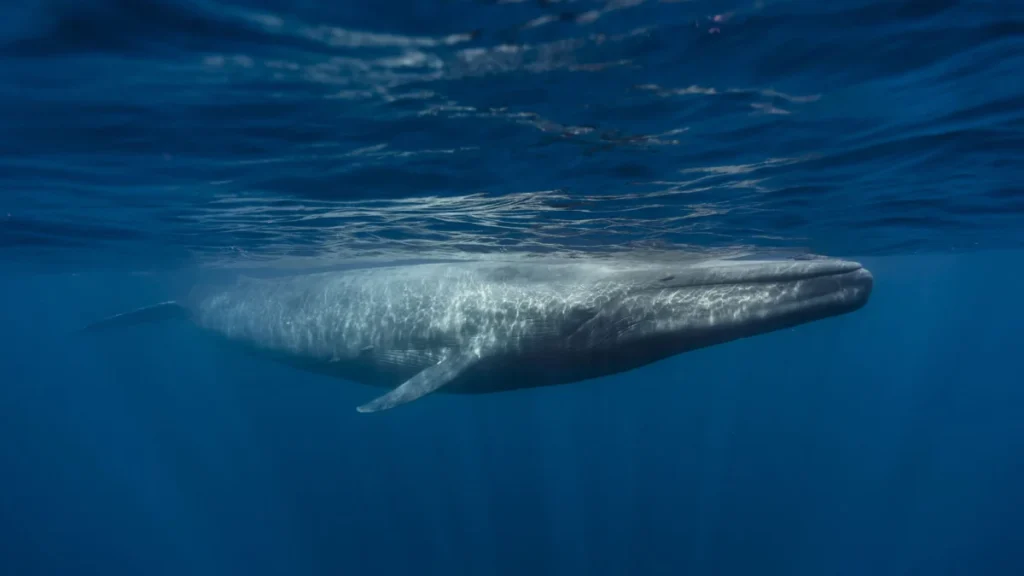
The sheer scale of the blue whale, Balaenoptera musculus, defies the standard biological expectations for mammalian life. To visualize the proportions of this marine titan, one must imagine the largest African bush elephant and multiply its mass by thirty. Reaching lengths of over 100 feet—comparable to a Boeing 737-700 commercial airliner—and weighing upwards of 330,000 pounds, the blue whale is not merely the largest animal alive today; it is the largest animal known to have ever existed in the history of the planet. Even the most massive prehistoric sauropods, such as the Argentinosaurus, are estimated to have reached roughly 75 to 90 tons, a figure that pales in comparison to the 150-ton average of a mature blue whale.
The existence of such a colossal organism is the result of a unique intersection between evolutionary biology, fluid mechanics, and global climate shifts. While land-dwelling mammals are strictly limited by the crushing force of gravity, the blue whale’s environment and specialized feeding strategies have allowed it to bypass traditional biological ceilings.
The Physical Constraints of Terrestrial Life vs. Aquatic Buoyancy
On land, the maximum size of a mammal is governed by the square-cube law: as an animal doubles in height, its surface area triples, but its volume and weight quadruple. This mathematical reality places an immense burden on the skeletal and cardiovascular systems. Large land mammals require exceptionally dense bone structures and massive, pillar-like limbs to prevent their own weight from collapsing their internal organs.
In the ocean, however, the medium of water provides buoyancy, which effectively counteracts the downward pull of gravity. This allows aquatic mammals to grow to sizes that would be physically impossible on land. Without the need to support their own weight against the earth, whales can allocate more energy toward growth and metabolic efficiency. However, buoyancy alone does not explain why blue whales specifically reached their current proportions. As researchers have noted, the transition to the water was not just a release from gravity, but an entry into a demanding thermal environment.
Dr. Craig McClain, a professor of biodiversity at the University of Louisiana at Lafayette, has conducted extensive research comparing nearly 7,000 living and fossilized species. His findings suggest that water acts as a selective pressure for larger body sizes in warm-blooded mammals. Because water conducts heat away from the body 25 times faster than air, small mammals struggle to maintain a stable internal temperature in the ocean. Larger bodies have a smaller surface-area-to-volume ratio, which is more efficient for heat retention.
McClain’s research highlights an "energetic sweet spot" where the income of calories comfortably exceeds the metabolic cost of maintaining a large body. For the blue whale, this sweet spot is pushed to the extreme.
Evolutionary Chronology: From Land-Dwellers to Marine Titans
The lineage of the blue whale is a remarkable testament to evolutionary adaptation. Approximately 50 million years ago, the ancestors of modern whales were small, four-legged land mammals. The Pakicetus, a wolf-sized ungulate, lived near the water’s edge and hunted in shallow marshes. Over millions of years, these creatures transitioned into fully aquatic life, with their limbs evolving into flippers and their nostrils migrating to the top of the head to become blowholes.
For the vast majority of their 40-million-year history in the ocean, whales remained relatively modest in size. Around 30 million years ago, the first baleen whales appeared, but they were typically no longer than 13 to 30 feet. The shift toward true gigantism is a relatively recent phenomenon in geological terms, occurring approximately 3 million years ago during the Pliocene and Pleistocene epochs.
This period was marked by a dramatic shift in global climate. As ice sheets began to cover the Northern Hemisphere, ocean circulation patterns changed. Stronger winds and seasonal cooling led to a process known as upwelling—the rising of cold, nutrient-rich water from the deep ocean to the surface. These nutrients fueled massive blooms of phytoplankton, which in turn supported vast swarms of krill.
"Blue whales did not just get big because they could," McClain explains. "They got big because the ocean started serving food in a way that rewarded giants." The sudden availability of concentrated, high-calorie food sources in specific coastal areas favored animals that could travel vast distances between feeding grounds and consume massive quantities of prey in a single instance.
The Biomechanics of Lunge Feeding
The primary engine behind the blue whale’s growth is its specialized feeding mechanism, known as lunge feeding. Unlike toothed whales that hunt individual prey, blue whales are filter feeders. They target dense swarms of krill—tiny, shrimp-like crustaceans that are approximately two inches long.
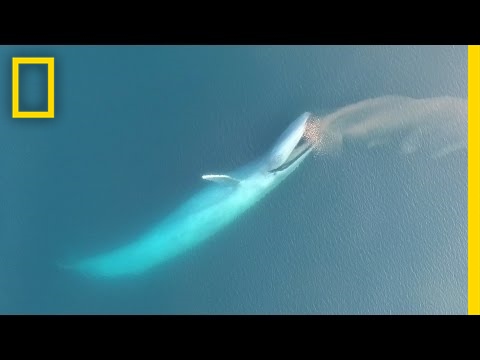
To maximize calorie intake, the blue whale has evolved a highly specialized anatomy. Its throat is lined with "ventral pleats"—deep folds of skin and blubber that stretch from the jaw to the navel. When a whale lunges at a swarm of krill, its mouth opens nearly 90 degrees, and the throat pouch balloons outward. In a single gulp, a blue whale can ingest up to 794 pounds of krill, which is roughly equivalent to the contents of 16 vending machines.
After the gulp, the whale uses its massive tongue to push the water out through baleen plates—comb-like structures made of keratin that trap the krill inside. This strategy is incredibly energy-intensive, requiring a massive burst of speed and the displacement of tons of water. However, the payoff is unparalleled.
Jeremy Goldbogen, a professor of oceans at Stanford University, utilized motion-recording sensors to analyze the energetics of these lunges. His data revealed that a single successful mouthful of krill can provide 200 times the energy the whale expended to capture it. This massive "return on investment" provides the surplus calories necessary to build and maintain a 150-ton frame.
Physiological Limits and the Biological Ceiling
Despite their current dominance, biological and physical laws suggest that blue whales are reaching the upper limit of what is possible for a mammal. A 2019 study that monitored the heart rate of a diving blue whale revealed the extreme physiological strain of gigantism.
During deep dives, a blue whale’s heart rate slows to a staggering two beats per minute to conserve oxygen. This is the absolute minimum required to maintain vital organ function. Conversely, when the whale surfaces to breathe, its heart rate accelerates to 37 beats per minute, which researchers believe is near the physical limit for a heart of that size. The heart itself is a marvel of biological engineering, weighing approximately 400 pounds and measuring the size of a small golf cart.
Furthermore, the "cost of living" for a giant is high. While their size allows them to store massive amounts of fat for long-distance migrations, it also means they require a consistent, high-density food supply. If the concentration of krill in the ocean were to drop below a certain threshold, the energy required for a blue whale to lunge and feed would exceed the energy gained from the meal, leading to metabolic failure.
Broader Implications and Conservation in a Changing Climate
The history of the blue whale is intrinsically tied to the health of the ocean’s "conveyor belt" of nutrients. Because their gigantism was triggered by specific climatic shifts that created concentrated food sources, they are uniquely vulnerable to modern climate change.
As ocean temperatures rise, the patterns of upwelling that create krill swarms are being disrupted. If krill become more dispersed, the blue whale’s lunge-feeding strategy becomes less efficient. This has significant implications for the species’ survival, as they require massive, localized "buffets" to survive their 5,000-mile migrations between feeding and breeding grounds.
From a journalistic and scientific perspective, the blue whale serves as a biological indicator of oceanic productivity. Their massive size is not merely a curiosity of nature but a reflection of the ocean’s ability to produce and concentrate energy. The transition from the wolf-sized Pakicetus to the 100-foot blue whale required millions of years of stable environmental conditions and a series of fortuitous evolutionary breakthroughs.
In conclusion, the blue whale stands as a pinnacle of evolutionary engineering—a creature shaped by the removal of gravity, the demands of thermal regulation, and a global shift in oceanic nutrients. Their existence confirms that under the right conditions, biology can push the limits of physics to create giants that dwarf the legends of the prehistoric past. Understanding the mechanisms that allowed them to reach such proportions is essential not only for biological history but for the future of marine conservation.