


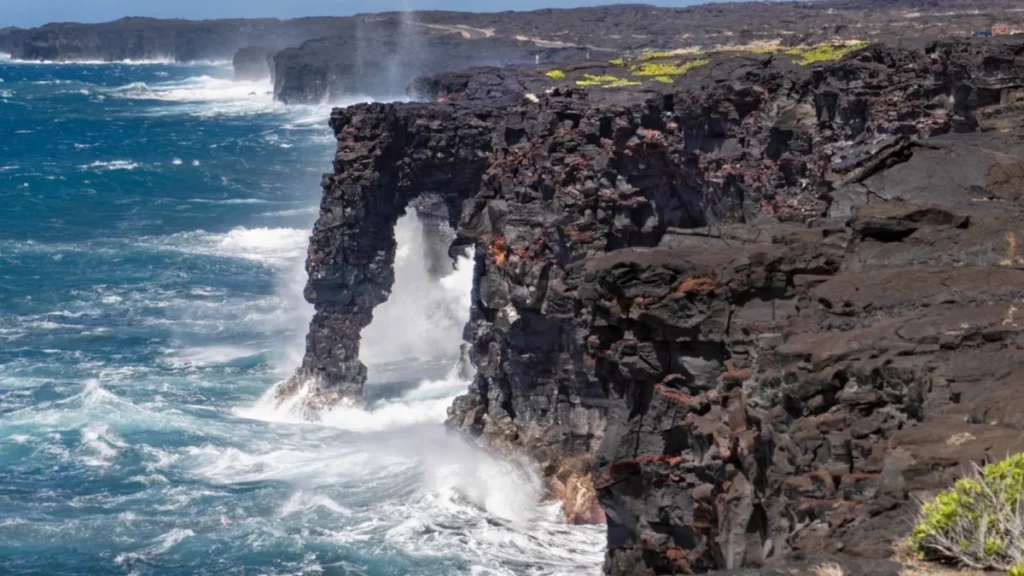
The towering Hōlei Sea Arch, a 90-foot-tall volcanic rock formation that stood resiliently against the Pacific Ocean for approximately five and a half centuries in Hawaiʻi Volcanoes National Park on the Big Island, has collapsed into the sea. Park officials confirmed that the iconic geological feature fell by Sunday, September 27, 2026, likely succumbing to the relentless battering of high surf and heavy rainfall associated with the passage of Tropical Storm Nolo. Situated at the terminus of the park’s scenic Chain of Craters Road, the arch was one of the most heavily photographed and visited natural attractions in the region, drawing hundreds of thousands of tourists annually. Its sudden disappearance marks the end of a multi-century geological cycle and highlights the dynamic, perpetually shifting nature of Hawaii’s volcanic coastline.
A Century of Erosion and the Mechanics of Formation
Geologically, the Hōlei Sea Arch was born out of intense elemental conflict. Formed approximately 550 years ago, the arch came into existence as powerful Pacific Ocean waves perpetually pounded against an ancient basaltic lava flow extending from the island’s active volcanic systems. Over centuries, the relentless hydraulic pressure of seawater exploited microscopic fractures, weak points, and softer layers within the volcanic rock—a geological process known as differential erosion.
Unlike uniform rock faces that erode at an equal pace, differential erosion occurs when softer mineral compositions or fractured structural seams wear away significantly faster than the surrounding denser basalt. This uneven weathering hollowed out the base of the sea cliff, eventually carving a distinct subterranean marine cave that broke through the other side, forming the signature overarching bridge.
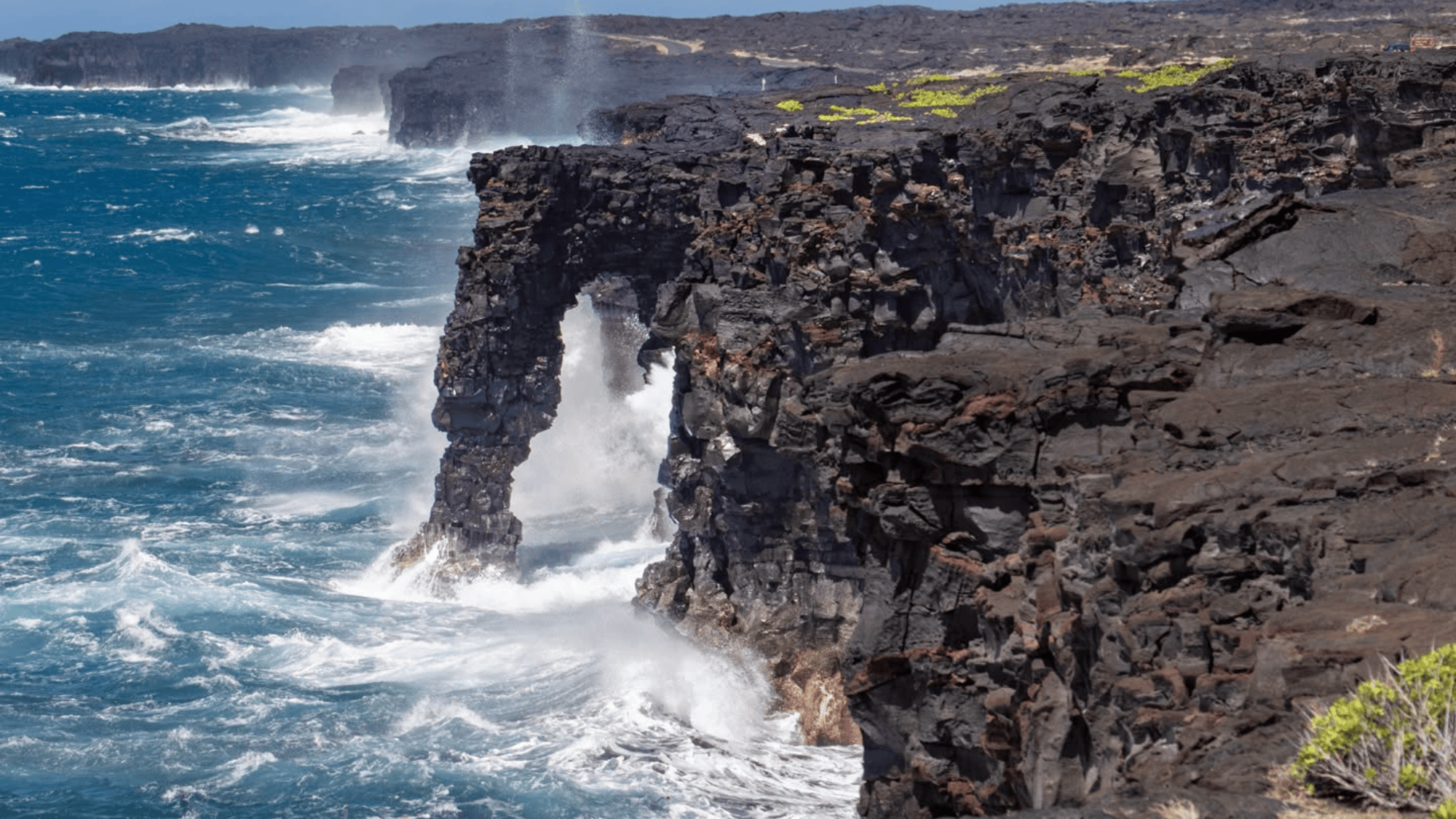
The arch was formally named after hōlei, a small, native endemic plant belonging to the milkweed family (Apocynaceae) that historically populated the surrounding dry shrublands of Kīlauea’s coastal zone. While majestic in appearance, sea arches are inherently ephemeral features on a geological timescale. They represent a transient phase in coastal recession; wave action continually undercuts the supporting pillars until gravity ultimately reclaims the span, leaving behind a jagged headland or an isolated sea stack before the cliff line eventually migrates further inland.
A Chronology of Decline: From Seismic Strain to Severe Weather
While the final collapse occurred quietly during a temporary park closure, the structural integrity of the Hōlei Sea Arch had been progressively compromised over the past decade by a compounding series of severe seismic events, volcanic activity, and extreme weather phenomena.
The structural decline of the landmark accelerated dramatically during the historic 2018 lower East Rift Zone eruption of Kīlauea. The massive seismic shifts and tectonic adjustments associated with the eruption induced widespread instability across the coastal cliffs of Hawaiʻi Volcanoes National Park, fracturing subterranean support structures well beyond the immediate eruption zones.
By January 2020, park rangers identified severe fracturing and rock instability surrounding the immediate viewing area, prompting officials to close the primary observation platform to ensure public safety. Following geotechnical assessments and the establishment of a slightly repositioned, safer viewing perimeter, the site was reopened to visitors in March 2020.
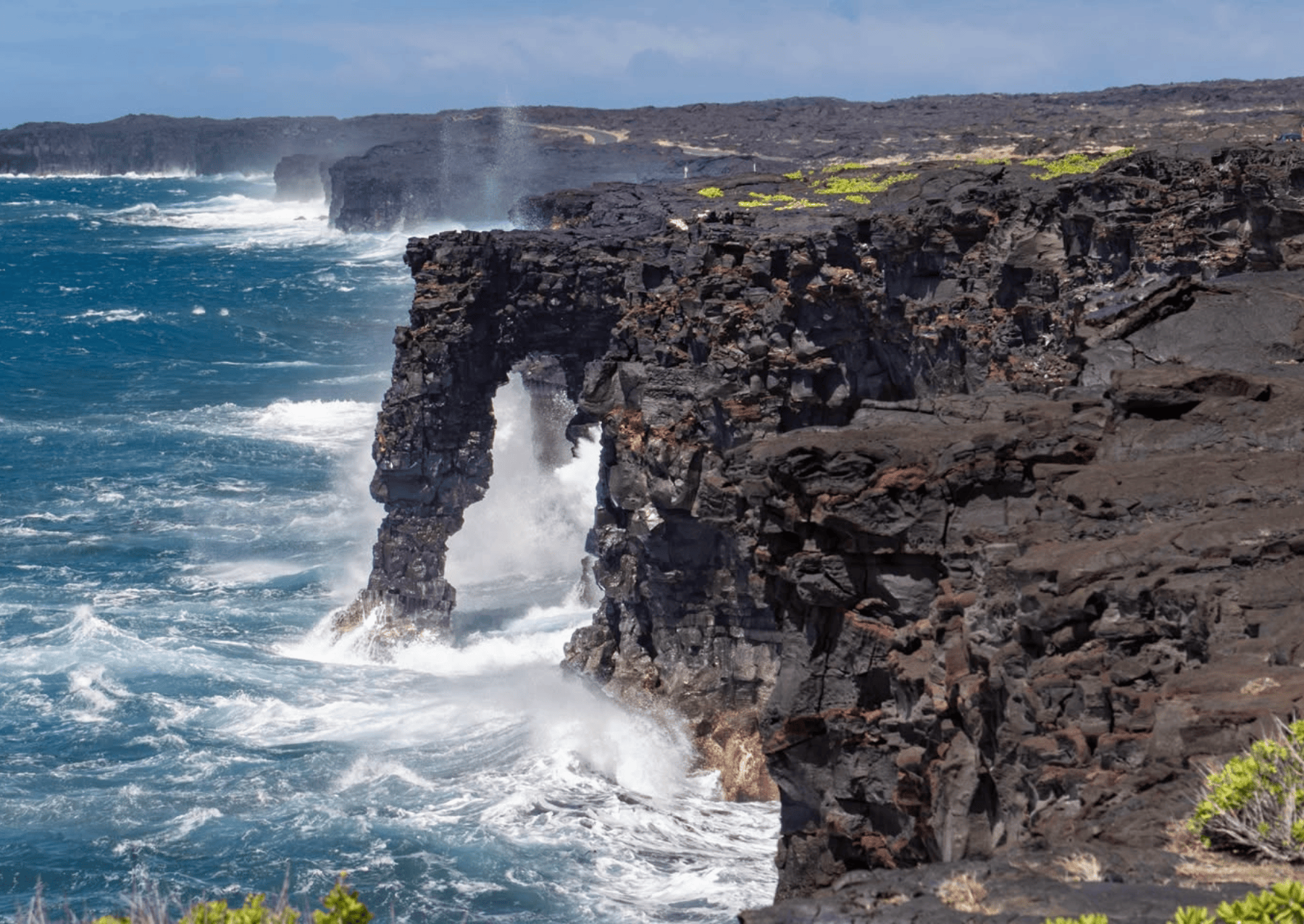
However, nature continued to chip away at the formation. During the passage of Tropical Storm Darby, high-energy surf and storm surges battered the coastline, breaking off a substantial chunk of rock from the lower foundation of the arch.
The final blow arrived in late September 2026. Hurricane Nolo, which intensified into a powerful Category 3 storm, made a close pass to the Hawaiian archipelago. Although the core of the hurricane did not make direct landfall on the Big Island, its sprawling outer rainbands and associated swells delivered over a foot of torrential rainfall to windward and coastal regions. The combination of saturated, unstable volcanic soils, severe wind shear, and pounding storm-driven surf proved to be the tipping point, bringing down the 550-year-old span during the storm-mandated park closure.
Official Responses and Public Sentiment
News of the collapse prompted immediate sadness and reflection from conservationists, park rangers, and travelers worldwide who shared a personal connection to the landmark. Hawaiʻi Volcanoes National Park released an official statement detailing the incident, emphasizing that while the loss of the arch is a poignant reminder of nature’s power, it is a normal part of the evolutionary cycle of volcanic shorelines.
In a community outreach post on social media, park administrators invited the public to grieve the loss by celebrating its memory, writing: “Hōlei Sea Arch is a very special place to so many of our visitors! Please share your favorite Hōlei photos in the comments. We would love to see them too.”
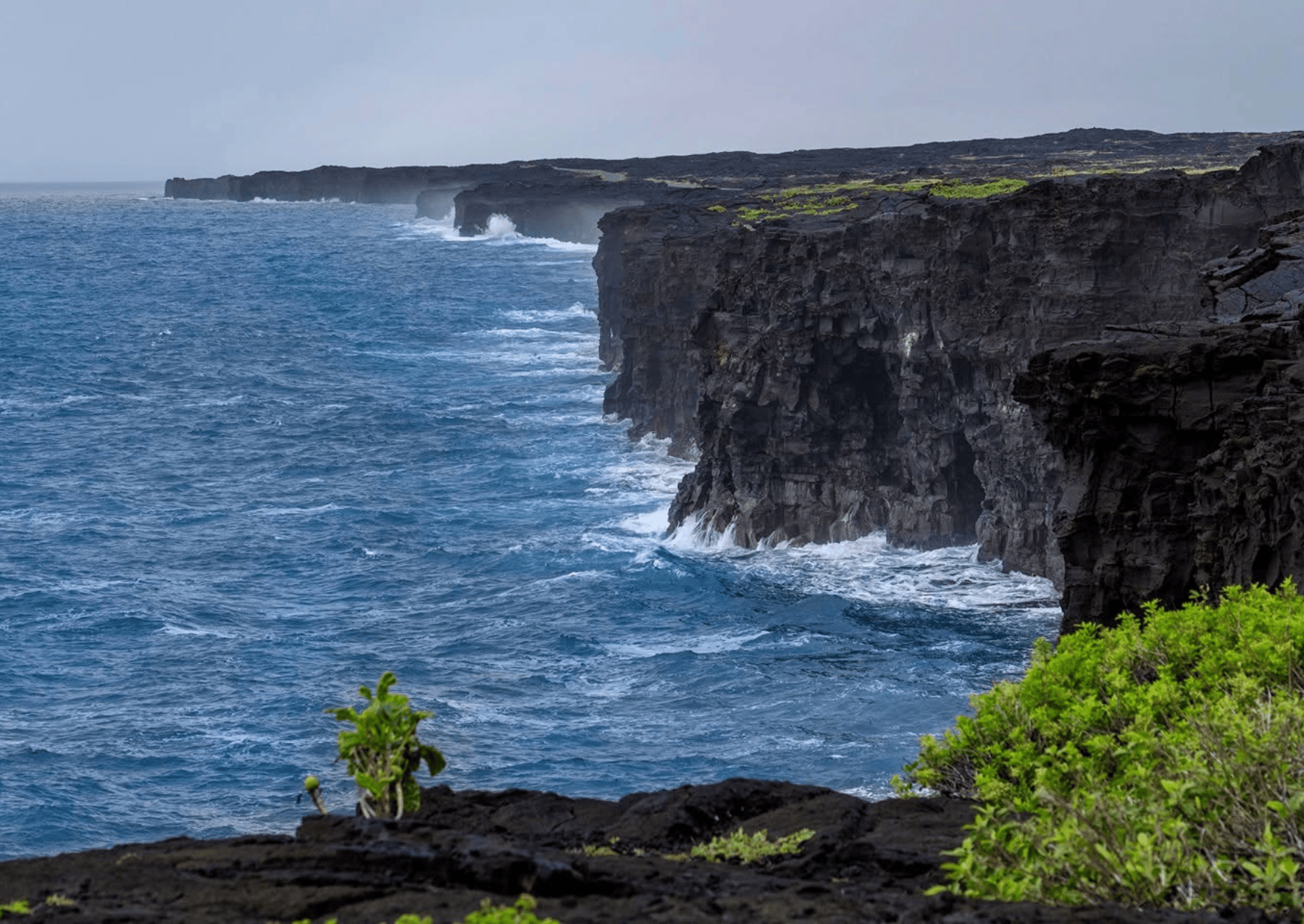
National Park Service interpreters noted that the outpouring of nostalgic photographs and personal accounts underscored the cultural and aesthetic significance of the site, which served as a tangible educational tool for visitors learning about coastal geomorphology and the active shaping of the Hawaiian Islands.
Broader Impact and Implications for Coastal Tourism
The loss of the Hōlei Sea Arch carries broader implications for coastal management, infrastructure planning, and tourism within Hawaiʻi Volcanoes National Park. Chain of Craters Road, which terminates near the former site of the arch, has long been a testament to the coexistence of infrastructure and active geology; portions of the historic roadway remain permanently cut off by previous lava flows from Kīlauea.
The collapse serves as a stark case study in the rapid vulnerability of coastal landmarks in the face of accelerating climate-driven weather patterns and intense hydrological events. As severe storms like Hurricane Nolo increase in frequency and intensity, coastal erosion rates along vulnerable basaltic cliffs are expected to amplify.
For the National Park Service, the event necessitates ongoing safety evaluations along the remaining viewing points of Chain of Craters Road. Park geologists continue to monitor adjacent sea cliffs for secondary collapses and residual instability. While the physical Hōlei Sea Arch is gone, park officials emphasize that the geological processes that created it remain fully active. Over the coming centuries, as the relentless surf continues to pound the newly exposed cliff face, differential erosion may eventually carve a new sea arch, perpetuating the endless cycle of creation and destruction that defines the living landscape of Hawaii.