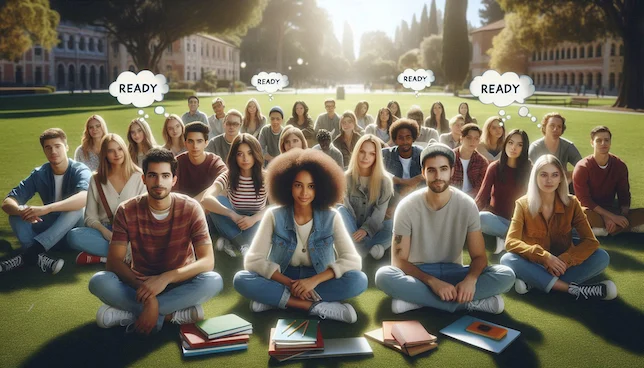


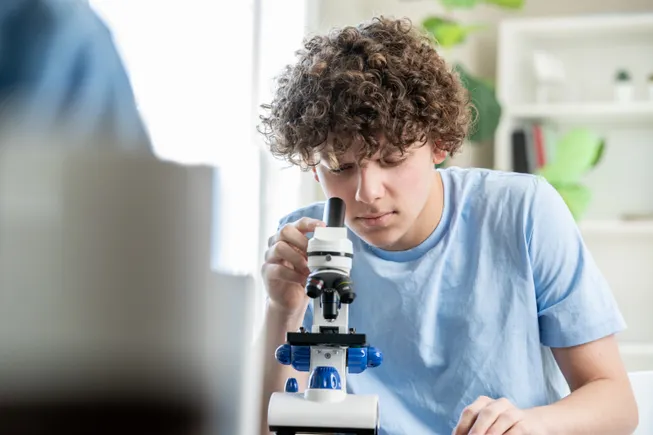
For nearly seven decades, the Summer Science Program International (SSPI) has been a cornerstone in nurturing young scientific minds, offering an intensive, five-week immersion program designed for high school juniors. This year marks a significant milestone as SSPI welcomes its largest cohort to date, with 720 students participating across 13 college campuses spanning the United States and Canada. The program’s enduring mission, as articulated by its leadership, centers on fostering a collaborative spirit and intentionally cultivating a diverse population of aspiring scientists, aiming to bridge equity gaps within the critical STEM fields.
Founded in 1959, SSPI emerged from a recognized need to provide high-achieving high school students with an unparalleled opportunity to engage deeply with scientific inquiry. The program was envisioned as an alternative to traditional classroom learning, emphasizing hands-on research and problem-solving. Its genesis can be traced to a period when access to advanced scientific training for pre-college students was limited, and the field itself was not as broadly representative as it is today. The founders recognized that early exposure to rigorous scientific methodology, coupled with a supportive and collaborative environment, could unlock potential and inspire a lifelong commitment to science. Over its 67-year history, SSPI has consistently evolved, adapting its curriculum and expanding its reach while holding true to its core values of inclusivity and experiential learning.
This year’s expansive program is hosted at a diverse array of esteemed institutions, including Colby College in Maine, Albion College in Michigan, Hendrix College in Arkansas, and the University of Guelph in Ontario, Canada. This geographic spread is a deliberate strategy to ensure accessibility and to bring the SSPI experience to students from varied regional backgrounds. The sheer scale of this year’s participation underscores the program’s growing impact and its increasing appeal to students worldwide who are eager to delve into the complexities of science.
A Legacy of STEM Advancement: Data-Driven Success
The impact of SSPI on its participants is demonstrably significant. Data meticulously collected by the organization reveals a compelling trend: between 65% and 80% of past participants, in any given year, go on to pursue STEM fields at the collegiate level and beyond. This statistic is a powerful testament to the program’s effectiveness in igniting and sustaining a passion for science, technology, engineering, and mathematics. These fields are increasingly recognized as crucial drivers of innovation and economic growth, making SSPI’s role in cultivating future talent all the more vital.
The curriculum at SSPI is designed to be both challenging and comprehensive, exposing students to cutting-edge scientific disciplines. Core subject areas include astrophysics, where students might delve into the mechanics of celestial bodies and the vastness of the universe; bacterial genomics, exploring the intricate genetic makeup of microorganisms and their role in health and disease; biochemistry, focusing on the chemical processes that occur within living organisms; and cell biology, investigating the fundamental units of life. This rigorous academic framework is complemented by an equally robust pedagogical approach.
Beyond Competition: Fostering Collaboration and Resilience
Amy Kim, chief program officer at SSPI, emphasizes the program’s departure from a competitive model. "We are not a competition model," Kim states. "We identify students, and they come and participate as a team. It’s not about what [college] you’re going to go to after high school. It’s about, ‘Throw them in a lab, give them the tools they need, and let them experience failure.’" This philosophy is central to SSPI’s ethos, shifting the focus from individual achievement and ranking to collective learning and the development of crucial soft skills.
The program intentionally cultivates an environment where experimentation and learning from mistakes are not only accepted but encouraged. This approach is particularly important in STEM fields, where breakthroughs often arise from a process of trial and error. By providing students with the necessary resources and a supportive peer group, SSPI empowers them to tackle complex problems without the pressure of constant evaluation. This "fail forward" mentality is a critical lesson that extends far beyond the confines of the laboratory, equipping students with resilience and adaptability.
Bridging the Equity Gap in STEM
A key pillar of SSPI’s mission is to actively address and mitigate the persistent equity gaps within the STEM landscape. Kim elaborates on this commitment: "As such, SSPI tries to bridge the equity gap in the STEM field by casting a wide net in selecting students. ‘We try to service students who have never had this opportunity. Students who are smart, want to work hard and are interested in science exist everywhere.’" This inclusive recruitment strategy ensures that talented individuals from all socioeconomic and geographic backgrounds have a chance to participate.
The program specifically seeks to engage students from communities that have historically been underserved or underrepresented in STEM education. This includes students from low-income households, individuals from rural areas where access to advanced scientific resources may be limited, and those who may not have had prior exposure to high-level research opportunities. By providing these students with an immersive, high-quality scientific experience, SSPI aims to level the playing field and foster a more diverse and representative future scientific workforce. The organization’s outreach efforts are often coordinated with its university partners to maximize their reach within local communities and surrounding regions, particularly targeting school districts that serve a significant population of students in need.
The Essence of Scientific Pursuit: Resilience Over Innate Genius
Kim, a chemist by training, often reflects on a core tenet of scientific success, a perspective she shares with her physicist husband: the most critical attribute for a scientist is not necessarily innate intelligence, but rather a profound willingness to persevere through difficulty. "The most important trait, in my opinion, is that you need to be willing to do something really hard," she asserts. "You’re going to be faced with a lot of failure. You’re going to have to be OK with it, and find other resources to solve the problem. Science is hard, but you can learn the tools, form teams and get help to solve the problem. Very rarely do scientists do something by themselves."
This perspective challenges the often-perpetuated myth of the solitary, genius inventor. SSPI’s model actively deconstructs this notion, emphasizing the collaborative and iterative nature of scientific discovery. The program teaches students that scientific progress is a collective endeavor, built upon shared knowledge, mutual support, and the ability to leverage diverse perspectives and expertise. This understanding is invaluable, not only for those who will pursue scientific careers but for anyone navigating complex challenges in their chosen path.
Broader Skills Development: Problem-Solving Beyond the Lab
While a significant portion of SSPI alumni pursue STEM careers, Kim is quick to point out that the program’s benefits extend to all participants, regardless of their ultimate career trajectory. "What we recognize is that doing a science program like ours gives them an opportunity to practice problem-solving skills that they may not have had," she explains. "That is a valuable skill for them to have, regardless of what they become in their future. It’s something we try to do, and it’s something that a lot of our underrepresented students are drawn toward."
The intensive, research-oriented nature of the program inherently hones critical thinking, analytical reasoning, and methodical problem-solving abilities. These are transferable skills that are highly sought after in virtually every professional field. By immersing students in real-world scientific challenges, SSPI equips them with a toolkit of cognitive strategies that will serve them well throughout their lives, whether they become doctors, engineers, artists, or entrepreneurs. The program’s emphasis on learning to deconstruct complex issues, identify potential solutions, and adapt to setbacks provides a robust foundation for lifelong learning and success.
Navigating the Era of Artificial Intelligence in Education
In the rapidly evolving landscape of education, SSPI, like many institutions, is actively engaging with the implications of artificial intelligence (AI). Kim acknowledges that AI presents both unprecedented opportunities and new challenges for students and educators alike. "Like educational programs everywhere, SSPI has needed to adjust to the age of artificial intelligence—which, like the internet itself, has created research opportunities but also spawned false information," she notes.
SSPI’s approach to AI is one of informed integration rather than outright prohibition. The program seeks to educate students on the capabilities and limitations of AI tools. "Our message shouldn’t be that you should never use [AI]," Kim advises. "You should understand how it works, what are its limitations, and what are the best-case scenarios." This balanced perspective encourages students to view AI as a powerful assistant rather than a replacement for critical thinking and independent research.
The potential applications of AI in scientific research are vast and transformative. Kim highlights the role of AI in assisting medical professionals with diagnostics, stating, "No human brain can maintain millions of scientific articles on rare cases. AI will be excellent for that. It can store a lot of information." This example illustrates how AI can augment human expertise, enabling professionals to access and synthesize vast amounts of data, leading to more informed decisions and potentially faster breakthroughs. SSPI aims to equip its students with the understanding necessary to harness these powerful tools responsibly and effectively within their academic and future professional pursuits.
Building Future Scientific Capacity: Outreach and Partnerships
The success of SSPI’s outreach efforts is intrinsically linked to its strong partnerships with the university campuses that host its programs. These collaborations are crucial for identifying and recruiting prospective students, particularly those who might not otherwise have access to such an opportunity. "To do outreach to prospective students, SSPI often partners with its university campus hosts to encourage those in the community and around the state to apply," Kim explains.
These partnerships manifest in several key ways. University hosts play a vital role in connecting SSPI with Title I school districts, which serve a high proportion of students from low-income families. This direct engagement ensures that the program’s message reaches those who can benefit most from its transformative experience. Furthermore, SSPI actively recruits undergraduate and graduate students from these host universities to serve as faculty and mentors. This strategy not only provides valuable on-the-job training and experience for these young academics but also helps to build a sustainable knowledge base and infrastructure within local communities. Through these multifaceted partnerships and strategic agreements, SSPI continues to expand its reach and fulfill its core objective: to provide life-changing opportunities to students who have historically been excluded from such advanced scientific training. The organization’s commitment to fostering a diverse, collaborative, and resilient cohort of future scientists positions it as a vital force in shaping the future of innovation and discovery.