


The Naval History and Heritage Command (NHHC) has officially confirmed the discovery and identification of the wreckage of the USS Herring (SS-233), a Gato-class submarine that played a vital role in the United States’ Pacific campaign during World War II. Resting at a depth of approximately 330 feet (100 meters) in the waters surrounding Matsua Island, part of the Kurile archipelago, the vessel remains in a remarkable state of preservation. The announcement, released on June 1, 2026, coincides exactly with the 82nd anniversary of the submarine’s loss in 1944. This discovery provides closure for the families of the 83 crewmembers who perished and adds a significant chapter to the ongoing efforts to document the "Lost 52," the group of American submarines that never returned from patrols during the conflict.
The identification of the USS Herring is the culmination of years of international collaboration and rigorous forensic analysis of underwater survey data. The wreckage was initially located during a 2017 expedition conducted by the Russian Geographic Society (RGS) and the Russian Ministry of Defense. Subsequent dives and data collection in 2022 provided the high-resolution imagery necessary for American naval historians to verify the vessel’s identity. According to NHHC analysts, the submarine sits upright on the seafloor, exhibiting distinct battle damage to its conning tower and evidence of grounding at the bow—details that align precisely with historical Japanese accounts of the vessel’s final engagement with shore-based batteries.
Technical Specifications and the Gato-Class Legacy
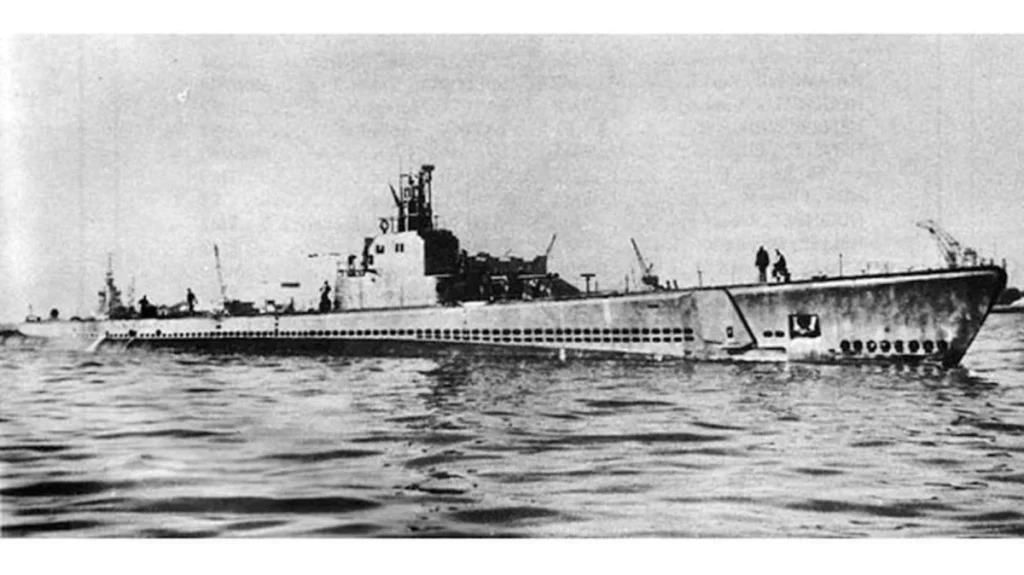
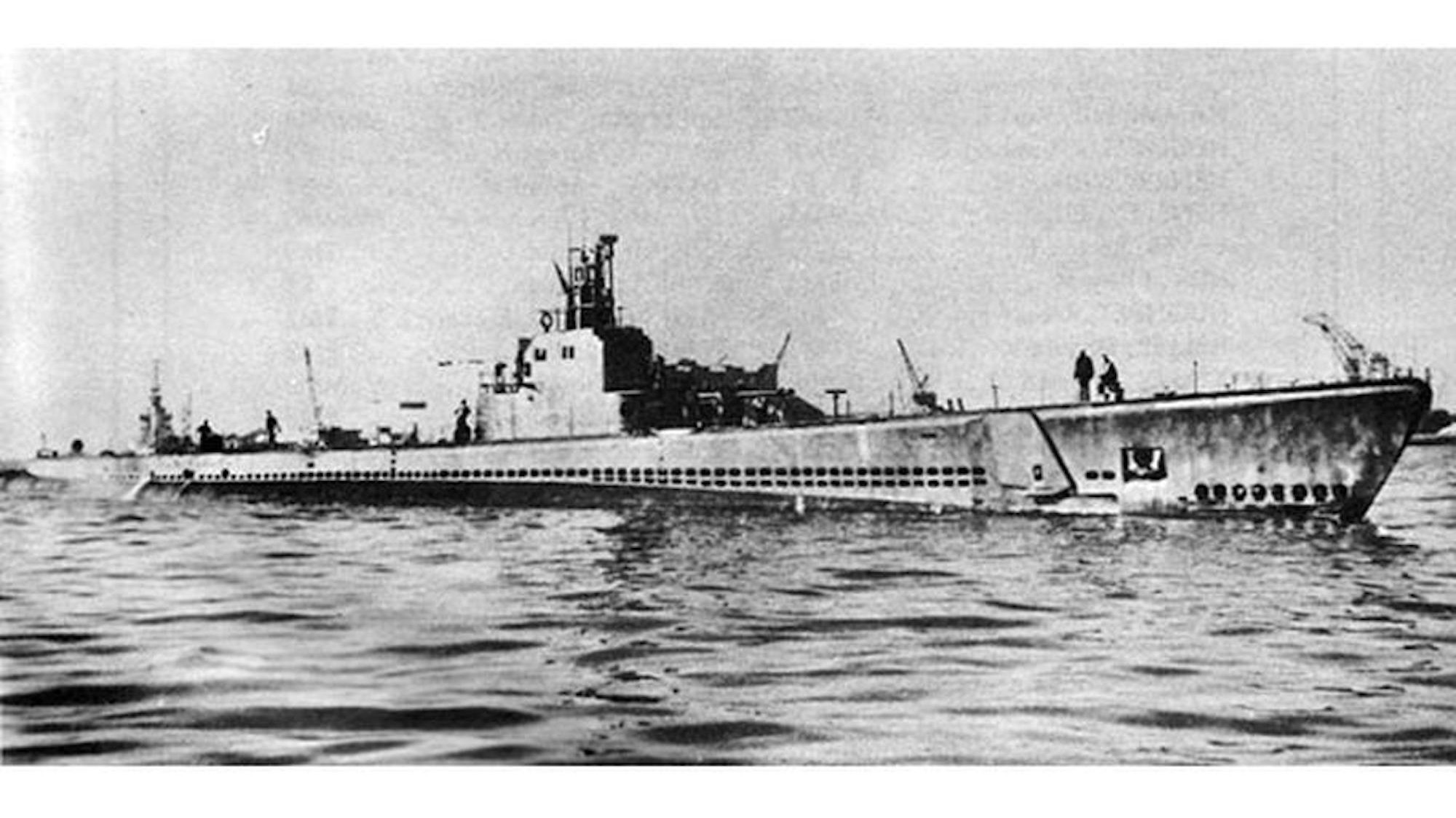
The USS Herring was a member of the Gato class, the first mass-production class of U.S. submarines during World War II. These vessels were the backbone of the "silent service," designed for long-range patrols in the vast expanses of the Pacific Ocean. Built at the Portsmouth Naval Shipyard in Kittery, Maine, the Herring was launched on January 15, 1942, and commissioned on May 4 of the same year under the command of Lieutenant Commander Raymond W. Johnson.
With a length of 311 feet and a displacement of 1,525 tons while surfaced, the Gato-class submarines were formidable platforms. They were powered by four diesel engines for surface travel and two electric motors for submerged operations, allowing for a top surface speed of 21 knots. The Herring was armed with ten 21-inch torpedo tubes—six forward and four aft—and featured a 3-inch deck gun for surface engagements. Over the course of its service life, the Herring underwent several refits to enhance its radar capabilities and anti-aircraft armament, reflecting the evolving nature of maritime warfare in the 1940s.
A Chronicle of Service: From the Atlantic to the Pacific
The operational history of the USS Herring spans eight war patrols, beginning with the invasion of North Africa. During its first patrol in November 1942, as part of Operation Torch, the Herring operated in the Atlantic, where it successfully torpedoed and sank the 5,171-ton French cargo ship Ville de Havre. This early success established the vessel’s reputation for effectiveness and stealth.
After five patrols in the Atlantic theater, the Herring was transferred to the Pacific in mid-1943 to join the offensive against the Japanese Empire. Its sixth and seventh patrols focused on the East China Sea and the waters surrounding the Japanese home islands. However, it was the eighth and final patrol that would secure the Herring’s place in naval lore. Operating out of Midway Atoll, the submarine was assigned to the Kurile Islands, a strategically vital chain of islands that provided a northern defensive perimeter for Japan.
During this final mission, the Herring demonstrated extraordinary tactical prowess. On the night of May 30-31, 1944, the submarine intercepted a Japanese convoy, sinking the escort ship Ishigaki and the cargo ship Hokuyo Maru. These successes, however, led the submarine into the heavily fortified waters of Matsua Island, where the Japanese maintained a significant military presence, including an airfield and coastal defense batteries.
The Final Engagement: June 1, 1944
The circumstances surrounding the loss of the USS Herring were pieced together using a combination of American and Japanese records. On the morning of June 1, 1944, the Herring targeted two additional Japanese vessels anchored at Point Tagan on Matsua Island: the Hiburi Maru and the Iwaki Maru. Both ships were successfully sunk while at anchor.
The audacious attack at close range drew the immediate attention of Japanese shore batteries. Historical records from the Japanese military indicate that a counterattack was launched from the island’s coastal defenses. The Herring was struck by two direct hits from a 12-centimeter shore battery. Witnesses reported that the submarine attempted to dive but was seen trailing oil and air bubbles before disappearing beneath the surface.
The USS Barb, another American submarine patrolling the same vicinity, reported hearing the distant rumble of depth charges and heavy artillery fire on the morning of June 1. The Barb and Herring had met the previous evening to coordinate their patrol sectors. When the Herring failed to arrive at Midway for its scheduled refit on July 13, 1944, it was officially declared "overdue and presumed lost."
The Discovery and Verification Process
The journey to finding the Herring began in earnest in 2017 when the Russian Geographic Society (RGS) identified a submarine-shaped anomaly during a survey of the Kurile Islands. The location—near the entrance to the Matua (Matsua) harbor—matched the coordinates suggested by Japanese wartime reports. In 2022, a joint expedition returned to the site with more sophisticated underwater imaging equipment.
The data provided by the RGS was shared with the NHHC’s Underwater Archaeology Branch. American researchers, working alongside Japanese naval historian Yutaka Iwasaki, conducted a detailed comparative analysis. The researchers looked for specific diagnostic features of the Gato-class design, such as the arrangement of the flood holes, the configuration of the conning tower, and the specific placement of the deck guns.
The high-resolution imagery confirmed that the vessel was indeed a Gato-class submarine. Furthermore, the damage observed on the conning tower—the "brain" of the submarine where the periscopes and navigation equipment are housed—was consistent with the impact of large-caliber shells from a shore battery. The grounding of the bow suggested that the vessel may have struck the seafloor while still under power or during a desperate attempt to maneuver away from the coastline.
Legal Protection and the Sanctity of War Graves
As a sunken military craft, the wreckage of the USS Herring is protected under both U.S. and international law. Specifically, the Sunken Military Craft Act (SMCA) of 2004 asserts U.S. government ownership of any sunken military craft, regardless of the passage of time or its location in international or foreign waters.
The NHHC has emphasized that the site is a hallowed war grave. "The wreck represents the final resting place of Sailors who gave their lives in defense of the nation and should be respected by all parties as such," the command stated in its official release. The Navy maintains a strict policy against the disturbance of such sites. While non-intrusive photography and scientific surveys are often permitted, any activity that involves physical contact with the hull or the removal of artifacts is strictly prohibited without explicit authorization from the Department of the Navy.
The 2022 expedition included a commemorative ceremony at the site, during which a plaque was placed on the seafloor to honor the 83 crewmembers. This act of remembrance highlights the humanitarian aspect of maritime archaeology, where the goal is not merely historical documentation but the preservation of a legacy for the families of the fallen.
Broader Implications for Maritime Archaeology
The identification of the USS Herring is a significant victory for the "Lost 52 Project," an initiative dedicated to locating the 52 U.S. submarines lost during World War II. To date, several of these vessels have been found, including the USS Grunion (SS-216), the USS Grayback (SS-208), and the USS Wahoo (SS-238).
Each discovery provides invaluable data to historians and naval architects. By studying the wreckage of these vessels, researchers can gain insights into the effectiveness of wartime repairs, the durability of Gato-class hulls under extreme stress, and the specific tactical conditions that led to their loss. Furthermore, the use of advanced sonar and remotely operated vehicles (ROVs) in the Herring’s discovery demonstrates the increasing capability of modern technology to solve decades-old mysteries of the deep.
The collaboration between American, Russian, and Japanese researchers also serves as a model for international cooperation in the field of underwater cultural heritage. Despite geopolitical complexities, the shared goal of honoring the dead and documenting history has allowed for a transparent exchange of data and expertise.
Conclusion: A Legacy Restored
The confirmation of the USS Herring’s final resting place ensures that the sacrifice of its crew will not be forgotten. The 83 men aboard the Herring were part of a silent service that bore a disproportionately high casualty rate during the war, yet their contributions were instrumental in severing the maritime lifelines of the Japanese Empire.
As the wreckage continues to sit upright in the cold, dark waters of the Kurile Islands, it serves as a silent sentinel and a testament to the bravery of the "Greatest Generation." For the descendants of the crew, the news provides a tangible connection to the past. The NHHC will continue to monitor the site, ensuring that the USS Herring remains protected as a monument to naval history and a sacred site of American sacrifice. The identification of the Herring is more than a discovery of steel and machinery; it is the recovery of a lost story, finally brought to light after 82 years of silence.