



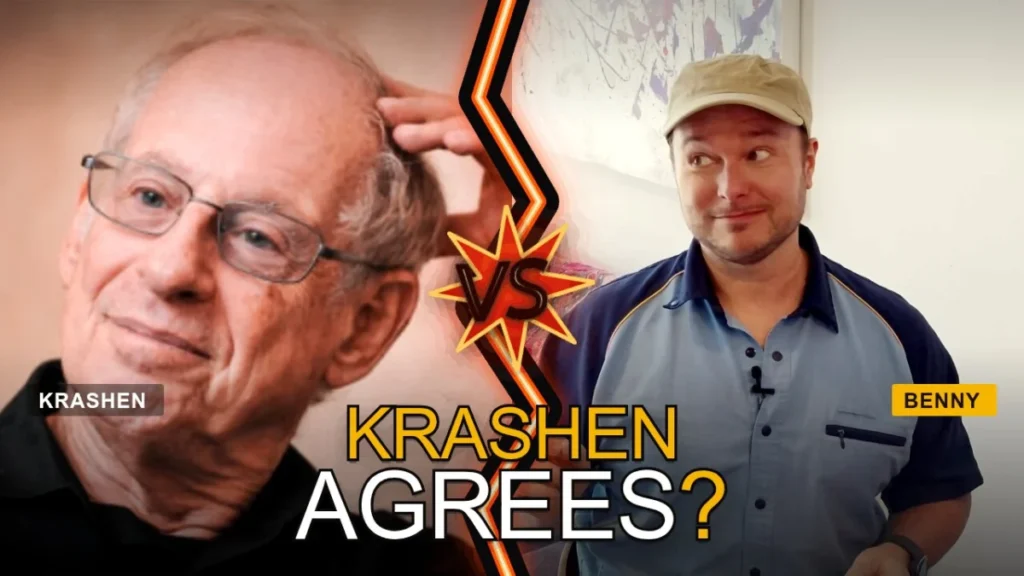
The long-standing ideological divide in the field of second-language acquisition (SLA) between advocates of "comprehensible input" and proponents of "active output" has undergone a significant re-evaluation following a collaborative dialogue between Dr. Stephen Krashen and polyglot author Benny Lewis. For decades, these two methodologies were viewed as mutually exclusive, with Krashen’s Input Hypothesis suggesting that language is acquired primarily through understanding messages, while Lewis’s "Speak from Day One" approach emphasized immediate communicative practice. However, recent interactions between the two figures have revealed that these theories are not only compatible but functionally intertwined within a successful language-learning framework.
Theoretical Foundations: The Input Hypothesis vs. The Communicative Approach
To understand the significance of this reconciliation, it is necessary to examine the foundational theories of Dr. Stephen Krashen, Professor Emeritus at the University of Southern California. In the late 1970s and early 1980s, Krashen introduced a series of hypotheses that transformed modern linguistics. Central to his work is the Input Hypothesis, which posits that humans acquire language in only one way: by understanding messages or by receiving "comprehensible input" (CI) that is slightly beyond their current level of competence (represented as $i+1$).
According to Krashen’s original framework, "learning" (conscious study of grammar and rules) does not lead to "acquisition" (the subconscious process of internalizing language). He argued that forced output—speaking before one is ready—could actually hinder progress by raising what he termed the "Affective Filter." This psychological barrier, triggered by anxiety, boredom, or low self-esteem, prevents the input from reaching the language acquisition device in the brain.
In contrast, the "Speak from Day One" philosophy, popularized by Benny Lewis through his platform Fluent in 3 Months, prioritizes social interaction and immediate production. Lewis’s methodology is rooted in the communicative approach, suggesting that the primary goal of language is connection. By attempting to speak immediately, learners identify specific gaps in their knowledge, forcing them to seek out the precise vocabulary and structures needed for real-world utility. While critics frequently cited Krashen’s work to debunk Lewis’s methods, claiming that early speaking was premature and stressful, the recent discourse between the two reveals a more nuanced reality.
The Convergence of Theory and Practice
In a recorded discussion that has since influenced thousands of independent learners, Dr. Krashen clarified that the "Speak from Day One" method does not violate the principles of the Input Hypothesis. Instead, he categorized early speaking as a vehicle for generating high-quality, personalized input.
Krashen noted that when a learner engages in a conversation, they are not merely producing language; they are actively managing the input they receive. In a one-on-one setting, a sympathetic interlocutor will naturally adjust their speech—slowing down, using simpler vocabulary, and employing gestures—to ensure they are understood. This creates a "bespoke" form of comprehensible input that is arguably more effective than passive listening because it is directly relevant to the learner’s immediate communicative needs.
During their dialogue, Krashen admitted to having read Lewis’s work extensively, noting that the "output" Lewis describes is often a catalyst for massive amounts of input. "You’re getting lots and lots of input all the time, and that totals up," Krashen remarked. He concluded that the difference between their approaches was not one of theory, but of "weighting"—the degree to which a learner emphasizes listening versus speaking at various stages of the journey.
Chronology of the Debate and Its Evolution
The tension between input-based and output-based learning has evolved through several distinct phases over the last forty years:
- The Rise of the Input Hypothesis (1980s): Krashen’s theories become the dominant paradigm in SLA, leading to a shift away from grammar-translation and drill-based methods in classrooms.
- The Output Hypothesis (1985): Researcher Merrill Swain proposes the "Comprehensible Output Hypothesis," arguing that producing language is necessary for learners to move from semantic processing to syntactic processing. She suggests that speaking "stretches" the learner’s competence.
- The Interaction Hypothesis (1990s): Michael Long further bridges the gap, suggesting that "negotiation for meaning" during social interaction is the most fertile ground for acquisition.
- The Digital Polyglot Era (2000s–Present): Online communities and platforms like YouTube and Reddit become battlegrounds for these theories. Lewis’s 2014 book, Fluent in 3 Months, becomes a lightning rod for "CI purists" who argue that his methods cause unnecessary stress and fossilized errors.
- The Synthesis (2020s): The direct collaboration between Krashen and Lewis provides a public reconciliation, signaling a shift toward "balanced" or "eclectic" acquisition strategies that value both immersion and interaction.
Data and Psychological Implications: The Role of the Affective Filter
One of the most critical aspects of this reconciliation involves the re-interpretation of the Affective Filter. Traditionally, CI advocates argued that speaking early raises the filter by causing "performance anxiety." However, Lewis argues—and Krashen concedes—that the context of the speaking is the deciding factor, not the act of speaking itself.
Data from educational psychology suggests that anxiety in language learning is often tied to "evaluative" environments, such as classrooms where students are graded on accuracy. In a "low-stakes" environment—such as a casual conversation with a friend or a language exchange partner—the Affective Filter can actually be lowered. Social connection releases oxytocin and dopamine, which can enhance memory retention and cognitive flexibility.

Furthermore, the "feedback loop" created by early speaking serves a vital diagnostic function. A learner who only consumes input may suffer from "the illusion of competence," where they believe they understand a structure until they are required to use it. Attempting to speak reveals three critical categories of knowledge:
- Things the learner thought they knew but cannot produce.
- High-frequency words the learner realizes they lack.
- Grammatical structures that require more "input" to be fully internalized.
This "aiming of the input" ensures that the learner’s subsequent listening and reading sessions are more focused and efficient.
The Impact of Graded Readers and Literacy
An unexpected outcome of the Krashen-Lewis dialogue was the mutual influence the two had on each other’s personal habits. Krashen, a staunch advocate for "Free Voluntary Reading," convinced Lewis to incorporate reading at an earlier stage than he previously had.
Graded readers—books written with a controlled vocabulary for specific proficiency levels—provide a bridge between beginner-level understanding and authentic native materials. Krashen argues that "compelling" input is the most effective; when a learner is so interested in a story that they forget they are reading in another language, the Affective Filter is at its lowest. Lewis has since integrated this into his recommendations, advocating for "early reading" alongside "early speaking" to build a robust mental lexicon.
Broader Implications for Language Pedagogy
The unification of these two approaches has significant implications for both independent learners and formal educational institutions. It suggests that the "silent period"—a phase in which children acquiring a first or second language typically do not speak—is not a mandatory requirement for adult learners, but rather an option.
For the modern learner, the takeaway is a "Dial" model rather than a "Switch" model. Instead of choosing between Input or Output, learners are encouraged to adjust the dial based on their personality, goals, and current level of fatigue.
- Introverted learners may prefer a higher ratio of input (80% input, 20% output) to build confidence.
- Extroverted learners may thrive on a 50/50 split, using social interaction to stay motivated.
- The common denominator remains the necessity of comprehensible input as the "fuel" for the engine of acquisition.
Field Observations: Achieving Automaticity
The ultimate goal of both Krashen and Lewis is "automaticity"—the ability to use the language without conscious thought. In a recent field report from Mexico, Lewis described a phenomenon often cited in SLA literature: the "dinner party effect." After hours of social interaction in Spanish, he realized he had stopped "monitoring" his speech. The background process of checking grammar rules had deactivated, and he was simply participating in the social fabric of the event.
This state of "flow" is the result of thousands of hours of input combined with the neural pathways strengthened by output. It validates Krashen’s theory that the "Monitor" (the internal editor) should remain offline during communication, and it validates Lewis’s claim that consistent speaking is the fastest route to reaching that uninhibited state.
Conclusion: A Unified Path Forward
The dialogue between Dr. Stephen Krashen and Benny Lewis represents a maturing of the language-learning community. It moves the conversation past "either/or" dogmatism and toward a "both/and" methodology. By recognizing that speaking is a powerful tool for generating comprehensible input and that input is the essential raw material for speaking, the two figures have provided a clearer, more scientifically grounded roadmap for learners worldwide.
The recommendation for contemporary learners is straightforward: seek out massive amounts of interesting, understandable content, but do not fear the "awkward" first conversation. In the framework of modern linguistics, that conversation is not an exam; it is a live, interactive, and highly efficient form of immersion that aligns perfectly with the most celebrated theories of language acquisition.