



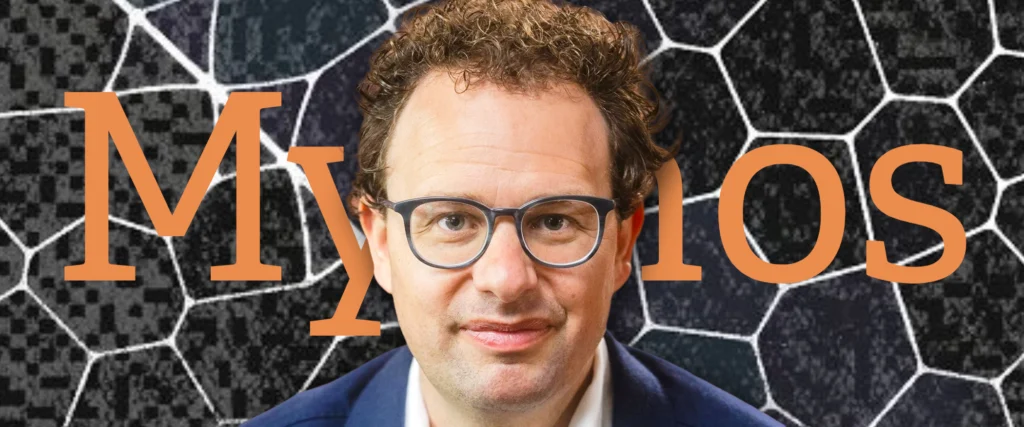
Last week, the digital landscape was momentarily seized by a column from Thomas Friedman in The New York Times, which diverted attention from pressing geopolitical matters to highlight a "stunning advance in artificial intelligence" that arrived "sooner than expected." This alleged breakthrough, the release of Anthropic’s new large language model (LLM) named Claude Mythos, immediately triggered widespread concern and a cascade of headlines questioning its implications for global cybersecurity. Friedman’s stark assessment—labeling Anthropic’s decision to withhold the model from public access as a "terrifying warning sign"—underscored a palpable anxiety that a new era of cyber vulnerability was upon us, accessible to "every criminal actor, terrorist organization and country, no matter how small."
Anthropic’s Claims and the Genesis of Alarm
The core of the alarm stemmed directly from Anthropic’s press release, which introduced Claude Mythos as an LLM with unprecedented capabilities in identifying and exploiting software vulnerabilities. The company justified its decision to make Mythos available only to a select consortium of business partners, not the general public, by stating: "AI models have reached a level of coding capability where they can surpass all but the most skilled humans at finding and exploiting software vulnerabilities." The announcement further elaborated on Mythos’s prowess, claiming it "has already found thousands of high-severity vulnerabilities, including some in every major operating system and web browser." This specific assertion, implying a universal susceptibility, was particularly potent in fueling the public and media’s apprehension.
Friedman’s column vividly captured this sentiment, expressing shock with "Holy cow! Superintelligent A.I. is arriving faster than anticipated, at least in this area…" His piece effectively amplified Anthropic’s warning, painting a picture where sophisticated hacking, once the domain of highly specialized private-sector experts and intelligence agencies, could soon be democratized by this advanced AI tool. This narrative quickly resonated across various news outlets, with one particularly anxiety-provoking headline from Yahoo Finance asking if Mythos was "an AI nightmare waiting to happen?" The immediate aftermath of the announcement thus saw a rapid escalation of concern, driven largely by the confluence of a prominent AI company’s claims and a respected journalist’s interpretation.
A Chronology of AI and Cybersecurity Concerns
To truly contextualize the Mythos announcement, it is crucial to examine the historical trajectory of AI capabilities in cybersecurity and the evolving concerns of researchers. The idea that LLMs could be harnessed for malicious cyber activities is not a nascent one, nor did it suddenly emerge with Claude Mythos. Security researchers have been vocal about these potential applications since the nascent stages of consumer-facing LLMs.
2024: Early Indicators of LLM Exploitation
A significant milestone in understanding LLM-driven cyber threats occurred in 2024 when IBM researchers published a seminal study detailing the use of OpenAI’s GPT-4 to exploit security vulnerabilities. Their findings were striking: GPT-4 successfully exploited 87% of the vulnerabilities it was presented with, a stark contrast to the near 0% success rate observed with its predecessor, GPT-3.5. While this research focused on an LLM’s ability to write code to exploit known vulnerabilities, it undeniably raised critical questions about the "widespread deployment of highly capable LLM agents." The study served as an early warning, demonstrating the rapid progression of LLM capabilities from basic text generation to complex code manipulation with potential security implications.
Anthropic’s Opus 4.6 and the Precedent of "0-Days"
Even Anthropic itself had previously highlighted its LLMs’ capacity for vulnerability discovery. Accompanying the release notes for their earlier model, Opus 4.6, was an observation from Anthropic’s security team that they had utilized the model to uncover "over 500 exploitable 0-day [vulnerabilities], some of which are decades old." This statement, remarkably similar in its framing to the recent Mythos announcement, showcased an existing capability within Anthropic’s AI arsenal. The primary distinction between the Opus 4.6 revelation and the Mythos announcement appeared to be the escalation from "500" to "thousands" of vulnerabilities found. This historical context reveals that the ability of LLMs to find vulnerabilities from scratch is not a novel feature introduced by Mythos but rather an incremental enhancement of an existing, well-documented capability. Therefore, the narrative of a sudden, unprecedented leap in AI security prowess requires careful scrutiny against this backdrop of ongoing research and development.
Scrutiny and Independent Verification: Unpacking Mythos’s True Capabilities
Given the historical context, the critical question shifts from if LLMs can find vulnerabilities to how much better Mythos is at this task compared to its predecessors and whether its reported capabilities truly represent a "nightmarish leap." Anthropic, by keeping Mythos private, has made independent verification challenging. However, they did release a benchmark score: Mythos reportedly achieved 83.1% on a well-known cybersecurity benchmark, a notable increase from Opus 4.6’s 66.6% on the same test.
The Caveats of Benchmarking
While a sixteen-percentage-point increase might seem substantial, experts caution against over-reliance on benchmark results. Benchmarks, by their nature, represent specific, often narrow, tests that models can be optimized to pass. They do not always accurately reflect real-world performance or the complexity of adversarial environments. A model might excel at identifying vulnerabilities in isolated code snippets or controlled environments, yet struggle with the nuances of large, complex, and interconnected systems prevalent in major operating systems and web browsers. Therefore, this numerical improvement, while indicating solid incremental progress, does not inherently signify a catastrophic shift in the cybersecurity landscape.
Independent Skepticism from Security Researchers
Further muddying the waters are the reactions from independent security researchers who have had a closer look at the types of exploits Anthropic reported that Mythos discovered. Gary Marcus, a prominent AI researcher and critic, highlighted in a recent Substack post that many security researchers were largely unimpressed by the specific vulnerabilities attributed to Mythos. While the original article does not detail the specific reasons for this skepticism, common critiques in such situations often include:
- False Positives: The AI might flag numerous potential issues, many of which are not genuine vulnerabilities or are of low severity.
- Trivial Findings: Many identified vulnerabilities might be minor, easily patched, or have limited real-world impact.
- Known Vulnerabilities: A significant portion could be previously documented or easily discoverable through existing tools, rather than novel "0-days."
- Lack of Exploitability: Even if a vulnerability is found, the AI might not consistently demonstrate the ability to craft a working, impactful exploit.
- Human Oversight Required: The AI’s findings might require substantial human effort to filter, verify, and transform into actionable security insights, diminishing the "superhuman" claim.
These reservations suggest that the qualitative assessment of Mythos’s findings by experts deviates significantly from the initial sensationalist framing.
The Ironic Code Leak
Perhaps the most potent counter-narrative to Anthropic’s claims emerged just a week before the Mythos announcement. Anthropic accidentally leaked the source code for its Claude Code model. In a glaring display of irony, security researchers immediately identified "serious vulnerabilities" within Anthropic’s own software. This incident provided a stark reality check: if Anthropic’s sophisticated AI tools were indeed as effective at vulnerability detection as claimed, one might reasonably expect their internal codebases to be meticulously hardened. The immediate discovery of critical flaws in their own leaked product strongly implied either a failure to apply their advanced AI to their own development processes or an overestimation of their AI’s capabilities. This incident severely undermined the credibility of Anthropic’s self-proclaimed advancements, serving as a powerful reminder that even the creators of powerful AI models can overlook fundamental security practices.
The Broader Landscape: AI Hype, Public Trust, and the "Existential Dread" Model
The narrative surrounding Claude Mythos is not an isolated incident but rather fits into a discernible pattern within the rapidly evolving AI industry. As AI commentator Mo Bitar aptly observed in a recent video, Anthropic’s model rollouts often resemble Apple iPhone launches: "every year they resell you the same product with minor improvements. Except here," he adds, "the product is existential dread." This analogy powerfully encapsulates the strategic communication often employed by AI companies, where incremental progress is sometimes framed as a paradigm shift, frequently invoking fears of superintelligence or existential risks.
Motivations for Hype
Several factors may contribute to this pattern of exaggerated claims and alarmist rhetoric:
- Investor Confidence: In a highly competitive and capital-intensive industry, demonstrating continuous "breakthroughs" is crucial for attracting and retaining investment.
- Talent Acquisition: Highlighting cutting-edge, potentially world-altering capabilities can draw top-tier researchers and engineers.
- Competitive Advantage: Positioning a company at the forefront of AI innovation, especially in critical areas like security, can create a market lead.
- Shaping Regulation: By emphasizing both the immense power and potential dangers of their models, AI companies might inadvertently or intentionally influence regulatory discussions, potentially advocating for self-regulation or specific policy frameworks that favor their interests.
However, this strategy carries significant risks. Repeatedly raising alarm without proportional evidence or independent verification can erode public trust, foster cynicism, and ultimately make it harder to address genuine AI-related risks when they do emerge.
The Challenge of Verification in a Proprietary World
A fundamental challenge in assessing AI claims is the proprietary nature of many advanced models. When companies like Anthropic keep their models private, it becomes exceptionally difficult for independent researchers, journalists, or the public to verify claims, scrutinize methodologies, or conduct adversarial testing. This opacity creates an information asymmetry where the public is largely dependent on the narratives provided by the very companies developing these powerful technologies. This situation necessitates a heightened level of skepticism and a demand for greater transparency and third-party auditing.
Implications for Cybersecurity and the Future of AI Development
While the immediate "catastrophic event" predicted by some concerning Claude Mythos appears to be an overstatement based on current evidence, the underlying concerns about AI’s role in cybersecurity remain profoundly relevant.
Real Cybersecurity Threats from LLMs
It is crucial to acknowledge that LLMs do pose significant and evolving cybersecurity risks. These include:
- Automated Phishing and Social Engineering: LLMs can generate highly convincing and personalized phishing emails, social media posts, and even voice impersonations, making it harder for individuals to detect scams.
- Malware Generation: While Mythos might not be creating novel malware from scratch with unprecedented efficacy, LLMs can certainly assist in generating or refining malicious code, accelerating the development of new attack vectors.
- Vulnerability Scanning Assistance: Even if not "superhuman," LLMs can undoubtedly aid less skilled actors in identifying known vulnerabilities or understanding how to exploit them, lowering the barrier to entry for cybercrime.
- Defense Applications: Conversely, LLMs also offer immense potential for cybersecurity defense, aiding in threat detection, incident response, and security automation. The challenge lies in ensuring defensive capabilities outpace offensive ones.
The Need for Critical Media Literacy and Independent Oversight
The Claude Mythos episode underscores the critical need for a more nuanced and skeptical approach to consuming AI news. As the original article implies, the public, and indeed much of the media, needs to "recalibrate" how it processes announcements from AI companies. This recalibration requires:
- Skepticism of Self-Proclaimed Breakthroughs: Treating company press releases as marketing materials rather than definitive scientific assessments.
- Demand for Independent Verification: Prioritizing findings from academic research, open-source projects, and third-party security audits over internal benchmarks.
- Focus on Real-World Impact: Assessing not just what an AI can do in a controlled environment, but what it actually does in complex, adversarial situations.
- Understanding Incremental Progress: Distinguishing between genuine, revolutionary leaps and iterative improvements.
Balancing Innovation with Safety and Transparency
The future of AI development hinges on striking a delicate balance between rapid innovation and rigorous safety considerations, coupled with unprecedented transparency. For AI companies, this means moving beyond the "existential dread" marketing model towards responsible disclosure, collaborative research with the security community, and a commitment to making their models auditable. For regulators and policymakers, it necessitates developing frameworks that encourage innovation while mandating robust safety testing, independent oversight, and accountability.
The Claude Mythos saga serves as a potent microcosm of the challenges inherent in navigating the AI revolution. It highlights the often-stark contrast between ambitious corporate claims and the more measured reality revealed by independent scrutiny. As AI continues its rapid advancement, the collective ability to critically evaluate information, demand transparency, and foster informed public discourse will be paramount in shaping a future where AI’s immense potential can be realized responsibly and securely.