



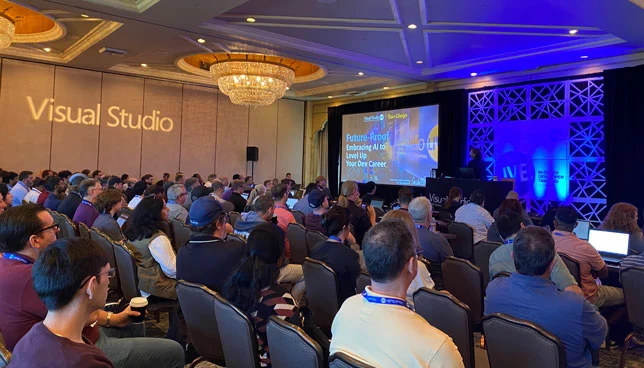
For higher education IT teams navigating the complexities of artificial intelligence pilots, intricate Enterprise Resource Planning (ERP) integrations, the development of student-facing applications, sophisticated analytics projects, and ever-escalating cybersecurity concerns, Visual Studio Live! San Diego 2026 presents an indispensable opportunity to explore the cutting-edge development practices that are fundamentally reshaping the campus technology landscape. Scheduled to unfold from September 14 to 18 in the vibrant city of San Diego, this highly anticipated conference meticulously centers its agenda on Microsoft technologies, offering an exhaustive array of sessions that delve into critical areas such as .NET, Azure, GitHub, advanced AI development, robust data platforms, scalable cloud architecture, stringent application security, and a myriad of other essential topics pertinent to modern university operations. The conference serves as a crucial nexus for IT professionals seeking to not only understand but also implement the strategic technological shifts necessary for the future of higher education.
The practical and immediately applicable focus of VSLive! was vividly underscored by the firsthand experience of Josh Yarbrough, a dedicated software developer at Vanderbilt University. Yarbrough attended last year’s VSLive! event with a specific objective: to substantially deepen his Blazor skills, having previously had only limited exposure to the framework. His team at Vanderbilt was already proficiently utilizing C# for their API and back-end development initiatives and sought to explore Blazor as a promising avenue for enhancing their user interface (UI) development capabilities. Reflecting on his experience, Yarbrough commented, "The instructors and classes were exceptionally well-structured and meticulously focused on topics that were precisely what I needed to quickly get up to speed." The tangible benefits of his attendance were swift and measurable; he added that, upon returning to campus after the conference, his team successfully developed and deployed "a couple of Blazor apps," demonstrating a direct and impactful transfer of knowledge and skills.
Beyond the formal structure of the scheduled sessions, Yarbrough highlighted another invaluable aspect of the event: the unparalleled access to instructors and speakers. He recounted an instance where he and a colleague encountered pressing technical questions. The conference presenters facilitated direct connections with Microsoft developers who possessed intimate knowledge and had actively contributed to the specific tools in question. This informal yet highly effective networking opportunity provided direct insights and solutions that would otherwise be difficult to obtain, exemplifying the conference’s commitment to fostering a collaborative and problem-solving environment. Such interactions are particularly crucial for higher education institutions, which often operate with unique constraints and require tailored solutions, benefiting immensely from direct access to the creators of the technologies they deploy.
The Evolution of VSLive! and its Strategic Importance for Higher Education
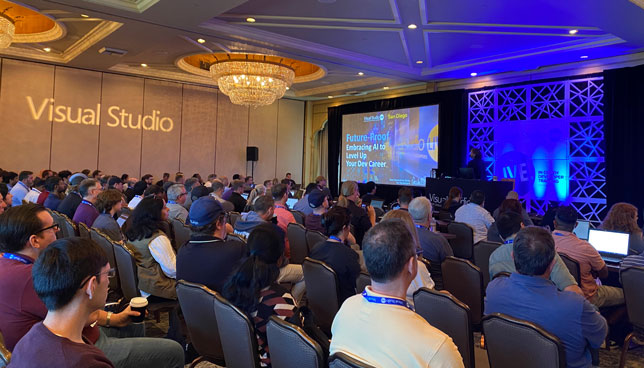
Visual Studio Live! has a rich and enduring history as a cornerstone event within the developer community, specifically catering to professionals working within the Microsoft ecosystem. For decades, VSLive! has served as a vital forum for developers to hone their skills, explore emerging technologies, and network with peers and industry leaders. Its evolution mirrors the transformative journey of software development itself, from the early days of desktop applications to the advent of the internet, the proliferation of cloud computing, and now the pervasive integration of artificial intelligence. Each iteration of VSLive! has consistently aimed to equip attendees with the practical knowledge and tools necessary to navigate these technological shifts.
For higher education institutions, VSLive! holds particular strategic importance. Universities and colleges frequently rely on Microsoft technologies for a vast array of their IT infrastructure, including administrative systems, academic platforms, research environments, and student services. This deep reliance makes events like VSLive! crucial for campus IT teams, who must stay abreast of the latest advancements to maintain competitive educational offerings, streamline operations, and ensure robust data security. The conference’s commitment to practical application, as evidenced by Yarbrough’s experience, directly addresses the pressing need for universities to translate theoretical knowledge into deployable, real-world solutions that enhance the student experience, empower faculty, and support administrative efficiency. The ability to directly engage with experts and gain hands-on experience with tools like .NET, Azure, and GitHub is not merely beneficial but essential for institutions operating on often constrained budgets and with diverse, demanding user bases.
AI at the Helm: From Pilot Programs to Production-Ready Solutions
A significant portion of this year’s VSLive! agenda is strategically dedicated to tackling a pervasive and familiar challenge confronting higher education institutions globally: the arduous yet critical transition of artificial intelligence initiatives from experimental pilot programs into stable, scalable, and fully operational production environments. The scope of AI sessions is remarkably broad, encompassing everything from practical applications of GitHub Copilot and Copilot Studio to sophisticated explorations of agent frameworks and complex multimodal applications. The overarching emphasis throughout these sessions is firmly placed on real-world development workflows, acknowledging that AI is rapidly evolving from a mere supplementary tool to an integral, foundational component of how applications are conceived, constructed, and subsequently supported.
The imperative for higher education to embrace AI is underscored by recent industry trends. A 2023 EDUCAUSE Horizon Report highlighted that AI is a top strategic technology priority for 73% of higher education institutions, indicating a widespread recognition of its potential to revolutionize teaching, learning, research, and administrative processes. However, the report also identified significant barriers, including a lack of skilled personnel and clear implementation strategies, precisely the gaps VSLive! aims to bridge.

The conference delves into the operational intricacies required to effectively maintain, diligently monitor, and ultimately foster trust in AI-enabled systems once they are launched. This critical segment of the agenda covers a wide spectrum of topics, including the architecture and management of agent-based applications, establishing secure and efficient enterprise data connections, implementing best practices for AI deployment, and integrating robust safety controls. As organizations universally begin to move beyond rudimentary, first-generation chatbot pilots, campus IT teams are confronted with a new paradigm of complex questions that demand precise and well-considered answers. These include: Which specific university systems can an AI tool securely and appropriately access? How are the outputs and recommendations generated by AI systems rigorously evaluated for accuracy, fairness, and relevance? And, perhaps most critically, who bears the ultimate responsibility when an automated workflow, no matter how sophisticated, inadvertently produces an erroneous or suboptimal recommendation? These ethical and governance questions are paramount in an academic setting, where data privacy (e.g., FERPA compliance), academic integrity, and equitable access are non-negotiable principles. The discussions at VSLive! aim to provide frameworks and technical solutions to address these profound challenges, guiding institutions towards responsible and effective AI integration.
Fortifying the Digital Campus: Cybersecurity as a Foundational Pillar
Cybersecurity, an ever-present and increasingly urgent concern for all organizations, permeates the entire VSLive! agenda, reflecting its foundational importance in the design and operation of modern IT systems. Higher education institutions, in particular, represent highly attractive targets for cybercriminals due due to the vast repositories of sensitive data they manage—ranging from personal student and faculty information to groundbreaking intellectual property and critical research data. Recent reports indicate a significant increase in ransomware attacks and data breaches targeting universities, underscoring the urgent need for robust security postures. For example, a 2023 IBM report highlighted that the education sector continues to be among the most frequently attacked industries, with the average cost of a data breach in the sector reaching into the millions.
A standout session, "Building Practical Zero Trust APIs with .NET 10 and Azure," exemplifies the conference’s commitment to cutting-edge security practices. This session focuses intently on crucial elements such as managed identity, sophisticated ingress and egress controls, leveraging Azure-native security capabilities, and establishing efficient developer workflows that inherently bake security into the development process. As applications become increasingly interconnected and the flow of data extends across an ever-growing number of services and platforms, treating secure API design as an optional add-on is no longer tenable. The strategic pairing of Zero Trust principles with developer productivity within the conference curriculum unequivocally communicates a critical message: security can no longer be merely "bolted on" as an afterthought once development is complete. Instead, it must be meticulously integrated and built directly into everyday engineering practices, becoming an intrinsic part of the entire software development lifecycle. This paradigm shift is essential for higher education, where the perimeter of the network is porous and trust must be explicitly verified for every access attempt, regardless of its origin.
The Human Side of Digital Transformation: Nurturing Talent and Collaboration

While technological advancements take center stage, VSLive! San Diego 2026 dedicates significant attention to the often-overlooked yet critically important human dimension of technological change. This holistic approach recognizes that the success of any advanced technology project, particularly within complex institutional environments like universities, hinges not solely on the efficacy of the tools themselves but equally on the collaborative spirit, documented decision-making processes, and the inherent ability of teams to effectively manage complexity without introducing unnecessary friction or inefficiencies.
Sessions focusing on code review culture, effective project management methodologies, strategic career development, and the profound impact of AI on traditional software development roles are integral components of the agenda. These topics acknowledge that as AI automates certain tasks, human developers must evolve their skill sets, focusing on higher-level problem-solving, ethical considerations, and system design. For university IT teams, often characterized by being stretched thin across multiple diverse roles and operating within dynamic, resource-constrained environments, these practices are not merely beneficial but can be the definitive factors determining whether new initiatives truly thrive and deliver long-term value, or falter under the weight of unforeseen challenges. A robust code review culture, for instance, not only improves code quality and security but also serves as a vital mechanism for knowledge transfer and mentorship, crucial for developing junior staff in academic IT departments. Similarly, effective project management techniques become paramount in orchestrating the deployment of complex AI systems across various university departments, ensuring alignment with institutional goals and stakeholder expectations.
The Future Campus Application Stack: A Strategic Roadmap
For higher education IT teams meticulously planning their next generation of application development, data management, and AI integration projects, the VSLive! San Diego 2026 agenda offers more than just a collection of technical sessions; it provides a comprehensive and forward-looking roadmap. The insights gained from the conference illuminate the trajectory of the next campus application stack, showcasing how interconnected technologies—from AI-powered tools to cloud-native platforms and intrinsically secure architectures—will converge to create more intelligent, efficient, and resilient university environments.
The conference underscores a critical message for university leadership: strategic investment in these core technological areas is no longer optional but imperative for maintaining institutional competitiveness, fostering innovation in research and teaching, and delivering a superior experience for students, faculty, and staff. Events like VSLive! empower IT professionals to return to their institutions not just with new skills, but with a clearer vision and a practical framework for implementing transformative technologies. By fostering a deeper understanding of where the technological landscape is headed and providing the practical expertise to navigate it, VSLive! plays a pivotal role in shaping the future of digital higher education. To explore the comprehensive agenda and secure registration, interested parties are encouraged to visit the VSLive! site directly.

About the Author
Rhea Kelly is editor in chief for Campus Technology, THE Journal, and Spaces4Learning. She can be reached at [email protected].