
The modern death industry is confronting an ecological reckoning, prompting researchers, environmental scientists, and consumers to reevaluate what happens to the human body after life ends. For decades, standard funerary practices in the industrialized world have prioritized preservation and permanence, utilizing massive amounts of steel, concrete, toxic embalming fluids, and fossil fuels. However, as global awareness of climate change and carbon footprints intensifies, an increasing number of individuals are asking a fundamental question: what is the most environmentally sustainable way to handle mortal remains?
According to environmental experts, life-cycle assessments, and green burial advocates featured on a recent segment of the Popular Science podcast Ask Us Anything, the most scientifically proven, eco-friendly method for burial is also the simplest: a natural, unvarnished green burial. Eschewing flashy new technologies in favor of age-old decomposition, natural burial has emerged as the gold standard for reducing environmental impact at the end of life.
The Environmental Toll of Conventional Funerals
To understand why natural burial holds the highest environmental rating, researchers must first evaluate the heavy footprint of conventional practices. A standard contemporary funeral typically involves embalming, a process that preserves the body using toxic chemicals such as formaldehyde, methanol, and ethanol. Millions of gallons of these hazardous fluids are injected into the ground annually, posing a long-term contamination risk to local soil and groundwater tables.
Beyond embalming, conventional burials require extensive resource extraction. The average traditional burial consumes a polished hardwood or steel casket, a heavy concrete vault or liner designed to prevent the ground from settling, and chemical sealants. The manufacturing and transportation of these materials require significant mining, industrial production, and fossil fuel consumption. Once interred, the vault and sealed casket actively impede the natural decomposition process, locking the body away from the vital microbial life that helps cycle nutrients back into the ecosystem.
Flame cremation, long viewed by many as a simpler and cleaner alternative, carries its own hidden environmental costs. Operating furnaces typically require temperatures ranging between 1,400 and 1,900 degrees Fahrenheit, fueled primarily by natural gas or other fossil fuels. This intense heating process releases significant carbon dioxide emissions into the atmosphere. Furthermore, flame cremation vaporizes dental amalgams, releasing mercury and other heavy metals. Industry data indicates that flame cremation accounts for roughly 14 percent of all mercury pollution in United States waterways. Open-air cremation pyres, common in various cultural and religious traditions globally, similarly consume massive quantities of wood—often between 880 and 1,100 pounds per body—and release hundreds of kilograms of carbon dioxide per service.
The Chronology and Evolution of Green Burials
The modern green burial movement in the United States took formal root in 1996 with the establishment of the Ramsey Creek Preserve, a stunning conservation burial ground situated along the foothills of the Appalachian Mountains in North Carolina. Spanning a densely forested canopy of oaks, birches, and maples, the preserve was designed to demonstrate that a cemetery could function simultaneously as a protected wildlife habitat and a final resting place.
The philosophy behind Ramsey Creek Preserve and the subsequent green burial movement is rooted in the absence of impediments to natural decomposition. In a natural burial, the body is not embalmed. Instead, it is wrapped in a biodegradable shroud or placed within a simple, untreated wooden box, then lowered directly into the earth at a shallow depth—typically three to four feet. At this depth, native soil microbes, insects, and fungi can efficiently break down the organic material, recycling vital nutrients back into the surrounding flora without chemical interference or greenhouse-gas-heavy manufacturing.
A landmark 2017 life-cycle assessment evaluating various end-of-life options concluded that natural burial consistently incurs the lowest overall environmental cost of any modern method. Furthermore, because many natural burial sites double as officially recognized conservation land, they actively protect acreage from commercial real estate development, logging, and urban sprawl, allowing families to contribute to permanent habitat preservation as a final act.
Emerging Alternatives: Innovation vs. Simplicity
As public interest in sustainability grows, innovators have introduced alternative end-of-life technologies designed to bypass both traditional caskets and traditional crematoriums. Among these are alkaline hydrolysis (commonly known as aquamation) and natural organic reduction (human composting).
Aquamation utilizes a heated water and lye solution to accelerate the breakdown of soft tissue over approximately 12 hours, leaving only bone fragments behind. While this process reduces carbon emissions by roughly 20 percent compared to flame cremation, it generates between 100 and 300 gallons of nutrient-rich liquid waste that must be processed through municipal wastewater treatment systems.
Human composting, or natural organic reduction, places a body inside a specialized vessel alongside carbon-rich organic materials such as wood chips, alfalfa, and straw. Over a 60-day period, microbial activity breaks down the soft tissues and bones, transforming the remains into roughly 250 pounds of soil-like material that can be returned to families. While innovative, scientists note that these newer methods are not entirely impact-free. The inputs required, such as alfalfa, are sometimes grown in water-stressed regions and transported long distances, while the processing itself requires controlled industrial facilities and energy inputs.
Lee Webster, an author, educator, and former president of the Green Burial Council, emphasized the importance of looking past marketing terminology when evaluating green claims. In statements to researchers, Webster noted that people often seek out shiny, new, and exciting technologies when the simplest solution—returning directly to the earth—remains the most ecologically sound.
Cultural Traditions and Global Perspectives
While the scientific debate centers on carbon footprints and chemical runoff, human societies have historically viewed death through diverse cultural, spiritual, and practical lenses. In parts of Tibet, Mongolia, and Bhutan, sky burials remain a sacred and deeply practical ritual. Because the mountainous ground is frequently too rocky to dig and fuel for cremation is scarce, bodies are placed on high elevation mountaintops to be consumed by scavenging birds, such as vultures. Rooted in Buddhist philosophy, this practice represents a final act of radical altruism, returning the body directly to the web of living creatures.
Similarly, historical European practices utilized ossuaries—communal bone repositories—where bodies were temporarily interred before skeletal remains were moved to shared walls to maximize scarce burial space for subsequent generations. While practices like sky burials remain illegal in many Western nations due to public health and zoning regulations, they highlight the vast spectrum of human ingenuity in managing mortality across different geographies and climates.
Implications for the Future of the Funerary Industry
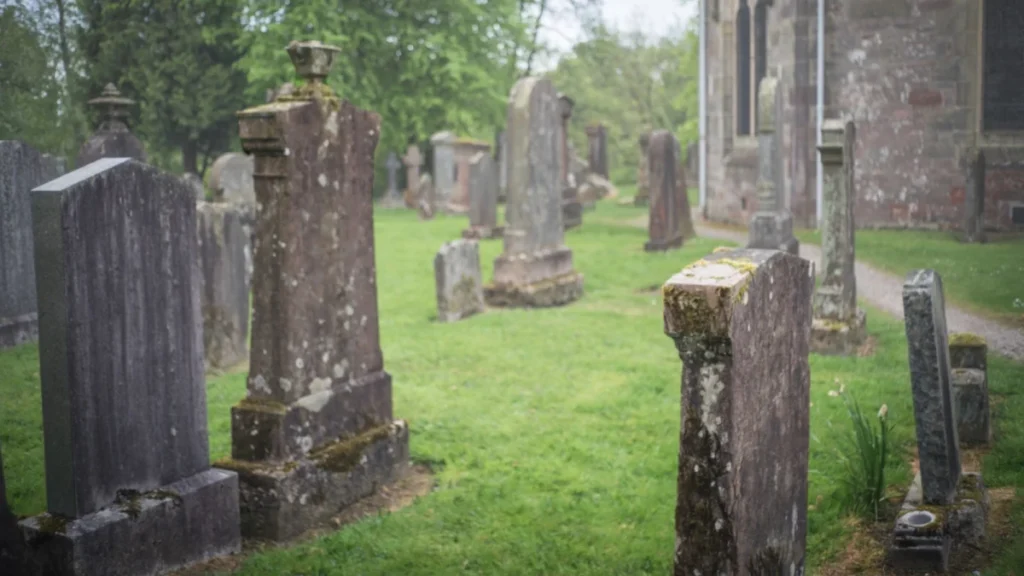
The growing scientific consensus favoring natural burial is beginning to influence consumer choices and policy developments worldwide. Urban planners and municipal governments are increasingly pressured to accommodate aging populations while managing limited urban land resources. Traditional cemeteries require perpetual land maintenance, mowing, and chemical weed control, which collectively drain municipal resources.
In contrast, conservation cemeteries require minimal maintenance, preserving native ecosystems in a wild or semi-wild state. As consumer demand shifts toward transparency and environmental accountability, the death care industry is slowly adapting. More conventional funeral homes now offer green burial packages, biodegradable caskets, and un-embalmed viewings, signaling a broader cultural pivot away from artificial preservation and toward ecological integration.
Ultimately, the choice of how to handle human remains remains deeply personal, influenced by a complex intersection of family traditions, religious beliefs, and emotional needs. However, for those seeking to minimize their ecological legacy, the scientific evidence points decisively backward to the basics: a quiet return to the soil, unhindered by concrete, metal, or chemicals, allowing the cycle of nature to continue uninterrupted.