



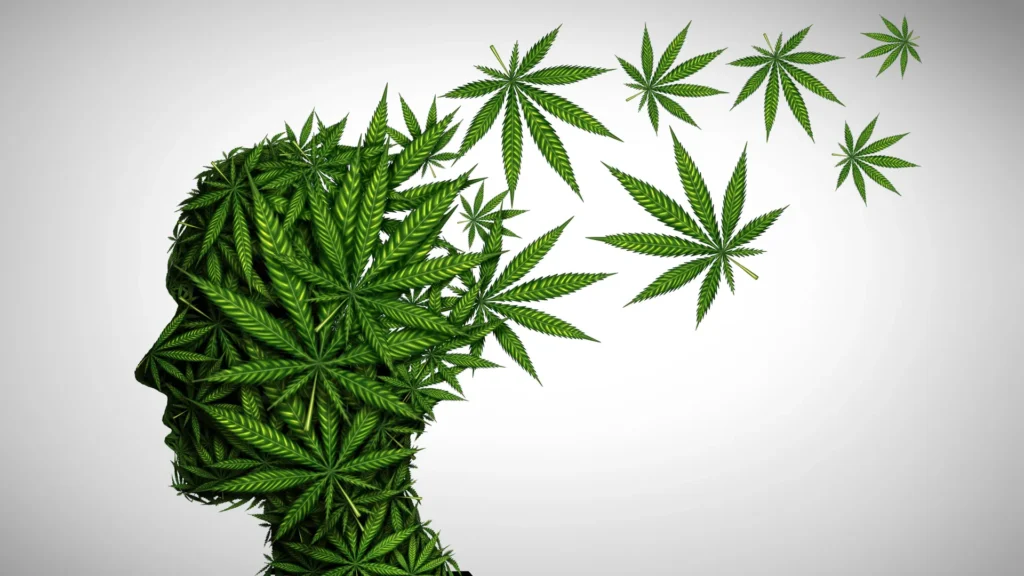
A pioneering study from Washington State University (WSU) has cast new light on the pervasive cognitive effects of cannabis, demonstrating that acute intoxication with tetrahydrocannabinol (THC) significantly impairs a wide array of memory functions beyond mere fogginess. Published in the Journal of Psychopharmacology, the research provides the most comprehensive examination to date of how cannabis influences not just simple recall, but the complex processes underpinning everyday memory tasks, including the formation of false memories and the ability to discern the origin of information. The findings suggest that even moderate amounts of THC can broadly disrupt cognitive functions critical for daily living, raising important considerations for public health and individual decision-making in an era of increasing cannabis legalization.
Broad Disruption of Memory Systems Uncovered
The WSU study, led by senior author Carrie Cuttler, an associate professor of psychology, and co-author Ryan McLaughlin, an associate professor in the Department of Integrative Physiology and Neuroscience, meticulously investigated seven distinct types of memory: verbal, visuospatial, prospective, source, false, episodic content, and temporal order memory. Their comprehensive approach starkly contrasts with most previous research, which typically focused on only one or two memory domains, often simple word recall. What they found was a widespread disruption: participants acutely intoxicated with cannabis performed significantly worse than a placebo group on 15 of the 21 memory tests administered.
One of the most striking revelations was the impact on false memory formation. In a specific test designed to elicit false recollections, participants listened to lists of semantically related words, all connected by a central theme, but critically, the keyword representing that theme was never actually spoken. Following cannabis consumption, individuals were notably more prone to confidently asserting they had heard words that were, in fact, never presented. "I found it was really common for people to come up with words that were never on the list," Cuttler explained, noting that these fabricated memories sometimes related to the list’s theme, but at other times were entirely unrelated. This susceptibility to false memories has profound implications, particularly in contexts where accurate recall is paramount, such as eyewitness testimony or medical reporting.
Equally concerning were the findings related to source memory—the ability to recall where, when, and how one acquired a piece of information. Participants under the influence of cannabis struggled significantly more to identify the origin of previously learned information. This impairment can lead to "source confusion," making it challenging to distinguish between reliable and unreliable information, a conversation with a friend versus a news article, or even a personal experience versus something imagined. In an age saturated with information and misinformation, the capacity to accurately track the provenance of knowledge is more vital than ever, and its disruption by cannabis warrants serious attention.
Furthermore, the study highlighted impairments in prospective memory, which governs the ability to remember to perform tasks in the future. This encompasses mundane yet crucial daily responsibilities such as taking medication at a specific time, attending scheduled meetings, returning phone calls, or remembering to pick up groceries on the way home. Cuttler underscored the practical implications: "These are things we rely on constantly in our day-to-day lives. If you have something you need to remember to do later, you probably don’t want to be high at the time you need to remember to do it." Such deficits could have cascading effects on personal efficacy, professional performance, and even safety.
Interestingly, the researchers observed no meaningful differences in memory impairment between participants who consumed 20 milligrams of THC and those who consumed 40 milligrams. This finding is crucial, as it suggests that even what might be considered a moderate dose of THC can significantly interfere with memory, challenging the assumption that higher doses are exclusively responsible for marked cognitive effects. This "ceiling effect" implies that the cognitive machinery involved in memory might be maximally affected even at relatively lower concentrations of the psychoactive compound.
Rigorous Methodology Bolsters Findings
To achieve these detailed insights, the WSU team designed a robust double-blind, placebo-controlled experiment involving 120 regular cannabis users. Participants were randomly assigned to vaporize either placebo cannabis, 20 milligrams of THC, or 40 milligrams of THC. The double-blind nature of the study, where neither the participants nor the researchers knew who received which substance, significantly reduces bias and enhances the reliability of the results. After consuming the assigned substance, participants spent approximately an hour completing a battery of memory tests specifically designed to probe the various memory systems. This comprehensive assessment approach sets the WSU study apart from much of the existing literature.
The choice to study acute intoxication is also significant. While chronic cannabis use has been linked to various cognitive changes, understanding the immediate effects of a single use helps to isolate the direct impact of THC on brain function. This acute effect is particularly relevant for individuals who use cannabis recreationally or intermittently, and for understanding the immediate risks associated with activities like driving or operating machinery under the influence.
The Evolving Landscape of Cannabis Use and Research Challenges
The publication of this study comes at a pivotal moment in North America, where the legal and social landscape surrounding cannabis is rapidly evolving. States like Washington, where WSU is located, have legalized recreational cannabis, leading to a significant increase in its availability and use. Data from the National Institute on Drug Abuse (NIDA) indicates a steady rise in cannabis use across various demographics in the United States, with a particular increase among young adults. For instance, in 2022, 11.0% of young adults aged 19-30 reported daily cannabis use, a significant jump from 6.9% five years prior. This growing prevalence underscores the urgent need for robust scientific research to inform public understanding and policy.
Despite the increasing normalization of cannabis, there remain substantial gaps in scientific knowledge regarding its full spectrum of effects, particularly the acute cognitive impacts. One primary reason for this research deficit has been the federal classification of cannabis as a Schedule I substance under the Controlled Substances Act. This classification, which places cannabis alongside drugs like heroin and LSD, designates it as having a high potential for abuse and no accepted medical use, thereby imposing stringent regulatory hurdles on researchers. Accessing legal, research-grade cannabis and navigating the complex approval processes has historically stifled scientific inquiry, leaving a void in comprehensive data that is only now beginning to be filled as more states legalize and push for federal reform.
Before this WSU study, existing research on cannabis and memory often provided a fragmented picture. While it was generally accepted that cannabis could cause short-term memory impairment, the specific mechanisms and the breadth of affected memory types were less understood. Early studies, often limited by sample size or methodological constraints, pointed to issues with verbal learning and working memory. However, the WSU research goes deeper, elucidating specific vulnerabilities in memory formation and retrieval that have broader implications for how individuals interact with and interpret their environment.
Implications for Public Health, Policy, and Individual Choices
The findings from Washington State University carry significant implications across several domains.
Public Health and Safety: Public health officials are likely to use these findings to bolster warnings about cannabis use, particularly concerning activities that demand clear cognitive function. The impairment of prospective memory, for instance, could increase risks in critical daily tasks. Imagine a construction worker forgetting a safety protocol, a healthcare professional misremembering a patient’s dosage, or a parent forgetting to pick up a child. While the study focused on acute effects, the cumulative impact of repeated memory disruptions on an individual’s long-term cognitive health and daily functioning warrants further investigation. The ability to form false memories and experience source confusion also presents a risk in situations requiring accurate recall, such as reporting incidents or providing testimony. Public awareness campaigns could highlight these specific risks, moving beyond general warnings about "being high" to educate users about precise cognitive vulnerabilities.
Legal and Policy Frameworks: The study’s insights could influence legal and regulatory frameworks surrounding cannabis. Laws concerning driving under the influence (DUI) of cannabis are still evolving, and objective measures of impairment are challenging to establish. This research contributes to a growing body of evidence demonstrating significant cognitive impairment, which could inform the development of more precise impairment standards. Furthermore, workplace safety regulations, particularly in industries involving heavy machinery, transportation, or sensitive information, may need to be re-evaluated in light of the demonstrated memory deficits. For medical cannabis patients, the findings underscore the importance of physician guidance regarding timing of doses, especially when patients need to perform tasks requiring high cognitive acuity. Policy makers may also consider educational mandates for dispensaries to inform consumers about these acute cognitive effects.
Individual Decision-Making: For individuals, the study provides crucial data to make more informed decisions about cannabis use. Understanding that even moderate doses can broadly disrupt memory, including the creation of false memories and difficulty tracing information sources, empowers users to weigh the risks against perceived benefits. It emphasizes the importance of responsible use, suggesting that individuals should avoid using cannabis when critical cognitive functions are required, such as before important meetings, studying, or engaging in tasks that require precise recall and judgment. The study implicitly advocates for a more nuanced understanding of cannabis’s effects, moving beyond anecdotal evidence to scientific certainty.
Future Research Directions: While groundbreaking, the WSU study also opens doors for future research. Longitudinal studies are needed to understand the long-term effects of chronic cannabis use on these various memory systems. Research could also explore how different cannabis strains (e.g., varying THC/CBD ratios) or consumption methods (e.g., edibles vs. vaping) might differentially impact memory. Investigating the effects on different demographics, including adolescents whose brains are still developing, and older adults who may already face age-related cognitive decline, is also critical. Furthermore, exploring the neural mechanisms underlying these specific memory disruptions could lead to targeted interventions or harm reduction strategies.
In conclusion, the Washington State University study represents a significant leap forward in understanding the immediate cognitive impacts of cannabis. By comprehensively examining a wide range of memory systems, it reveals that acute THC intoxication broadly disrupts our ability to form, recall, and contextualize memories, even leading to the creation of false ones. This robust scientific evidence serves as a vital resource for public health initiatives, informs policy development, and empowers individuals to make educated choices about cannabis use in an increasingly legalized landscape. As Carrie Cuttler aptly stated, "The goal is to help people make informed decisions about the risks and benefits," and this research unequivocally contributes to that crucial objective.