



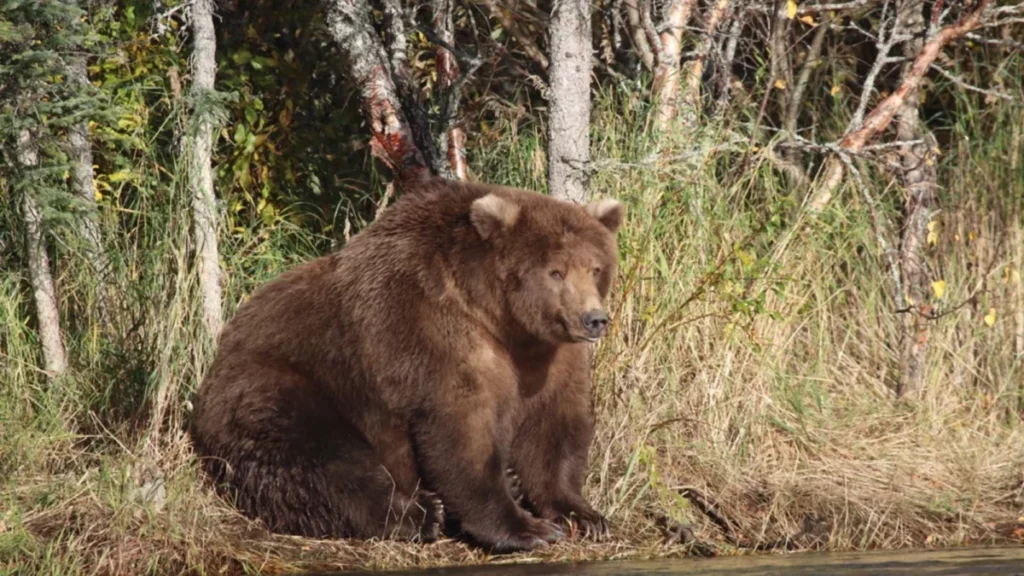
The crisp autumn air of Katmai National Park and Preserve in Alaska signals the end of a prolific summer feeding season and the return of one of the internet’s most anticipated conservation events. As the days grow shorter and the iconic pink salmon run reaches its conclusion, millions of online spectators turn their attention to the massive brown bears (Ursus arctos) of the Brooks River. Fat Bear Week, a single-elimination tournament celebrating the survival and sheer bulk of these apex predators, returns to capture the public imagination, blending wildlife education with competitive lightheartedness.
What began in 2014 as a modest, one-day local event has grown into an international phenomenon. Organizers, conservationists, and wildlife enthusiasts alike view the competition not merely as a lighthearted contest of girth, but as a vital educational platform highlighting the complex ecosystem of the Alaskan wilderness, the realities of climate fluctuations, and the rigorous biological demands of wildlife survival.
The Origins and Evolution of Fat Bear Week
Fat Bear Week was established a decade ago by park rangers at Katmai National Park and Explore.org as a way to celebrate the resilience and ecological success of the park’s brown bear population. In its inaugural year, the event recorded a mere 1,700 votes cast primarily by local enthusiasts and park visitors. However, the rise of live-streaming technology transformed the initiative. By utilizing underwater and terrestrial webcams stationed at Brooks Falls, millions of viewers worldwide gained unprecedented, real-time access to the daily lives of individual bears.
By the tournament’s tenth anniversary, engagement had skyrocketed to over 1.2 million votes cast from more than 100 countries. The format mimics traditional sports brackets, such as March Madness, but replaces basketball teams with identifiable individual bears. Voters evaluate "before" and "after" photographs capturing the dramatic physical transformation of the animals from the lean months of early summer to their massive, insulating bulk in the autumn. The tournament progresses through successive elimination rounds, culminating in the crowning of the champion.
Biological Imperatives: The Science Behind the Bulk
The primary objective for every brown bear in Katmai is survival, a goal achieved through hyperphagia—an extreme state of increased appetite that drives the animals to consume massive quantities of food. The geographic location of Katmai National Park provides an ideal habitat for this biological imperative, centered around the annual migration of Pacific salmon.
In late June, bears congregate at Brooks Falls to intercept salmon leaping upstream to spawn. As summer transitions into late August and September, the salmon spawn and eventually die, accumulating near the lower Brooks River. The bears exploit this high-protein, calorie-dense food source aggressively.
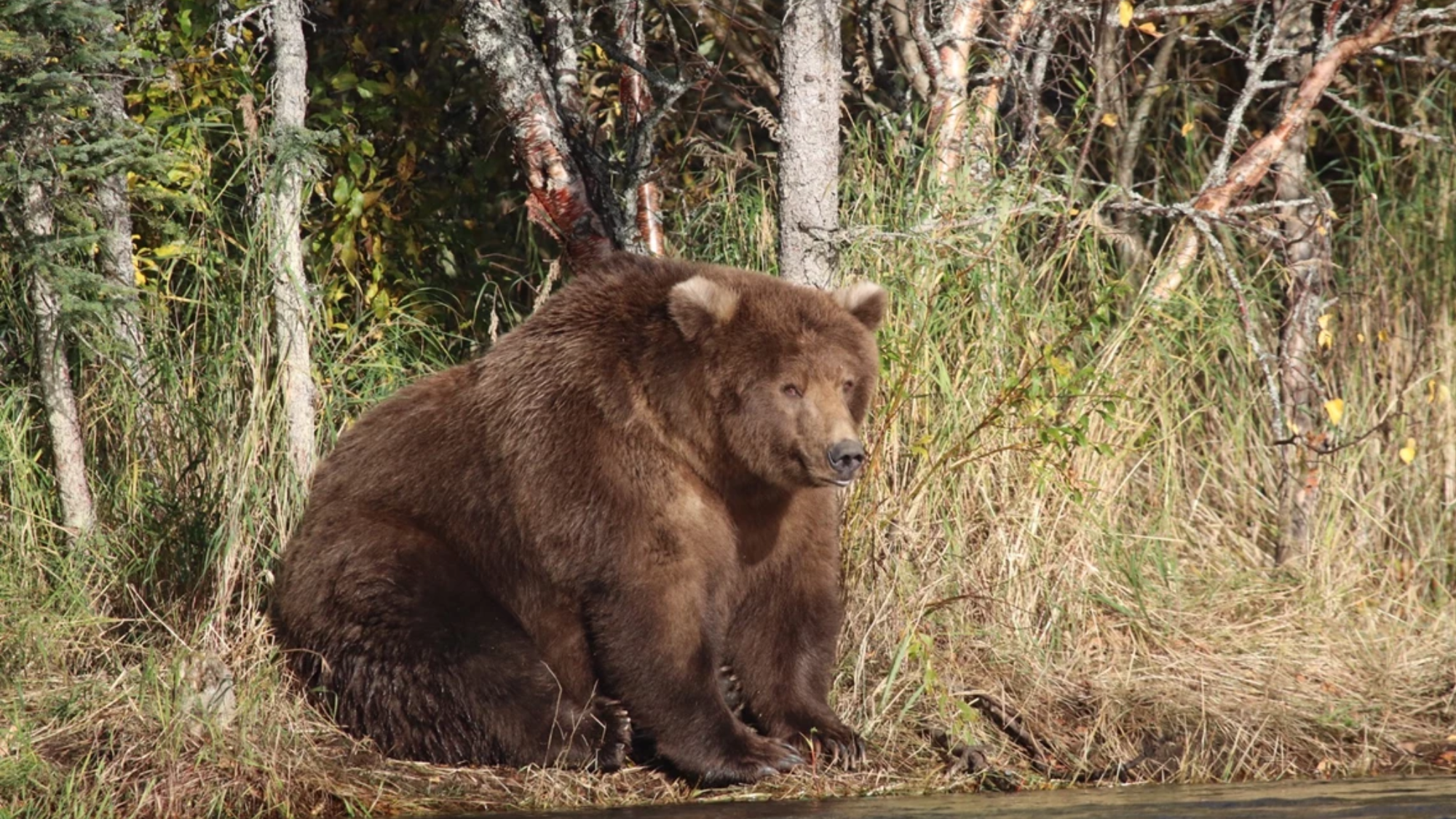
This intensive foraging is essential for surviving winter hibernation. Unlike true hibernators such as certain species of bats, ground squirrels, and bees—whose body temperatures drop close to freezing—brown bears enter a state known as torpor. Torpor is an involuntary physiological adaptation primarily triggered by food scarcity and plummeting temperatures. During this period, bears do not eat, drink, or defecate. Instead, their bodies undergo a remarkable metabolic shift, breaking down the massive fat reserves accumulated during the summer and fall to sustain vital organ functions.
The mathematical reality of this process is staggering. An adult male brown bear may weigh approximately 700 pounds in the early summer months. By the time they retreat to their dens in late autumn, heavy feeders can exceed 1,200 pounds. The general rule within the park ecosystem is straightforward: the heftier the bear, the higher the probability of surviving the prolonged winter fast, particularly for pregnant females who must also give birth and nurse cubs in the den.
Tournament Dynamics and Recent Champions
Each competing bear brings a distinct life history, physical trademark, and survival strategy to the bracket. Park rangers and naturalists provide detailed profiles of the candidates, allowing voters to weigh not just visual mass, but the obstacles each bear overcame to achieve it.
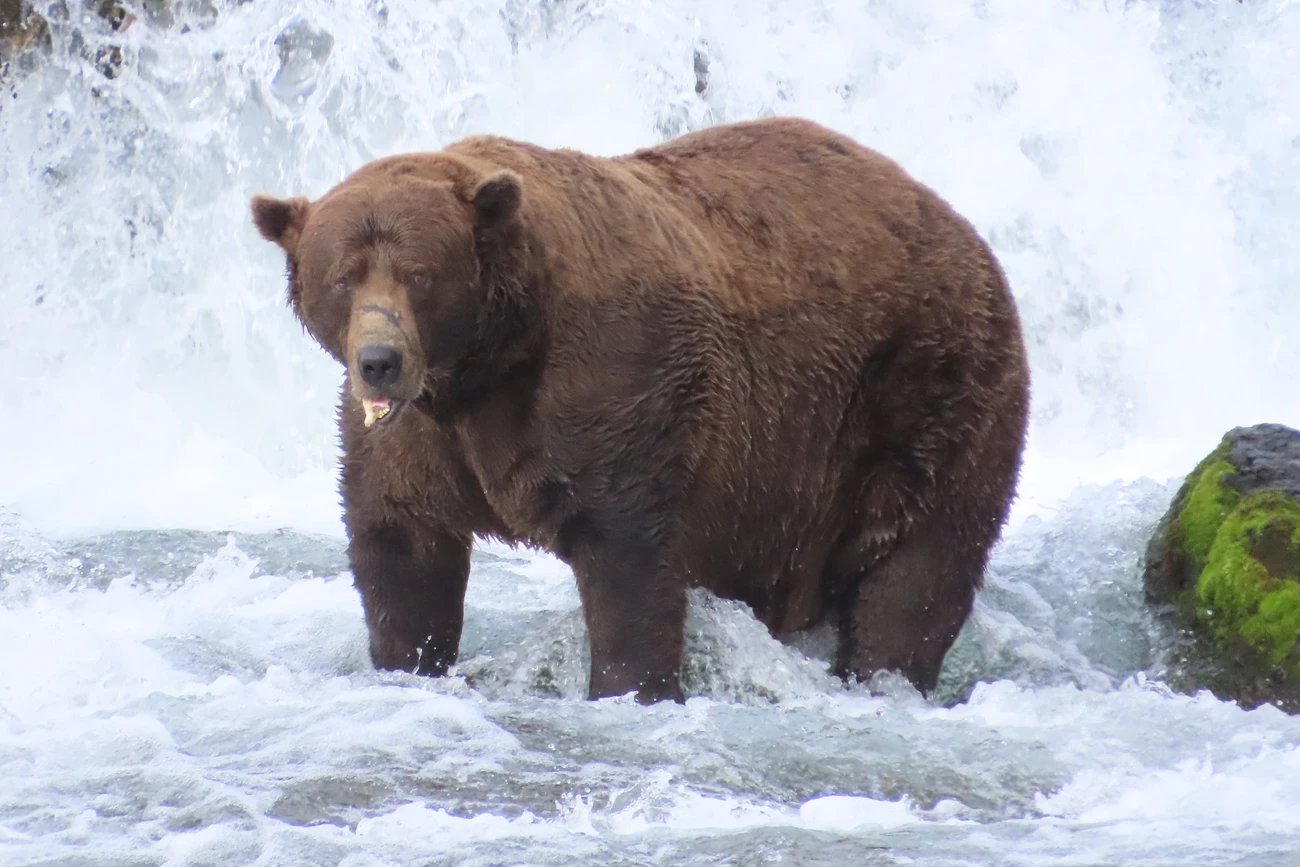
In the 2025 tournament, Bear #32, widely known as Chunk, secured the championship title. Chunk’s victory was particularly remarkable given that he entered the salmon-rich waters with a freshly broken jaw, an injury likely sustained during a territorial dispute with a rival male for a mate. Despite this significant handicap, Chunk leveraged his dominance, size, and tenacity to secure prime fishing spots along the river. Characterized by narrow-set eyes, dark fur, a prominent brow ridge, and a distinct scar across his muzzle, Chunk exemplifies the rugged durability required to thrive in Katmai.
The Raw Realities of the Wild: Nature Unfiltered
While Fat Bear Week offers an entertaining entry point for public engagement, the live-cam footage from Katmai also exposes viewers to the unfiltered, and occasionally brutal, realities of wild animal behavior. The 2026 season provided stark reminders of the ecological pressures facing the park’s inhabitants.
In late July, live-stream cameras captured a rare and distressing event: a young brown bear cub, born earlier that spring to a 10-year-old female known as Bear #909, was killed and consumed by an unrelated mother bear, identified as Bear #806. The incident left Bear #909, who had already lost her first cub earlier in the season, with no surviving offspring. Just days later, another tragic interaction occurred when a cub belonging to Bear #335 (Jolly) was fatally attacked after following three unrelated cubs up a tree.
Park naturalists, including Mike Fitz, alongside rangers Christine Loberg and Sarah Bruce, noted that such documented aggressive interactions are exceedingly rare along the Brooks River. While behavioral scientists debate the precise motivations behind infanticide and intraspecies aggression among brown bears—hypothesizing factors ranging from resource competition and food scarcity to dominance disputes and displacement—these events underscore the intense pressures governing wildlife populations.
Conversely, the summer season also showcased the lighter and more eccentric sides of bear society. Viewers tracked the progress of a rare cub with silver-hued fur, a younger bear that learned a painful lesson regarding porcupine quill safety, the innovative and unorthodox fishing techniques of Bear #164 (Bucky Dent), and Bear #284 (Electra), whose family demonstrated an uncanny ability to navigate deep water channels.
Conservation, Support, and the Otis Fund
The immense popularity of Fat Bear Week has generated substantial tangible support for conservation efforts within Katmai National Park and Preserve. Donations are funneled through the Katmai Conservancy via specialized initiatives like the Otis Fund, named in honor of Bear #480 (Otis), a legendary competitor who secured four Fat Bear Week titles before passing away around 2024.
To amplify public contributions, partner organizations such as Explore.org frequently implement matching donation programs during the peak of the voting season. These funds directly support park interpretation programs, wildlife monitoring, habitat protection, and the maintenance of the viewing infrastructure that allows millions of people worldwide to connect with the wilderness.
Broader Implications and Public Engagement
The success of Fat Bear Week represents a modern paradigm in wildlife conservation and science communication. By transforming ecological monitoring into an interactive, gamified experience, Katmai National Park has successfully bridged the gap between scientific research and public awareness.
Environmental analysts point out that public investment in individual animals fosters a broader appreciation for systemic conservation issues, including climate change impacts on salmon fisheries, habitat preservation, and human-wildlife coexistence. As voters log onto fatbearweek.org to analyze the physical transformations of bears like Chunk, Beadnose, and their contemporaries, they participate in a global exercise in biodiversity appreciation that extends far beyond a simple internet contest.