

The Orange County Convention Center in Orlando, Florida, served as the epicenter of educational technology innovation as thousands of K-12 educators, school librarians, district leaders, instructional coaches, and edtech developers converged for ISTELive 2026. Against a backdrop of rapid technological evolution, this year’s conference marked a critical turning point for the education sector. Rather than focusing on early experimentation and speculative novelty, participants and major industry stakeholders centered their discussions on practical, scalable integration. The core objective of the conference addressed how artificial intelligence can transition from isolated classroom trials into secure, institution-wide frameworks that drive measurable learning outcomes.
The annual gathering provided a vital forum for stakeholders to evaluate the shifting landscape of digital instruction. Over the course of the week, attendees engaged in hundreds of specialized sessions, hands-on technical labs, and high-profile keynote addresses. The consensus across these diverse forums was clear: while artificial intelligence holds immense potential to revolutionize pedagogy, its success relies entirely on deliberate implementation, comprehensive teacher training, and a foundation built on robust learning science.

The Shift from Fragmented Experimentation to System-Wide Governance
A dominant theme throughout ISTELive 2026 was the urgent need for educational institutions to move past ad-hoc, individual teacher adoption of artificial intelligence. In the early phases of generative AI deployment, many educators relied on uncoordinated tools, creating potential disparities in data privacy, equity, and instructional quality. At the conference, district leaders and policymakers emphasized the transition toward coordinated, system-wide governance models.
This structural shift requires aligning artificial intelligence integration with established teaching standards, institutional priorities, and strict data security protocols. To assist school boards and administrators in navigating this complex transition, the newly released Microsoft AI in Education Report provided comprehensive data and institutional perspectives. The report outlines current utilization rates, identifies persistent operational opportunities, and highlights structural supports necessary for responsible adoption. Educational analysts note that as school districts face mounting pressure to modernize their infrastructure, data-driven frameworks like those discussed in Orlando will be essential for mitigating risks associated with student data privacy and algorithmic bias.
Microsoft 365 Education Announcements and Pedagogical Focus
Major technology providers used the global stage of ISTELive 2026 to unveil purpose-built educational tools designed to prioritize deep learning over mere speed. Microsoft Corporation introduced several updates to its Microsoft 365 Education ecosystem, reflecting a strategic alignment with cognitive learning science.

Among the primary announcements were dedicated experiences such as Teach, enhanced Assignments featuring integrated AI guidelines, Learning Zone, and the specialized Study and Learn Agent. According to company briefings, these offerings are engineered to support how students build foundational knowledge, engage in productive cognitive practice, and deepen conceptual understanding rather than simply accelerating task completion.
To reinforce the theoretical underpinnings of these tools, Microsoft released a whitepaper titled Learning by design. The document details the research-backed learning science foundation supporting the Study and Learn Agent. By grounding software development in peer-reviewed cognitive science, technology developers aim to provide educators with reliable resources that validate the efficacy of AI-assisted instruction. Instructional leaders at the conference praised this methodical approach, noting that administrative buy-in depends heavily on transparent, evidence-based claims regarding cognitive impact.
Fostering Educator Capacity and Professional Communities
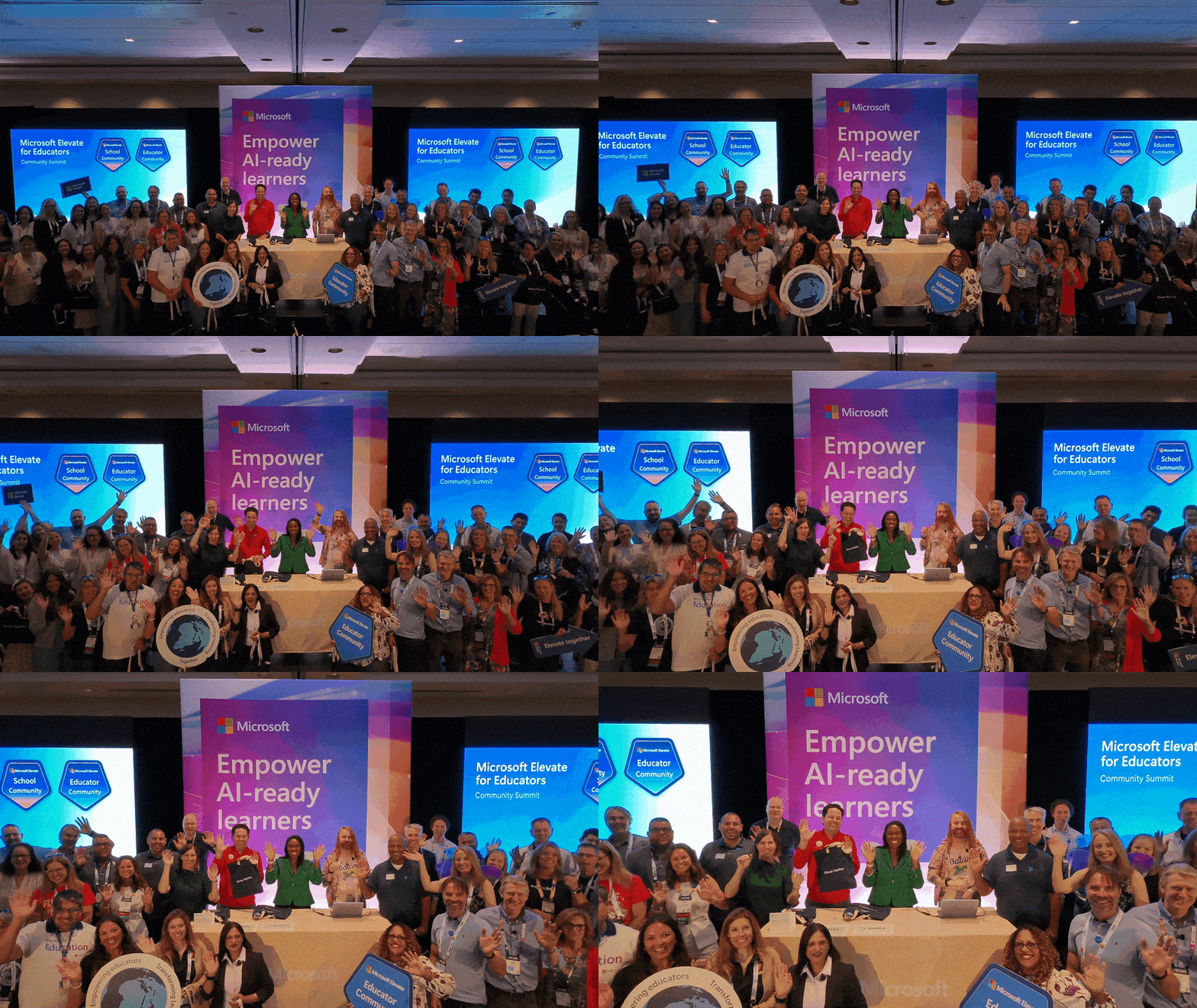
Recognizing that technological innovation is only as effective as the professionals utilizing it, conference programming heavily emphasized educator empowerment and professional capacity-building. Pat Yongpradit, General Manager of Global Education and Workforce Policy at Microsoft, underscored this sentiment during an evening reception for the Microsoft Elevate for Educators community. Addressing the assembly of over 43,000 global teachers and school leaders, Yongpradit emphasized the irreplaceable value of human instruction, stating that the contemporary global workforce relies fundamentally on the expertise of exceptional educators.
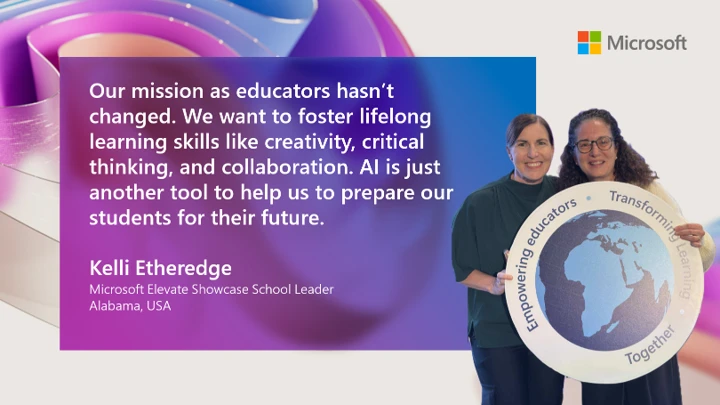
The Microsoft Elevate for Educators initiative focuses on countering educator burnout and retention challenges by providing structured peer networks, professional credentials, and capacity-building resources. Throughout the conference, the Instructional Leadership Exchange (ILX) hosted collaborative workshops where administrators shared best practices for professional development. These sessions highlighted that successful digital transformation depends on continuous, supportive training regimens rather than one-off professional development seminars.
Minecraft Education and the Velocity Prize: Gamifying AI Literacy
Addressing the necessity of early digital literacy, Minecraft Education utilized the ISTELive platform to launch the Velocity Prize. Set to officially open for submissions in October 2026, the global skills challenge targets students aged 13 to 16, integrating computational thinking with AI-assisted problem-solving strategies.
The competition is designed to move students from passive consumers of technology to active creators. By utilizing gamified environments familiar to millions of young people, educators are provided with classroom-ready modules that demystify complex computational concepts. Alongside the Velocity Prize rollout, Minecraft Education introduced comprehensive AI literacy and digital safety resources. These toolkits, animated guides, and professional learning pathways are structured to make artificial intelligence concepts accessible not only to students and teachers, but also to families navigating the digital age at home.

Redefining Metrics: Moving from Screen Time to Learning Time
A significant philosophical shift emerged during panel discussions regarding student device usage. For over a decade, educational debates have focused heavily on quantifying "screen time," often treating all digital engagement as a uniform variable with potential negative developmental consequences. At ISTELive 2026, educators and child development experts reframed the conversation entirely, advocating for an evaluation of "learning time."
This perspective shifts the evaluative lens from the duration of device exposure to the qualitative nature of the digital interaction. Educators are actively seeking technological tools that foster critical thinking, collaborative problem-solving, and personalized remediation, while simultaneously safeguarding student wellbeing and emotional health. By leveraging artificial intelligence to facilitate active creation and deep cognitive engagement rather than passive media consumption, schools are attempting to establish a balanced, sustainable approach to modern pedagogy.
Broader Implications and Future Outlook
The discussions, product launches, and collaborative networks established at ISTELive 2026 signal a maturing edtech market. As educational institutions continue to digest the implications of artificial intelligence, the overarching trajectory points toward disciplined, research-backed integration.

The transition from individual experimentation to institutional strategy indicates that school districts are recognizing both the vast opportunities and the inherent responsibilities of artificial intelligence in the classroom. By prioritizing educator professional development, establishing rigorous governance standards, and grounding software in cognitive science, the educational community is actively shaping an environment where technology serves to elevate human instruction rather than replace it. As the academic year progresses, the frameworks established in Orlando will serve as a crucial benchmark for districts worldwide seeking to prepare students for an increasingly automated future.