




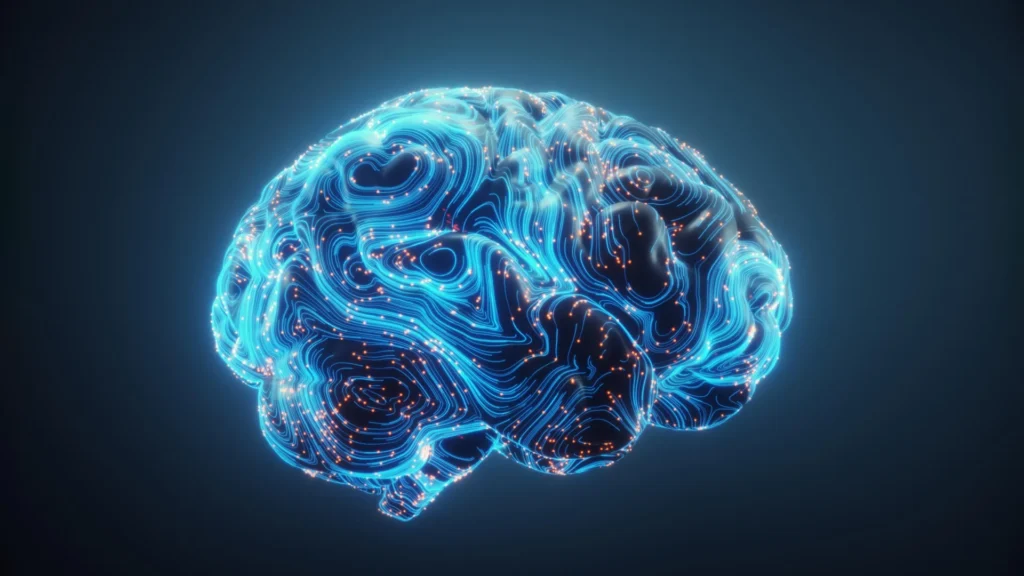
The long-standing scientific consensus that human multitasking is merely a rapid, subconscious switching of focus between tasks has been fundamentally challenged by new research from Georgetown University. A team of neuroscientists has provided robust evidence that the brain undergoes significant physical reorganization during the mastery of a skill. This process of neural remodeling allows well-practiced activities to migrate from the resource-heavy prefrontal cortex to more specialized regions, effectively bypassing the "bottleneck" that typically limits human cognitive capacity. By offloading these tasks, the brain creates the necessary bandwidth to perform multiple complex activities simultaneously, providing a neurological basis for what researchers are now identifying as genuine multitasking.
The Evolution of Learning Theory
For decades, cognitive psychology has operated under the assumption that the prefrontal cortex—the brain’s hub for executive function, conscious planning, and reasoning—acts as a gatekeeper. Because this area is associated with effortful deliberation, researchers traditionally argued that it could only handle one cognitively demanding task at a time. The phenomenon of "multitasking" was therefore categorized by most experts as "task-switching," a rapid oscillating process that creates an illusion of simultaneity at the cost of efficiency and accuracy.
However, this new longitudinal study, published in the Journal of Cognitive Neuroscience on June 4, suggests that the architecture of the brain is far more plastic than previously understood. When a task is practiced extensively, the brain does not merely become more efficient at using the prefrontal cortex; it fundamentally shifts the processing location of that task to the temporal cortex. This region, which is deeply involved in long-term memory and the recognition of complex objects, takes over the workload, freeing the prefrontal cortex to address other challenges.
Chronology of the Study and Experimental Methodology
To capture this transformation, the research team, led by Dr. Maximilian Riesenhuber and Dr. Patrick Cox, designed a longitudinal study that spanned several weeks. The project utilized a smartphone-based application that functioned as a training tool, requiring participants to categorize morphed images of cars based on subtle visual differences.
The experimental timeline was structured as follows:
- Baseline Assessment: Before training commenced, participants underwent comprehensive fMRI and EEG scans to establish the initial neural pathways used to solve the categorization problems.
- Intensive Training Phase: Over a period of five to 10 weeks, volunteers completed more than 30,000 individual trials. This high volume of repetition was essential to move the participants from a novice state to a level of automaticity where the task became largely effortless.
- Post-Training Analysis: Following the completion of the training cycles, participants underwent a second round of fMRI and EEG scans.
The data revealed a clear shift: while the initial trials showed high activity in the prefrontal cortex, the post-training scans displayed a significant reduction in frontal lobe involvement. Instead, the task was processed in a newly formed, category-selective area within the temporal lobe.
Data-Driven Insights into Neural Efficiency
The findings provide a quantitative basis for understanding how expertise translates into efficiency. By measuring the "offloading" of tasks, the researchers demonstrated that the more the temporal cortex assumed control of the categorization, the higher the performance of the participants on secondary, simultaneous tasks.
This suggests that the "frontal bottleneck" is not a permanent, unchangeable limitation of the human brain, but rather a temporary constraint that applies primarily to new or unfamiliar information. As the brain creates specialized circuits, it effectively builds a bypass. This mechanism explains why an experienced radiologist can identify malignant masses on an X-ray in a fraction of the time it takes a student, or why a seasoned driver can navigate heavy traffic while maintaining a complex conversation. The driver is not switching focus; they are utilizing an automated neural circuit that operates independently of the executive functions managing the conversation.
Implications for Habit Formation and Behavioral Change
Beyond the mechanics of performance, the study offers significant insights into the nature of human habits. If a well-learned behavior is "hardwired" into the temporal cortex, it effectively moves out of the sphere of conscious, executive control.
This explains the recurring failure of many behavioral intervention strategies. When an individual attempts to break a compulsive habit through willpower or conscious redirection, they are engaging the prefrontal cortex—the very part of the brain that the habit has already bypassed. Dr. Riesenhuber notes that this provides a neurobiological explanation for why simply "thinking about something else" is rarely effective for ingrained habits. Unlearning a behavior requires targeting the specific neural circuits where the skill resides, rather than relying on top-down executive inhibition.
Cross-Disciplinary Impacts: Artificial Intelligence
The implications of this research extend into the field of artificial intelligence, where "catastrophic forgetting" remains a major hurdle. Current AI systems are excellent at learning specific tasks, but they often struggle to integrate new learning without degrading their performance on previous tasks.
Humans, by contrast, excel at continuous, lifelong learning. The Georgetown study suggests that the brain’s ability to move mastered skills to a separate, stable area (like the temporal cortex) is the key to maintaining a "free" prefrontal cortex for new, unfamiliar learning. By modularizing knowledge, the human brain preserves its capacity to expand its skill set without needing to rewrite its foundational architecture. AI developers may find that mimicking this modular, offloading architecture is the next necessary step in evolving systems toward more human-like, flexible learning capabilities.
Future Directions and Safety Considerations
While the findings provide an optimistic outlook on human cognitive capacity, the researchers emphasize the limits of this neural reorganization. The ability to multitask effectively is contingent on the degree to which a neural circuit has been trained to be independent.
Dr. Patrick Cox, now an assistant professor at Lehigh University, cautions that this research does not imply that all tasks can be safely combined. "We can walk and chew gum at the same time," Cox noted, "but looking at our phones to text while driving will never be safe, because we take our eyes away from the road." The safety of multitasking depends on whether the neural circuits involved are truly separate and whether they compete for the same sensory inputs. The team’s future work will focus on identifying which specific types of tasks are compatible for parallel processing and uncovering the molecular signals that trigger the migration of a task from the frontal to the temporal lobe.
Conclusion and Acknowledgments
The study, supported by the National Science Foundation, the ARCS Foundation, and the Army Research Laboratory, marks a significant departure from the static view of the brain. By proving that the brain physically remodels itself to accommodate increased cognitive load, the research team has opened a new window into the plasticity of the human mind.
As society becomes increasingly data-driven and fast-paced, understanding how we acquire, store, and execute skills becomes paramount. Whether in clinical settings to treat obsessive-compulsive behaviors, in educational environments to optimize learning, or in the development of next-generation AI, the discovery that we can "remodel" our neural architecture serves as a foundational step toward a more sophisticated understanding of human potential. The research team, which also included Clara A. Scholl, Marissa L. Laws, Nelson E. Jaimes, and Xiong Jiang, concluded that the study provides a vital framework for future explorations into the limits and possibilities of the human brain’s multitasking potential.







