

For years, the standard approach to teaching writing in middle and secondary classrooms has been dominated by formulaic structures, rigid rubrics, and the relentless pressure of standardized testing. Educators often rely on scaffolds such as the RACES strategy (Restate, Answer, Cite, Explain, Summarize) or the traditional five-paragraph essay to ensure students meet state benchmarks. However, a growing body of pedagogical research, recently bolstered by a comprehensive dissertation by educator Nashwa Elkoshairi, suggests that these prescriptive methods may be inadvertently suppressing student creativity, critical thinking, and individual voice. By pivoting toward inquiry-based freewriting, teachers are finding a way to move beyond compliance-based instruction and toward a model that prioritizes authentic cognitive development.
The Problem with Formulaic Instruction
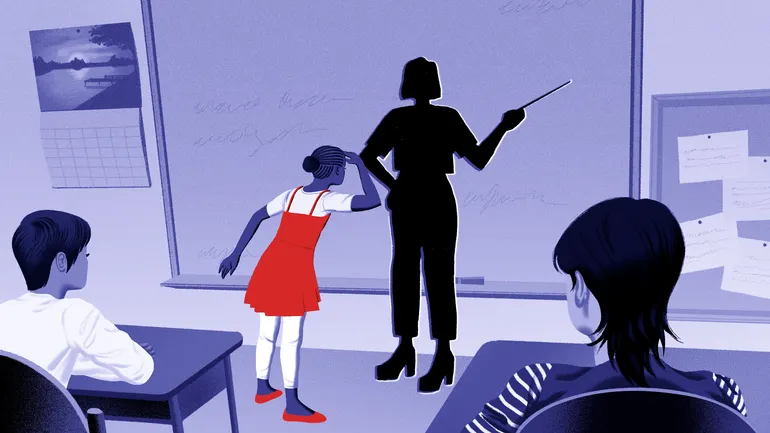
The reliance on highly structured writing formats stems from the high-stakes environment of modern education. With teacher evaluations often tied to student performance on standardized assessments, educators frequently prioritize "testable" writing skills over the messy, non-linear process of genuine intellectual exploration. In this context, writing becomes a transactional exercise—a box to be checked for a grade rather than a tool for processing complex ideas.
Data suggests that this approach has significant downsides. According to recent educational studies, students who are consistently trained to prioritize structural adherence over content development often exhibit "writer’s block" when faced with open-ended tasks. They become conditioned to wait for a prompt or a template, losing the ability to generate original insights. This has become particularly acute in the age of Artificial Intelligence, where students—feeling that their own voices are "wrong" or "inadequate"—increasingly turn to generative models to produce text, effectively outsourcing their critical thinking to software.
A Chronology of Pedagogical Shift
The transition away from rigid rubrics toward inquiry-based models is not entirely new, but its application in the modern, technology-integrated classroom is evolving. The theoretical foundations of this movement trace back to the work of 20th-century scholars such as John Dewey, who emphasized experiential learning, and Ken Macrorie and Peter Elbow, who pioneered the use of "freewriting" as a means of unlocking student potential.
Over a four-year period, Nashwa Elkoshairi conducted an extensive study to determine whether these theories could be successfully integrated into the current middle school environment. The research followed a structured timeline:
- Year 1-2 (The Diagnostic Phase): Identification of the "compliance trap," where students demonstrated high adherence to rubrics but low engagement with the subject matter.
- Year 3 (The Implementation Phase): Integration of daily, low-stakes freewriting exercises anchored by "driving questions" that transcended simple prompt-response structures.
- Year 4 (The Synthesis Phase): Analysis of student growth, which saw average writing output increase from 150 words to over 500 words per session, with a marked increase in self-reflective complexity.
The Mechanics of Inquiry-Based Freewriting
Unlike traditional creative writing prompts, inquiry-based freewriting is anchored to a "driving question"—an essential, open-ended query such as "Why does friendship matter?" or "How do our choices shape our future?"
The process is designed to be low-constraint. Students are assessed on two primary metrics: their ability to reflect personally on the topic and their commitment to increasing the volume of their writing over time. Crucially, spelling, grammar, and formal structure are removed from the immediate grading criteria during the drafting phase. This shift in assessment creates a "psychological safety net," allowing students to take intellectual risks without the fear of immediate punitive grading.
Culturally Responsive Leadership as a Foundation
A core component of this instructional shift is the application of Culturally Responsive School Leadership (CRSL). Developed by researchers like Muhammad Khalifa, CRSL posits that effective instruction must be rooted in an environment that validates student identity and lived experience.

In the classroom, this translates into four key practices: creating an environment of inclusivity, validating diverse perspectives through text selection, modeling vulnerability, and providing feedback that focuses on "bragging" about a student’s intellectual moves rather than correcting their errors. By focusing on the student’s identity, the teacher-leader creates a classroom culture where students feel their thoughts are valuable enough to be written down and scrutinized.
Implications for Modern Education
The implications of this shift are broad, extending well beyond the English Language Arts classroom. As schools grapple with the ubiquity of AI-generated content, the ability to synthesize personal experience with academic research is becoming a critical differentiator.
Educational experts note that when students are taught to "think on the page" through freewriting, they develop a level of metacognition that is difficult to replicate with AI. By analyzing their own previous entries, students can track the evolution of their opinions and identify patterns in their logic. This builds a form of intellectual agency that remains with the student long after they have left the classroom.
Furthermore, this model offers a scalable solution for other subject areas. In mathematics, for example, students might be asked to freewrite about the "beauty of a proof" or the "frustration of a failed equation," bridging the gap between cold data and human experience. In science, students can explore the ethical implications of technological advancement, while in history, they can reflect on the personal impact of past events on their own communities.
Analysis of Student Feedback
Qualitative data gathered during the implementation of these practices indicates a consistent pattern of resistance followed by breakthrough. Initial student reactions often reflect the discomfort of having their "safety net"—the rubric—removed. However, as the semester progresses, students frequently report a newfound sense of ownership.
One recurring theme in student reflections is the realization that their own thoughts can lead them down "unexplored alleys." This suggests that the primary benefit of the practice is not just better writing, but the discovery of ideas that the student did not know they possessed. This transition from "compliance to curiosity" is identified by educators as the hallmark of a successful inquiry-based classroom.
Conclusion and Future Outlook
The transition toward inquiry-based freewriting represents a significant pivot in modern pedagogy. By dismantling the reliance on formulaic writing, teachers can foster a generation of students who view themselves as thinkers rather than just processors of information. As AI continues to change the landscape of written communication, the human element—the ability to connect, synthesize, and reflect—becomes the most valuable skill a student can acquire.
The success of these methods, as evidenced by recent academic research and classroom outcomes, suggests that the future of writing instruction lies not in tighter rubrics, but in the creation of environments that trust students to lead their own intellectual journeys. For educators, the message is clear: when the pressure to be perfect is removed, the capacity for true innovation flourishes. By prioritizing the student’s voice and identity, the educational system can move away from the "transactional" model of learning and toward one that is deeply, and effectively, human.