


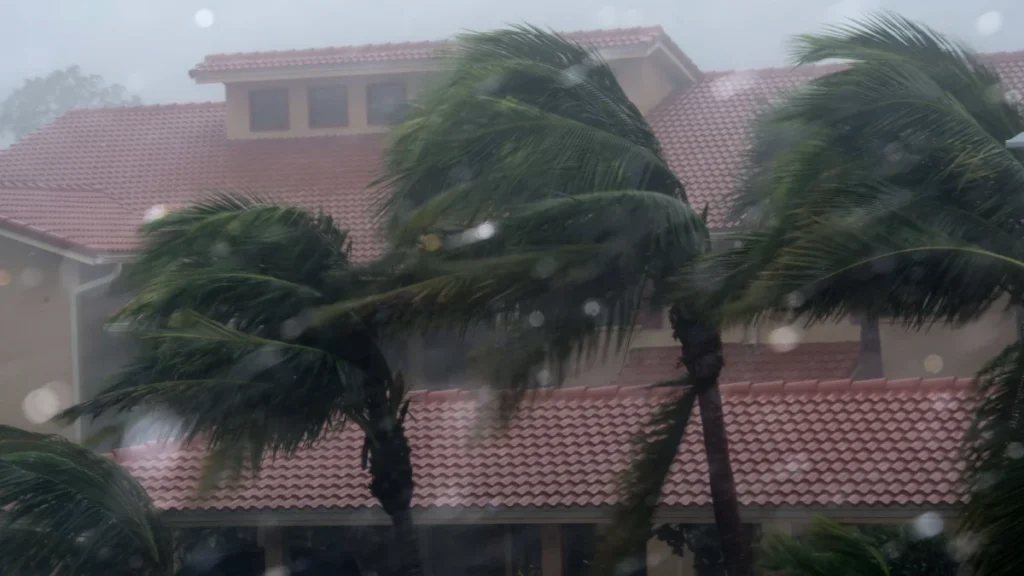
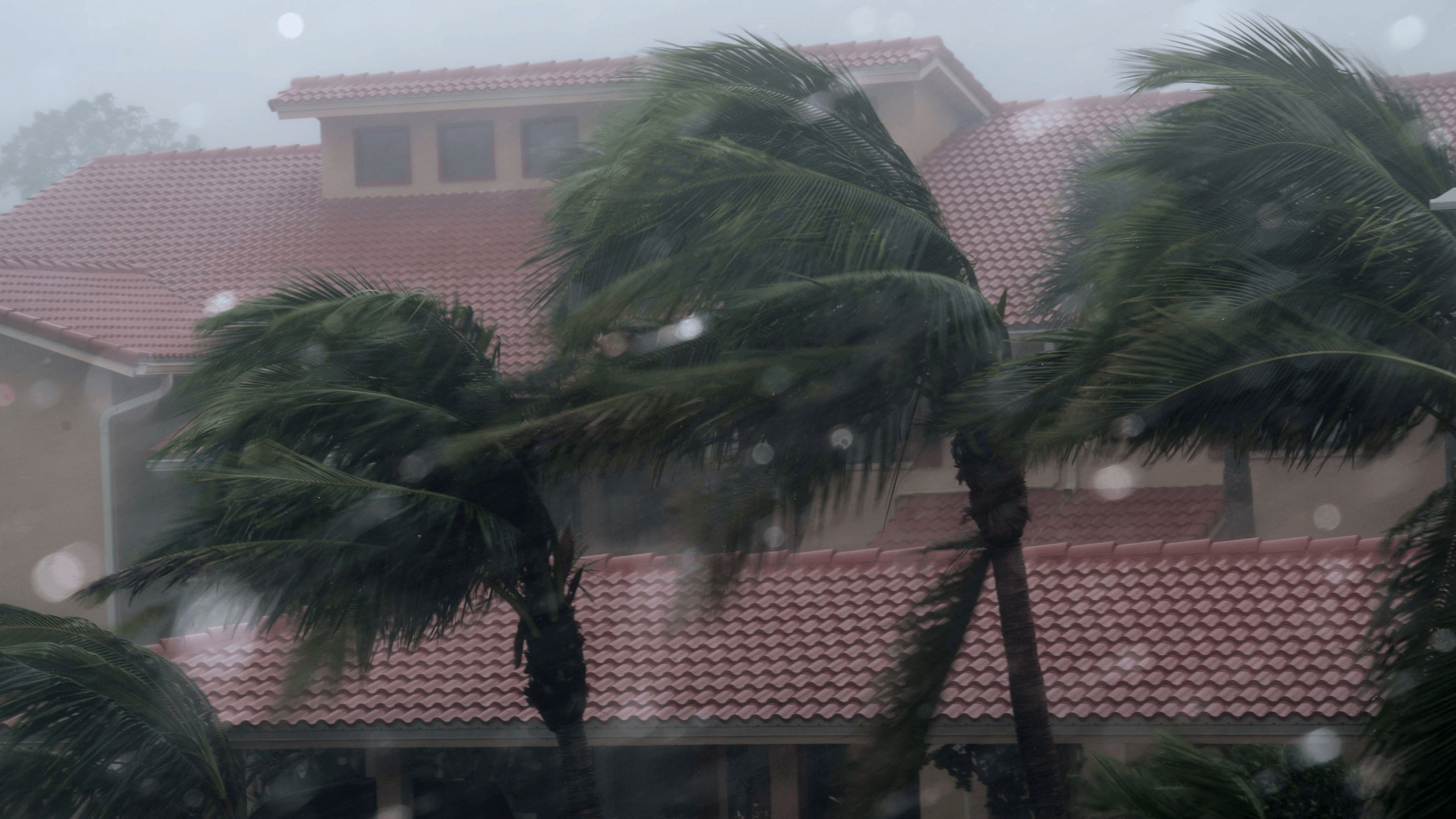
As communities along the northern Gulf Coast brace for the intensifying impacts of major weather systems, the vulnerability of conventional residential and commercial real estate remains a paramount concern for urban planners, structural engineers, and homeowners alike. Hurricane-force winds and associated storm surges regularly inflict catastrophic structural failures, leading to billions of dollars in property damage annually. According to estimates by the Congressional Budget Office, extreme wind events and storm-related flooding collectively cost United States households roughly $34 billion every year. Traditional mitigation techniques—such as reinforced wall framing, aerodynamic rounded corners, and specialized roof tie-downs—often require costly retrofits or expensive specialized materials that present financial barriers for commercial developers operating under tight margins.
Seeking a more cost-effective, passive defense mechanism against severe weather, a collaborative team of researchers from Florida A&M University (FAMU) and Florida State University (FSU) has turned to fluid dynamics and biomimicry. By investigating the natural aesthetics of ocean waves, the engineering team has developed a novel architectural concept featuring wave-shaped walls and roofs. Published recently in the journal Engineering Structures, their experimental findings indicate that incorporating rhythmic, sinusoidal curves into low-rise building exteriors can drastically mitigate the destructive pressure of high-velocity winds. As global climate patterns shift toward more frequent and intensely destructive storms, innovative geometrical interventions like these could soon transition from experimental laboratories into mainstream coastal development.
The Mechanics of Wind Destruction on Conventional Buildings
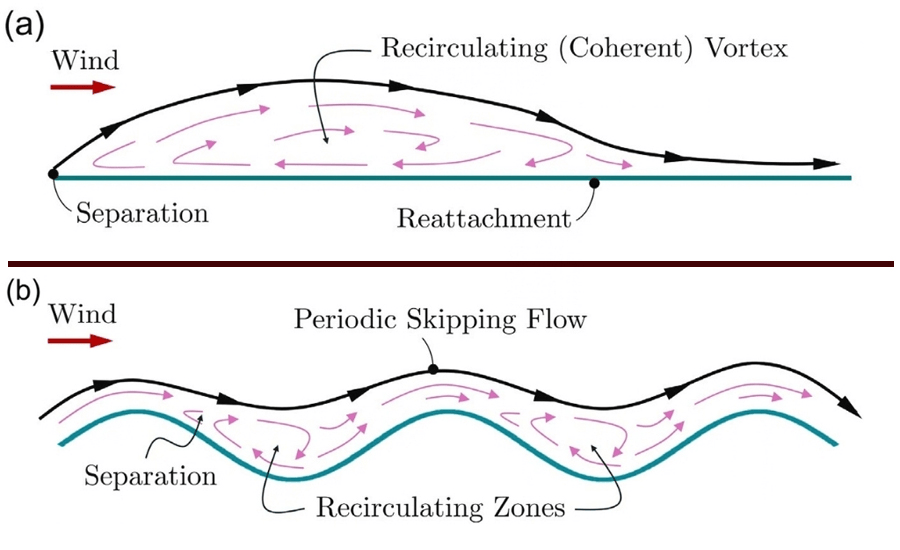
To understand the innovation behind wave-shaped architecture, one must first examine how standard rectangular buildings interact with high-speed airflows. When strong winds encounter a conventional flat-walled structure with a standard pitched roof, the air must rapidly accelerate as it is forced upward over the leading edge. This abrupt separation of airflow creates a massive, swirling vortex directly above the roofline.
This singular, large-scale vortex creates a localized zone of intense low pressure, or suction, right at the vulnerable corners and edges of the roof. Simultaneously, higher pressure builds up beneath and inside the building, pushing outward against the walls and foundation. This pressure differential—high internal pressure pushing out combined with extreme suction pulling up—creates a lift force that can literally peel roofs away from their framing structures, initiating catastrophic structural collapse.
For decades, structural engineers have attempted to neutralize these aerodynamic forces primarily through material reinforcement rather than geometric redesign. Standard building codes mandate thicker plywood sheathing, heavier hurricane straps, and impact-resistant glass. However, these solutions add significant weight and construction costs to the project without altering the fundamental aerodynamics of the structure. The FAMU-FSU research team realized that altering the building’s exterior geometry could disrupt the formation of destructive vortices at the source, offering a structural shield built directly into the exterior walls and roof profile.
Wind Tunnel Testing and Experimental Methodology
To test their hypothesis, the research team constructed precise, scale-model prototypes of low-rise buildings using advanced 3D-printing technology. The experimental matrix compared a standard baseline model featuring flat, conventional surfaces against a series of modified structures outfitted with wave-shaped walls and roofs.
The researchers tested three distinct wave amplitudes, defined as the size of the wave relative to the overall height of the building. In these models, the wave amplitudes were set at 5 percent, 7.5 percent, and 10 percent of the structure’s total height. For example, on a hypothetical 20-foot-tall residential building, a 10-percent amplitude translates to undulating waves extending outward by roughly two feet.
These 3D-printed models were subsequently placed inside a specialized boundary-layer wind tunnel at the university research facility. The wind tunnel subjected the models to controlled, high-velocity airflow from multiple directional angles to simulate the chaotic, shifting winds typical of a landfalling hurricane. High-resolution pressure sensors embedded across the exterior surfaces of the models recorded real-time aerodynamic loads.
The results demonstrated a clear correlation between wave depth and wind pressure reduction. Every wave-configured model experienced lower overall wind loads compared to the traditional flat-surface baseline. Most notably, the models featuring the deepest waves—the 10-percent amplitude configuration—achieved a reduction in peak wind pressure near the roof and wall corners by an impressive 40 to 60 percent.
How Wavy Architecture Disrupts Aerodynamic Forces
The mechanism behind this dramatic reduction lies in how fluid dynamics interact with undulating surfaces. Instead of encountering a flat facade that forces a sharp, monolithic separation of air, wind flowing over a wavy roof skips across the surface much like a flat stone skipping across calm water.
Rather than generating one massive, destructive vortex at the leading edge, the wave patterns break the airflow up into a series of smaller, dissipated micro-vortices. This continuous disruption prevents the formation of the intense, concentrated low-pressure suction pockets that typically target roof corners and eaves. By smoothing out the pressure gradients across the entire building envelope, the structure experiences significantly less localized stress during severe wind events.
"These nonconventional building shapes reduce the damage from worst-case severe weather scenarios," explained Pedro Fernández-Cabán, a civil engineer at Florida State University and co-author of the study. "It’s another tool for engineers and designers to protect against wind damage without relying solely on heavier, more expensive materials."
Broader Implications for Coastal Infrastructure and Urban Planning
The implications of this research extend far beyond academic curiosity. As coastal populations continue to swell and climate change fuels the intensification of tropical storms and hurricanes, municipalities face mounting pressure to fortify public and private infrastructure. Traditional building codes, while continuously updated to reflect modern safety standards, often struggle to keep pace with the rising frequency of severe weather events.
Implementing wave-shaped geometries into low-rise residential developments, commercial strip malls, and suburban neighborhoods could provide an affordable, passive layer of defense. Because these wave patterns can potentially be integrated directly into standard architectural panels, pre-fabricated siding, or roof trusses, developers may be able to adopt these designs without exponentially inflating construction budgets.
Furthermore, the architectural shift toward biomimicry and aerodynamic shapes aligns with a growing movement in sustainable and resilient urban design. Architects are increasingly looking to natural forms—such as the hydrodynamic contours of marine life and ocean waves—to solve engineering challenges posed by extreme natural environments.
Next Steps in Research and Development
Despite the promising wind tunnel data, the research team emphasizes that their current findings represent an early phase in a broader investigative process. The initial experiments focused primarily on measuring surface wind pressures under controlled laboratory conditions.
To transition these concepts from laboratory models to real-world construction sites, the researchers are currently conducting advanced computational fluid dynamics (CFD) simulations. These computer models allow the team to map complex airflow patterns around the wavy structures in microscopic detail, helping them fine-tune the optimal wave frequency, wavelength, and amplitude for various building types and regional climate profiles.
Future phases of the research will also evaluate the structural integrity of these wave-shaped panels when subjected to wind-driven debris and prolonged cyclic fatigue. Additionally, structural engineers will need to collaborate with local zoning boards and building code authorities to establish standardized guidelines for permitting non-rectilinear building envelopes in hurricane-prone zones.
If subsequent testing continues to validate the initial wind tunnel results, the aesthetic landscape of coastal communities could undergo a subtle yet profound transformation. Future neighborhoods in hurricane alleys might feature softly undulating roofs and walls, replacing rigid, boxy structures with wave-inspired designs engineered to weather the storm.