



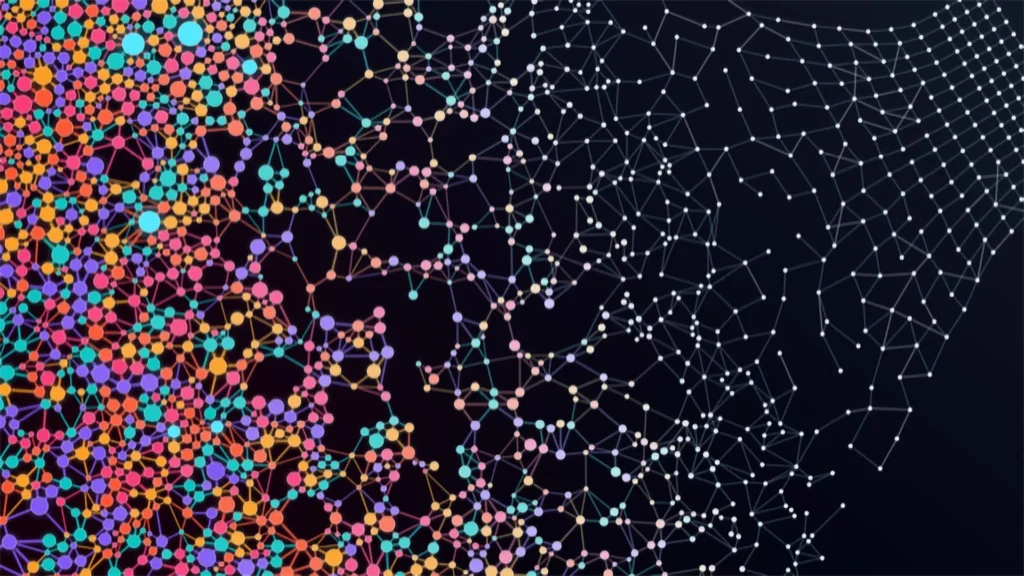
For decades, the prevailing philosophy in engineering and systems science has been rooted in the pursuit of uniformity. Whether designing an electrical grid to distribute power, building a swarm of autonomous drones, or conceptualizing a synthetic material, the objective has almost universally been to minimize variance. The logic was intuitive: if every component behaves identically, the system should be predictable, manageable, and, by extension, stable. However, a groundbreaking study published September 17 in the journal Science by researchers at Northwestern University suggests that this long-held architectural bias may be fundamentally flawed. By introducing a new mathematical framework, the team has demonstrated that perfection is not always the optimal state; rather, carefully calibrated disorder—or heterogeneity—can serve as a powerful stabilizer for complex networks.
The Myth of Uniformity in Complex Systems
The study, led by Adilson Motter, the Charles E. and Emma H. Morrison Professor of Physics and Astronomy at Northwestern, challenges the foundation of classical network theory. For years, scientists have relied on models like the Kuramoto model, which simplifies individual nodes into single variables to understand how synchronization occurs. While these models have provided essential insights into phenomena like the rhythmic pulsing of fireflies or the synchronized oscillation of power generators, they often fail to capture the messy reality of the natural world.
In nature, uniformity is the exception, not the rule. Neurons in the human brain vary in size and firing threshold; bird flocks are composed of individuals with distinct temperaments; and ecological webs are built upon the interactions of species that occupy vastly different niches. Until now, these irregularities were often treated as "noise" or defects to be corrected. The Northwestern team’s work suggests that these variations are not merely incidental; they are functional, providing a structural buffer that allows systems to absorb shocks and resist collapse.
A Chronology of Discovery
The journey to this discovery has been marked by a decade-long shift in how physicists view network dynamics. The trajectory began in earnest with initial observations that heterogeneous networks sometimes outperformed their uniform counterparts in specific simulations.
In 2020, a study published in Nature Physics by the Motter group provided one of the first major clues: they observed that electrical generators in a simulated grid synchronized more efficiently when they were allowed to operate with slight, distinct operational differences rather than being locked into perfectly identical behavior. Building on this, a 2025 study in Nature Communications, led by postdoctoral researcher Arthur Montanari, extended these findings to the realm of swarm robotics and biological flocking. These earlier projects established that the stabilizing effect of disorder was not a mathematical anomaly but a repeatable, observable phenomenon.
The current research serves as the culmination of these efforts, moving from isolated examples to a unified, predictive mathematical framework. By developing a model capable of calculating the stability of networks with varying degrees of internal diversity, the team has transitioned the field from anecdotal observation to rigorous, predictive science.
Anatomy of the Framework: How Disorder Stabilizes
To understand how disorder enhances resilience, the Northwestern researchers conceptualized systems as networks of nodes (the components) and links (the relationships). Stability, in this context, is defined as the system’s ability to return to a balanced state after an external disturbance—a sudden spike in electricity demand, a change in environmental conditions, or a physical impact on a material.
The mathematical framework developed by the team, which includes co-first authors Arthur Montanari and graduate student Pietro Zanin, operates on two primary levels. First, it identifies how differences among individual nodes contribute to stability. Second, it assesses how the architecture of the links—the "wiring" of the system—can be optimized through irregularity.
The data suggests that there is a "Goldilocks zone" for disorder. A system that is entirely uniform may be brittle, failing catastrophically when a disturbance exceeds a certain threshold. Conversely, a system with excessive, uncontrolled variation may lack the coherence necessary to function at all. The researchers found that by introducing a moderate, controlled level of heterogeneity, they could effectively broaden the range of disturbances a system could withstand.
Perhaps most surprisingly, the study indicates that in many cases, random variation is sufficient to outperform the most highly optimized, uniform configuration. This implies that engineers may not always need to engage in the prohibitively expensive task of manufacturing perfect, identical parts. Instead, allowing for natural variance within a design margin could lead to more robust systems at a lower cost.
Addressing the Ecological Paradox
The implications of this study extend far beyond the laboratory, providing a potential solution to a long-standing riddle in ecology known as May’s Paradox. Since the 1970s, mathematical models—most notably those developed by Robert May—have predicted that large, complex ecosystems should be inherently unstable. According to these traditional models, as the number of species and interactions increases, the probability of the system collapsing under its own complexity should rise exponentially.
However, the empirical reality of the natural world contradicts this. Earth’s most diverse ecosystems—such as tropical rainforests and coral reefs—are also among the most persistent and resilient. The Northwestern study offers a compelling explanation: the very diversity that traditional models viewed as a destabilizing force may actually be the source of the system’s longevity. When species interact in ways that are asymmetric or varied, they create a network of dependencies that can dampen the effects of population fluctuations, thereby preventing the chain-reaction collapses that earlier models predicted.
Implications for Engineering and Infrastructure
As society moves toward increasingly interconnected technologies, the need for resilient infrastructure is more critical than ever. The modern power grid, for instance, is currently transitioning toward a decentralized model involving thousands of renewable energy sources, battery storage units, and "smart" appliances. Unlike the traditional, centralized grid, this new architecture is highly complex and prone to cascading failures.
The Northwestern framework offers a new toolkit for grid operators. By understanding the optimal level of "disorder" within the generation and storage nodes, engineers could design grids that are inherently more resistant to the sudden drops in frequency that cause blackouts. Similarly, the field of architected materials—materials engineered at the micro-scale to possess specific properties—could be revolutionized. By deliberately introducing structural variations into the repeating units of a metamaterial, designers could create structures that are both lightweight and exceptionally resistant to fracture, mimicking the toughness of biological materials like bone or nacre.
Future Directions and Open Science
To ensure that these findings are accessible to the wider scientific community, the Northwestern team has launched an interactive website. This platform allows users to manipulate parameters in real-time, visualizing how network components synchronize and organize as the degree of disorder is adjusted.
"When disorder enhances stability, the next challenge is figuring out how best to design it," Motter remarked, highlighting that the work is far from finished. The transition from theoretical framework to practical application will require substantial computational effort. Engineers will need to use high-performance computing to map the specific "stability landscapes" of individual projects, identifying exactly which configurations of variance yield the best outcomes for specific environments.
While the research provides a new lens through which to view complexity, it also underscores the limitations of past methodologies. By stripping away complexity to achieve a "clean" model, scientists inadvertently removed the very mechanisms that allowed real-world systems to thrive. As researchers continue to apply this framework to neural networks and brain computation, they hope to unlock new understandings of how human cognition maintains stability despite the inherent variability of individual neurons.
The study, "Disorder-promoted stability," received support from the Army Research Office and the National Science Foundation. It stands as a significant contribution to the growing field of network dynamics, suggesting that the path to a more resilient future may not lie in the perfection of the individual parts, but in the intelligent management of their differences. In a world defined by its complexity, the ability to embrace and design for disorder may well be the defining technological challenge of the coming decade.