



The intersection of nuclear physics, 19th-century social hysteria, and the clandestine journals of pioneering microbiologists offers a profound look into the unpredictable nature of scientific discovery and human behavior. Recent historical investigations, highlighted in the latest discourse from Popular Science, have shed new light on three distinct yet equally compelling narratives: the lethal accidents involving the "Demon Core" at Los Alamos, the bizarre phenomenon of "ghost hoaxing" in colonial Australia, and the hidden ethical complexities behind Louis Pasteur’s most famous breakthroughs. These accounts provide a sobering reminder of the thin line between scientific progress and catastrophe, as well as the enduring power of public fear.
The Lethal Physics of the Demon Core: A Chronology of Criticality
In the immediate aftermath of World War II, the United States military possessed a 6.2-kilogram (13.7 lb) subcritical mass of plutonium intended for a third atomic strike against Japan. When the surrender of Japan rendered the weapon unnecessary, the sphere—internally known as "Rufus"—was retained at the Los Alamos Laboratory for research. It was during this period of transition from a weapon of war to a subject of laboratory scrutiny that the core earned its more ominous moniker: the "Demon Core."
The core was designed to exist in a state near criticality, the point at which a nuclear chain reaction becomes self-sustaining. To study this state, scientists engaged in "tickling the dragon’s tail," a series of high-stakes experiments meant to determine how close the plutonium could be brought to a critical state before a lethal burst of radiation occurred.
The first fatal accident occurred on August 21, 1945. Physicist Harry Daghlian was performing neutron reflection experiments by manually stacking tungsten carbide bricks around the core. During the procedure, Daghlian accidentally dropped a brick directly onto the plutonium sphere, causing it to go prompt critical. In a desperate bid to stop the reaction, he knocked the bricks away by hand. While he succeeded in halting the chain reaction, the burst of neutron radiation was terminal. Daghlian died 25 days later from acute radiation poisoning, becoming the first laboratory fatality of the atomic age.
Despite this tragedy, safety protocols remained dangerously informal. On May 21, 1946, physicist Louis Slotin conducted a similar experiment using two half-spheres of beryllium as a neutron reflector. Rather than using safety shims to keep the hemispheres apart, Slotin used the tip of a flathead screwdriver to manually maintain the gap. The screwdriver slipped, the hemispheres closed completely, and a massive flash of blue light signaled a criticality event. Slotin instinctively jerked his hand up, lifting the top hemisphere and saving the lives of seven other scientists in the room. However, Slotin had absorbed a massive dose of roughly 1,000 rads of neutron and gamma radiation. He died nine days later in agonizing conditions.
Following Slotin’s death, the Los Alamos Laboratory banned all manual "hands-on" criticality experiments. The Demon Core was eventually melted down and its material recycled into other cores, but its legacy remains a foundational case study in the necessity of rigorous nuclear safety standards and the inherent dangers of human error in high-stakes physics.
Ghost Hoaxing and the Social Fabric of Colonial Australia
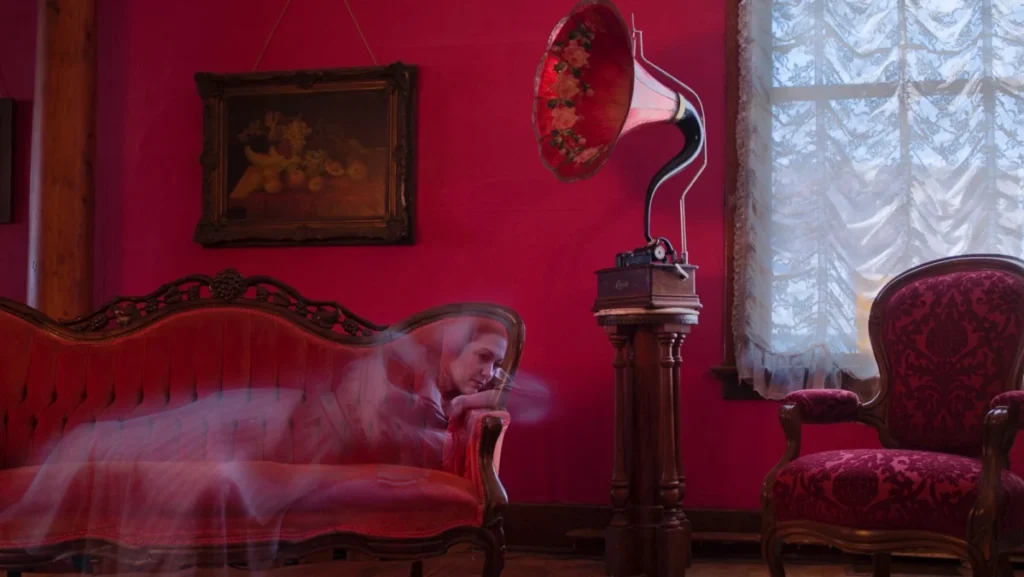
While American physicists were grappling with the invisible dangers of radiation, citizens in 1880s Australia were contending with a different kind of "apparition." The phenomenon of "ghost hoaxing" emerged as a widespread social trend, blending elements of performance art, juvenile delinquency, and organized crime.
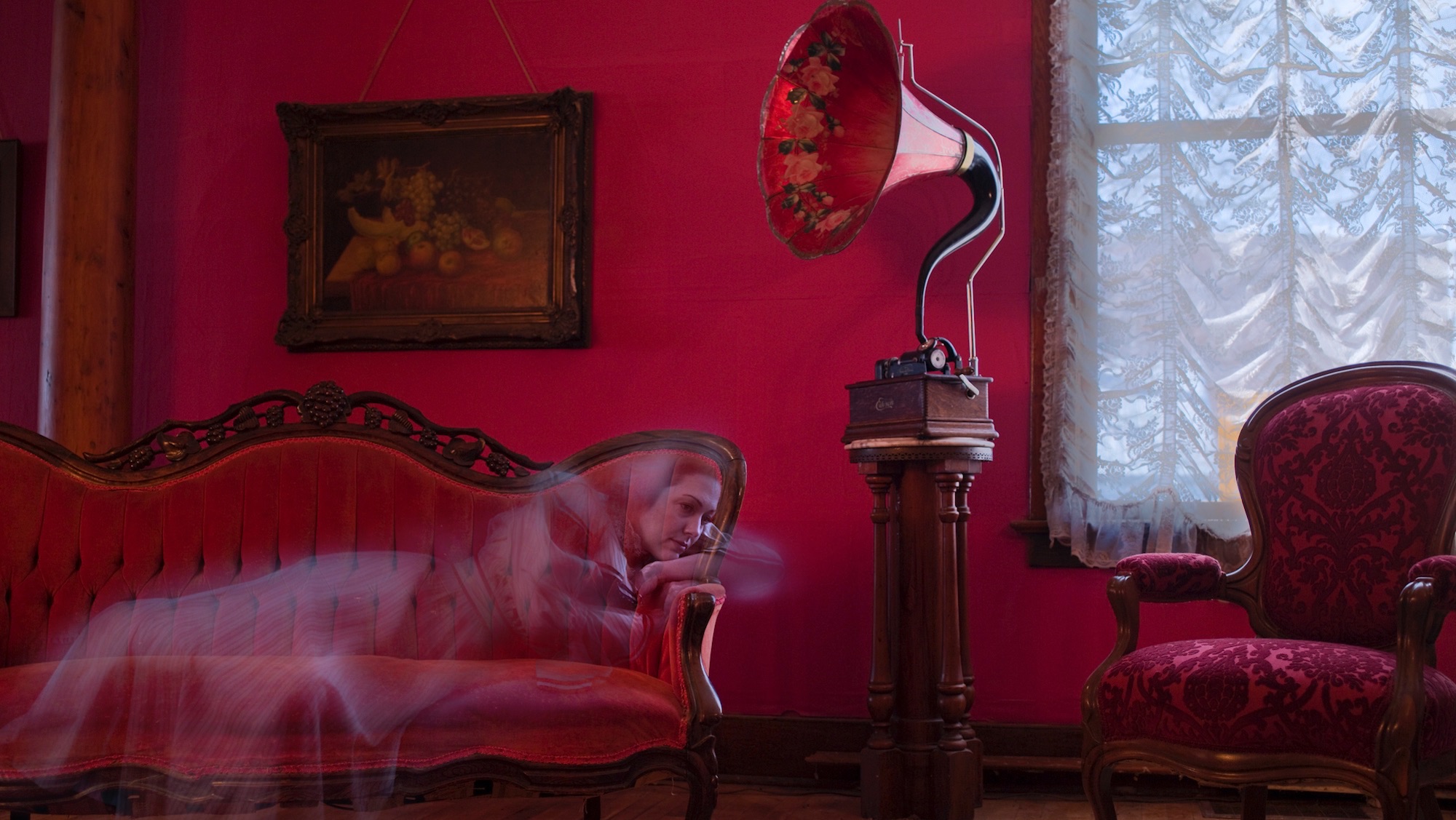
During this period, the availability of phosphorescent paints—often containing dangerous chemicals like white phosphorus or calcium sulfide—allowed pranksters to create glowing costumes. Reports from the era describe individuals, often referred to as "theatrical ghosts," who would roam the streets of Melbourne, Sydney, and Ballarat to terrify the public. One of the most famous accounts involves a woman who reportedly donned a glowing wedding dress and climbed onto residential rooftops to play the guitar, creating an eerie, luminous spectacle that drew crowds and local consternation.
However, the trend quickly evolved from harmless, albeit strange, pranks into a significant public safety issue. Criminal elements realized that the "ghost" disguise was an effective way to evade identification by colonial police forces, which were often understaffed and lacked centralized coordination. These "criminal ghosts" engaged in harassment, assault, and robbery, leveraging the prevailing Victorian-era superstitions to paralyze their victims with fear.
The public reaction was swift and often violent. In many towns, "ghost-hunting" vigilante groups were formed. These groups, armed with sticks and occasionally firearms, patrolled the streets with the intent of unmasking and punishing the hoaxers. Historical records indicate that several "ghosts" were severely beaten or shot by terrified or angry residents. This era of Australian history serves as a precursor to modern "scary clown" panics, illustrating how a combination of new technology (in this case, luminous paint) and social instability can trigger widespread communal hysteria.
The Pasteur Myth: Secret Notebooks and Ethical Controversies
In the realm of biological science, few names carry as much weight as Louis Pasteur. Celebrated as the father of germ theory and the inventor of pasteurization, Pasteur is often depicted as a paragon of selfless scientific inquiry. However, modern historical analysis, aided by the eventual release of his private laboratory notebooks, reveals a more complex and ethically ambiguous figure.
Pasteur was notoriously secretive, specifically instructing his family never to release his private journals. It was not until 1964 that his grandson donated the papers to the Bibliothèque Nationale de France, and not until the 1990s that historians like Gerald L. Geison fully analyzed their contents. The notebooks revealed that Pasteur’s public accounts of his experiments often diverged significantly from his actual laboratory practices.
One of the most striking revelations concerns the development of the anthrax vaccine. In 1881, Pasteur conducted a famous public demonstration at Pouilly-le-Fort, where he successfully vaccinated sheep against anthrax. Publicly, he claimed to have used a vaccine attenuated by exposure to oxygen. In reality, his notebooks showed he had used a chemical attenuation method—a process developed by his rival and former collaborator, Jean-Joseph-Henri Toussaint. Pasteur had essentially used Toussaint’s method while claiming credit for his own theoretical approach.
Furthermore, the ethics of Pasteur’s first human trials for the rabies vaccine have come under scrutiny. In 1885, Pasteur treated nine-year-old Joseph Meister, who had been bitten by a rabid dog. While the treatment was successful and hailed as a miracle, the notebooks indicate that Pasteur had not yet fully proven the vaccine’s safety or efficacy in animal models before administering it to the child. By modern standards, this would be considered a high-risk and potentially unethical human experiment.
Pasteur’s drive for success was fueled in part by a fierce rivalry with the German physician Robert Koch. This competition accelerated the pace of discovery in microbiology but also led Pasteur to take significant risks and maintain a level of secrecy that complicated the peer-review process of the late 19th century.
Analysis of Implications: The Human Element in Science and Society
The stories of the Demon Core, Australian ghost hoaxers, and Louis Pasteur’s hidden journals share a common thread: the impact of human psychology on the progression of science and social order.
The accidents at Los Alamos demonstrate that even the most brilliant minds are susceptible to complacency. The "cowboy culture" of the early Manhattan Project, characterized by a lack of formal safety protocols and a reliance on individual intuition, led directly to preventable deaths. Today, nuclear facilities operate under strict "defense-in-depth" strategies, a direct evolution from the lessons learned during the era of the Demon Core.
Similarly, the ghost hoaxing phenomenon in Australia highlights the role of "moral panics" in shaping public policy and policing. The transition from prank to crime, and the subsequent rise of vigilantism, reflects a society struggling to adapt to rapid urbanization and the breakdown of traditional social structures. It underscores the fact that fear, whether of the supernatural or the unknown, is a powerful catalyst for social disruption.
Finally, the re-evaluation of Louis Pasteur’s career reminds us that scientific progress is rarely a straight line of objective truth. It is often driven by ego, competition, and ethical compromises. While Pasteur’s contributions to humanity are undeniable, understanding the "Pasteur Myth" allows for a more nuanced appreciation of the scientific process—one that recognizes the flaws of the individual while celebrating the ultimate triumph of the discovery.
As we look back on these historical anomalies, they serve as a roadmap for the future. They emphasize the need for transparency in research, the importance of rigorous safety standards, and the necessity of understanding the psychological underpinnings of public reaction to new phenomena. Whether it is a glowing sphere of plutonium or a glowing figure on a roof, the unknown will always elicit a response; history dictates whether that response is one of progress or of panic.