



Microsoft has unveiled a comprehensive suite of initiatives and technological tools designed to integrate generative artificial intelligence into the global education sector. This strategic rollout, anchored by the launch of the Microsoft Elevate for Educators program, represents a significant expansion of the company’s commitment to modernizing classrooms and bridging the digital divide through AI-driven pedagogy. The announcement comes ahead of the Bett UK 2026 conference, signaling a major shift in how the technology giant intends to support education leaders, teachers, and students in navigating the complexities of the AI era.
At the heart of this initiative is the Microsoft Elevate for Educators program, a multi-faceted platform designed to connect teaching professionals with a global peer network, professional development resources, and specialized AI tools. This program is a central component of Microsoft’s broader "Elevate" commitment, an ambitious global undertaking that aims to provide AI skilling credentials to more than 20 million people over the next two years. By focusing on educators, Microsoft seeks to ensure that the primary facilitators of learning are equipped not only with the technology itself but with the pedagogical skills required to implement it responsibly and effectively.
Core Technological Innovations for the Classroom
The technological centerpieces of this announcement include new AI-powered applications purpose-built for the educational environment. Among these is "Teach," a specialized feature now available within the Microsoft 365 Copilot app. Designed to address the administrative and preparatory burdens that frequently contribute to teacher burnout, Teach allows educators to streamline lesson preparation. The tool offers customizable features for generating lesson plans aligned with specific academic standards, developing quizzes and rubrics, and adapting existing instructional materials to suit varying reading levels. By automating these time-consuming tasks, the tool is intended to allow educators to redirect their focus toward direct student engagement and personalized instruction.
For institutions utilizing Copilot+ PCs—Microsoft’s latest generation of hardware featuring on-device AI processing—the company has introduced the Microsoft Learning Zone. This application leverages NPU (Neural Processing Unit) technology to provide interactive learning experiences without relying solely on cloud connectivity. The Learning Zone has already received the ISTE Seal of Alignment, a prestigious recognition indicating that the software meets rigorous standards for learning design and research-backed teaching practices.

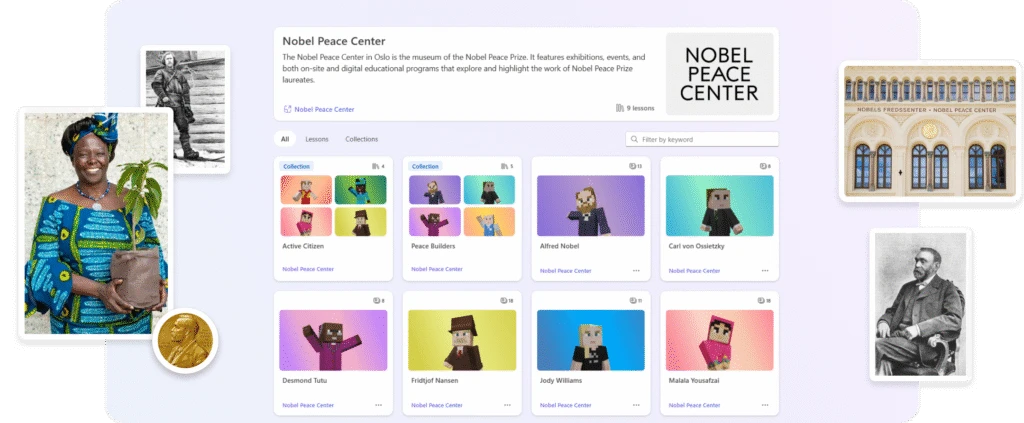
The application incorporates content from a diverse array of high-profile partners, including NASA, the Nobel Peace Center, PBS NewsHour, and the World Wildlife Fund. For instance, the Nobel Peace Center collection allows students to explore themes of human rights and justice through the stories of laureates like Malala Yousafzai, complemented by interactive activities within Minecraft Education. Microsoft has confirmed that while the app currently supports English and Spanish, it will expand to include Portuguese, French, and German by the end of 2026, with Learning Management System (LMS) integration also slated for next year.
Advancing Student Autonomy and Career Readiness
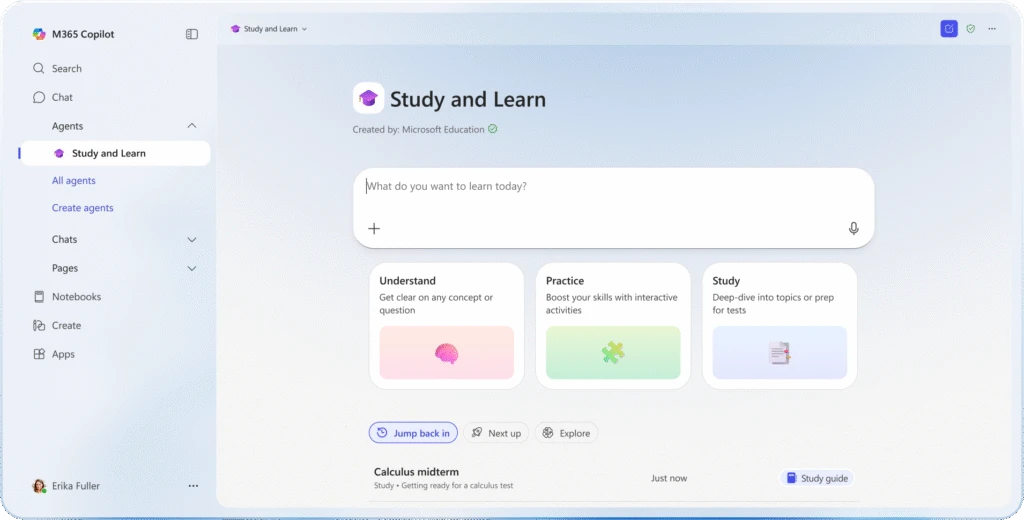
Microsoft’s strategy extends beyond the teacher’s desk to direct student support. The newly introduced "Study and Learn Agent" is an AI-powered companion designed for students aged 13 and older. Built on established learning science principles, the agent does not simply provide answers but guides students through the process of understanding complex concepts. It features adaptive exercises, flashcards, and matching games that adjust in difficulty based on the student’s performance, fostering critical thinking and independent study habits.
In the higher education sector, Microsoft is addressing the transition from academia to the professional workforce. Eligible university students are being offered 12 months of free access to Microsoft 365 Premium and LinkedIn Premium Career. This dual-subscription offer is intended to provide students with the tools necessary for both academic excellence—such as advanced writing and organization tools—and career advancement, including interview preparation and internship networking. This move is seen by industry analysts as a strategic effort to cultivate brand loyalty among the next generation of professionals as they enter a competitive, AI-influenced job market.
Chronology of Microsoft’s Educational Evolution
The launch of Microsoft Elevate for Educators is the latest milestone in a history of educational involvement spanning five decades. To understand the significance of this current rollout, it is necessary to view it through the lens of the company’s recent AI trajectory:
- 2023-2024: Microsoft began the broad integration of GPT-based models into its productivity suite, launching Microsoft 365 Copilot. Early pilot programs in schools focused on basic administrative automation.
- Early 2025: The company announced the "Elevate" global commitment, focusing on large-scale workforce readiness and AI literacy.
- July 2025: The broader Microsoft Elevate commitment was detailed, setting the target of 20 million skilled individuals by 2027.
- Late 2025: Collaboration with IDC resulted in the publication of a white paper titled "A Blueprint for AI-Ready Schools," which synthesized data from early adopters in Australia, Canada, and the United States.
- January 2026: Official unveiling of the Elevate for Educators program and the suite of classroom-specific AI agents (Teach, Study and Learn) ahead of the Bett UK conference.
Data-Driven Insights and Institutional Governance
The push for AI integration is supported by new research highlighting the necessity of a structured approach to digital transformation. The IDC White Paper sponsored by Microsoft, "A Blueprint for AI-Ready Schools: Strategies from the Front Lines of K-12 Education," outlines the common challenges and successes experienced by early-adopter districts. According to the report, schools that implement AI with a focus on "human-in-the-loop" systems—where AI supports rather than replaces the teacher—report higher levels of student engagement and more efficient resource allocation.
Case studies highlighted in the report include Brisbane Catholic Education in Australia and Broward County Schools in the U.S., both of which utilized Microsoft’s framework to develop policies for responsible AI use. These districts focused on data privacy and the ethical implications of algorithmic grading, providing a roadmap for other institutions.
To address the growing concerns regarding cybersecurity in schools—a sector increasingly targeted by ransomware—Microsoft has also released the "Microsoft Education Security Toolkit." This resource provides institutional leaders with guidance on strengthening their cybersecurity posture while implementing new AI tools. It includes compliance templates, implementation scenarios, and strategic planning modules designed to simplify the complex landscape of educational data protection.
Institutional and Industry Responses
While Microsoft has not released formal third-party testimonials with this specific announcement, the reaction from the educational community has been characterized by a mix of optimism and cautious pragmatism. School administrators have largely welcomed the "Teach" app’s ability to reduce administrative overhead, which remains a primary cause of teacher attrition globally.
However, some educational advocates have raised questions regarding the "digital divide." While the Copilot+ PC features are robust, there is concern that students in lower-funded districts without access to high-end hardware may be left behind. Microsoft’s response to this has been the inclusion of cloud-based versions of many tools and the "AI Skills Navigator," which provides free resources regardless of hardware specifications.
Industry analysts suggest that Microsoft’s comprehensive approach—combining hardware, software, and professional development—is a direct move to maintain its lead over competitors like Google and Apple in the education space. By offering free LinkedIn and Microsoft 365 subscriptions to higher education students, Microsoft is positioning its ecosystem as the standard for "career readiness" in the 21st century.
Broader Impact and Future Implications
The long-term implications of the Microsoft Elevate for Educators program extend beyond simple classroom utility. By aiming to skill 20 million people, Microsoft is essentially attempting to set the global standard for AI literacy. This has profound implications for the future of work, as the skills taught in these AI-enabled classrooms will likely dictate the competencies required in the global economy of the 2030s.
Furthermore, the emphasis on "Responsible AI" within the Education AI Toolkit suggests that Microsoft is taking a proactive role in shaping the ethical framework of educational technology. As generative AI becomes more pervasive, the focus on critical thinking and "reflective learning" found in the Study and Learn Agent may become a necessary safeguard against the potential for over-reliance on automated answers.
As the educational sector prepares for the Bett UK 2026 conference, the focus will remain on how these tools perform in real-world environments. The success of Microsoft Elevate for Educators will ultimately be measured not by the sophistication of its algorithms, but by its ability to demonstrably improve student outcomes and alleviate the systemic pressures currently facing educators worldwide. For now, Microsoft has laid out a clear vision: a future where AI is not a replacement for the human element of teaching, but a powerful engine for its amplification.