



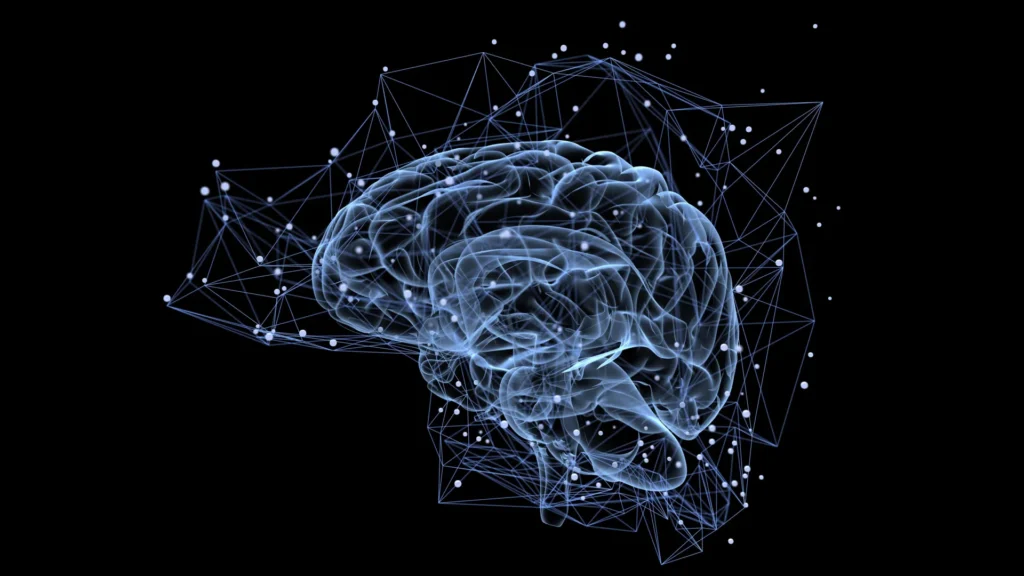
Every day, the human brain masterfully transforms fleeting impressions, innovative thoughts, and profound emotional experiences into enduring memories, thereby forging our individual identities and shaping the decisions that guide our lives. For decades, a fundamental question has captivated neuroscientists: how does the brain discern which fragments of information are worthy of lasting storage, and what mechanisms dictate the longevity of these precious recollections? Recent groundbreaking research, detailed in the prestigious journal Nature, has unveiled a sophisticated answer, revealing that long-term memories are not simply switched "on" or "off," but rather sculpted by an intricate sequence of molecular timing mechanisms that orchestrate their activation across various regions of the brain. This discovery fundamentally redefines our understanding of memory consolidation and persistence.
A Paradigm Shift in Memory Research
Scientists utilizing an innovative virtual reality behavioral system in mice have pinpointed specific regulatory factors crucial for either solidifying memories into increasingly stable states or allowing them to gradually dissipate. This work, spearheaded by Priya Rajasethupathy, head of the Skoler Horbach Family Laboratory of Neural Dynamics and Cognition, illuminates how multiple brain regions collaboratively reorganize memories over time. The findings highlight the existence of internal "checkpoints" that continually assess the significance of each memory and, consequently, determine its appropriate durability.
"This is a key revelation because it explains how we adjust the durability of memories," Rajasethupathy emphasized in a recent statement. "What we choose to remember is a continuously evolving process rather than a one-time flipping of a switch." This perspective marks a significant departure from previous, more simplistic models of memory formation.
Moving Beyond the Classical "On/Off Switch" Model
For a considerable period, the dominant scientific consensus on memory formation revolved around two primary brain structures: the hippocampus, traditionally understood as the hub for short-term memory encoding, and the cortex, believed to be the ultimate repository for long-term memories. Within this classical framework, long-term memories were conceptualized as being governed by straightforward biological "on-and-off switches."
"Existing models of memory in the brain involved transistor-like memory molecules that act as on/off switches," Rajasethupathy further elaborated, describing the prior, widely accepted viewpoint. This older perspective posited that once a memory was designated for long-term storage, it would, in essence, persist indefinitely. While this model offered valuable foundational insights and helped establish a basic understanding of memory pathways, it struggled to account for a critical observational discrepancy: why some long-term memories might endure for only a few weeks, while others remain remarkably vivid and accessible for many decades, even a lifetime. The variability in memory durability presented a profound challenge to the "static switch" hypothesis.
The Thalamus: A Central Hub in Memory Orchestration
The seeds for this new understanding were sown in 2023 when Rajasethupathy and her colleagues first described a novel brain circuit that intricately links the short-term and long-term memory systems. A pivotal component of this newly identified pathway is the thalamus, a deep brain structure previously recognized for its role in relaying sensory and motor signals. Their earlier research suggested that the thalamus plays a far more active role in memory than previously thought, acting as a crucial arbiter that helps determine which nascent memories should be retained and subsequently directs them to the cortex for long-term stabilization.
These initial discoveries opened a cascade of deeper, more nuanced questions that the scientific community had long pondered: What precisely happens to memories once they transition beyond the hippocampus’s initial processing? And, critically, what are the underlying molecular processes that ultimately decide whether a memory becomes a lasting fixture in our minds or fades into oblivion? The current study sought to unravel these complex molecular mechanisms.
Unveiling Memory Persistence Through Virtual Reality Experiments
To meticulously investigate these elusive mechanisms, Rajasethupathy’s team embarked on developing a highly sophisticated experimental setup. They constructed a virtual reality environment specifically designed for mice, enabling the researchers to precisely control and manipulate the formation of specific memories. "Andrea Terceros, a talented postdoc in my lab, created an elegant behavioral model that allowed us to break open this problem in a new way," Rajasethupathy explained, highlighting the innovative nature of their approach.
By systematically varying the frequency with which certain experiences were presented and repeated to the mice, the researchers were able to induce different levels of memory retention. Some experiences were frequently repeated, leading to stronger memories, while others were shown only occasionally, resulting in weaker, more transient recollections. This methodological design allowed the team to directly observe and correlate specific brain mechanisms with varying degrees of memory persistence.
However, mere correlation, while informative, could not definitively establish causality. To move beyond correlational data and pinpoint the precise molecular players, co-lead researcher Celine Chen engineered a cutting-edge CRISPR-based screening platform. This powerful genetic tool allowed the team to selectively alter gene activity within the thalamus and cortex of the mice. Through this targeted manipulation, they discovered that the removal or alteration of specific molecules directly impacted how long memories lasted, revealing that each identified molecule operated on its own distinct timescale, contributing to a complex, multi-stage process of memory consolidation.
Timed Programs: The Guiding Hand of Memory Stability
The collective findings of this extensive research powerfully indicate that long-term memory formation is not predicated on a simplistic, single on/off switch. Instead, it relies on an elaborate sequence of gene-regulating programs that metaphorically unfold like molecular timers across different regions of the brain.
These "timed programs" exhibit a crucial temporal hierarchy. Early timers activate rapidly but are designed to fade quickly, facilitating the natural process by which less important or redundant memories are allowed to disappear. Conversely, later timers are initiated more gradually, meticulously providing the necessary structural and molecular support for important experiences to persist over extended periods. In this particular study, the repetition of experiences served as an effective experimental proxy for the inherent "importance" of a memory, allowing researchers to directly compare the molecular responses associated with frequently encountered contexts versus those seen only occasionally.
The team meticulously identified three specific transcriptional regulators that proved essential for the maintenance of memories: Camta1 and Tcf4, both located within the thalamus, and Ash1l, found in the anterior cingulate cortex. Crucially, these molecules are not required for the initial formation of a memory; rather, their roles are critical for its subsequent preservation and stabilization. Disrupting the function of Camta1 and Tcf4, for instance, led to a measurable weakening of the vital connections between the thalamus and the cortex, directly resulting in significant memory loss in the experimental subjects.
According to the refined model proposed by Rajasethupathy’s team, memory formation typically commences in the hippocampus. From there, Camta1 and its downstream molecular targets play an initial, vital role in keeping that nascent, early memory intact. As time progresses and the memory is deemed significant, Tcf4 and its targets become activated, working to strengthen cellular adhesion and provide robust structural support within the neural circuits. Finally, Ash1l promotes sophisticated chromatin remodeling programs—processes that alter the structure of DNA and associated proteins—which further reinforce and lock in memory stability for the long term.
"Unless you promote memories onto these timers, we believe you’re primed to forget it quickly," Rajasethupathy underscored, emphasizing the dynamic and active nature of memory consolidation. This dynamic system ensures that the brain is not overwhelmed by an endless barrage of trivial information, selectively retaining only what is deemed most relevant for an individual’s survival and functioning.
Shared Memory Mechanisms Across Biology and Therapeutic Potential
One of the most intriguing aspects of this discovery lies in the evolutionary conservation of these molecular mechanisms. Ash1l, for example, belongs to a family of proteins known as histone methyltransferases, which are recognized for their role in maintaining memory-like functions in a diverse array of other biological systems. "In the immune system, these molecules help the body remember past infections, enabling a more rapid and effective response upon re-exposure," Rajasethupathy noted. "During development, those same molecules help cells remember that they’ve become a neuron or muscle and maintain that identity long-term."
This striking parallel suggests that the brain may have "repurposed" these ubiquitous forms of cellular memory, adapting them to support the more complex and nuanced processes of cognitive memory. This evolutionary conservation hints at fundamental biological principles underlying information storage and retrieval across different scales of life.
The profound implications of these discoveries extend far beyond basic scientific understanding. They hold significant promise for eventually helping researchers address a spectrum of debilitating memory-related diseases, such as Alzheimer’s and other forms of dementia. By gaining a precise understanding of the specific gene programs that preserve memory, scientists may one day be able to develop innovative therapeutic strategies aimed at redirecting memory pathways, potentially bypassing damaged brain regions.
"If we know the second and third areas that are important for memory consolidation, and we have neurons dying in the first area, perhaps we can bypass the damaged region and let healthy parts of the brain take over," Rajasethupathy mused, envisioning a future where this knowledge could lead to novel interventions that mitigate the devastating effects of neurodegenerative disorders. For instance, in Alzheimer’s disease, where the hippocampus is often an early casualty, understanding alternative consolidation pathways could offer a lifeline to preserving cognitive function.
Decoding the Future: Next Steps for the Memory Timer System
The ongoing research by Rajasethupathy’s team is now focused on deciphering the precise mechanisms by which these molecular timers are activated and what factors ultimately determine their specific duration. This critical next phase includes delving deeper into how the brain evaluates the "importance" of a particular memory and subsequently decides on its appropriate longevity. Their continued investigations consistently point toward the thalamus as a central, critical hub in this intricate decision-making process.
"We’re interested in understanding the life of a memory beyond its initial formation in the hippocampus," Rajasethupathy affirmed, outlining the ambitious scope of their future work. "We think the thalamus, and its parallel streams of communication with the cortex, are central in this process." This continued exploration promises to unlock further secrets of memory, potentially paving the way for revolutionary treatments and a deeper appreciation of one of the brain’s most miraculous capabilities.