



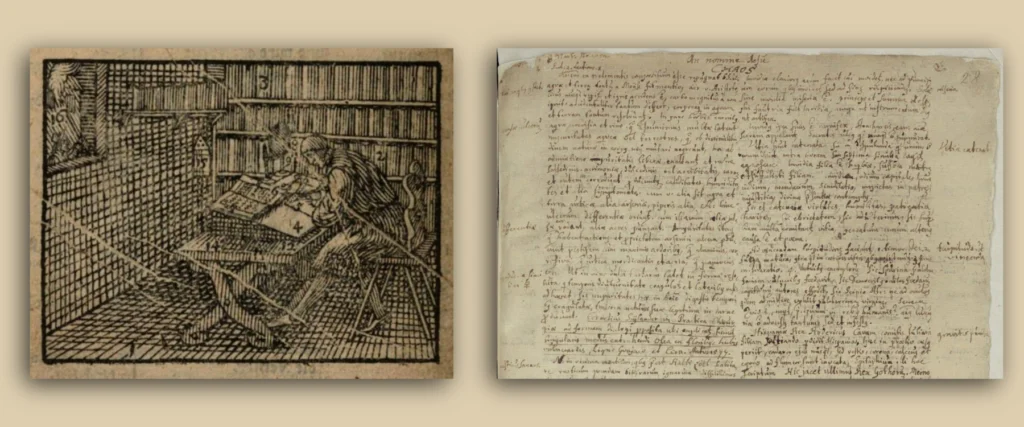
The challenges of navigating an increasingly complex information landscape, characterized by an overwhelming deluge of data and ideas, are not a uniquely modern phenomenon. Recent insights from historical scholarship, juxtaposed with current anxieties surrounding artificial intelligence and its potential economic impact, reveal a striking parallel: the enduring human quest for cognitive mastery in the face of exponential information growth. A historian of science at All Souls College, Oxford, recently highlighted the pioneering strategies of Nicolaus Steno, a prominent 17th-century anatomist, geologist, and later Catholic Bishop, whose methods for focused intellectual engagement offer a compelling blueprint for today’s digitally saturated world.
Nicolaus Steno: A Pioneer of Focused Cognition in the Early Modern Era
Nicolaus Steno (1638–1686), born Niels Stensen in Copenhagen, was a polymath whose intellectual journey unfolded during a pivotal period in European history—the Early Modern era. This epoch was marked by profound scientific, philosophical, and religious transformations, but perhaps none more impactful on the intellectual sphere than the widespread dissemination of knowledge enabled by the printing press. Steno’s education and subsequent groundbreaking contributions to anatomy (particularly his work on glands and the heart) and geology (laying foundations for stratigraphy and paleontology) were forged in an environment grappling with what scholars now recognize as an early form of "information overload."
Before Gutenberg’s revolutionary invention in the mid-15th century, knowledge transmission was slow and arduous, primarily through handwritten manuscripts painstakingly copied by scribes. Books were rare, expensive commodities, largely confined to monastic libraries and elite scholarly circles. The advent of the movable-type printing press dramatically altered this paradigm. By the 16th century, printing presses were proliferating across Europe, churning out books, pamphlets, and broadsides at an unprecedented rate. This surge in printed material democratized access to information, fueling the Renaissance, the Reformation, and the Scientific Revolution. Estimates suggest that between 1450 and 1500, around 20 million books were printed, a number that exploded to between 150 and 200 million in the 16th century alone.
This explosion, while transformative, also presented a novel and perplexing problem for aspiring scholars like Steno: how to manage, digest, and synthesize an ever-growing volume of available knowledge. As an essay by Nuno Castel-Branco details, "Books were a leading distraction in the early modern period—and how envious we should be of those times. From the 1500s onward, with the development of the printing press and the humanist revival of ancient philosophies, knowledge became available at a much greater pace than ever before." This created pressing epistemological and practical questions for thinkers: "How do we decide what to read? How long should we read it for? Must every single chapter be excerpted?"
Steno’s Methodologies for Knowledge Mastery
In response to this nascent information crisis, Early Modern scholars developed innovative techniques to navigate the intellectual currents. A primary solution was the refinement of note-taking practices. Among the most popular was the "commonplace book," a master notebook where scholars meticulously copied significant passages, ideas, and quotations from their readings. These books were not mere scrapbooks; they were systematically organized, often by topic or theme, allowing for later retrieval, synthesis, and creative recombination of ideas. William Powell’s insightful 2010 techno-history, Hamlet’s Blackberry, offers a delightful exploration of this technique and its historical significance.
However, even superior note-taking proved insufficient as the sheer volume of "good books" continued to swell. Steno, during his university studies in the 1650s, recognized the need for more advanced "attention management strategies." He understood that merely accumulating information was not enough; true intellectual progress required deep engagement and focused processing.
His approach centered on several key principles that resonate strongly with modern productivity concepts:
-
Focused Inquiry and Thematic Concentration: Steno learned to "focus on specific themes, rather than letting his mind read multiple things quickly." He famously articulated this as avoiding a "harmful hastening." His solution was to "stick to one topic," diving deep into a particular subject area before moving on. This deliberate, thematic approach countered the superficiality that a vast influx of information could otherwise induce. For Steno, understanding one subject thoroughly was more valuable than a cursory glance at many.
-
Dedicated Time Blocking for Demanding Tasks: Steno rigorously structured his day to ensure dedicated, uninterrupted periods for his most cognitively demanding work. In his personal notebook, he prescribed: "before noon nothing must be done except medical things." This strict adherence to time blocking ensured that his most valuable cognitive hours were allocated to his primary intellectual pursuits, shielding them from lesser distractions or urgent but less important tasks. He applied this method to his diverse interests; he confided to a friend that he dedicated "almost all the morning hours" to studying the works of the Church Fathers and ancient biblical manuscripts available at the renowned Medici library.
These practices, developed out of necessity in the 17th century, eerily foreshadow modern productivity methodologies. Steno’s insistence on thematic focus and deep engagement aligns perfectly with the principles of "deep work," a concept popularized by Cal Newport, advocating for uninterrupted concentration on a single task. His structured allocation of specific time slots for particular subjects is a historical precedent for "time blocking," a widely recommended strategy for maximizing productivity. Furthermore, his deliberate pace and resistance to "harmful hastening" reflect the philosophy of "slow productivity," which emphasizes sustainable, high-quality output over frantic, superficial activity.
The lessons from Steno’s era are unequivocal: the effective use of our brains for profound thought and meaningful idea generation is not a recent innovation. It has been a core human challenge since the early modern period, when sophisticated information first became broadly accessible. The "best practices" developed then—avoiding overload, concentrating on one task at a time, and dedicating specific, protected hours to mentally demanding efforts—remain remarkably pertinent today.
The Contemporary Parallel: Navigating the AI Economic Debate
Fast forward to the 21st century, and humanity finds itself at another inflection point, facing a new kind of "information overload" and profound technological disruption driven by artificial intelligence. The rapid advancements in generative AI, particularly large language models (LLMs), have ignited a fervent global debate about their potential to revolutionize, or even dismantle, established economic structures and job markets.
This debate reached a fever pitch recently following the publication of an essay by Citrini Research, a small financial services firm. Their piece outlined a bleak scenario wherein AI agents are projected to decimate the white-collar job market in the near future. The essay quickly went viral, attracting widespread attention and even being cited as a factor in a modest decline of the S&P 500 on the subsequent day. This publication was not an isolated incident; it followed a series of credulous articles and op-eds in major publications—including The Atlantic and The New York Times—proposing similar apocalyptic outcomes for employment. These narratives often paint a picture of AI as an unstoppable, job-destroying force, threatening a significant portion of the global workforce.
Skepticism and Counterarguments from Economic Experts
The negative market reaction, however modest, served as a catalyst for a concerted pushback from serious economists and financial analysts against what many perceived as alarmist and economically unsophisticated predictions. Critics began to challenge these "technological ghost stories," emphasizing the complexity of economic systems and the historical precedent of technological change.
A Deutsche Bank analyst, for instance, in a comment to The New York Times, notably described the Citrini article as having an "undeniably high" "vibes-to-substance ratio," perhaps echoing terminology used by other commentators critical of emotionally driven reporting on AI. This critique highlights a growing concern among experts that much of the public discourse around AI’s economic impact lacks rigorous empirical grounding and often relies on speculative fear rather than detailed economic analysis.
A particularly detailed and influential response came from an analyst within the Global Macro Strategies group at Citadel. Their article began with a sharp, sarcastic critique of the prevailing narratives: "Despite the macroeconomic community struggling to forecast 2-month-forward payroll growth with any reliable accuracy, the forward path of labor destruction can apparently be inferred with significant certainty from a hypothetical scenario posted on Substack…" This opening immediately set a tone of skepticism towards the definitive pronouncements made by less experienced forecasters.
The Citadel analysis systematically dismantled the economic naivety inherent in many of these breathless op-eds and viral essays. Key arguments raised by such critical analyses typically include:
- Historical Precedent: Throughout history, technological advancements (e.g., the agricultural revolution, the industrial revolution, the internet) have certainly displaced jobs, but they have also consistently created new industries, new job categories, and ultimately led to higher productivity and living standards. The Luddite fallacy, the mistaken belief that technological unemployment will lead to widespread, permanent joblessness, has been repeatedly disproven.
- Complexity of Labor Markets: Labor markets are dynamic and adaptive. While AI may automate specific tasks, it rarely automates entire jobs, especially complex white-collar roles that require human judgment, creativity, emotional intelligence, and interpersonal skills. Instead, AI is more likely to augment human workers, making them more productive and freeing them to focus on higher-value tasks.
- Productivity Gains vs. Job Destruction: Economists often view AI primarily as a tool for productivity enhancement. Increased productivity can lead to economic growth, lower prices, and increased demand for goods and services, which in turn can create new jobs.
- Limitations of Current AI: Despite impressive capabilities, current AI technologies have significant limitations. They often lack common sense, cannot generalize effectively across domains, and require substantial human oversight and training. The path from technological capability to widespread economic disruption is far from linear.
- Regulatory and Social Adaptation: Societies and governments do not passively accept mass unemployment. There will be policy responses, educational reforms, and investments in new sectors to mitigate adverse effects and adapt to changing labor demands.
- Unforeseen New Jobs: Just as no one in the 1980s could have predicted "social media manager" or "data scientist," AI will undoubtedly spawn entirely new professions that we cannot yet imagine.
Such detailed counter-arguments offer a crucial "AI reality check," helping to lower the blood pressure of those anxious about an imminent economic unraveling. They emphasize that while AI presents significant challenges and opportunities, a nuanced and historically informed perspective is essential, moving beyond sensationalist narratives to a more grounded understanding of its long-term implications. This underscores the importance of critical thinking and discerning information sources in an age of abundant, often emotionally charged, content.
Bridging the Eras: Enduring Lessons for the Information Age
The intellectual journey of Nicolaus Steno in the 17th century and the contemporary debates surrounding artificial intelligence present a profound and enduring lesson: the human capacity for focused thought and strategic information processing remains paramount, regardless of the technological era. The fundamental challenge of cognitive overload, whether from an explosion of printed books or an incessant stream of digital data, has remained constant.
Steno’s principles of "slow productivity," "deep work," and "time blocking" are not antiquated relics; they are timeless strategies that become even more vital in our current AI-augmented world. As AI increasingly handles routine tasks and processes vast datasets, the unique human abilities—critical thinking, creative problem-solving, ethical reasoning, and nuanced communication—will grow in value. These are precisely the faculties that Steno cultivated through his disciplined approach to learning.
For individuals and institutions alike, the implications are clear. In an environment where AI can generate information at an unprecedented scale, the ability to discern, synthesize, and engage deeply with meaningful ideas becomes a competitive advantage. Education must emphasize not just content acquisition, but also cognitive strategies for managing information, fostering deep concentration, and cultivating intellectual resilience. Professionals must adopt deliberate practices to carve out time for focused, high-value work, resisting the allure of constant digital distraction and the superficiality of multitasking.
In conclusion, while the technological landscape evolves with dizzying speed, the core human challenge of mastering information and cultivating profound thought endures. The past, through figures like Nicolaus Steno, offers a powerful testament to the effectiveness of focused attention and disciplined intellectual habits. As we navigate the complexities and anxieties of the AI age, embracing these historical blueprints for cognitive mastery may well be the key to not just surviving, but thriving, in the relentless currents of information and innovation.