



For decades, Canadian universities have served as both mirrors and catalysts for era-defining social movements. From the waves of feminism and anti-racism to the persistent calls for environmental justice and the advocacy for Indigenous and LGBTQIA+ rights, these movements have profoundly transformed the academic landscape. They have ignited rigorous debate, spurred the development of new curricula, fostered entirely new fields of research, and fundamentally challenged prevailing conceptions of knowledge and its dissemination. Far from being isolated ivory towers, universities are in a constant, dynamic interplay with the society around them. Social movements dictate not only what is taught but also how it is taught, while academic institutions play a critical role in constructing, disseminating, and legitimizing the ideas that emerge from these societal struggles. This relationship is not merely enduring and complicated; it is inherently and deeply political.
While contemporary discourse sometimes frames current campus activism as a crisis within higher education, a historical perspective reveals this to be a recurring pattern. The university, from its very inception, has been a locus of tension, debate, and disagreement concerning the nature and validity of knowledge. Examining the historical influence of social movements on universities offers invaluable insights into the processes by which knowledge is constructed, transformed, and contested.
A Chronicle of Contention: Universities as Arenas of Social Change
The impact of social movements on academic institutions is not a novel phenomenon. As Brieg Capitaine, an associate professor of sociological and anthropological studies at the University of Ottawa, explains, the ideas underpinning social movements have consistently shaped academia. He points to the late 1960s as a pivotal period when the modern university, particularly in North America and Europe, underwent significant evolution.
"Some media outlets today interpret these protests as a crisis in higher education," Dr. Capitaine states. "In reality, this kind of questioning has always occurred."
During the 1960s, youth-led social movements actively challenged the limited accessibility of university education and vociferously demanded the recognition of diverse forms of knowledge that had been historically marginalized. This era witnessed a significant shift in how knowledge was perceived and valued within academic circles.
Francis Dupuis-Déri, a professor in the political science department at Université du Québec à Montréal (UQAM), concurs with this historical perspective, emphasizing that "since the beginning, universities have been shaped by social and political tensions." He argues that these institutions are not detached from societal struggles but rather evolve in tandem with the debates and conflicts that define the broader social fabric. "There have been student strikes since the early years of European universities," he notes. "In Bologna, for example, students protested the cost of rent and the quality of teaching. These early demonstrations proved from the outset that universities would be places where different worldviews would collide."
This historical trajectory underscores that the notion of a neutral university, divorced from social conflict, is largely a myth. Knowledge, by its very nature, has never existed in a political vacuum.

Feminism’s Transformative Force on Knowledge Production
The feminist movement stands as a potent illustration of the profound and multifaceted interactions between social movements and academic institutions. Feminism began to exert a significant influence on academia as its activists increasingly occupied professorial roles, particularly within newly established institutions like UQAM (founded in 1969) and Concordia University (founded in 1974). Sociologist Francine Descarries, who was interviewed for this article before her passing in March, highlighted this development.
These nascent universities, closely attuned to the social zeitgeist, became fertile ground for establishing feminist studies as a legitimate academic discipline from the mid-1970s onwards. Dr. Descarries, a founding member of the Réseau québécois en études féministes and UQAM’s Institut de recherches et d’études féministes, emphasized the pivotal role played by the feminist and labour movements in legitimizing feminist research and cultivating a demand for this specialized knowledge.
As this initial cohort of feminist scholars entered academia, they brought their experiences as activists, catalyzing changes that positioned these institutions at the forefront of intellectual innovation. "Feminism did more than just spawn new courses," Dr. Dupuis-Déri observes. "It changed the way we think about science. It introduced new perspectives, new questions."
The path to academic recognition was arduous. Within an academic world historically structured by androcentric norms, feminist research faced marginalization and was compelled to rigorously prove its scientific validity and intellectual merit. "The connection between activism and the university was very strong," Dr. Descarries remarked. This symbiotic relationship saw activists become academics, developing the foundational courses for the field, while the emerging discipline of women’s studies gained legitimacy among feminists who "needed research to back up their demands." This dynamic fostered the rapid growth of a research area that might otherwise have taken considerably longer to germinate. Furthermore, feminist activism contributed to the development of innovative research methodologies, including the co-construction of knowledge, where individuals who are the subjects of study become active participants in the knowledge production process.
Black and Anti-Racist Studies: A Long-Awaited Integration
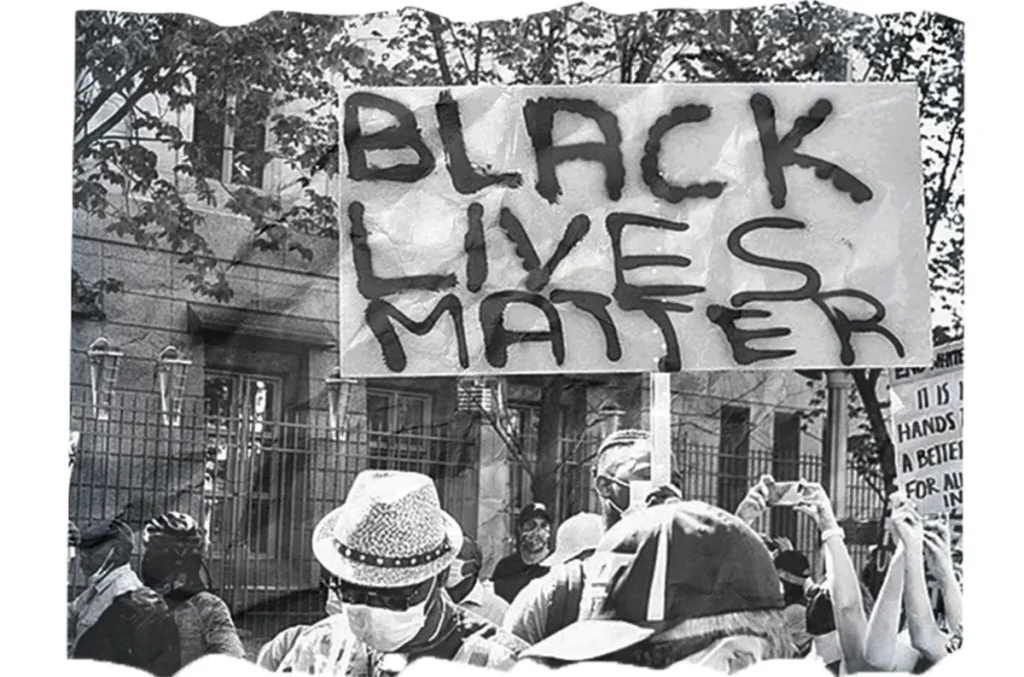
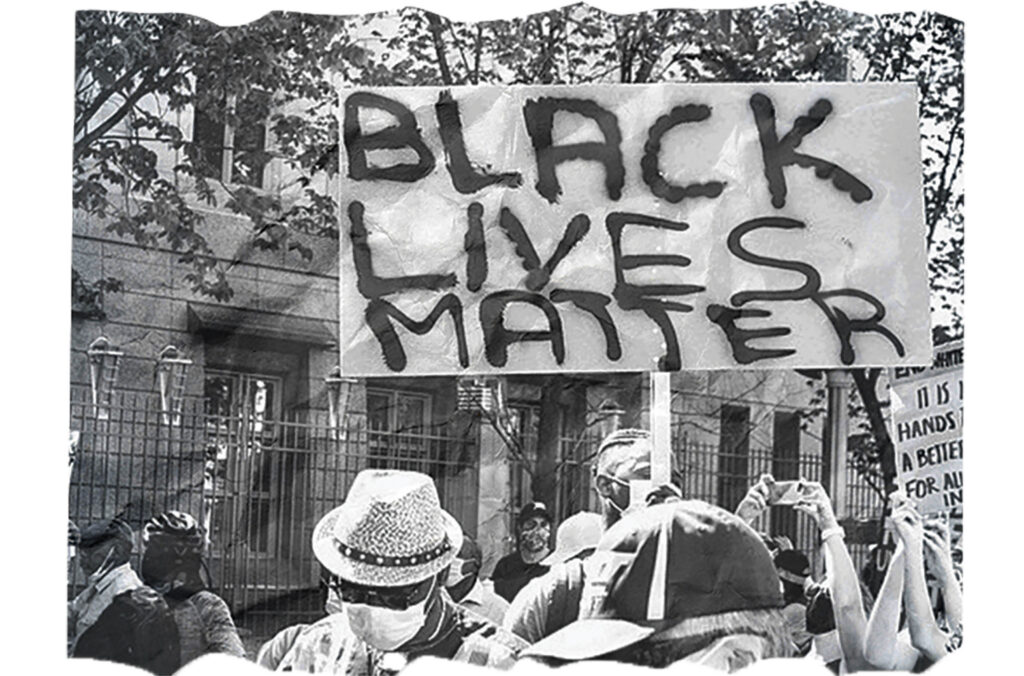
More recently, the Black Lives Matter movement has amplified awareness of systemic racism embedded within numerous institutions, including universities, prompting a critical re-evaluation of existing curricula. However, the roots of anti-racist activism within academia extend back several decades. While research into Black history officially commenced in the United States in 1926, the first conference dedicated to the institutionalization of Black studies in Canadian francophone universities was only held in November 2024 at Université de Montréal (UdeM). This event underscored the significant lag in establishing Black studies in Canada, even as student interest in the field continues to surge.
Simplice Ayangma Bonoho, a historian specializing in Africa and the African diaspora at UdeM, notes that the integration of these subjects into Canadian universities reflects a broader historical trend. "These subjects were first taught in the 1950s and 1960s, with the emergence of anti-racist movements in the United States and independence movements in Africa," he explains. "This is not a recent dynamic. But it’s because of these movements that universities began to offer courses on African history and the African diaspora, and that organizations like the Canadian Association of African Studies were founded."
Despite this historical foundation, progress remains gradual. "At UdeM, the first course in African history wasn’t taught until the fall of 2024," Dr. Bonoho states. "It’s a gradual process inhibited by institutional inertia and resistance resulting from power dynamics." Nevertheless, the groundwork has been laid. Dr. Bonoho anticipates that growing student interest in anti-racist studies will compel universities to adapt, regardless of internal resistance.
Indigenous Perspectives: From Erasure to Essential Recognition
Concurrently, the formal integration of Indigenous perspectives into academic discourse has been accelerated by significant media attention to key events and the release of influential public reports, most notably the 2015 Final Report of the Truth and Reconciliation Commission of Canada.
Sébastien Brodeur-Girard, a lawyer and professor in the Indigenous studies department at Université du Québec en Abitibi-Témiscamingue, observes that these developments "have shed new light on long-overlooked realities." He continues, "Today, we don’t just teach history. We show that Indigenous communities are active and very much alive in the present moment. It’s crucial to dismantle stereotypes and to show that Indigenous cultures are both relevant and dynamic."
While institutional progress varies across universities, the growing emphasis on Indigenous perspectives signifies a deeply rooted social movement poised to endure beyond transient trends and pressures.
Pedagogical Shifts: How Social Movements Reshape Teaching and Assessment
The influence of social movements extends beyond curriculum reform, fundamentally altering pedagogical approaches and assessment practices. Christophe Chénier, an assistant professor specializing in proficiency assessments at UdeM’s faculty of education sciences, argues that assessment methods are susceptible to transformation during periods of widespread social change. Evolving student demographics, influenced by factors such as the feminist movement, demographic shifts, and changing work-life balances, have significantly redefined institutional expectations.
"Forty or fifty years ago, most students didn’t work full-time, tuition was more affordable, and part-time education was rare," he explains. "Nowadays, we have students who are raising children alone, working full-time, and writing essays in the evenings. This has forced universities to rethink their approach."
Technological advancements and cultural shifts also contribute to pedagogical evolution. The increasing recognition of neurodivergence, for instance, has led to the broader implementation of accommodation measures, such as individualized testing environments for students with ADHD.
"In other words, assessment practices aren’t based on just one way of teaching," says Dr. Chénier. "They’re based on a worldview. A few decades ago, we saw assessment through a punitive lens. Now our goal is to support learning, thanks to extensive dialogue between social movements, community values, and the university culture."
Academic Resistance and the Question of Legitimacy
Not all academic circles have readily embraced these transformations. Resistance persists among some faculty members and researchers who view the integration of perspectives from social movements into university curricula as overly ideological rather than strictly scientific. Fields such as gender studies, Indigenous studies, and postcolonial studies have faced scrutiny regarding their academic legitimacy.
Dr. Dupuis-Déri challenges this criticism, characterizing it as a persistent misconception. "In reality, all disciplines have baked-in values," he asserts. "Neoliberal economists have a particular view of the world that is no more neutral than women’s studies or postcolonial studies."

Dr. Capitaine observes that student demands are a significant catalyst for institutional change. "Students pressure professors to adapt their course material. Sometimes the institution takes the initiative; other times, it’s students who take up a new cause. A few years ago, students were mobilizing for the climate. This year, their focus is on the Israel-Palestine conflict."
In some instances, changes emerge not from a singular, high-profile cause but from a confluence of evolving societal attitudes and expectations. "Sometimes it’s simply that students ask us questions, we reply, and our practices change as a result," Dr. Capitaine adds.
Universities as Sites of Contention, Not Neutrality
One fundamental reality is undeniable: the university has never been, nor will it ever be, a completely neutral environment. Universities are invariably shaped by the prevailing social conflicts of each era. This very dynamism, however, is precisely what empowers them to function as vibrant engines of knowledge production.
"History shows us that universities have always been places where knowledge is contested," states Dr. Capitaine. "The important thing is to support an environment for open debate. Conflict and discussion are essential to the advancement of knowledge."
These societal movements can serve as a healthy impetus for intellectual evolution. As Dr. Dupuis-Déri notes, "After their PhD, professors could teach for 30 years without questioning their own beliefs. Social movements remind us that we can’t remain stagnant."
This is not to advocate for universities to transform into overt activist hubs. Rather, it underscores their inability to feign ignorance of prevailing social tensions. "Academics aren’t out in the streets, but they still have a responsibility to inform themselves by reading, listening and understanding the different arguments."
Social movements do more than simply inspire updates to course content or programming; they redefine the fundamental role universities play within society. By opening their doors to new voices and novel areas of research, universities are challenged to harmonize academic excellence with inclusivity and social responsibility. This delicate, and at times contentious, balancing act is an integral element of the university’s historical trajectory. The persistent tension between knowledge, society, and politics should not be misconstrued as a sign of academic decline. On the contrary, it is a vital driving force behind the university’s enduring relevance and its capacity for continuous evolution.