

The National Aeronautics and Space Administration’s Psyche spacecraft, an ambitious mission designed to explore a unique metal-rich asteroid, has successfully completed a pivotal gravity assist maneuver by swinging past Mars. During this high-stakes orbital encounter, the probe managed to capture a striking image of the Red Planet, offering a rare perspective of Earth’s neighbor while simultaneously harnessing its gravitational pull to accelerate toward the outer reaches of the solar system. This maneuver marks a significant milestone in a 2.2-billion-mile journey that seeks to uncover the secrets of planetary formation.
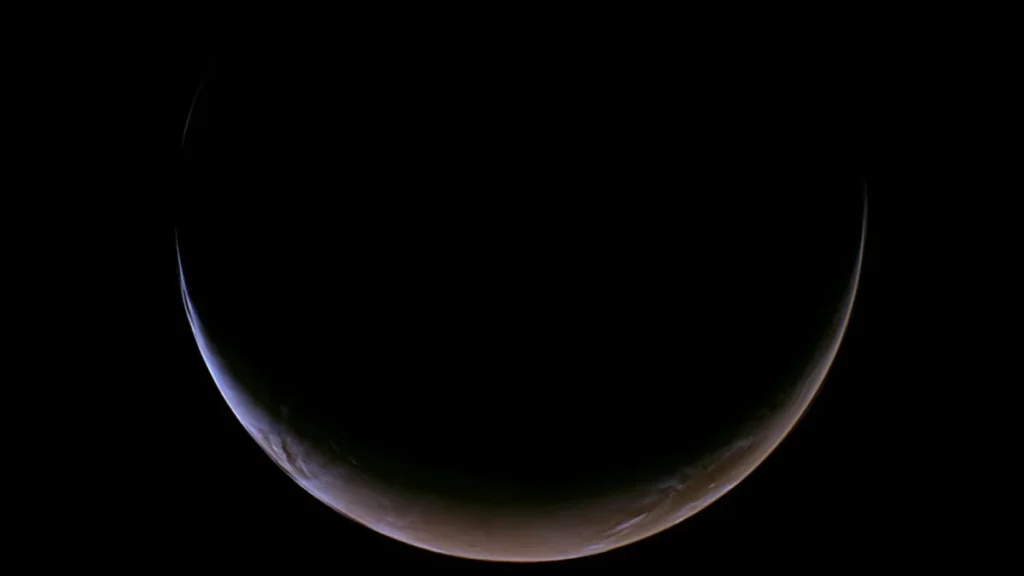
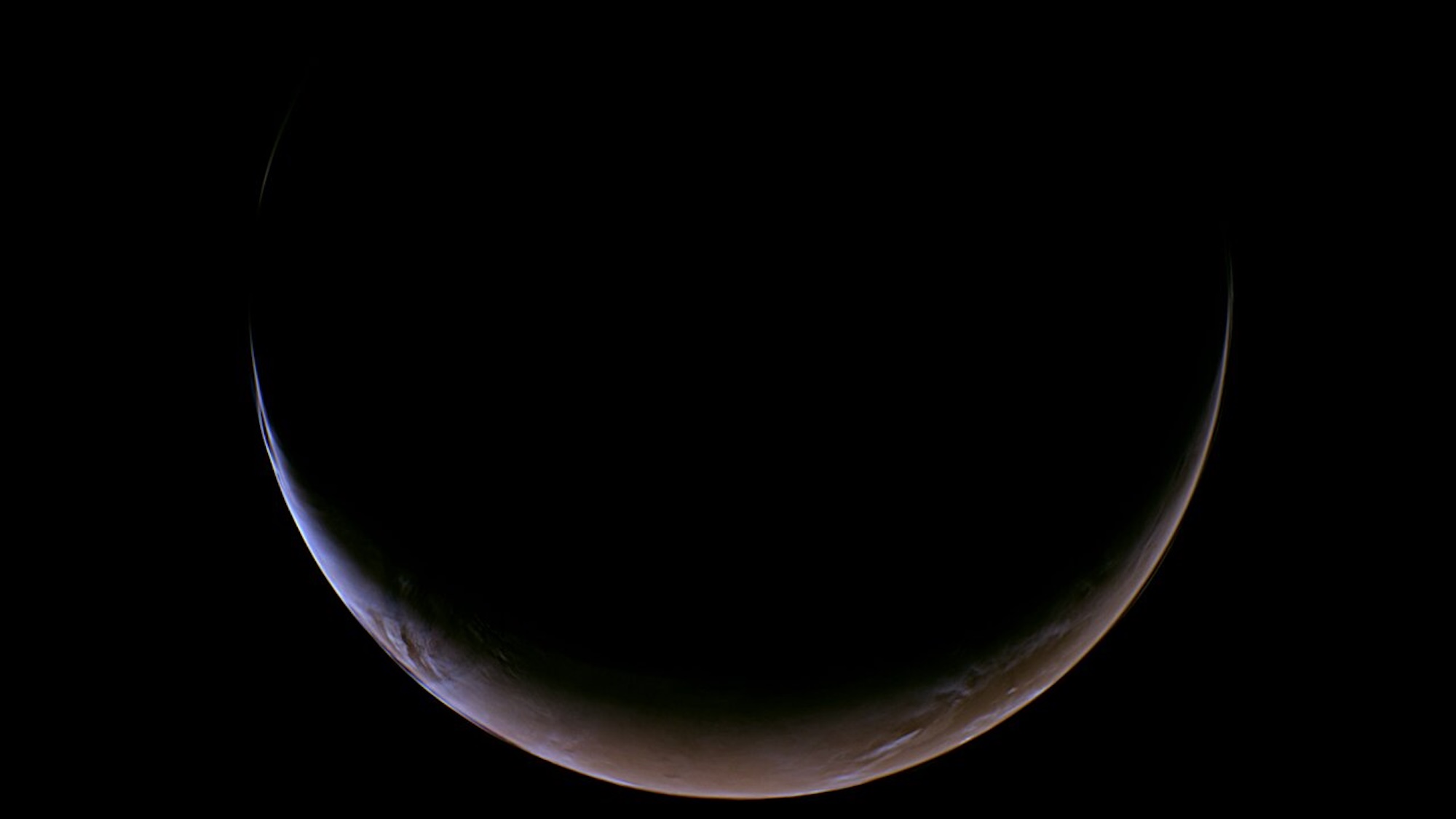
The newly released imagery, captured on May 15, 2024, at approximately 8:03 a.m. EDT, showcases Mars as a slender, luminous crescent. At the time of the photograph, the spacecraft was executing its closest approach, skimming a mere 2,800 miles above the Martian surface. Traveling at a velocity of roughly 12,333 miles per hour relative to the planet, the Psyche probe utilized its multispectral imager to document the flyby. The resulting visual data provides more than just a scenic postcard; it serves as a testament to the precision of modern deep-space navigation and the resilience of the spacecraft’s onboard instrumentation.
The Mechanics of a Gravity Assist
A gravity assist, or "slingshot" maneuver, is a cornerstone of deep-space exploration. It allows spacecraft to gain velocity and alter their trajectory without the need for massive amounts of heavy, expensive chemical propellant. By entering the gravitational sphere of influence of a large celestial body like Mars, a spacecraft can effectively "steal" a tiny fraction of the planet’s orbital momentum.
For the Psyche mission, this maneuver was essential. Launched in October 2023 from the Kennedy Space Center in Florida, the spacecraft is powered primarily by solar electric propulsion. While highly efficient, this system provides low thrust over long periods. The boost provided by Mars serves as a crucial kinetic "kick," ensuring the probe has the necessary speed to reach the asteroid belt, located between Mars and Jupiter, by its target date in August 2029.
The precision required for such a flyby is immense. Mission controllers at NASA’s Jet Propulsion Laboratory (JPL) in Southern California and Arizona State University (ASU) had to calculate the approach vector with extreme accuracy. A pass too close could result in atmospheric drag or an accidental collision, while a pass too distant would fail to provide the necessary gravitational tug. The 2,800-mile altitude achieved represents a "sweet spot" that maximized the energy gain while maintaining a safe margin for the spacecraft’s hardware.
Atmospheric Scattering and Imaging Challenges
The image released by NASA on May 20 highlights the unique lighting conditions of the flyby. Captured at what astronomers call a "high phase angle," the spacecraft was positioned such that the Sun was almost directly behind Mars from its perspective. This orientation usually results in a very thin, dark silhouette, but the Martian atmosphere created a surprising visual effect.
According to technical reports from the imaging team, the crescent appeared significantly brighter and wider than initial computer models predicted. This phenomenon is attributed to the high concentration of dust and aerosols in the Martian atmosphere, which scatter sunlight into the shadows—a process similar to how Earth’s atmosphere remains illuminated for a short time after sunset.
The image provided to the public is a composite. The Psyche spacecraft’s multispectral imager does not "see" in full color like a standard commercial camera. Instead, it captures data through various filters designed to identify specific minerals and chemical signatures. To create the natural-color view, scientists combined data from the red, green, and blue filters. The raw, unfiltered data would appear monochromatic and lacks the depth required for human visual interpretation, but the processed version reveals the subtle ochre and salmon hues characteristic of the Red Planet.
A Timeline of the Psyche Mission
The journey to the asteroid 16 Psyche is a multi-year odyssey that began long before the 2023 launch. The mission was officially selected as part of NASA’s Discovery Program in early 2017, following years of theoretical research into the nature of metal-rich asteroids.
- October 13, 2023: Psyche launched atop a SpaceX Falcon Heavy rocket. This marked the first interplanetary mission for the Falcon Heavy, demonstrating the vehicle’s capability for high-energy trajectories.
- Late 2023 – Early 2024: The spacecraft underwent a series of system checks, including the deployment of its massive solar arrays, which span the size of a tennis court.
- May 15, 2024: The Mars gravity assist was completed, providing the velocity boost needed to exit the inner solar system.
- 2024 – 2029: The "cruise phase." During this period, the spacecraft will continue to use its Hall-effect thrusters—which emit a blue glow of ionized xenon—to refine its path.
- August 2029: Expected arrival at the asteroid 16 Psyche.
- 2029 – 2031: Primary science operations. The spacecraft will orbit the asteroid at progressively lower altitudes (ranging from 440 miles to 47 miles) to conduct detailed mapping and analysis.
The Target: A World of Metal
The ultimate destination of the mission, 16 Psyche, is one of the most intriguing objects in the solar system. Measuring approximately 140 miles (226 kilometers) at its widest point, it is vastly different from the rocky or icy bodies that NASA has explored in the past. Radar observations and spectral analysis suggest that the asteroid is composed largely of iron and nickel, rather than silicate rock.
This composition has led scientists to hypothesize that 16 Psyche might be the exposed core of a "protoplanet." In the chaotic early days of the solar system, a planetesimal—a building block of a planet—may have been involved in violent collisions that stripped away its outer rocky crust and mantle, leaving the metallic heart exposed. Because humans cannot travel to Earth’s own core to study it directly, 16 Psyche offers a unique "natural laboratory" to study the processes that formed the terrestrial planets, including Mercury, Venus, Earth, and Mars.
Beyond the planetary core theory, some researchers suggest that Psyche could be a remnant of a different type of iron-rich material that formed near the Sun and was later pushed outward. Regardless of its origin, the mission aims to determine the asteroid’s age, its magnetic properties, and whether it possesses any topographical features like "frozen" lava flows of pure metal.
Technological Innovation: Deep Space Optical Communications
While the primary goal is the study of 16 Psyche, the spacecraft is also a testbed for revolutionary technology. It carries the Deep Space Optical Communications (DSOC) experiment, which utilizes a near-infrared laser to transmit data back to Earth.
Traditional deep-space missions rely on radio frequency (RF) communications. While reliable, RF has limited bandwidth. Laser communications can potentially increase data transmission rates by 10 to 100 times, allowing for high-definition video and complex scientific datasets to be sent across the void of space. During the Mars flyby, the DSOC system continued to undergo testing, proving that laser signals can be maintained even as the spacecraft moves at incredible speeds and distances. This technology is viewed as essential for future crewed missions to Mars, where high-bandwidth communication will be a necessity for astronaut safety and mission success.
Scientific and Strategic Implications
The successful Mars flyby has been met with praise from the international scientific community. Dr. Laurie Leshin, Director of NASA’s Jet Propulsion Laboratory, has previously emphasized that missions like Psyche represent the "brave spirit of exploration" and the technical excellence of the JPL workforce.
By reaching the asteroid belt, Psyche will fill a major gap in our understanding of the solar system’s "family tree." Most of our knowledge of the early solar system comes from meteorites that have fallen to Earth. While some of these meteorites are metallic, their exact origins are often speculative. Psyche will provide the first-ever in-situ (on-site) data from a metallic world, allowing scientists to correlate terrestrial meteorite samples with a known celestial body.
Furthermore, the mission has economic implications that, while not the primary focus of NASA, have captured the public imagination. Some estimates value the mineral wealth of 16 Psyche in the quadrillions of dollars. While there are currently no plans or technologies available to mine the asteroid and return its materials to Earth, the mission provides foundational data that will be invaluable for the burgeoning field of space resource utilization.
Looking Ahead
With the Mars flyby now in the rearview mirror, the Psyche spacecraft enters a long cruise phase. The journey ahead is quiet but active, as the solar electric propulsion system works continuously to shape the final approach to the asteroid belt. The images captured of Mars serve as a final look back at the inner solar system before the probe ventures into the cold, dark frontier of the main asteroid belt.
As the spacecraft continues its five-year trek, the data gathered during the Martian encounter will be further analyzed by atmospheric scientists to better understand the scattering properties of the Martian air. For now, the "fingernail" view of the Red Planet stands as a symbol of a mission that is perfectly on track, bridging the gap between the familiar rocky planets and the mysterious metallic remnants of our solar system’s violent past.