


Last fall, the serene halls of the Vatican hosted a significant closed-door meeting on the burgeoning field of artificial intelligence ethics, drawing a diverse assembly of religious thinkers, distinguished academics, and influential leaders from the technology industry. Among the attendees was Meghan Sullivan, a prominent philosopher from the University of Notre Dame, whose observations from the gathering shed light on the complex intersection of advanced technology and timeless human values. This unprecedented convergence underscores a growing recognition among global institutions and technological pioneers that the rapid advancement of AI necessitates a profound ethical and moral framework.
The Vatican as a Nexus for AI Ethics
The decision by the Holy See to convene such a high-level discussion on AI ethics is not without precedent, yet it highlights the urgency with which the global community is grappling with the implications of this transformative technology. For centuries, the Vatican has served as a moral compass, engaging with profound societal shifts, from industrial revolutions to bioethical dilemmas. Its current engagement with AI reflects a commitment to safeguarding human dignity and promoting the common good in an era increasingly shaped by algorithms and autonomous systems. The closed-door nature of the meeting fostered an environment for candid dialogue, allowing participants to explore the nuanced challenges of AI development and deployment without the pressures of public scrutiny.
Sullivan’s recollections, shared in a recent newsletter, offer a poignant glimpse into the atmosphere of the summit. She recounted attending an optional Catholic Mass held in an ancient church on the first morning. To her surprise, one of the technology industry’s leading figures, typically associated with the casual attire of Silicon Valley, was present. "The kind of guy you typically see in a black t-shirt and chinos," Sullivan noted, "That morning he was dressed in a brown suit and tie, quietly taking in the sanctuary as the first rays of morning light filled the room." This observation, seemingly minor, revealed a deeper curiosity and search for meaning that transcended typical professional boundaries.
Following the service, a brief conversation unfolded. The tech leader, despite not being Catholic, offered a remarkably candid explanation for his presence at the Mass and the broader Vatican initiative. He stated, "We’re building something that is going to change life as we know it. I want to make sure I keep in touch with what humans have always cared about. This is a place that takes care of those values." This statement encapsulates a burgeoning awareness within some segments of the tech industry regarding the profound ethical responsibilities that accompany the creation of technologies capable of fundamentally altering human existence. It suggests a recognition that technological progress, divorced from human values, risks veering into unforeseen and potentially detrimental territories.
The Evolving Narrative of AI Development
The characterization of the AI industry has frequently veered into realms often described as possessing a quasi-religious zeal. For a period, a pervasive narrative suggested that many AI companies were less focused on incremental product development and more on what was often termed "inventing the future." This ambition, while driving innovation, also fostered an environment where developers were perceived by some observers as assuming roles akin to priests or prophets, engaged in the summoning of a powerful, digital entity and simultaneously warning of its impending transformative, or even destructive, capabilities.
This perception was fueled by the rapid pace of AI advancement, marked by exponential growth in computing power, sophisticated algorithms, and the increasing capabilities of large language models. Billions of dollars have been poured into AI research and development, with a significant portion targeting the elusive goal of Artificial General Intelligence (AGI)—a hypothetical AI capable of performing any intellectual task that a human can. This pursuit has often been accompanied by grand pronouncements about AI’s potential to solve humanity’s greatest challenges, from disease to climate change, while simultaneously raising alarm about existential risks (often referred to as "x-risk") that could arise from misaligned or uncontrolled superintelligence.
Statements from prominent figures within the AI community frequently included discussions about universal basic income (UBI) as a necessary societal adaptation once AI automates a significant portion of human labor, or utopian visions of coexisting with "machines of loving grace." These ideas, while framed as pragmatic foresight by their proponents, were increasingly viewed by critics as indicative of a profound disconnect between the technical pursuit of AI and its real-world societal implications, often reflecting a form of technological determinism. The narrative suggested that these advancements were inevitable, and society’s role was merely to adapt to the predetermined future laid out by AI developers. This perspective, critics argued, often overshadowed critical questions about human agency, ethical governance, and the deliberate shaping of technology for human flourishing.
"Magnifica Humanitas": A Papal Intervention
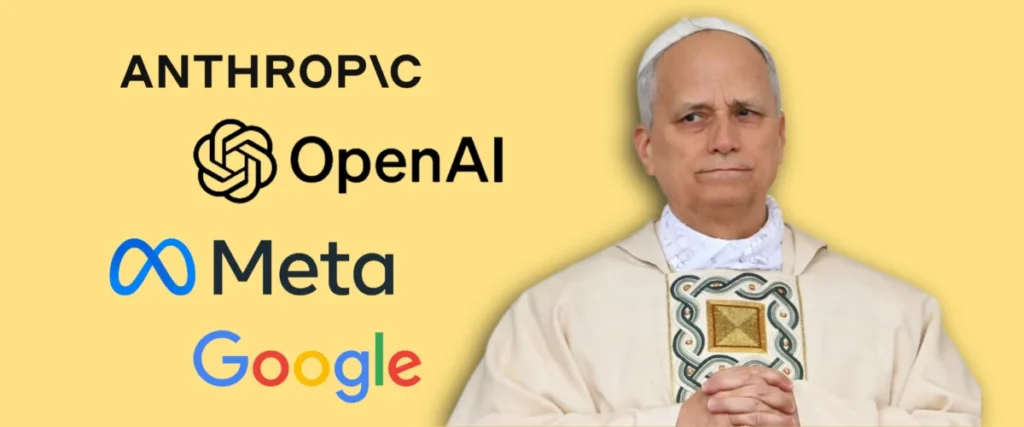
Against this backdrop of rapid technological advancement and often lofty, sometimes alarming, pronouncements from the tech sector, the Vatican has asserted a clear moral voice. Last week, Pope Leo XIV released a comprehensive 42,000-word encyclical titled "Magnifica Humanitas" (Magnificent Humanity), directly addressing the multifaceted challenges posed by artificial intelligence. This extensive document represents a significant and authoritative intervention by the Holy See into one of the most pressing ethical debates of the 21st century.
The release of "Magnifica Humanitas" follows a long tradition of papal encyclicals that have responded to critical social, economic, and technological developments throughout history. From Leo XIII’s Rerum Novarum (1891), which addressed the conditions of the working classes during the Industrial Revolution, to Pope Francis’s Laudato Si’ (2015) on environmental care, the Church has consistently sought to provide moral guidance rooted in human dignity and the common good. "Magnifica Humanitas" extends this legacy, applying foundational Catholic social teaching to the digital age.
Early summaries and analyses of the encyclical indicate that Pope Leo XIV is not advocating for a passive acceptance of an AI-driven future dictated by technological inevitability. Instead, the document issues a powerful call for a human-centric approach to AI development and governance. A key exhortation from the encyclical resonates with a deep historical and theological critique of unchecked ambition: "With the heart of a shepherd and a father, I ask everyone to abandon the construction of yet another Tower of Babel and to join forces in building up the common good, so that humanity will never lose its beauty, and the world once again will come to recognize the human heart as the place where God desires to dwell."
This "Tower of Babel" metaphor is particularly potent, referencing the biblical story of humanity’s attempt to build a tower to reach the heavens, an act condemned as hubris leading to divine confusion and dispersal. In the context of AI, the Pope’s message implies a warning against technological ambitions that prioritize power, profit, or an idealized future over the fundamental well-being and intrinsic value of human beings. It critiques any approach to AI that might inadvertently diminish human autonomy, exacerbate inequalities, or create systems that are beyond human control or understanding. The encyclical firmly posits that technology, including AI, must serve humanity, not the other way around. It champions the idea that tools should enhance lives, build communities, and contribute to the "common good," aligning technological innovation with ethical imperatives rather than allowing it to proceed unchecked.
Recalibrating the AI Discourse: A Shift in Tone
In a notable development reflecting increased scrutiny and perhaps a dose of reality, recent weeks have seen a perceptible shift in the discourse from some of the most influential figures in the technology industry concerning AI’s immediate impact. This recalibration suggests a move away from the more speculative and, at times, alarmist predictions that characterized earlier discussions about AI’s transformative power.
One of the most direct challenges to the prevailing narrative came from Jensen Huang, CEO of Nvidia, a company whose graphics processing units (GPUs) are the bedrock of modern AI development. Huang "called BS" on executives who attributed layoffs to AI, branding such excuses as "lazy" and merely a way for them "to sound smart." This statement from a leader at the very heart of the AI infrastructure industry carries significant weight, directly contradicting the notion that AI is already a primary driver of widespread job displacement. Huang’s comments underscore the complexity of economic factors at play and suggest that some corporations might be using AI as a convenient scapegoat for broader business decisions, rather than a genuine technological cause for workforce reduction.
Perhaps even more surprising, Sam Altman, CEO of OpenAI—a company at the forefront of generative AI—admitted just last week that he had been "pretty wrong" about his previous predictions regarding AI’s potential to automate vast numbers of jobs in the near future. Altman, who had previously been a vocal proponent of concepts like universal basic income to mitigate the impact of AI-driven job losses, acknowledged that the technology’s integration into the workforce is proving to be more nuanced and less immediately disruptive than anticipated. This public admission from a key architect of the current AI boom signals a significant adjustment in the industry’s self-assessment and public messaging. It suggests a growing recognition that while AI will undoubtedly reshape work, the process is evolutionary rather than revolutionary in the immediate term, potentially leading to job augmentation and creation rather than solely mass automation.
These shifts in tone from highly visible tech executives are open to various interpretations. While some observers view them as a genuine, albeit belated, recalibration of expectations and a more grounded assessment of AI’s current capabilities and societal integration, others suggest they might be primarily driven by public relations considerations. The previous rhetoric, emphasizing existential risks and widespread job losses, had undoubtedly generated considerable public anxiety and attracted the attention of regulators worldwide. A more tempered and pragmatic discourse could be seen as an effort to manage public perception, build trust, and potentially preempt overly restrictive regulatory frameworks. Regardless of the underlying motivations, these statements mark a departure from the earlier, more hyperbolic claims, moving the conversation towards a more grounded and practical discussion about AI’s role in society.
Towards a Human-Centric AI Future
The confluence of the Vatican’s authoritative ethical framework, the philosophical reflections from academic circles, and the evolving rhetoric from the technology industry itself underscores a critical turning point in how humanity approaches artificial intelligence. The message emerging from these diverse dialogues is clear: the future of AI must be guided by human values, prioritizing societal well-being and the common good over unchecked technological ambition.
The imperative now is for sustained, interdisciplinary collaboration. This requires technologists, ethicists, policymakers, religious leaders, and the public to engage in constructive dialogue, translating abstract ethical principles into concrete design choices, regulatory frameworks, and societal adaptations. The challenge lies in fostering an environment where innovation is encouraged, but always within boundaries that protect human dignity, promote fairness, and ensure accountability.
Moving forward, the focus must shift from speculative "x-risk" scenarios or utopian visions of "machines of loving grace" to the practical application of AI as a tool to solve real-world problems. This means developing AI that is genuinely useful, enhances human capabilities, addresses pressing global challenges like healthcare and climate change, and contributes to a more equitable society. The "p(doom) genie," the widespread anxiety and fear generated by previous narratives of existential risk, will take time to put back into its bottle, highlighting the long-term impact of how technology leaders communicate about their creations.
The call from Pope Leo XIV, echoed by a growing chorus of ethical voices, is for a renewed commitment to humanity at the core of technological progress. It urges technology executives to embrace a more pragmatic role, focusing on building reliable, beneficial tools rather than assuming the mantle of prophets predicting an inevitable, preordained future. By grounding AI development in ethical considerations and a deep understanding of human values, society can steer this powerful technology towards a future that truly serves "Magnifica Humanitas"—a magnificent humanity.