



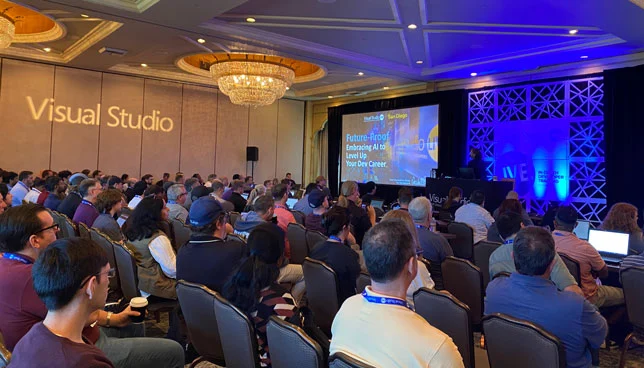
A Legacy of Developer Empowerment: The VSLive! Journey
Visual Studio Live! has long stood as a cornerstone event for developers working within the Microsoft ecosystem, evolving alongside the very technologies it champions. Founded decades ago, VSLive! conferences have consistently provided a vital platform for professional developers to hone their skills, learn about the latest tools and frameworks, and connect with industry experts and peers. Initially focusing heavily on the Visual Basic and C++ development environments, the conference’s scope expanded dramatically with the advent of .NET in the early 2000s, embracing web development with ASP.NET, desktop applications, and later, mobile and cloud computing with Azure. This chronological evolution mirrors the tech industry’s rapid advancements, with VSLive! consistently adapting its curriculum to remain at the forefront of developer needs.
The conference’s enduring relevance stems from its commitment to practical, hands-on learning delivered by seasoned practitioners and Microsoft product teams. Over the years, it has become an indispensable resource for IT professionals in various sectors, including higher education, where the demand for modern, secure, and efficient technological solutions is ever-growing. For university IT departments, navigating limited budgets and diverse user needs, VSLive! has provided a crucial bridge between theoretical knowledge and actionable implementation, helping teams to leverage new technologies effectively. The 2026 San Diego iteration marks a pivotal moment in this trajectory, signaling AI’s definitive shift from an experimental concept to a core component of enterprise and campus IT strategy.
The AI Imperative: Transforming Higher Education
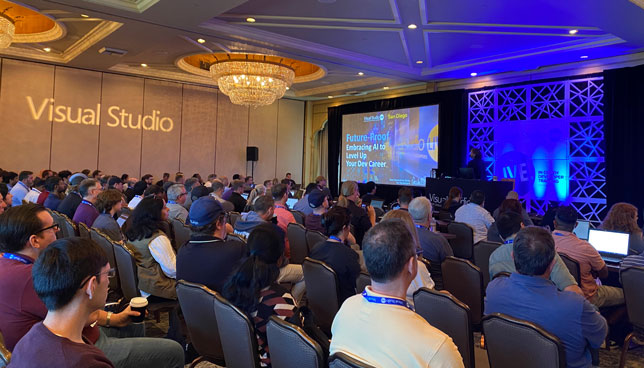
Artificial intelligence is no longer a futuristic concept but an immediate imperative for higher education institutions seeking to enhance operational efficiency, personalize the student experience, accelerate research, and maintain competitive advantage. Recent reports indicate a significant acceleration in AI adoption within the education sector. A 2023 survey by Educause, for instance, revealed that over 60% of higher education institutions were actively exploring or implementing AI tools in some capacity, up from less than 40% just two years prior. This rapid integration is driven by several factors:
- Student Engagement and Personalization: AI-powered chatbots can provide 24/7 support for admissions, financial aid, and academic advising, while adaptive learning platforms tailor educational content to individual student paces and preferences, improving outcomes and retention.
- Administrative Efficiency: AI automates repetitive tasks in HR, finance, and facilities management, freeing up staff for more strategic initiatives. Predictive analytics, for example, can forecast enrollment trends, optimize resource allocation, and identify at-risk students for early intervention.
- Research Acceleration: AI tools are revolutionizing research across disciplines, from processing vast datasets in scientific discovery to generating new hypotheses in humanities. Machine learning algorithms can identify patterns, simulate complex systems, and even assist in writing research papers.
- Campus Operations: AI is being deployed for smart campus initiatives, optimizing energy consumption, managing security systems, and improving transportation logistics.
However, moving AI from isolated pilots to widespread production within the complex, interconnected IT environment of a university presents unique challenges. These include data privacy concerns, ethical considerations regarding algorithmic bias, the integration with legacy systems, and the need for a skilled workforce capable of developing, deploying, and maintaining AI solutions. VSLive! San Diego 2026 directly addresses these hurdles, providing a roadmap for IT teams to strategically embed AI into their core operations.
From Pilot to Production: Navigating AI’s Operational Realities
Much of this year’s VSLive! agenda is dedicated to demystifying the transition of AI initiatives from experimental pilots to robust, production-ready systems. Sessions delve into the practicalities of integrating AI into real development workflows, reflecting a paradigm shift where AI is no longer an add-on but an intrinsic part of how applications are constructed and supported. For instance, the conference will feature deep dives into GitHub Copilot and Copilot Studio, illustrating how AI-powered coding assistants can enhance developer productivity and streamline software creation. Attendees will learn about agent frameworks for building intelligent, autonomous applications and explore multimodal AI applications that combine different data types (text, image, audio) for richer interactions.
A significant portion of the program is allocated to the operational intricacies of managing AI-enabled systems post-launch. This includes crucial topics such as maintaining AI models, continuous monitoring for performance and bias, and establishing trust in automated decision-making processes. As higher education institutions move beyond initial chatbot deployments, critical questions emerge: Which campus systems can an AI tool securely access? How are the outputs and recommendations of AI systems rigorously evaluated for accuracy and fairness? And, crucially, who bears responsibility when an automated workflow produces an erroneous or detrimental recommendation? These sessions will explore deployment practices, strategies for secure enterprise data connections, and the implementation of robust safety controls, providing actionable guidance for responsible AI integration.

Josh Yarbrough, a software developer at Vanderbilt University, exemplifies the practical value of VSLive! attendance. Having participated in a previous VSLive! event, Yarbrough sought to deepen his Blazor skills, a framework his team aimed to integrate for UI development given their existing C# expertise for API and back-end tasks. "The instructors and classes were very good and focused on topics that I needed to be able to get up to speed quickly," Yarbrough commented, highlighting the conference’s targeted curriculum. His team’s subsequent success in developing and deploying "a couple of Blazor apps" post-conference underscores the immediate and tangible benefits of the focused training provided. Yarbrough also lauded the invaluable access to instructors and speakers outside formal sessions, noting how presenters facilitated direct connections with Microsoft developers working on specific tools, offering unparalleled troubleshooting and insights.
Fortifying the Digital Campus: Cybersecurity as a Core Competency
In an era of escalating cyber threats, cybersecurity is not merely a feature but a fundamental requirement that permeates the entire VSLive! agenda. Higher education institutions are particularly attractive targets for cybercriminals due to the vast amounts of sensitive data they manage—ranging from student records and financial information to cutting-edge research and intellectual property. Data breaches in the education sector have seen a consistent increase, with recent reports indicating that universities are among the most frequently attacked sectors.
The conference addresses these critical concerns directly, notably through sessions like "Building Practical Zero Trust APIs with .NET 10 and Azure." This session focuses on implementing a Zero Trust security model, which assumes no user or device can be trusted by default, regardless of whether they are inside or outside the network perimeter. Key topics include managed identity, ensuring robust ingress and egress controls, leveraging Azure-native security capabilities, and establishing efficient, secure developer workflows. As applications become increasingly interconnected and data traverses multiple services and platforms, secure API design can no longer be an optional afterthought. The emphasis on pairing Zero Trust principles with developer productivity underscores a critical shift: security must be meticulously built into everyday engineering practices from the ground up, rather than being "bolted on" after development. This proactive approach is vital for protecting institutional assets, maintaining regulatory compliance, and safeguarding the privacy of students and faculty.
The Human Factor: Cultivating Collaborative and Resilient IT Teams

Beyond the technical deep dives, VSLive! San Diego 2026 dedicates significant attention to the often-overlooked human dimension of technological change. Successful technology projects are not solely dependent on advanced tools and frameworks; they are equally, if not more, reliant on effective collaboration, clear communication, well-documented decisions, and resilient teams capable of managing complexity without undue friction.
Sessions on code review culture, for example, will explore best practices for fostering constructive feedback loops that improve code quality and knowledge sharing. Project management sessions will equip attendees with strategies for agile development, resource allocation, and stakeholder communication, critical skills for navigating large-scale campus IT initiatives. Career development discussions will offer insights into navigating evolving job roles in an AI-driven landscape, emphasizing the need for continuous learning and adaptability. Furthermore, dedicated sessions on AI’s impact on software roles acknowledge the transformative effect of automation and intelligent tools on developer responsibilities, prompting discussions on upskilling and refocusing human effort on higher-value tasks.
In environments where higher education IT teams are frequently stretched thin across multiple roles and responsibilities, these "soft skills" and organizational practices can be the decisive factor in whether new initiatives merely survive or truly thrive in the long term. Fostering a culture of psychological safety, continuous improvement, and effective teamwork is paramount for attracting and retaining talent, enhancing productivity, and ultimately, delivering innovative solutions that meet the diverse needs of a university community. This holistic approach ensures that attendees leave not just with technical knowledge, but also with strategies to build stronger, more effective teams.
Strategic Implications for the Future Campus IT Stack
For higher education IT teams currently planning their next generation of application development, data management, and AI integration projects, the VSLive! San Diego 2026 agenda offers invaluable insights into the strategic direction of the future campus application stack. The convergence of advanced AI capabilities, stringent cybersecurity requirements, and modern developer practices signals a comprehensive shift towards a more intelligent, secure, and integrated technological ecosystem.

Institutions that embrace these evolving paradigms will be better positioned to:
- Optimize Resource Utilization: By leveraging AI for automation and predictive analytics, universities can make more informed decisions regarding budget allocation, staffing, and infrastructure investments.
- Enhance Learning and Research: AI-powered tools will unlock new possibilities for personalized education, advanced scientific discovery, and interdisciplinary collaboration, elevating the academic mission.
- Strengthen Data Security and Compliance: Implementing Zero Trust architectures and secure development practices will fortify defenses against cyber threats, protecting sensitive institutional and personal data, and ensuring compliance with evolving privacy regulations like FERPA and GDPR.
- Foster Innovation and Agility: By empowering IT teams with the latest tools and methodologies, universities can accelerate the development and deployment of innovative solutions, responding more quickly to the needs of students, faculty, and administrators.
VSLive! San Diego 2026 represents more than just a conference; it is a critical forum for shaping the strategic technological roadmap for higher education. It equips IT professionals with the knowledge, skills, and connections necessary to navigate the complex digital landscape, ensuring that their institutions remain at the forefront of innovation and educational excellence. To explore the full agenda and register for this transformative event, interested parties are encouraged to visit the VSLive! site.
About the Author
Rhea Kelly is editor in chief for Campus Technology, THE Journal, and Spaces4Learning. She can be reached at [email protected].