


An international team of astronomers and astrophysicists has confirmed the discovery of two extraordinarily rare "super-puff" exoplanets orbiting a distant star, a finding made possible through the combined efforts of citizen scientists and professional researchers. Located approximately 1,110 light-years from Earth within the southern constellation of Volans, the planets, designated TOI-791 b and TOI-791 c, possess densities so low that they are being compared to the consistency of spun sugar or cotton candy. The study, published in the Monthly Notices of the Royal Astronomical Society, highlights a significant milestone in our understanding of planetary formation and the diverse architectures of solar systems beyond our own.
The discovery was initially triggered by volunteers participating in the Planet Hunters TESS project, a citizen-science initiative that allows members of the public to sift through data from NASA’s Transiting Exoplanet Survey Satellite (TESS). These "super-puff" worlds represent a class of exoplanets with masses only a few times that of Earth but with radii larger than Neptune, resulting in an incredibly low bulk density. While several thousand exoplanets have been cataloged to date, only a handful of super-puffs have been identified, and finding two such objects within the same multi-planetary system is a mathematical and astronomical rarity.
The Physical Profile of the TOI-791 System
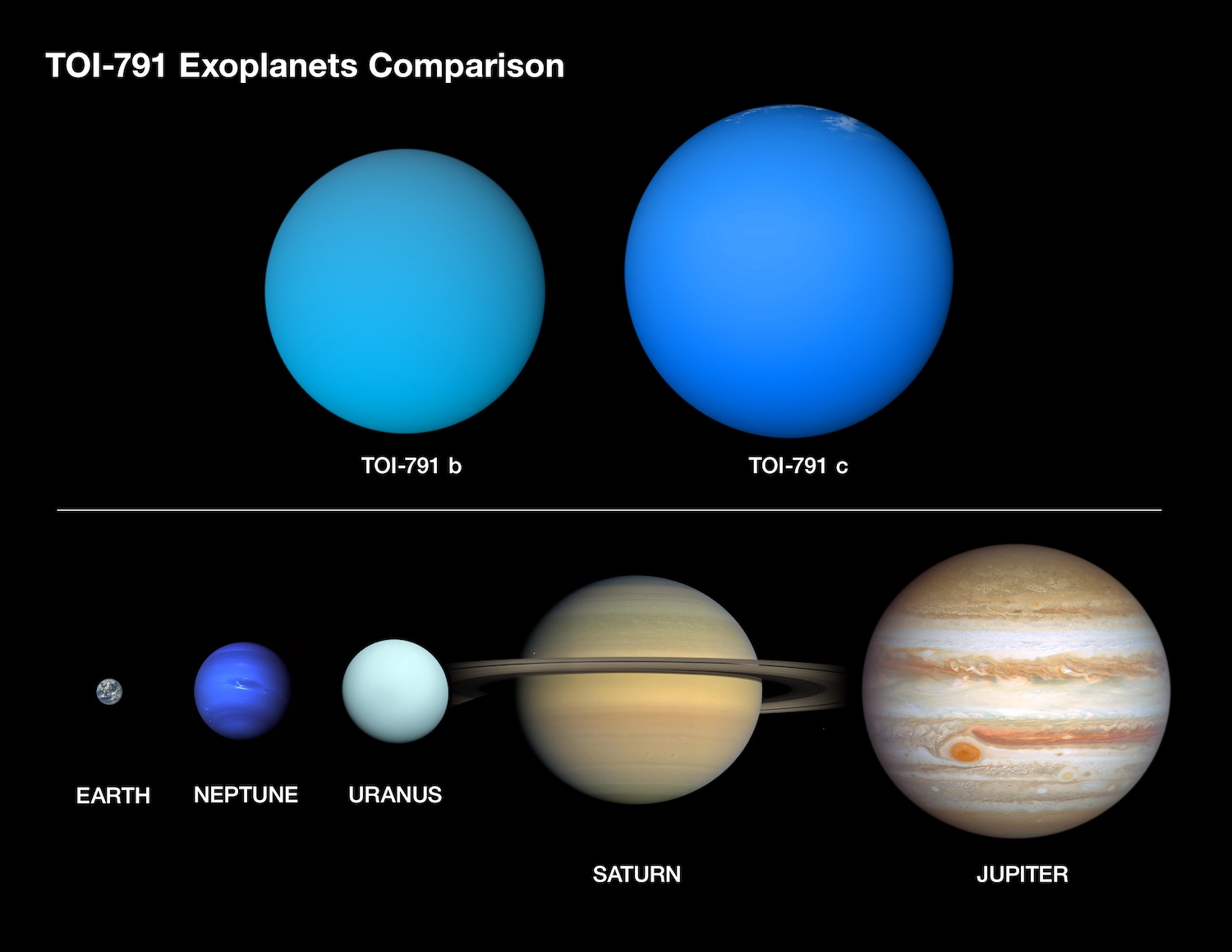
The TOI-791 system presents a striking contrast to the planetary standards of our own solar system. To comprehend the "puffy" nature of these worlds, one must look at the specific density measurements recorded by the research team. TOI-791 b exhibits a density of approximately 0.022 ounces per cubic inch, while its sibling, TOI-791 c, possesses a density of 0.027 ounces per cubic inch.
To provide scientific context, Earth—a rocky, terrestrial world—has an average density of 3.18 ounces per cubic inch. Jupiter, the gas giant of our system, has a density of 0.76 ounces per cubic inch. Remarkably, the spun sugar used to create cotton candy has a density of roughly 0.29 ounces per cubic inch. This means that TOI-791 b and c are nearly ten times less dense than the candy itself and more than 30 times less dense than Jupiter. Despite being roughly the size of Jupiter in terms of volume, their lack of mass suggests they are composed primarily of hydrogen and helium, held in a vastly distended, "fluffy" atmosphere.
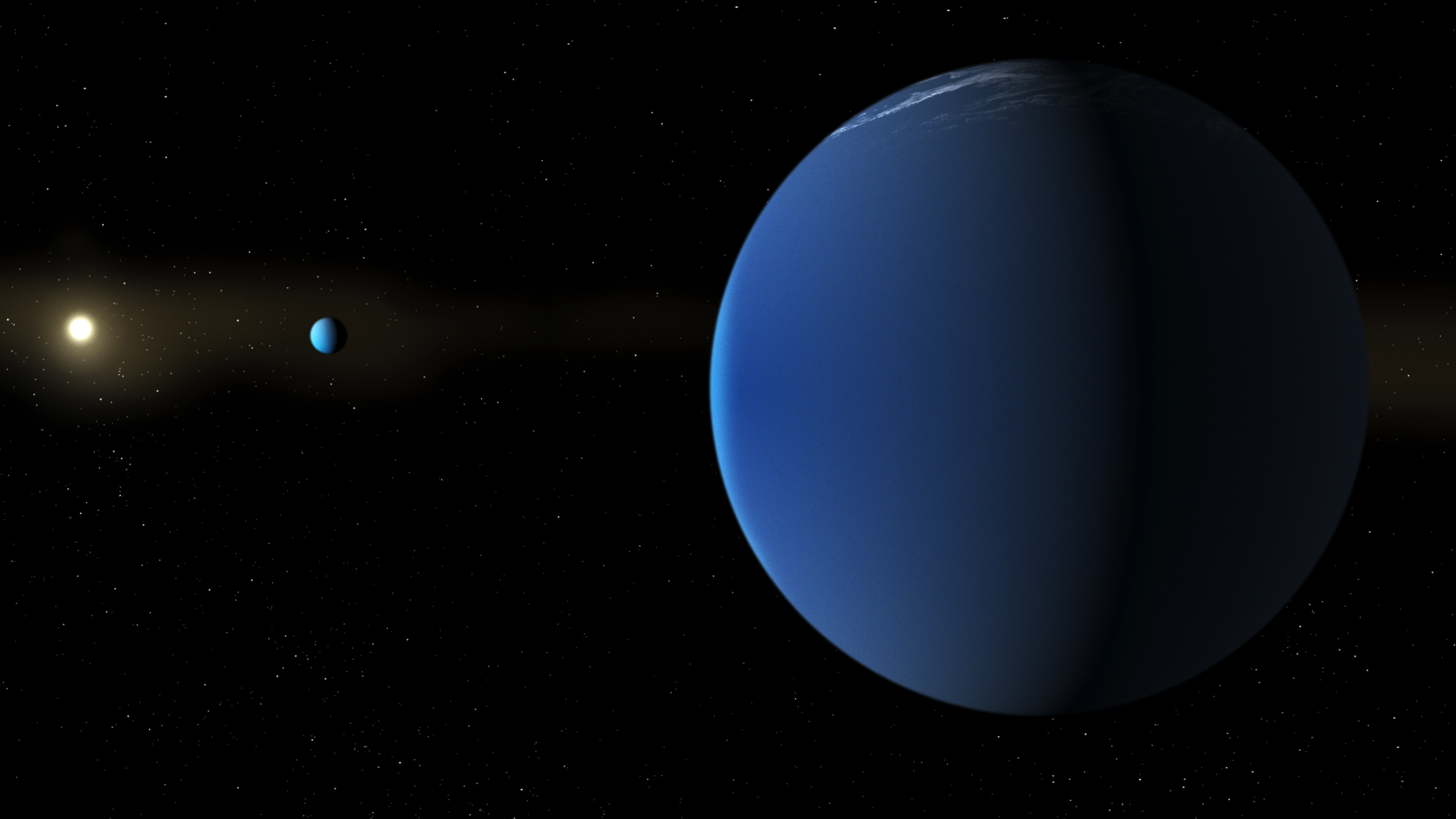
George Dransfield, an astrophysicist at the University of Oxford and co-author of the study, emphasized the importance of these findings. According to Dransfield, the extremely low densities of these planets make them ideal laboratories for atmospheric study. Because their atmospheres are so extended, light from their host star passes through the gaseous envelopes more easily, allowing telescopes to "read" the chemical composition of the planets with much higher clarity than is possible with denser worlds.
A Chronology of Discovery: From TESS to Antarctica
The journey to identifying TOI-791 b and c spanned nearly eight years of rigorous observation and data cross-referencing. The timeline began with the launch of NASA’s TESS mission in 2018, which was designed to survey the brightest stars near the sun for transiting exoplanets. As TESS monitored the TOI-791 system, it recorded periodic dips in the star’s brightness—signals that something was passing in front of it.
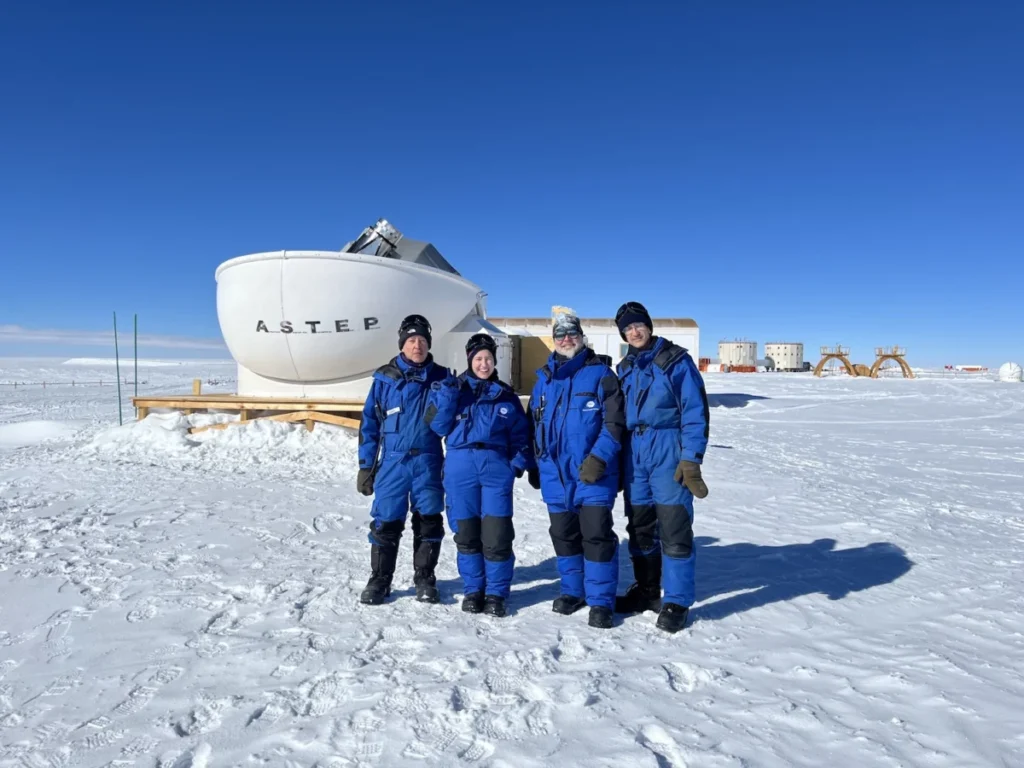
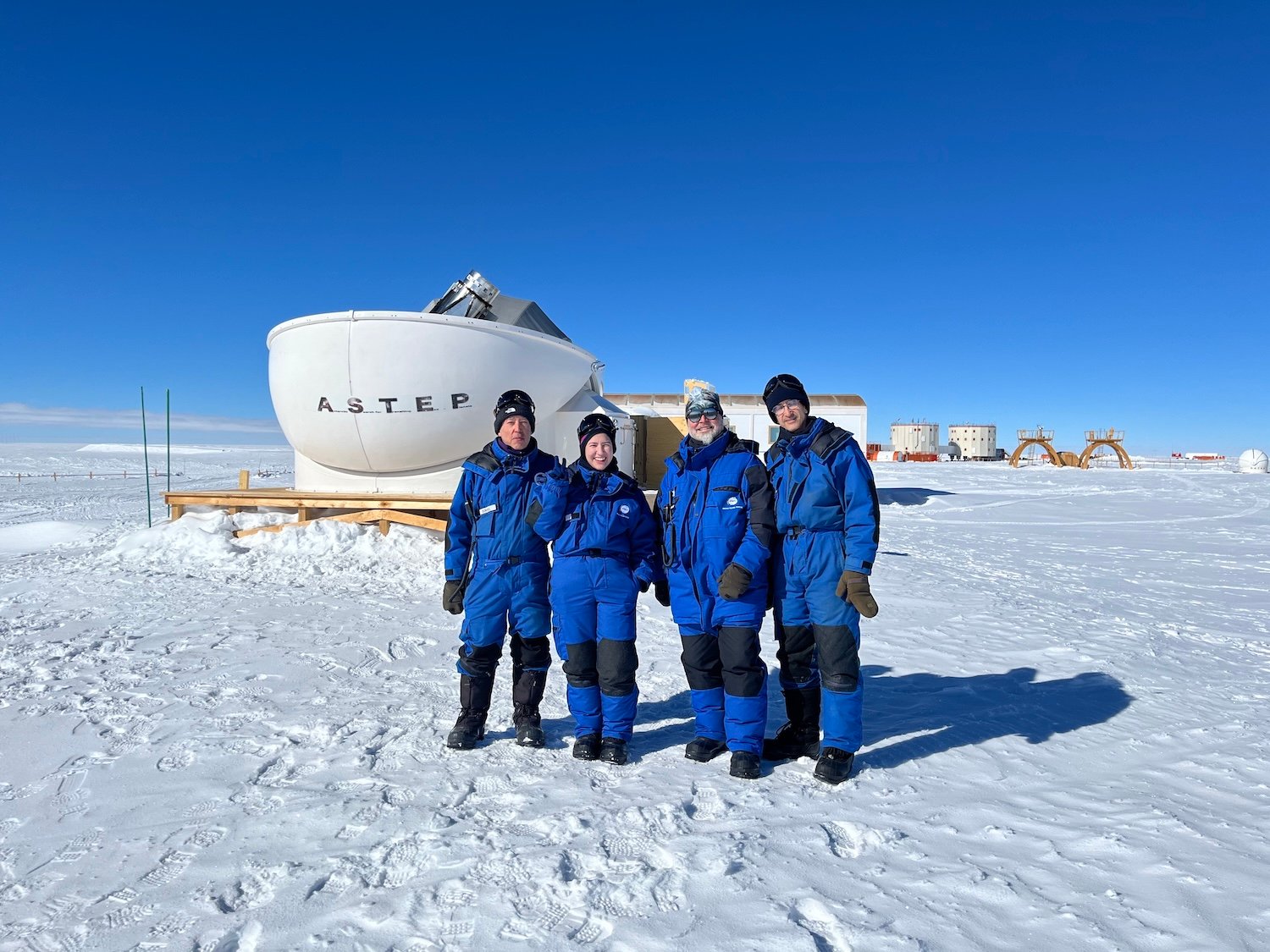
In 2019 and 2023, volunteers with the Planet Hunters TESS project flagged these signals as potential planetary candidates. The transition from "candidate" to "confirmed" required a global effort involving ground-based observatories. One of the most critical components of this verification process took place at the Concordia Station in Antarctica. Using the ASTEP (Antarctic Search for Transiting ExoPlanets) telescope, researchers took advantage of the continent’s long, dark winters and stable atmospheric conditions to obtain high-precision measurements of the planets’ transits.
The ASTEP data was crucial in refining the orbital periods and sizes of the planets. Because the system is located in the southern celestial hemisphere, the Antarctic vantage point provided a continuous observation window that would be impossible from more temperate latitudes. Following the Antarctic observations, the team utilized radial velocity measurements and transit-timing variations to calculate the masses of the planets, ultimately revealing their "super-puff" status.
Orbital Resonance and Gravitational Dynamics
Beyond their physical composition, TOI-791 b and c are locked in a complex gravitational dance known as mean-motion resonance. Specifically, the planets share a 5:3 resonance, meaning that for every five orbits completed by the inner planet (TOI-791 b), the outer planet (TOI-791 c) completes exactly three.
This type of orbital synchronization is rare and indicates a highly stable, yet interactive, system. Such resonances usually form early in a system’s history as planets migrate through the protoplanetary disk—the swirl of gas and dust surrounding a young star. The gravitational tug-of-war between the two planets allows astronomers to calculate their masses with greater precision by observing how one planet’s gravity speeds up or slows down the transit of the other.
Tristan Guillot, an astronomer and study co-author, noted that these multi-planetary systems are living records of celestial history. The interactions between TOI-791 b and c have likely evolved over tens of millions of years. By studying the current state of their resonance, scientists can work backward to model how the planets moved from their birthplaces to their current positions.
Theoretical Origins of the Cotton Candy Worlds
The existence of super-puff planets poses a challenge to traditional models of planetary formation. Standard theory suggests that planets as large as Jupiter should have enough gravity to compress their atmospheres, leading to higher densities. The fact that TOI-791 b and c have remained so "puffy" suggests they formed under specific, perhaps fleeting, conditions.
One leading hypothesis is that these planets formed in the outer, colder regions of their star’s protoplanetary disk, far beyond the "snow line" where volatile gases like hydrogen and helium are abundant. In these frigid reaches, the planets could have ballooned in size by accreting massive amounts of gas before migrating inward toward their host star.
Another theory suggests that the "puffiness" might be a temporary stage in a planet’s life. It is possible that these worlds are currently undergoing a process of atmospheric escape, where the heat from the host star causes the atmosphere to expand and slowly leak into space. However, the stability of the TOI-791 system suggests that these planets have maintained their low-density states for a significant period, making them outliers in the current catalog of known exoplanets.
Broader Implications and Future Research
The discovery of the TOI-791 system has profound implications for the future of exoplanetary science. As astronomers move from simply finding planets to characterizing their environments, super-puffs represent the "low-hanging fruit" for atmospheric spectroscopy.
The research team has already identified TOI-791 b and c as prime candidates for follow-up observations with the James Webb Space Telescope (JWST). With its powerful infrared capabilities, JWST can peer through the hazy envelopes of these planets to determine if they contain water vapor, methane, or carbon dioxide. Understanding the chemical makeup of these wispy atmospheres will provide clues as to whether the planets formed in situ or migrated from the outer reaches of their system.
Furthermore, the role of citizen scientists in this discovery cannot be overstated. The Planet Hunters TESS project demonstrates that the sheer volume of data produced by modern space missions requires more than just algorithms to process. Human eyes are uniquely adept at spotting subtle patterns and anomalies that automated systems might overlook. This discovery serves as a testament to the democratization of science, where amateur enthusiasts can contribute to peer-reviewed research in the world’s leading astronomical journals.
As we continue to explore the Volans constellation and beyond, systems like TOI-791 remind us that the universe is far more diverse than our own solar system suggests. From rocky "Super-Earths" to "Cotton Candy" giants, the variety of worlds orbiting distant suns continues to expand the boundaries of human knowledge, forcing a constant re-evaluation of the laws governing planetary evolution. The study of TOI-791 b and c is just the beginning of a new chapter in understanding how the most unusual worlds in the cosmos come to be.