


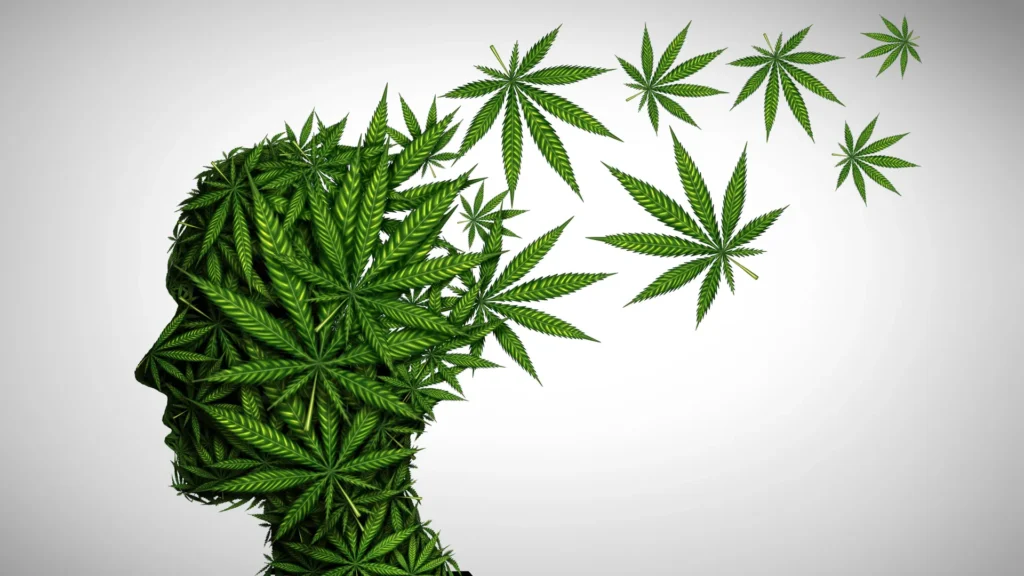
A landmark study from Washington State University (WSU) has unveiled significant findings regarding the acute effects of cannabis on human memory, indicating that consuming THC does more than just cause transient forgetfulness; it fundamentally alters how memories are formed and retrieved. Published in the esteemed Journal of Psychopharmacology, this research provides one of the most comprehensive examinations to date on how cannabis influences a wide array of memory functions crucial for daily life, pointing to a broad disruption across most memory systems.
The Study’s Revelations: Beyond Simple Recall
The WSU study, led by senior author Carrie Cuttler, an associate professor of psychology, and co-author Ryan McLaughlin, an associate professor in the Department of Integrative Physiology and Neuroscience, challenged the conventional understanding of cannabis’s impact on memory. Unlike previous research that often focused on one or two specific types of memory, such as recalling word lists, this investigation meticulously explored multiple memory systems simultaneously. The findings were stark: acute cannabis intoxication appears to broadly disrupt nearly all of them.
Researchers recruited 120 regular cannabis users for a rigorous double-blind experiment. Participants were randomly assigned to vaporize either a placebo, 20 milligrams of THC, or 40 milligrams of THC. Following consumption, each participant underwent approximately an hour of comprehensive memory assessments. These tests measured various memory types, including verbal, visuospatial, prospective, source, false, episodic content, and temporal order memory.
The results painted a clear picture: individuals who consumed cannabis performed significantly worse than those who received the placebo across the majority of the tests. Out of 21 distinct memory measures, cannabis consumption led to significant impairments in 15 of them. A particularly surprising revelation was the absence of meaningful differences between participants who consumed 20 milligrams of THC and those who consumed 40 milligrams. This crucial finding suggests that even moderate amounts of THC can significantly interfere with memory processes, challenging the notion that higher doses are solely responsible for pronounced cognitive effects. This implies a potential threshold effect, where even relatively low doses can initiate substantial cognitive disruption.
A Deeper Dive into Memory Mechanics: False Memories and Source Confusion
Among the most pronounced effects observed were impairments in false memory and source memory. These two systems are fundamental to accurately recalling information and, critically, determining the origin of that information. False memories refer to recollections of events or details that never actually occurred, while source memory allows individuals to correctly identify where, when, or how they acquired a piece of information.
In one particularly illustrative test, participants listened to lists of thematically related words, but the central keyword tying them together was intentionally omitted. For instance, a list might include "bed," "dream," "sleep," but omit "night." Later, individuals who had consumed cannabis were markedly more likely to falsely claim they remembered hearing words that were never presented, often those related to the list’s theme, but sometimes even entirely unrelated words. "I found it was really common for people to come up with words that were never on the list," Cuttler noted, highlighting the potent influence of cannabis on memory distortion.
The impairment in source memory was equally concerning. Participants under the influence of cannabis struggled significantly to identify where previously learned information originated. This difficulty has profound implications for everyday life, making it harder to discern whether information came from a trusted news source, a casual conversation, or a potentially unreliable online platform. Such memory distortions are not merely inconvenient; they can have serious consequences in situations demanding precise recall, such as eyewitness testimony in legal proceedings, where inaccurate recollections or susceptibility to suggestive questioning can dramatically alter outcomes. The ability to verify the veracity of information and its source is paramount in an age saturated with data, and cannabis’s impact on this faculty warrants serious attention.
The Ubiquity of Impairment: Everyday Tasks and Critical Decisions
Beyond false and source memories, the WSU researchers also observed significant impairments in prospective memory—the ability to remember to perform tasks in the future. This form of memory is indispensable for navigating daily life, governing responsibilities like taking medication on schedule, attending scheduled meetings, or remembering to pick up groceries on the way home. "These are things we rely on constantly in our day-to-day lives," Cuttler emphasized. "If you have something you need to remember to do later, you probably don’t want to be high at the time you need to remember to do it." The disruption of prospective memory highlights how acute cannabis intoxication can subtly yet significantly undermine an individual’s ability to function effectively and reliably in their personal and professional lives.
While most memory systems showed significant effects, one form of memory—episodic content memory, which involves recalling personal experiences—did not show a statistically significant effect in this particular study. However, Cuttler cautioned that further research is necessary before drawing definitive conclusions about this specific memory type. The nuanced findings underscore the complexity of memory and the varied ways cannabis can interact with different cognitive functions.
Contextualizing Cannabis: A Shifting Legal and Scientific Landscape
This groundbreaking study arrives at a pivotal moment in North America, where cannabis use is rapidly becoming more common following widespread legalization and decriminalization efforts. As of early 2024, nearly half of U.S. states have legalized recreational cannabis, with many more allowing medical use. This dramatic shift has seen the industry boom, with annual sales projected to reach tens of billions of dollars. According to recent Gallup polls, cannabis use has reached record highs, with approximately 16% of American adults reporting current use and nearly half having tried it at some point. This growing normalization, however, has outpaced scientific understanding of its full range of short-term and long-term cognitive effects.
Historically, rigorous scientific study of cannabis has been severely hampered by its classification as a Schedule I substance under federal law, alongside drugs like heroin. This classification, which designates substances with a high potential for abuse and no accepted medical use, has created significant bureaucratic hurdles for researchers seeking federal funding, acquiring legal cannabis for studies, and navigating complex regulatory frameworks. While some progress has been made in easing these restrictions, the legacy of prohibition means that there remain substantial gaps in scientific knowledge regarding cannabis’s impact on human health and cognition.
The endocannabinoid system (ECS), a complex cell-signaling system in the human body, plays a crucial role in regulating a wide range of functions, including sleep, mood, appetite, and memory. THC, the primary psychoactive compound in cannabis, mimics the body’s natural endocannabinoids and binds to cannabinoid receptors (CB1 and CB2) found throughout the brain and body. CB1 receptors are particularly dense in areas associated with memory, such as the hippocampus and prefrontal cortex. When THC binds to these receptors, it can disrupt normal neurotransmitter function, interfering with the intricate processes involved in memory encoding, consolidation, and retrieval. This neurobiological interaction provides the physiological basis for the cognitive impairments observed in the WSU study. Understanding these mechanisms is vital for comprehending why cannabis has such a profound and broad impact on memory.
Expert Perspectives and Policy Implications
The findings from Washington State University are poised to ignite further discussion among public health officials, policymakers, and industry stakeholders.
Dr. Anya Sharma, Director of Public Health Initiatives for a national health organization, commented, "This study provides compelling evidence that acute cannabis intoxication can broadly impair cognitive functions essential for daily life. As cannabis becomes more accessible, it is imperative that public health campaigns clearly communicate these risks, especially concerning tasks that require unimpaired judgment and accurate memory, such as driving, operating machinery, or making important decisions." Dr. Sharma stressed the need for clear guidelines on responsible use and comprehensive consumer education.
State Senator Mark Jenkins, a key figure in cannabis regulation debates, acknowledged the study’s relevance. "These findings will undoubtedly inform our ongoing legislative discussions regarding cannabis policy, particularly in areas of public safety, such as driving under the influence laws, and workplace impairment. We must ensure that our regulatory framework is grounded in robust scientific evidence to protect public welfare while respecting individual freedoms." Senator Jenkins indicated that the study could prompt reevaluation of current public education funding and content.
A spokesperson for the National Cannabis Industry Association (NCIA) stated, "The cannabis industry is committed to promoting responsible consumption and ensuring consumer safety. We support all scientific research that contributes to a deeper understanding of cannabis and its effects. These findings underscore the importance of clear product labeling, consumer education programs, and continuous investment in research to help individuals make informed choices about their cannabis use." The NCIA emphasized that responsible retailers already advocate for moderation and avoiding impairment in critical situations.
Dr. Elena Petrova, a distinguished cognitive neuroscientist at the University of California, Berkeley, offered an independent perspective. "The broad disruption across multiple memory systems highlighted in this WSU study is particularly significant because it extends beyond simple recall to critical functions like distinguishing fact from fiction and planning future actions. This level of comprehensive impairment has implications for everything from academic performance to occupational safety and even the integrity of legal testimony. It’s a wake-up call for further investigation into the long-term consequences, especially for developing brains."
The implications extend to workplace policies, where employers in states with legal cannabis are grappling with how to ensure safety and productivity. The study’s findings reinforce the need for clear impairment detection protocols and educational programs for employees. Furthermore, the medical cannabis community will need to consider how these acute cognitive effects might impact patients, particularly those with pre-existing memory conditions or those performing tasks requiring high cognitive function. Patient education on the timing of medication relative to critical tasks will be essential.
Looking Ahead: The Path for Future Research
Despite the significant contributions of the WSU study, many research gaps remain. Cuttler and McLaughlin’s work primarily focused on the acute effects of vaporized THC in regular users. Future research needs to explore:
- Longitudinal Effects: How do repeated acute exposures or chronic cannabis use affect memory over months and years?
- Different Consumption Methods: Do edibles, tinctures, or other forms of consumption lead to different cognitive profiles or durations of impairment?
- Varying Potency Levels: With increasingly potent cannabis products available, what are the effects of ultra-high THC concentrations?
- Specific Demographics: How do these effects manifest in adolescents, whose brains are still developing, or in elderly populations, who may already experience age-related memory decline?
- Cannabinoid Interactions: How do other cannabinoids, such as CBD, or terpenes modulate THC’s effects on memory?
- Individual Variability: Why do some individuals seem more susceptible to memory impairment than others?
The Schedule I classification continues to pose challenges, but as public interest and state-level legalization grow, the imperative for comprehensive, federally funded research becomes undeniable.
Conclusion
The Washington State University study serves as a critical contribution to our understanding of cannabis’s acute effects on memory. By demonstrating a broad and significant disruption across multiple memory systems, including the crucial abilities to distinguish true from false information and plan for the future, the research underscores the complexity of cannabis’s impact on the human brain. As cannabis becomes increasingly integrated into societal norms, informed decision-making by individuals, and evidence-based policy development by governments, will be paramount. The findings urge continued scientific inquiry and robust public health campaigns to ensure that the growing landscape of cannabis use is navigated with clarity, responsibility, and an unwavering commitment to public well-being.