



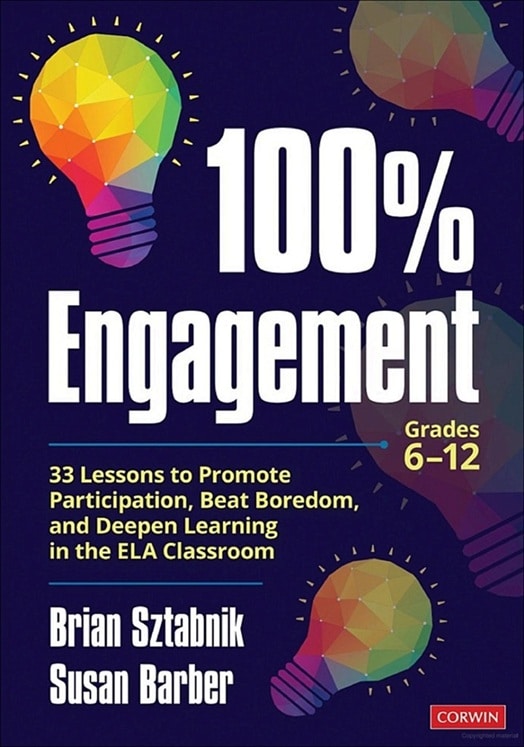
The realm of education, particularly within English Language Arts (ELA), frequently grapples with the persistent challenge of student disengagement when interacting with textual content. From classic literature to contemporary articles, poems, and textbooks, these foundational materials are central to knowledge acquisition, yet often lead to a classroom environment characterized by boredom and passivity. This pervasive issue diminishes the learning experience and hinders the development of crucial analytical and critical thinking skills. Addressing this educational dilemma, veteran high school English teachers Brian Sztabnik and Susan Barber have spearheaded a movement to revitalize ELA instruction, culminating in their recently published work, "100% Engagement: 33 Lessons to Promote Participation, Beat Boredom, and Deepen Learning in the ELA Classroom." This comprehensive guide offers practical, low-tech, and highly effective strategies designed to transform static text interaction into dynamic, participatory learning experiences.
The Enduring Challenge of Textual Engagement in ELA
For decades, English Language Arts classrooms have served as the cornerstone for developing literacy, critical analysis, and communication skills. However, the methods of delivering this instruction have often remained traditional, heavily relying on passive reading, lectures, and individual written responses. While foundational, this approach frequently struggles to capture the attention of modern students, who are accustomed to interactive, multimedia-rich environments. Educational research consistently highlights a decline in reading engagement among adolescents, with studies indicating that many students perceive text-based assignments as tedious or irrelevant. A 2019 report by Common Sense Media, for instance, found that reading for pleasure declined significantly among teenagers, suggesting a broader disconnect with textual materials even outside academic requirements. Within the classroom, this translates to glazed eyes, superficial comprehension, and missed opportunities for deeper learning. Teachers, particularly those in ELA, are acutely aware of this challenge, often seeking innovative methods to bridge the gap between mandated curricula and student interest. The problem is not merely about content delivery; it extends to fostering a genuine intellectual curiosity and the analytical rigor necessary to navigate complex texts.

A Decade of Collaborative Innovation: Sztabnik and Barber’s Journey
The genesis of "100% Engagement" can be traced back to over a decade of dedicated work by Brian Sztabnik and Susan Barber, both seasoned high school English teachers. Recognizing the isolation often felt by educators and the shared struggles in engaging students, they embarked on a mission to build a supportive online community for ELA teachers. Their platform, "Much Ado About Teaching," began as a blog and expanded to include vibrant social media chats, creating a nexus for professional dialogue and resource sharing. Through these interactions, Sztabnik and Barber gained invaluable insights into the common pain points experienced by their peers: a widespread desire for practical, immediately applicable strategies to combat student apathy towards text-based learning. This collaborative environment served as a crucible, allowing them to collect, refine, and curate a diverse array of teaching techniques that had proven successful in their own classrooms and those of their networked colleagues. The overwhelming feedback from their online community underscored a significant gap in available resources—a need for easily implementable, high-impact strategies that didn’t require extensive technological infrastructure or specialized training. Their book, released earlier this year, is a direct response to this identified need, packaging years of collective wisdom and pedagogical experimentation into an accessible format for educators seeking to invigorate their lessons.
Transforming Passive Reading into Active Learning: Three Core Strategies
During a recent podcast interview, Sztabnik and Barber illuminated three standout strategies from "100% Engagement" that exemplify their philosophy of active, low-tech, and collaborative learning. These methods are designed to disrupt traditional classroom dynamics, getting students physically and mentally involved with the course material.
1. Cutting Up Poems: Deconstructing for Deeper Understanding
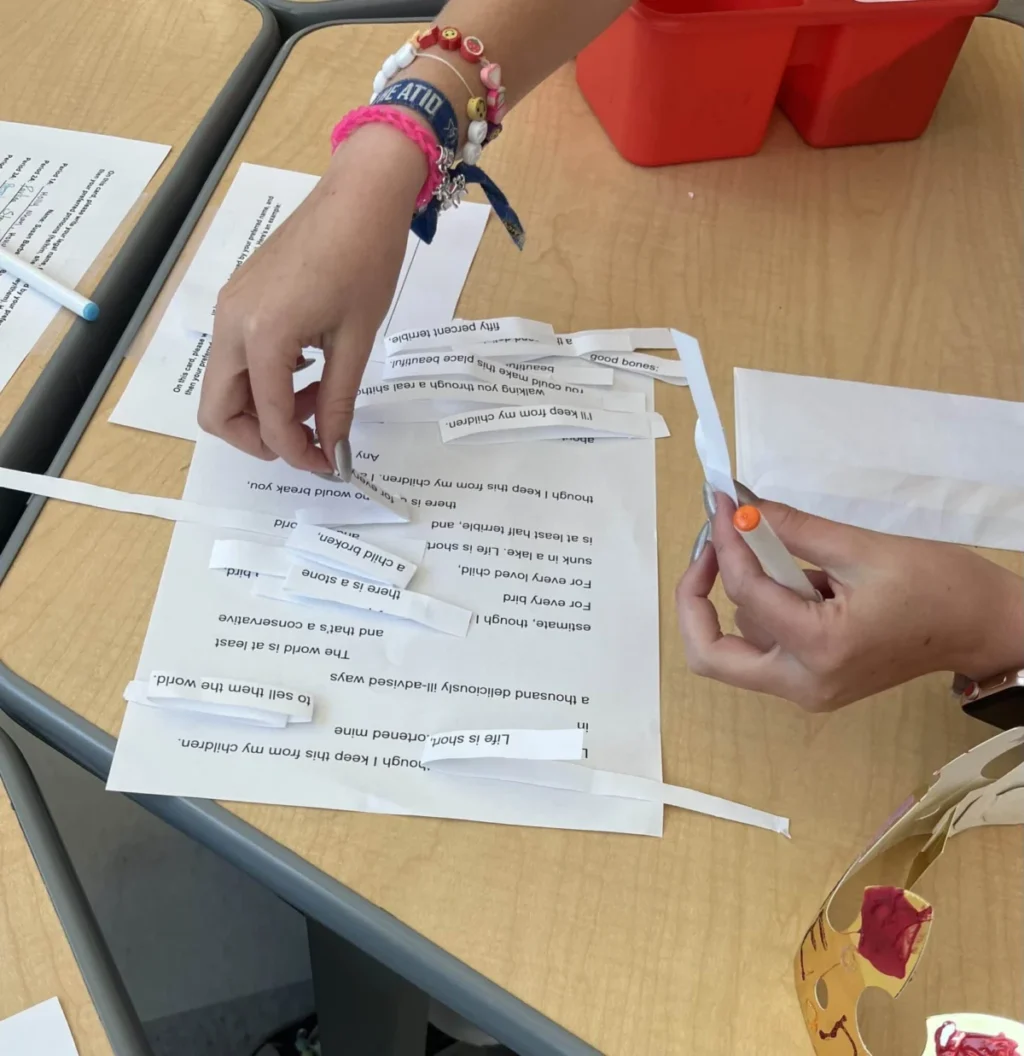
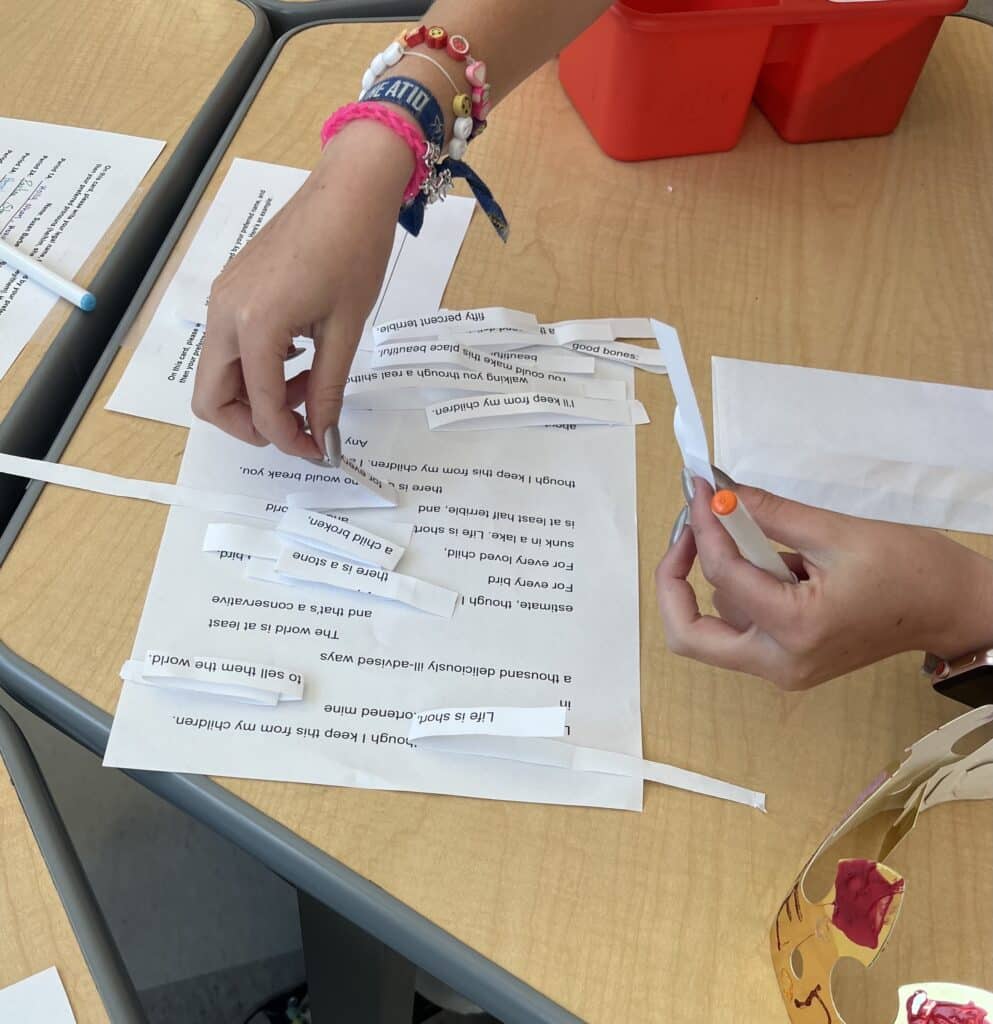
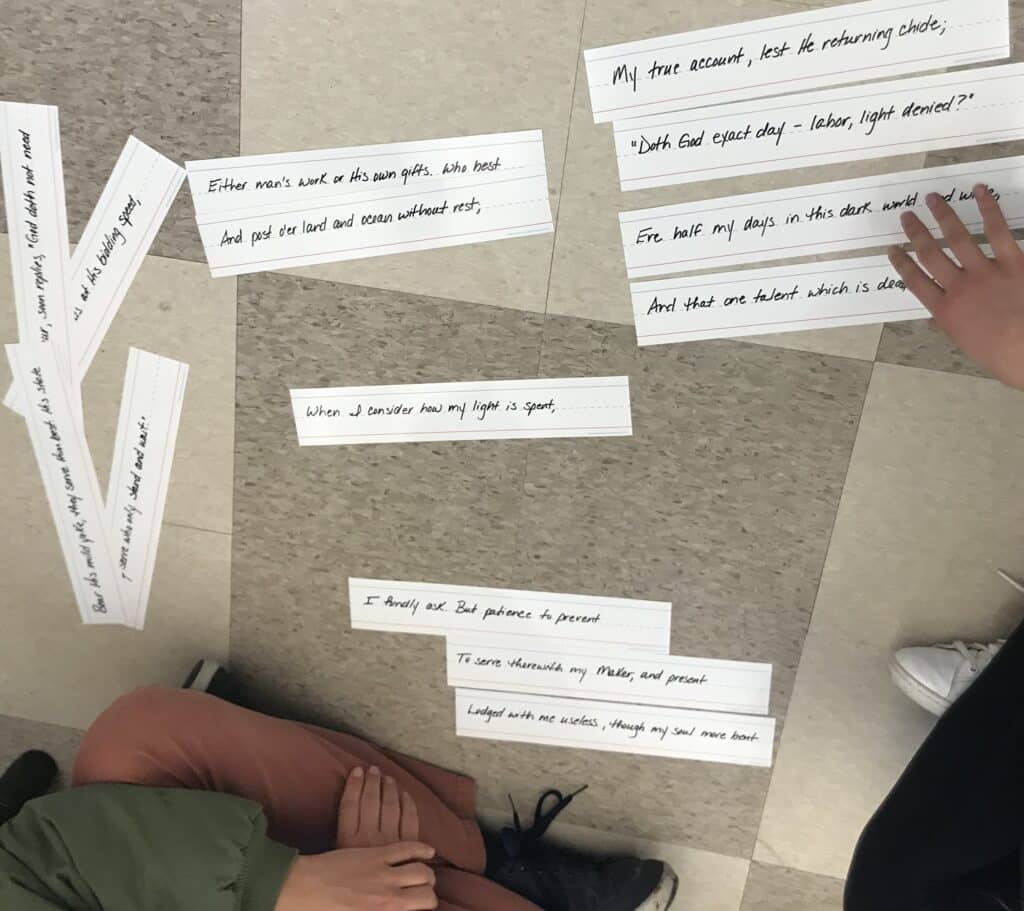
The "Cutting Up Poems" strategy is an ingenious, kinesthetic approach to close reading, turning what can often be a daunting task into an interactive puzzle. Students are presented with a poem that has been meticulously cut into strips, each containing individual words, phrases, or lines. Their primary task is to reconstruct the poem, physically arranging these strips to restore the original order. Following this reconstruction, students are then prompted to annotate their assembled version, documenting their thought processes and initial interpretations, before finally comparing it to the original text.
Susan Barber elucidates the profound impact of this activity, stating, "It’s forcing the students to do a close reading of the poem. If I would have passed out this poem and said, I want you to do a close reading, their eyes would be glazed over." She further elaborates on the cognitive processes involved: "They’re having to consider, Does this make sense if it goes here? Well, this is a capital letter, so it may not go in the middle of those sentences, or this is a comma here, that may not fit right there. And so students are already thinking about this poem analytically, and having really good discussion. They’re reading closely." Barber playfully refers to it as "a teacher trick," highlighting its deceptive simplicity in achieving sophisticated analytical engagement.
Pedagogically, this strategy aligns with constructivist learning theories, where students actively build knowledge through manipulation and problem-solving. It effectively breaks down the cognitive load associated with complex texts, allowing students to focus on syntax, punctuation, and semantic connections in a tangible way. Research in educational psychology indicates that kinesthetic activities enhance memory retention and engagement, particularly for abstract concepts like poetic structure and meaning. By transforming the poem into a physical puzzle, students are compelled to engage with its minutiae, making explicit choices about word order and grammatical flow. This process naturally fosters rich discussion as students collaborate (or even individually deliberate) on the most logical arrangement, leading to a deeper appreciation of the poet’s craft and the nuances of language. This method is also highly adaptable; while framed for poetry, it could be applied to significant excerpts from prose, historical documents, or even scientific explanations where precise sequencing of ideas is paramount. The low-tech nature of the activity ensures accessibility across various school environments, requiring only printed texts and scissors, making it a robust and equitable engagement tool.
2. Inferential Timeline: Mapping Narrative and Meaning
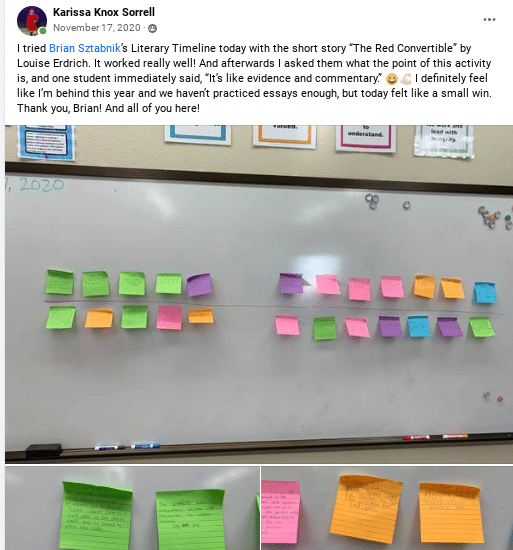
The "Inferential Timeline" strategy provides a dynamic framework for students to engage with narrative texts, particularly novels, by synthesizing plot points and drawing higher-level inferences. The lesson unfolds by dividing a section of a novel among students, with each assigned a few pages to analyze. Each student then receives an index card or post-it note. On this card, they are tasked with identifying the single most important event or development within their assigned pages, summarizing it concisely, and providing a direct quote from the text that illustrates this event. These cards form the top tier of a classroom timeline, physically laid out or affixed to a whiteboard in chronological order.
Brian Sztabnik emphasizes the core skill development here: "What I’m really asking is to summarize the plot and boil it down to one or two sentences. So this is all about decision-making and cutting out the extraneous details and just focusing on what’s really important. And often it’s either character development or increasing conflict or maybe a symbol finally emerges." This initial phase sharpens students’ summarization and critical selection abilities, forcing them to discern main ideas from supporting details.
The strategy then evolves into its second, more inferential tier. Once the top row of summary cards is complete, students select another classmate’s card from the timeline. Beneath it, they add a new card, explaining why that specific moment is significant within the broader context of the narrative. Sztabnik explains the collaborative and analytical depth of this stage: "It’s collaborative without being collaborative physically. It’s collaborative mentally: They have to look at their classmate’s card, determine what happened, and make an inference about why that event was so important in the grand scheme of those chapters. So here’s where we’re getting to the higher level thinking – we can understand the plot; now we need to draw conclusions." This second tier elevates the activity from mere plot recall to sophisticated textual analysis, requiring students to connect individual events to thematic development, character arcs, or overarching conflicts.
The lesson culminates in a "gallery walk," where students move along the entire timeline, examining the collective summaries and inferences made by their peers. This peer-learning component exposes students to diverse interpretations and deepens their understanding of the text’s complexities. The Inferential Timeline effectively scaffolds critical thinking, moving from concrete plot points to abstract analysis. It fosters a sense of shared ownership over the narrative and encourages active participation in constructing a holistic understanding of the text. This strategy is particularly effective in breaking down longer works into manageable, meaningful segments, making daunting novels more accessible and engaging. Its flexibility allows for adaptation in history classes (for sequential events and their significance) or science (for steps in a process and their implications).
3. Text Rendering: Precision in Meaning-Making
The "Text Rendering" strategy is designed to hone students’ ability to extract precise meaning from a passage, addressing a common challenge many educators face: students struggling to narrow their focus from broad generalizations to specific textual evidence. This structured activity guides students through a process of progressively narrowing down a chosen passage. They begin by identifying the single most important sentence or line within the passage. From that selected sentence, they then pinpoint the most crucial phrase or clause. Finally, they isolate the most impactful single word from that chosen phrase.
Susan Barber initiated this lesson to meet a specific academic need: "I have trouble every year getting students to narrow their focus when they’re making meaning from the text. They talk in these really big, general ideas, and I would be like, Where did this come from? And they’re like, You know, it’s just there. It has to come from someplace specific in the text. I had to find some activity to get them to take the big ideas to the small." This strategy directly confronts the tendency to make vague assertions by demanding explicit textual justification at every step.
After individually making their selections, students defend their choices to the rest of the class, articulating the rationale behind their narrowing process. This defense requires them to engage in close textual analysis, explaining how their chosen word, phrase, and sentence encapsulate the essence or core message of the passage. Following these individual presentations, small groups collaborate to synthesize their findings and draw collective conclusions about the passage’s deeper meaning or implications.
Text Rendering is a powerful tool for developing analytical precision, evidence-based reasoning, and critical thinking. It forces students to move beyond surface-level comprehension to grapple with authorial intent, word choice, and the subtle power of language. This activity is invaluable for preparing students for analytical essays, literary critiques, and any academic task requiring them to support arguments with specific textual evidence. By compelling students to connect "big ideas to the small," it equips them with the foundational skills necessary for sophisticated academic discourse and a nuanced understanding of any complex written material.
Broader Implications and the Future of ELA Instruction
The strategies championed by Sztabnik and Barber in "100% Engagement" represent more than just individual lesson plans; they signify a broader pedagogical shift towards active, student-centered learning. In an era where educational technology often dominates discussions about innovation, these low-tech, highly interactive methods offer a refreshing and equitable alternative. They demonstrate that profound engagement does not always necessitate screens or advanced software but can flourish through thoughtful design and simple, tangible materials. This accessibility is crucial for diverse educational settings, ensuring that innovative practices are not limited by resource availability.
Furthermore, these strategies underscore the growing recognition within education that learning is most effective when students are active participants, not passive recipients. The shift from a "sage on the stage" model to a "guide on the side" empowers students to take ownership of their learning, fostering critical thinking, problem-solving, and collaborative skills that extend far beyond the ELA classroom. The emphasis on movement, discussion, and physical manipulation of texts taps into multiple learning modalities, catering to a wider range of student needs and preferences.
The continued success of their blog, "Much Ado About Teaching," and the vibrant "100% Engagement" Facebook group highlight the enduring power of professional learning communities. These platforms provide vital spaces for teachers to share insights, adapt strategies, and collectively address the evolving challenges of education. Such collaborative environments are essential for fostering continuous professional growth and ensuring that educators remain equipped with innovative tools to meet the demands of a dynamic learning landscape.
Conclusion
Brian Sztabnik and Susan Barber, through their dedicated work and the impactful release of "100% Engagement," offer a compelling blueprint for revitalizing English Language Arts classrooms. By providing practical, engaging, and low-barrier strategies, they empower teachers to transform potentially dry textual analysis into vibrant, interactive learning experiences. Their methods not only combat student boredom but also cultivate deeper comprehension, critical thinking, and a genuine appreciation for the power of language. As educators continue to seek effective ways to connect with students in an increasingly complex world, the principles and practices outlined in "100% Engagement" stand as a testament to the enduring power of thoughtful pedagogy in fostering a generation of lifelong learners and critical thinkers.