
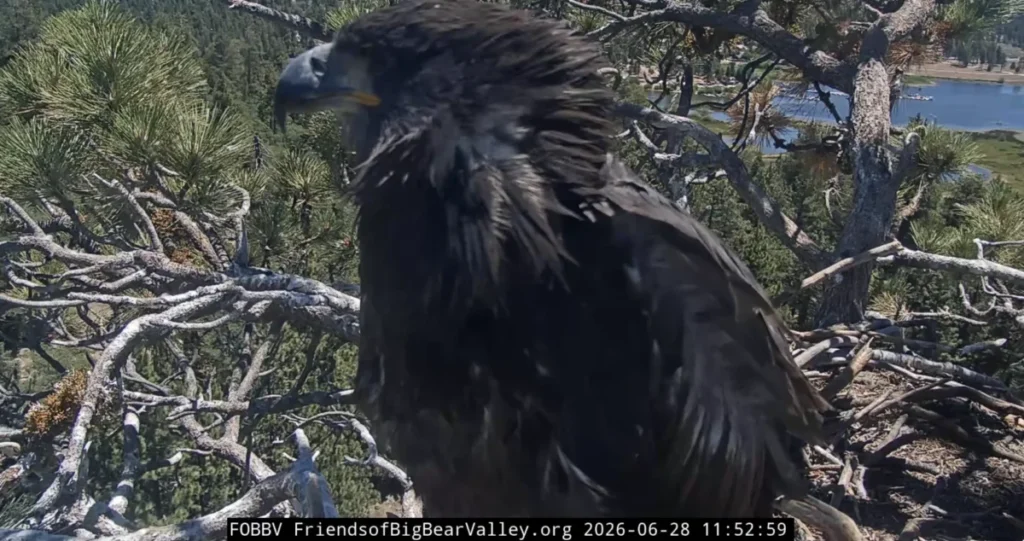
The natural progression of life in the San Bernardino National Forest took an unexpected turn on Sunday morning when Sandy, one of the two bald eagle chicks born to the world-famous pair Jackie and Shadow, prematurely departed the nest. At approximately 11:24 a.m. PDT, a routine interaction between the siblings resulted in Sandy’s accidental "fledge," a term used to describe a young bird’s first flight or departure from the nest. While bald eagles typically fledge between 10 and 14 weeks of age, Sandy’s exit was not a calculated leap but rather the result of a physical mishap on the "front porch" of the nest, an area of the pine tree where the chicks often practice their balance.
The incident occurred as Sandy and her sibling, Luna, were positioned on the edge of the nesting structure. In an attempt to maneuver back into the main bowl of the nest, Luna attempted to jump over Sandy. The sudden movement caught Sandy off guard, causing her to lose her footing on the narrow branch. Witnesses watching the 24/7 live stream operated by the non-profit organization Friends of Big Bear Valley (FOBBV) observed Sandy flapping her wings frantically as she tumbled through the lower branches of the Jeffrey pine. Although the fall was unplanned, Sandy managed to navigate her way to a neighboring tree, where she eventually found a stable perch.
A Chronology of the 2026 Nesting Season
The 2026 nesting season has been a focal point of international attention, following several years of environmental challenges and predatory threats that had previously hindered Jackie and Shadow’s reproductive success. Sandy and Luna were hatched in early April, bringing a sense of triumph to the conservationists and enthusiasts who monitor the nest.
Over the past twelve weeks, the chicks have undergone a rapid transformation from downy, helpless hatchlings to formidable juvenile eagles. By early June, both chicks had begun "branching," a behavior where they venture out of the nest bowl onto adjacent limbs to strengthen their talons and wings. This stage is critical for developing the muscular coordination required for flight.
Sandy, at 12 weeks old, was within the biological window for fledging; however, FOBBV experts noted that she had not yet completed the full regimen of "flap training"—vigorous wing-beating exercises performed while gripped to the nest—that usually precedes a successful first flight. The Sunday morning accident bypassed this final preparation phase, thrusting the young eagle into the surrounding forest earlier than anticipated.
The Dynamics of an Unplanned Departure
Following the fall, the immediate concern for observers was Sandy’s physical condition and her ability to communicate with her parents. FOBBV reported hearing distinct "squees"—high-pitched vocalizations used by juvenile eagles to signal their location and hunger—emanating from the area where Sandy landed. These vocalizations are vital survival tools, as they allow the adult eagles to track their offspring even when they are obscured by dense foliage.
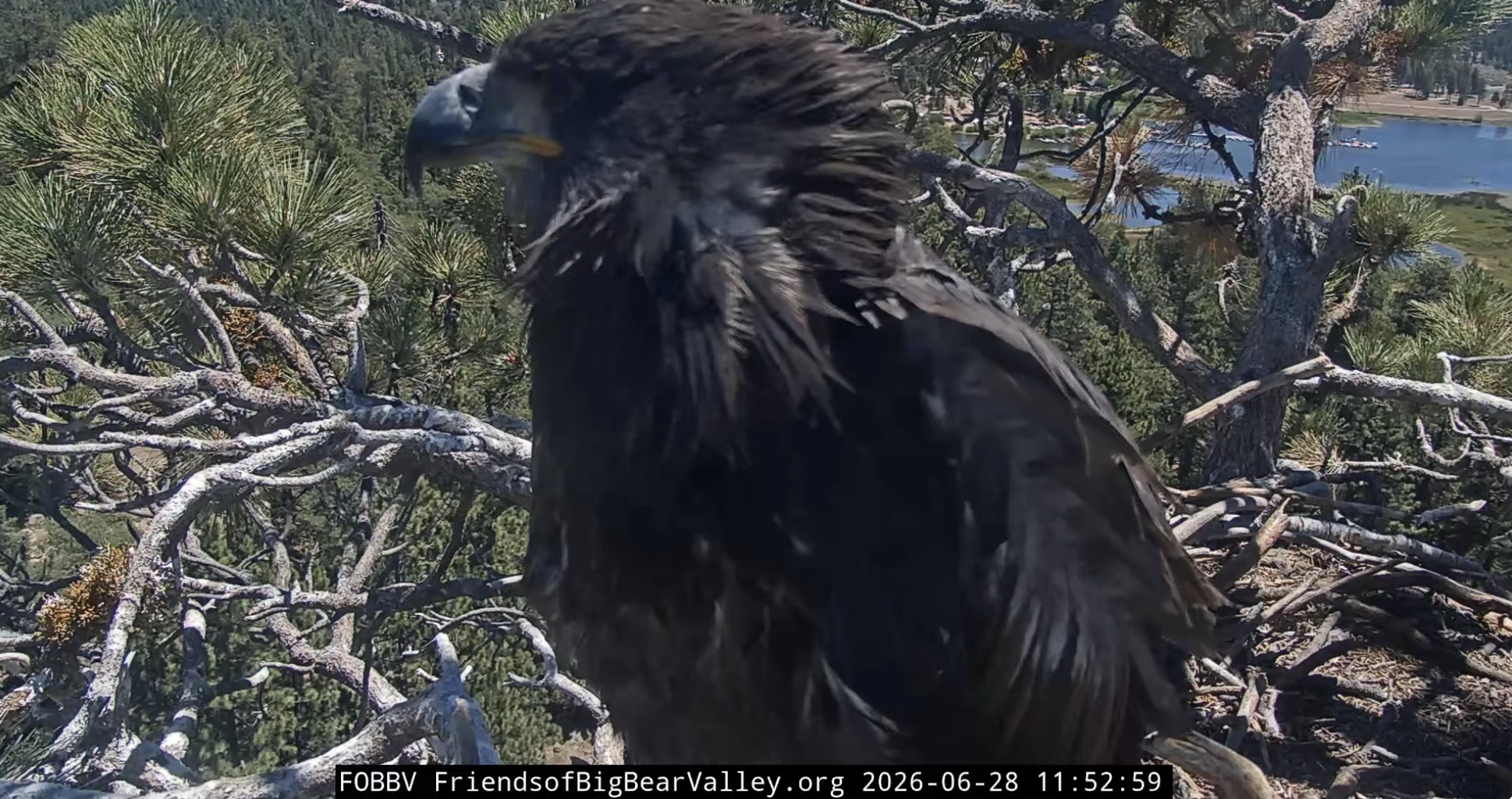
Jackie, the matriarch of the nest, arrived on the scene within minutes of the accident. Shortly thereafter, Shadow was also observed in the vicinity. According to a statement released by FOBBV on Instagram, the parents have already transitioned into their post-fledge roles. "Jackie and Shadow will now follow her wherever she goes and make sure she is fed and taken care of," the organization stated. This phase of parenting is often more demanding than the nesting phase, as the adults must now transport food to various locations in the forest rather than a single, centralized nest.
While the "accidental" nature of the fledge may seem precarious, experts suggest that Sandy’s ability to stay aloft and navigate to another tree indicates a healthy level of physical development. The primary challenge now lies in her ability to stay safe from ground-based predators and to continue receiving nourishment while she refines her flying and landing skills.
Biological Context and the Risks of Fledging
The transition from nestling to fledgling is the most dangerous period in a bald eagle’s life. Statistically, juvenile mortality rates are highest during the first few weeks after leaving the nest. This is due to a variety of factors, including the risk of starvation if the parents cannot locate the chick, predation by owls or larger raptors, and injuries sustained during clumsy landings.
In a typical fledging scenario, a chick will take a "leap of faith" toward a nearby branch or tree, often circling back to the nest for several days or weeks to rest and eat. Because Sandy’s exit was a fall rather than a choice, her return to the home nest is less certain. Bald eagles at this age have the strength to climb using their beaks and talons, a process known as "hitching," but the vertical distance of the Big Bear nest makes a return trip difficult for an inexperienced flyer.
The developmental milestones for bald eagles are rigid but allow for some individual variation. At 12 weeks, Sandy’s primary feathers are almost fully grown, providing the necessary surface area for lift. Her skeletal structure is also hardened enough to withstand the impact of landing. However, the lack of "landing practice" is what makes accidental fledges concerning. Landing requires a complex "stall" maneuver where the eagle fans its tail and wings to slow down—a skill Sandy will now have to learn through trial and error in the wild.
Community Impact and Conservation Protocols
The Big Bear eagle cam has become more than just a nature documentary; it is a global community hub. Thousands of viewers from around the world tune in daily, creating an emotional investment in the survival of Jackie and Shadow’s brood. This high level of visibility brings both benefits and challenges to local wildlife management.
In the wake of Sandy’s accidental fledge, FOBBV has issued an urgent plea to the public to stay out of the surrounding forest areas. Human interference can be catastrophic during this sensitive period. If people approach the area to catch a glimpse or take a photograph of Sandy, they risk "flushing" her—scaring her into a flight she is not yet ready to sustain. This could lead to her landing in a more dangerous location or exhausting the energy reserves she needs for survival.
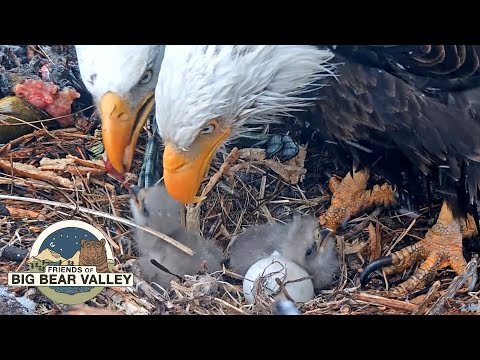
"Currently, our camera operators are continuing to search for her," FOBBV noted. The use of remote-controlled cameras and zoom lenses allows the organization to monitor Sandy’s progress without infringing on her space. This non-invasive observation is crucial for ensuring that the natural process remains undisturbed by human curiosity.
The Road Ahead for Sandy and Luna
As Sandy begins her life on the branches of the San Bernardino National Forest, her sibling Luna remains in the nest. It is expected that Luna will follow suit and fledge intentionally within the next week or two. Once both chicks are out of the nest, they will remain dependent on Jackie and Shadow for food for approximately one to two months. During this time, the parents will teach them the essential skills of hunting and scavenging.
The success of this brood is a significant data point for bald eagle conservation in California. Once an endangered species, the bald eagle has made a remarkable recovery thanks to the banning of DDT and the implementation of the Endangered Species Act. However, local populations still face threats from lead poisoning (via spent ammunition in carcasses), habitat loss, and climate-driven events like the severe winter storms that often strike Big Bear Valley.
Sandy’s accidental flight is a reminder of the thin margin between success and failure in the wild. Her "squees" from the lower branches represent the resilience of the species. While the mishap was unplanned, the biological readiness of a 12-week-old eagle provides a strong foundation for her survival. The eyes of the world remain on Big Bear, waiting for the next update from the forest floor, as Sandy navigates the complexities of her new, expanded world.
The Friends of Big Bear Valley will continue to provide updates as their camera operators track Sandy’s movements. For now, the focus remains on the watchful eyes of Jackie and Shadow, whose instinctual dedication to their offspring remains the most critical factor in Sandy’s journey toward becoming a sovereign master of the skies.