



While literacy has consistently remained a focal point in educational discourse, the intense scrutiny surrounding it in recent years has predominantly centered on reading instruction, often leaving writing instruction conspicuously absent from the conversation. Debates on phonics, fluency, and reading comprehension abound, yet the equally critical and deeply intertwined skill of writing receives comparatively little attention. This significant oversight has prompted a targeted response from educational experts Melanie Meehan and Maggie Roberts, who recently co-authored Foundational Skills for Writing: A Brain-Based Guide to Strengthen Executive Functions, Language, and Other Cornerstones for Writers. Their new publication aims to rebalance the literacy dialogue by delving into the intricate cognitive processes involved in writing and identifying common obstacles faced by students.
Meehan, a former curriculum coordinator who has since established her own in-person writing center, and Roberts, a literacy consultant and veteran middle school teacher with nearly two decades of experience supporting classroom educators, have collaboratively addressed this critical gap. Their book, released earlier this month, systematically dissects the multifaceted demands placed on the brain during the act of writing. By exploring the underlying cognitive mechanisms, they provide educators with practical, evidence-based strategies to foster robust writing abilities in students. The omission of writing from the broader literacy discussion is particularly striking given the established reciprocal relationship between reading and writing; proficiency in one often enhances the other. Data from the National Assessment of Educational Progress (NAEP) consistently indicates that a significant percentage of American students struggle with writing, a challenge that extends beyond basic composition to critical thinking and effective communication—skills vital for academic success and future careers.

The Neglected Dimension of Literacy: A Deeper Look
The emphasis on reading, particularly in the wake of the "Reading Wars" and the subsequent rise of the "Science of Reading" movement, has undeniably advanced our understanding of how children learn to read. This scientific approach has brought invaluable insights into phonological awareness, phonics, fluency, vocabulary, and comprehension. However, the "Science of Writing" has yet to achieve similar prominence or widespread integration into teacher training and curriculum design. This disparity creates a critical imbalance, as writing is not merely a transcription of thoughts but a complex cognitive act involving planning, organizing, drafting, revising, and editing, all while managing various linguistic and mechanical conventions.
The cognitive load associated with writing can be immense. For many students, the simultaneous demands of generating ideas, recalling vocabulary, constructing grammatically correct sentences, spelling words, forming letters (or typing), and adhering to genre conventions can overwhelm their working memory. When foundational skills are not automatized, precious cognitive resources are diverted from higher-order thinking processes like argumentation, analysis, and creativity. This can lead to frustration, disengagement, and a perception among students that writing is an insurmountable task. Educators, too, often feel ill-equipped to teach writing effectively, lacking explicit instruction in pedagogical approaches that address the myriad components of the writing process.
Meehan and Roberts’ work directly confronts this challenge by proposing a framework that breaks down the monolithic task of writing into manageable, foundational skill categories. This brain-based approach acknowledges that effective writing instruction must move beyond simply assigning writing tasks to explicitly teaching and practicing the prerequisite skills that underpin successful written communication. Their book categorizes these foundational skills into three primary domains: transcription skills, oral language, and executive functioning.
Deconstructing Writing: A Brain-Based Framework
- Transcription Skills: This category encompasses the mechanical aspects of writing, including handwriting, keyboarding, spelling, and the development of both large and small motor skills necessary for physical production of text. The authors emphasize that automaticity in these areas is crucial. When students struggle with letter formation or spelling, their cognitive energy is consumed by these basic tasks, leaving little capacity for generating ideas or structuring arguments. For instance, a student laboriously forming each letter or constantly second-guessing spelling will find it difficult to maintain a coherent train of thought.
- Oral Language: Recognizing that written language is often a reflection of spoken language, this category focuses on the speaking and listening skills that serve as vital precursors to writing. This includes developing robust vocabulary, understanding sentence construction, and practicing coherent verbal expression. Children who can articulate complex ideas orally are better positioned to translate those ideas into written form. Difficulties in oral language, such as limited vocabulary or an inability to form grammatically complex sentences verbally, often manifest as struggles in written composition.
- Executive Functioning: This domain addresses the higher-order cognitive processes essential for managing the writing process. Key executive functions include working memory (holding information in mind while processing it), cognitive flexibility (the ability to shift perspectives or approaches), and inhibitory control (the capacity to filter out distractions and resist impulsive responses). For writers, this means being able to plan a piece of writing, organize thoughts, monitor progress, self-correct, and revise effectively. A student with underdeveloped executive functions might struggle to maintain focus, organize ideas logically, or revise their work beyond surface-level corrections.
The strength of Meehan and Roberts’ approach lies in its practicality. The book provides teachers with concrete methods to cultivate these foundational skills, ensuring that students develop the underlying competencies necessary to become proficient writers.

"Minute Moves": Micro-Interventions for Macro-Impact
Central to Foundational Skills for Writing is a collection of actionable strategies termed "Minute Moves." These are short, flexible activities, each designed to take just a couple of minutes, making them easily integratable into daily classroom routines. They can serve as warm-ups, transition activities, or quick interventions. The core philosophy behind "Minute Moves" is to help students automatize foundational skills, thereby freeing up cognitive energy for the more demanding, creative, and analytical aspects of writing. This is particularly critical in overcrowded curricula where dedicated time for explicit writing instruction is often scarce.
Spelling Minute Moves: Building Lexical Pathways

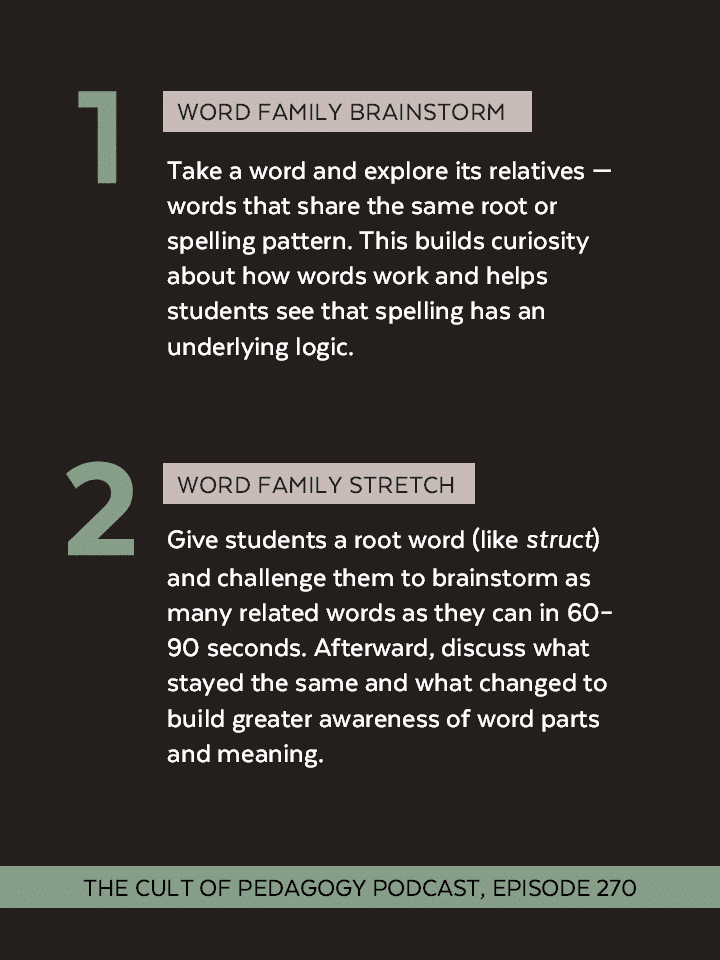
- Word Family Brainstorm: Inspired by spelling researcher Rebecca Treiman, this activity encourages students to explore the relationships between words. Instead of rote memorization, students uncover "relatives" of a given word. For example, by connecting "two" (the number) with "twin," "twine," and "twenty," students begin to recognize the "TW" pattern’s association with "twoness." This morphological awareness is a powerful tool for spelling. Meehan recounts a student struggling with "decision," who, by tracing its connection to "decide," then "incision," "concise," and even "scissors," understood the shared Latin root "to cut." This deepens understanding and solidifies spelling.
- Word Family Stretch: A variation of the brainstorm, this involves giving students a root word, like "struct" (meaning "to build"), and challenging them to generate as many related words as possible within a 60-90 second timer. Words like "structure," "destruction," "construct," "structural," and "instruct" emerge. The crucial debrief asks students to analyze what remained consistent and what changed, and how prefixes and suffixes altered meaning. This highlights that word parts carry meaning, reinforcing patterns across academic vocabulary. Roberts further distinguishes between "bound" roots (like "struct") and "free" roots (like "form"), deepening students’ appreciation for word mechanics.
- Prefix Swap: Building directly on morphological awareness, this activity focuses on prefixes. Students are given a base word (e.g., "form") and asked to generate variations by swapping prefixes: "reform," "transform," "inform," "deform." The discussion centers on how meaning shifts with each prefix change. This strategy is particularly effective for multilingual learners who often recognize prefixes and roots from their native languages, accelerating their acquisition of English vocabulary. Meehan emphasizes that these three spelling activities collectively strengthen the neurological pathways required for efficient word retrieval and accurate spelling.
Sentence Construction Minute Moves: Architecting Coherent Thoughts
- Sentence Scramble: Students are given a sentence broken into words or phrases on index cards. They then reconstruct the sentence. The physical manipulation of cards helps students visualize and experiment with word order. Post-activity questions like "How did you figure out the order?" and "Which words had to stay together?" prompt metacognitive reflection on syntactic clues and grammatical relationships. Variations include removing punctuation or adding distractor words. Roberts explains that this activity cultivates an "internalized understanding of sentence patterns and sentence construction," which students can then apply to their own writing.
- Sentence Expander: This activity begins with a simple "kernel" sentence (e.g., "The cat purrs") and collaboratively expands it through a series of questions: "Which cat? What color? Where? When? Why?" Meehan advocates for using more accessible terms like "doer" and "doing" instead of the abstract "subject" and "predicate" to help students identify core sentence components. Once the sentence is expanded (e.g., "The orange cat is sleeping on the couch in the afternoon because he is tired"), students experiment with rearranging words to create new variations. This playful exploration helps them develop richer, more complex sentence structures.
- Sentence Combining: Roberts identifies sentence combining as a "high-impact, quick way for kids to graduate from writing a series of simple sentences to ones that are more syntactically complex, interesting, and precise." Students are given two short sentences (e.g., "My cat is orange." and "My cat is big.") and asked to combine them into one ("My big orange cat…"). Scaffolding can involve underlining words to be "harvested." As students gain confidence, they can combine three sentences and experiment with conjunctions (e.g., "because," "and," "but") to alter meaning. This practice directly translates into students’ ability to produce more sophisticated, fluid prose in their independent writing.
Executive Functioning Minute Moves: Enhancing Cognitive Agility
- What’s Another Way?: This activity directly targets cognitive flexibility, a crucial executive function for writers. Students are given a sentence and challenged to rewrite it in multiple ways: starting with a dependent clause, replacing a noun with a pronoun, or making it shorter. Meehan emphasizes that effective writing is not solely about complexity; sometimes a concise sentence delivers the most impact. The goal is to develop the "art and craft of writing" by intentionally varying sentence structure for maximal effect. Crucially, Meehan notes the empowering effect of explicitly naming this skill as "cognitive flexibility" for students, helping them recognize themselves as capable writers engaged in sophisticated cognitive work.
- New Angle: This minute move elevates cognitive flexibility to the story level. Students retell a familiar scene from a book, shared text, or short film from a different character’s perspective. Roberts illustrates this with a personal anecdote about recounting a cafeteria food fight from the perspective of an impacted teacher. This exercise demands students hold multiple viewpoints simultaneously, making deliberate choices about voice, detail, and interpretation. Meehan uses Pixar shorts like "Snack Attack" in her tutoring, where students write from different character perspectives, sometimes even swapping documents to continue the narrative. This not only enhances writing skills but also fosters empathy and critical thinking, allowing students to understand diverse perspectives—a skill with profound implications for civic engagement and democracy.
Broader Implications for Education and the "Science of Writing"
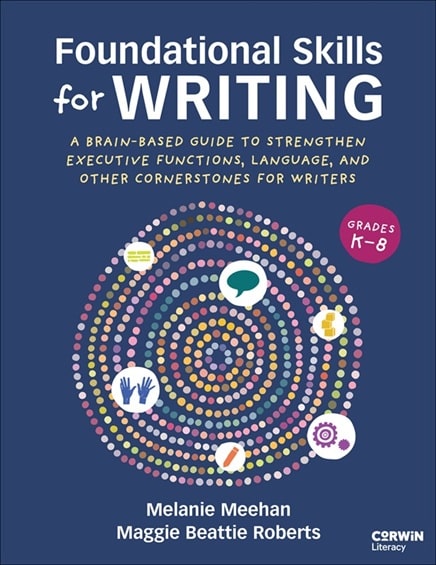
The introduction of Foundational Skills for Writing and its "Minute Moves" strategies arrives at a pivotal moment in education. As the "Science of Reading" continues to reshape early literacy instruction, there is a growing recognition among educators and policymakers that a parallel "Science of Writing" is desperately needed. Meehan and Roberts’ work contributes significantly to this emerging field by providing a clear, actionable framework grounded in cognitive science.
The implications of adopting such an approach are far-reaching. For teachers, it offers a structured curriculum that moves beyond generic "process writing" models, providing explicit, targeted instruction. This shift could alleviate teacher frustration and improve instructional efficacy. For students, the systematic development of foundational skills can reduce cognitive load, build confidence, and foster a more positive identity as writers. This is particularly vital for students from disadvantaged backgrounds or those with learning differences, who often face significant barriers to writing proficiency.
Furthermore, integrating "Minute Moves" into daily routines could help bridge the gap between isolated skill instruction and meaningful writing tasks. By automatizing basic skills, students can allocate more mental resources to the higher-order processes of ideation, organization, and critical analysis, ultimately leading to more sophisticated and impactful written communication. The ability to write clearly, persuasively, and analytically is not just an academic skill; it is a fundamental requirement for success in higher education, the modern workforce, and active citizenship.
In conclusion, Foundational Skills for Writing by Melanie Meehan and Maggie Roberts serves as a timely and essential resource. By spotlighting the often-overlooked discipline of writing and offering practical, brain-based strategies like "Minute Moves," the authors provide a powerful pathway for educators to cultivate a generation of more confident, capable, and cognitively flexible writers. Their work advocates for a holistic approach to literacy, one that recognizes writing not as a secondary skill, but as an indispensable pillar of intellectual development and effective communication.