


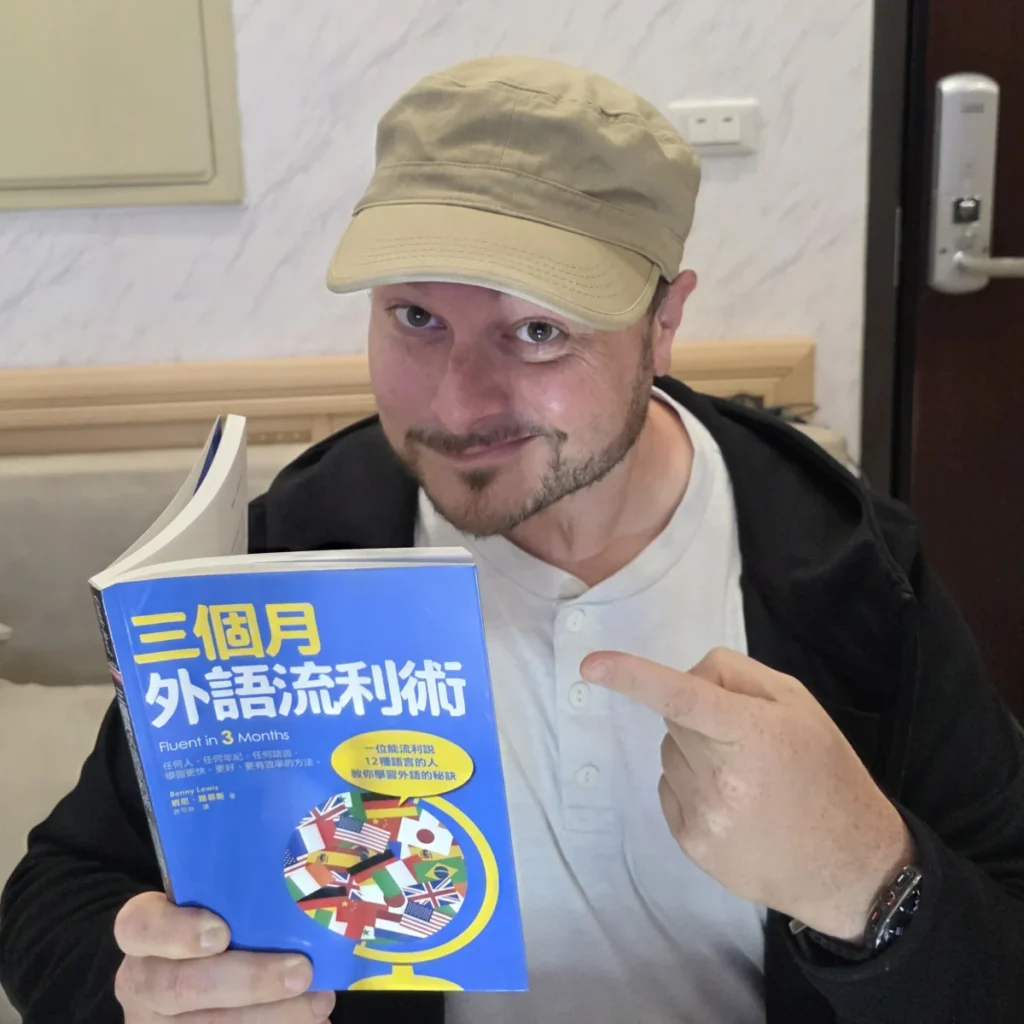
Benny Lewis, the Irish polyglot and founder of the influential language-learning platform Fluent in 3 Months, has officially returned to Taipei, Taiwan, to re-engage with intensive Mandarin Chinese studies. This relocation marks a significant milestone in Lewis’s linguistic career, occurring 14 years after his initial "Mandarin Mission" in 2012. The move highlights the challenges of long-term language maintenance and the evolving landscape of digital education in an era increasingly dominated by artificial intelligence. Lewis’s return to the Republic of China (Taiwan) follows a period of travel through Southeast Asia, where interactions with the Chinese diaspora catalyzed a renewed commitment to one of the world’s most complex languages.
The Evolution of the Mandarin Mission: A Historical Context
The trajectory of Lewis’s Mandarin journey began in 2012 with a project that became one of the most documented and debated initiatives in the online language-learning community. During that period, Lewis spent three months in Taiwan followed by two months of immersive travel through mainland China. The objective was to demonstrate the efficacy of his "speak from day one" philosophy. By the conclusion of the five-month stint, Lewis’s proficiency was independently assessed at a B1 level on the Common European Framework of Reference for Languages (CEFR), representing a lower-intermediate spoken ability.
During his initial stay, Lewis engaged in diverse cultural experiences, including training in Kung Fu within a traditional fishing village and conducting interviews with professional broadcasters. However, the project was not without its difficulties. Lewis has since acknowledged that the 2012 mission involved high levels of stress and controversial methodologies that sparked significant debate among linguists and hobbyists alike.
In the decade following the initial project, Lewis’s Mandarin proficiency experienced what linguists categorize as "language attrition." Aside from a brief intensive period during the co-authorship of the Language Hacking Mandarin coursebook, his use of the language was relegated to sporadic exchanges at international networking events. The current return to Taipei is positioned as a strategic effort to transition Mandarin from a temporary project into a "permanent maintenance" language within his repertoire.
Catalyst for Return: The Southeast Asian Influence
The decision to prioritize Mandarin over other linguistic pursuits, such as Malay, was influenced by Lewis’s recent travels through Malaysia. Demographic data supports the rationale behind this shift; Malaysia is home to a significant ethnic Chinese population, comprising approximately 22.6% of the national total as of recent census estimates. This diaspora, combined with a high volume of regional tourism from mainland China, provided Lewis with a practical environment to test his residual Mandarin skills.
According to Lewis, the frequency of these interactions served as a "natural" catalyst for a dedicated two-month residency in a Mandarin-dominant environment. Taipei was selected as the base of operations due to its historical significance to his learning journey and its unique linguistic environment, which blends traditional characters with specific regional grammatical nuances.
Modern Methodologies: Integrating AI and Traditional Study
Lewis’s current regimen in Taipei reflects a sophisticated blend of traditional pedagogy and modern educational technology. Unlike his 2012 approach, which focused heavily on immediate immersion, his 2024 routine incorporates a more structured focus on formal grammar.
1. Technical Resource Integration
Lewis is utilizing grammar resources that specifically address "Taiwanese Mandarin," a variant of the language that differs from the Standard Mandarin (Pǔtōnghuà) spoken in Beijing in terms of vocabulary, tones, and the use of traditional versus simplified characters. While Lewis maintains his stance that absolute beginners should avoid heavy grammar focus, he argues that for intermediate learners, grammar is essential for achieving a more "natural" cadence and sentence structure.
2. Digital Memory Management
A cornerstone of his technical routine involves Anki, a spaced-repetition system (SRS) flashcard application. Lewis reportedly recovered and updated digital decks dating back to 2012, which required complex file conversions to remain compatible with modern software. These decks contain vocabulary harvested from real-life interactions, which research suggests is more effective for retention than generic, pre-made word lists.
3. The Role of EdTech and AI
In a departure from the purely human-centric tutoring of the past, Lewis has integrated AI-driven conversation tools alongside professional human instruction via platforms like Preply. This hybrid approach reflects a broader trend in the $70 billion global language learning market, where AI is increasingly used to provide low-cost, 24/7 practice environments to supplement high-stakes human interaction.
The Linguistic Landscape of Taipei
Despite the global perception of Taipei as a cosmopolitan hub with high English proficiency, Lewis’s reports from the field suggest a different reality for immersive learners. Taiwan currently ranks 30th globally (and 4th in Asia) on the EF English Proficiency Index, categorized as "High Proficiency." However, Lewis notes that in daily transactional environments—such as postal services, retail, and local dining—English is frequently unavailable.
Lewis recounted an instance at a major international coffee chain where staff did not recognize the English term for "espresso," necessitating the use of the Mandarin term "nóngsuō kāfēi." This environment serves as a "forced immersion" mechanism, preventing the "lazy" fallback to English that often hinders expatriates in cities like Hong Kong or Singapore.
Strategic Expansion: The Deep Travel Initiative
The Taipei residency is a precursor to a broader "Deep Travel" project. Lewis intends to spend several weeks traversing rural and less-frequented regions of Taiwan. This aligns with his previous large-scale travel projects, which include:
- Brazil: A mission to visit every state in the country.
- United States: A project covering all 48 contiguous states.
- South Korea: A comprehensive tour of every province.
The objective of "Deep Travel" is to move beyond major metropolitan hubs where English might be more prevalent, thereby testing linguistic resilience in environments where residents are less accustomed to accommodating non-native speakers.
Broader Implications: Human Content in the Age of AI
Beyond the linguistic technicalities, Lewis’s return to blogging and personal documentation represents a pushback against the proliferation of "AI-generated slop" in the digital media ecosystem. Between 2013 and 2023, many educational blogs, including Fluent in 3 Months, pivoted toward Search Engine Optimization (SEO) strategies to satisfy Google’s algorithms. However, the rise of AI-generated "snippets" has diverted traffic away from original content creators, leading to a crisis in the digital publishing industry.

Lewis has signaled a return to "human-centric" storytelling—a style prevalent during the early years of the "blogosphere" (2009–2013). This approach prioritizes personal experience, anecdotal evidence, and raw travel narratives over clinical, keyword-optimized instructional articles.
"In the age of AI, we need more personal experiences of actual humans in the world," Lewis stated, acknowledging that while AI may assist in grammar correction or rephrasing, the core narrative must remain authentically human to retain value for the audience.
Analysis of the Polyglot Movement and Long-term Fluency
The case of Benny Lewis highlights a critical reality in the field of linguistics: fluency is not a static achievement but a perishable skill. The "polyglot" lifestyle, characterized by the acquisition of numerous languages, often comes at the cost of "depth" versus "breadth."
Data from the Foreign Service Institute (FSI) classifies Mandarin as a "Category IV" language, requiring approximately 2,200 class hours for a native English speaker to achieve professional working proficiency. Lewis’s strategy of three-month intensive bursts followed by long periods of dormancy illustrates the "Sisyphus effect" in language learning—where the learner must periodically exert massive effort to regain lost ground.
By returning to Taipei, Lewis is testing whether a mature learner can successfully bridge the gap between "temporary project proficiency" and "permanent linguistic integration." His progress will likely serve as a case study for the thousands of students who follow his "Speak from Day One" methodology.
Conclusion and Future Outlook
As Lewis prepares to move beyond Taipei into the rural provinces of Taiwan, his journey serves as a barometer for the current state of independent language learning. The integration of 14-year-old digital flashcards with modern AI tutors, set against the backdrop of a traditional East Asian culture, provides a unique look at how technology and travel intersect in the 21st century.
The project’s success will be measured not just by Lewis’s ability to order coffee or navigate the postal system, but by his capacity to engage in the "deep travel" and complex social interactions that he originally mastered over a decade ago. For the global community of language learners, Lewis’s return to Taipei is a reminder that the pursuit of a language is a lifelong endeavor, requiring constant adaptation to both shifting cultural landscapes and emerging technological frontiers.