


The educational landscape is increasingly recognizing the invaluable contributions of neurodivergent educators, individuals whose brains process information differently due to conditions such as ADHD, autism, dyslexia, and Tourette’s Syndrome. These teachers, often characterized by unique perspectives, deep empathy, and innovative problem-solving abilities, are vital assets in fostering diverse and inclusive learning environments. However, many operate within traditional school systems that, by design, often fail to accommodate their cognitive profiles, leading to significant challenges and, frequently, burnout. This growing awareness highlights an urgent need for systemic adjustments that embrace neurodiversity, not merely as a concept for students, but as a foundational principle for supporting all members of the school community.
The Emergence of the "Lost Generation" of Educators
A significant portion of today’s neurodivergent educators, particularly those in their 30s, 40s, and 50s, represent a "lost generation" whose neurodevelopmental differences went largely unrecognized during their formative years. In the early 1990s, when many of these individuals were children, the understanding and diagnostic criteria for conditions like ADHD and autism were considerably narrower than they are today. ADHD was often exclusively associated with hyperactivity in boys, overlooking less overt presentations, especially in girls who might internalize struggles or mask symptoms effectively. Similarly, autism diagnoses were far more restrictive, focusing primarily on severe social and communication deficits, frequently missing individuals with higher support needs or those whose traits manifested differently.
The lack of early identification meant that many bright, capable individuals navigated their academic and early professional lives without the benefit of self-understanding or appropriate support mechanisms. They developed coping strategies, often at immense personal cost, to conform to neurotypical expectations. The irony is profound: these individuals, now teachers, were trained to identify and support neurodivergent traits in their students, yet remained unaware of their own neurocognitive differences. This historical gap has created a cohort of educators who are now, often later in life, connecting the dots between lifelong patterns of overwhelm, inconsistency, and exhaustion and their newly recognized neurodivergence. This realization frequently comes through personal research, engagement with online communities, or after their own children receive diagnoses, providing a belated but powerful framework for understanding their experiences.

For these educators, the journey of self-discovery can be a complex emotional landscape. There is often immense relief in finally having a language for experiences that once felt like personal failings. The phrase "Oh, that’s why…" resonates deeply, validating decades of struggle. Simultaneously, this realization can bring a profound sense of grief for the years spent blaming themselves, for the unnecessary exhaustion endured, and for the opportunities perhaps missed due to unaddressed needs. This process of reinterpreting one’s own story is both liberating and destabilizing, profoundly altering how they view their work, their students, and the very systems within which they operate. Despite increasing public discourse around neurodiversity, stigma persists, making it challenging for educators to openly discuss their executive functioning difficulties, attention challenges, or sensory sensitivities without fear of being perceived as incompetent or unprofessional.
The Demands of Teaching and the Neurodivergent Experience
Teaching is a profession inherently rich in executive functioning demands, a reality often underestimated until one is fully immersed in it. From meticulous lesson planning, managing classroom logistics, remembering individual student support schedules, to navigating a perpetual influx of grading and administrative paperwork, the role requires an extraordinary level of organizational prowess, sustained attention, and flexible thinking. For neurodivergent educators, whose cognitive profiles often include variations in executive functions – such as working memory, task initiation, prioritization, and emotional regulation – these routine tasks can feel like an insurmountable climb.
Beyond executive functions, the sensory environment of a typical school can be intensely challenging. Classrooms are often vibrant, noisy spaces filled with constant movement, varied auditory inputs, fluctuating lighting (often harsh fluorescents), and a myriad of smells. Socially, teachers are expected to be constantly "on," engaging with students, colleagues, and parents, requiring continuous social processing and emotional labor. For neurodivergent individuals, who may experience sensory sensitivities or social processing differences, this constant barrage of input can lead to significant sensory overload, mental fatigue, and heightened anxiety, quietly eroding their energy and confidence over time. The expectation for seamless transitions between tasks, constant multitasking, and the ability to tolerate high levels of sensory and social input are benchmarks of a neuronormative system that often fails to consider the diverse cognitive needs of its workforce.
A Spectrum of Strengths: The Invaluable Contributions of Neurodivergent Teachers
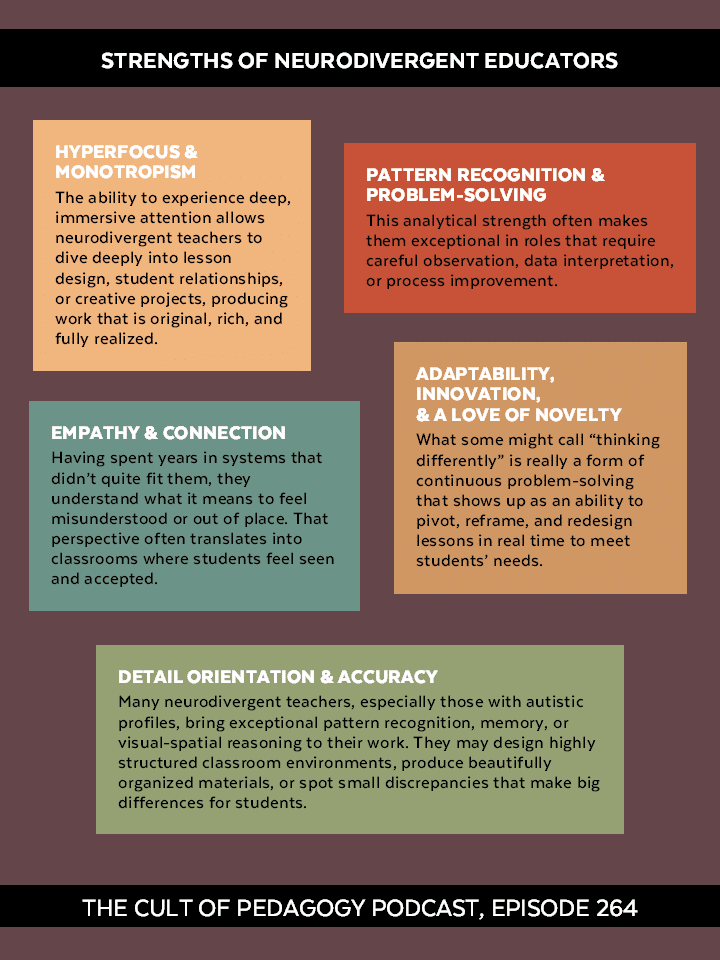
Despite these systemic hurdles, neurodivergent teachers are often among the most innovative, empathetic, and dedicated professionals in education. Their unique cognitive processing frequently translates into distinct advantages that enrich the learning experience for all students. When viewed through a strengths-based lens, neurodivergent traits are not deficits but powerful variations in thinking and engagement.
- Profound Empathy and Unique Perspectives: Lived experience with neurodivergence often cultivates a deeper, more nuanced understanding of students who learn or behave differently. This can lead to more compassionate classroom management, tailored instructional approaches, and stronger student-teacher relationships, particularly with neurodivergent students who feel seen and understood.
- Creative Problem-Solving and Innovation: Neurodivergent brains often approach problems from unconventional angles, fostering out-of-the-box thinking. This can manifest in highly creative lesson designs, innovative classroom structures, and novel solutions to pedagogical challenges, enriching the curriculum and engaging students in new ways.
- Hyperfocus and Deep Dive Capability: When engaged in a topic of interest, many neurodivergent individuals can achieve states of intense focus (hyperfocus), allowing them to delve deeply into subjects, create exceptionally detailed and engaging lessons, and convey genuine passion for their content.
- Authenticity and Role Modeling: When educators feel safe enough to be their authentic selves, they model self-awareness and self-acceptance. This teaches students that there isn’t one "right" way to think, learn, or be, fostering a more inclusive and accepting classroom culture where diversity is celebrated. This is particularly impactful for neurodivergent students who may see themselves reflected in their teachers.
- Pattern Recognition and Attention to Detail: The ability to notice subtle patterns or details often missed by others can be highly beneficial in identifying student needs, adapting materials, and recognizing underlying causes of behavior, leading to more targeted and effective interventions.
- Dedication and Passion: Many neurodivergent educators are drawn to teaching by a genuine passion for their subject matter and a deep commitment to student success, often fueled by their own educational experiences.
These strengths flourish when educators feel supported and safe. When schools create environments that allow neurodivergent teachers to leverage their natural abilities, they not only retain valuable talent but also cultivate a more dynamic, inclusive, and effective educational ecosystem. Research consistently shows that diverse teams, including those with cognitive diversity, are more innovative and resilient, a principle that applies directly to school faculties.
Practical Tools and Strategies for Neurodivergent Educators
While systemic change is paramount, neurodivergent educators can also employ personal strategies to manage their energy, optimize their workflow, and enhance job sustainability. These are not one-size-fits-all solutions but rather a menu of options to explore and adapt.
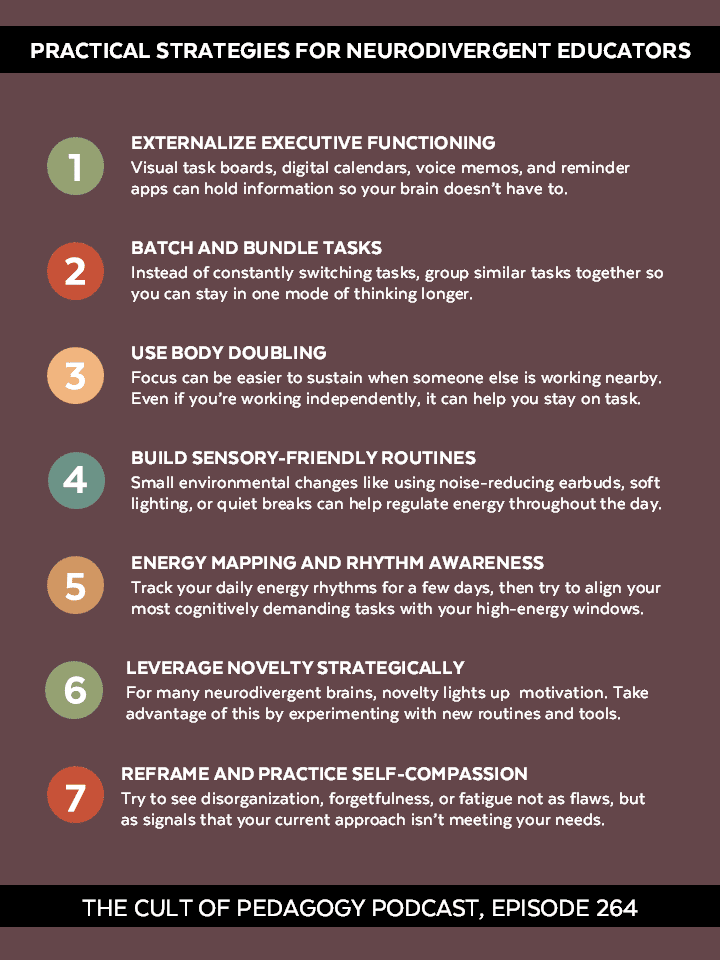
- Externalize Executive Functioning: Relying solely on internal memory for the hundreds of daily decisions required in teaching is unsustainable. Educators can offload mental tasks onto trusted external systems. This includes using visual task boards, digital calendars (e.g., Google Calendar, Outlook Calendar), reminder apps, and project management tools (e.g., Trello, Notion) to track deadlines, lesson plans, and student interventions. Voice memos can capture fleeting ideas, and automation tools like IFTTT (If This Then That) can streamline routine digital tasks, making the invisible mental load visible and manageable.
- Batch and Bundle Tasks: Constant task-switching is a significant energy drain for many neurodivergent brains. Grouping similar tasks together allows for sustained focus in one cognitive mode. For example, dedicating a specific block of time solely to grading all short-answer responses, or writing all lesson plans for the week in a single sitting. Similarly, setting aside distinct times for communication (emails, parent updates) can reduce cognitive "gear-shifting."
- Utilize Body Doubling: The presence of another person working nearby can significantly aid focus and task initiation, a concept known as body doubling. Neurodivergent teachers can partner with a colleague for shared planning periods, engage in virtual co-working sessions, or even use ambient noise videos of people working. This external accountability can provide the necessary nudge to start and maintain focus on challenging tasks like grading or report card writing.
- Build Sensory-Friendly Routines and Environments: Small environmental adjustments can yield substantial benefits. Using noise-reducing earbuds or headphones during planning periods, adjusting lighting to be less harsh (e.g., lamps instead of overhead fluorescents), and incorporating brief, intentional movement breaks or grounding exercises between classes can help regulate sensory input and energy levels throughout the day. A "reset ritual" – stepping out for a few deep breaths, sipping water, or engaging with a fidget toy – can be crucial for managing transitions.
- Energy Mapping and Rhythm Awareness: Understanding one’s natural daily energy and focus fluctuations is key to strategic task management. By tracking energy peaks and troughs for a week or two, educators can align cognitively demanding tasks (like lesson planning or providing detailed feedback) with their high-energy windows, reserving lower-energy times for less intensive activities. This proactive awareness helps prevent burnout by honoring natural biological rhythms.
- Leverage Novelty Strategically: For many neurodivergent individuals, novelty is a powerful motivator. This can be harnessed by introducing small, controlled variations into routine tasks – experimenting with a new lesson format, rearranging classroom furniture, or trying a new digital tool. The goal is to use novelty as a catalyst for engagement when feeling stuck, then returning to familiar, grounding structures.
- Reframe and Practice Self-Compassion: In systems not designed for neurodivergent brains, it’s easy to internalize struggles as personal failures. Instead, educators can reframe disorganization, forgetfulness, or fatigue as valuable information, signaling that current approaches are not meeting their needs. Cultivating self-compassion allows for experimentation without shame, recognizing that "professionalism" does not equate to neurotypical perfection, and that sustainable teaching stems from honoring one’s unique human needs.
These strategies, individually and in combination, aim to reduce friction, conserve energy, and allow neurodivergent teachers to operate from a place of strength rather than constant compensation.
What Schools and Administrators Can Do: Fostering Inclusive Environments
Supporting neurodivergent educators is not about special treatment but about creating equitable access to and sustainability within the profession. Just as schools differentiate for students, they must differentiate support for their staff. This strengthens the entire school community by maximizing the potential of all educators.
- Comprehensive Professional Development: Beyond student-focused training, schools should offer professional development on neurodiversity for all staff, including administrators. This fosters understanding, reduces stigma, and equips leaders to better support their neurodivergent colleagues.
- Flexible Scheduling and Workflows: Rigid schedules can be particularly challenging. Offering flexibility in meeting times (e.g., asynchronous options, varying meeting lengths), providing quiet spaces for planning, and allowing for staggered start/end times where feasible can significantly reduce overwhelm.
- Physical Environment Audits: Proactively assess classrooms and staff areas for sensory triggers. Simple adjustments like offering dimmer lighting options, designated quiet zones, or ergonomic furniture can make a substantial difference in comfort and focus.
- Cultivate Open Communication and Trust: Leaders should foster a culture where educators feel safe discussing their needs without fear of judgment or professional repercussions. This requires active listening, empathy, and a commitment to implementing reasonable accommodations.
- Mentorship and Peer Support Networks: Establishing formal or informal mentorship programs where neurodivergent educators can connect with peers or experienced mentors can provide invaluable guidance, validation, and practical strategies.
- Leverage Technology for Support: Explore and invest in assistive technologies and organizational software that can aid executive functioning, such as dictation software, project management tools, or noise-canceling devices.
- Focus on Outcomes Over Prescriptive Processes: Allow educators the autonomy to achieve instructional goals through methods that best suit their cognitive style, rather than enforcing rigid, one-size-fits-all processes. This acknowledges that diverse brains may approach tasks differently but still achieve excellent results.
Broader Implications for a Stronger Educational Ecosystem
When schools intentionally design for neurodivergent educators, the benefits ripple throughout the entire educational ecosystem. Teachers who feel safe and supported to work in ways that align with their brains are more engaged, more innovative, and less prone to burnout. This directly impacts teacher retention, a critical issue in education today, by creating a more sustainable and attractive profession.
Moreover, a school culture that embraces neurodiversity among its staff inherently becomes more inclusive for its students. Students observe adults who openly utilize visual schedules, take sensory breaks, or discuss their attention patterns, realizing that these strategies are not signs of weakness but effective tools for success. This normalizes neurodiversity, demystifies differences, and reinforces the message that diverse ways of learning and being are valued. It cultivates an environment where all students, regardless of their neurocognitive profile, can feel a stronger sense of belonging and see themselves reflected in their mentors.
For school leadership, approaching neurodiversity with empathy and flexibility builds deep trust and strengthens staff morale. Clear communication, reasonable expectations, and genuine openness foster a more resilient and adaptable faculty. A culture that prioritizes sustainability, well-being, and individual strengths over rigid adherence to neurotypical norms is better positioned to attract and retain high-quality educators, leading to a more stable and effective learning environment for everyone.
As more educators recognize their own neurodivergence, the conversation in education is evolving beyond mere awareness. It is moving towards a demand for actionable change, for structures that transform understanding into tangible support. Schools that commit to designing for flexibility, clarity, and belonging are not just improving the lives of their neurodivergent staff; they are creating truly inclusive institutions where every teacher and every student can thrive, bringing their full, authentic selves to the vital work of education. This shift represents a fundamental re-imagining of what it means to be a professional in education, ultimately building a more robust, empathetic, and effective system for all.