


The global educational landscape is undergoing a fundamental transformation as artificial intelligence moves from a speculative concept to a foundational tool for classrooms worldwide. Microsoft, a stakeholder in educational technology for over five decades, has announced a comprehensive suite of initiatives designed to integrate AI into the academic environment responsibly. Central to this rollout is the Microsoft Elevate for Educators program, a strategic framework intended to bridge the gap between technological potential and classroom practice. This initiative is complemented by the introduction of specialized AI-driven tools, such as the Teach assistant for instructors and the Study and Learn Agent for students, alongside a significant expansion of professional resources for higher education and institutional security.
The Strategic Framework of Microsoft Elevate for Educators
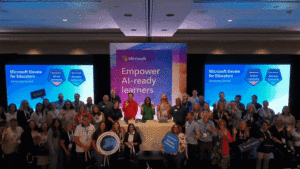
The introduction of Microsoft Elevate for Educators represents a critical pillar of the company’s broader commitment to global workforce readiness. This program is an extension of the "Microsoft Elevate" initiative, which was established in July 2025 with the ambitious goal of providing AI skilling credentials to more than 20 million people over a 24-month period. By focusing specifically on the K-12 and higher education sectors, Microsoft aims to ensure that the rapid advancement of AI does not leave educators behind but instead provides them with the expertise required to navigate an AI-augmented future.
The program functions as a multifaceted ecosystem. It provides educators and school administrators with access to one of the world’s largest peer-to-peer educator networks, facilitating the exchange of best practices across international borders. Furthermore, it offers free professional development resources and access to industry-recognized credentials. This focus on credentialing is particularly significant as school districts increasingly look for standardized benchmarks to measure AI literacy among staff. By offering these resources at no cost, the initiative addresses the "skilling gap" that often prevents underfunded districts from adopting new technologies.
Purpose-Built AI Tools for the Modern Classroom
A primary challenge for educators in the AI era has been the adaptation of general-purpose AI models to the specific, nuanced needs of the classroom. To address this, Microsoft has launched "Teach," an AI assistant integrated directly into the Microsoft 365 Copilot app. Unlike generic chatbots, Teach is engineered to streamline the administrative and preparatory aspects of instruction. Educators can utilize the tool to generate lesson plans that align with specific academic standards, develop quizzes and rubrics, and—perhaps most critically—adapt existing reading materials to various literacy levels. This functionality allows for a higher degree of differentiated instruction, enabling a single teacher to provide personalized materials for students with diverse learning needs without the prohibitive time commitment traditionally required for such tasks.

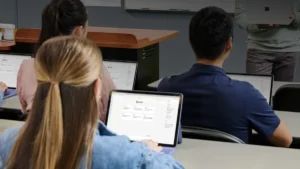
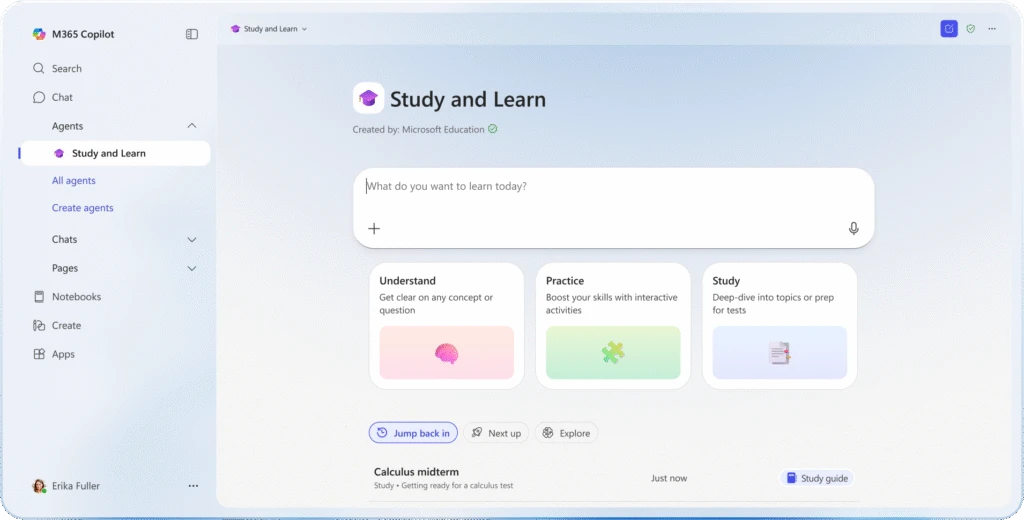
For students, the "Study and Learn Agent" serves as a personalized learning companion. Designed for learners aged 13 and older, the agent is built on established learning science principles. Rather than simply providing answers, the tool is programmed to foster critical and reflective thinking. It offers adaptive exercises, guided study sessions, and interactive tools such as flashcards and matching games. This shift toward a "Socratic" AI model—one that guides the student through the process of discovery—marks an evolution in educational technology, moving away from passive consumption toward active engagement.
Hardware-Software Synergy: Microsoft Learning Zone and Copilot+ PCs
The efficacy of AI in education is increasingly tied to the hardware on which it runs. Microsoft’s "Learning Zone" app is specifically optimized for Copilot+ PCs, utilizing on-device intelligence to provide high-performance, secure learning experiences. The app has recently earned the ISTE (International Society for Technology in Education) Seal of Alignment, a distinction that validates its learning design, usability, and adherence to research-backed pedagogical practices.
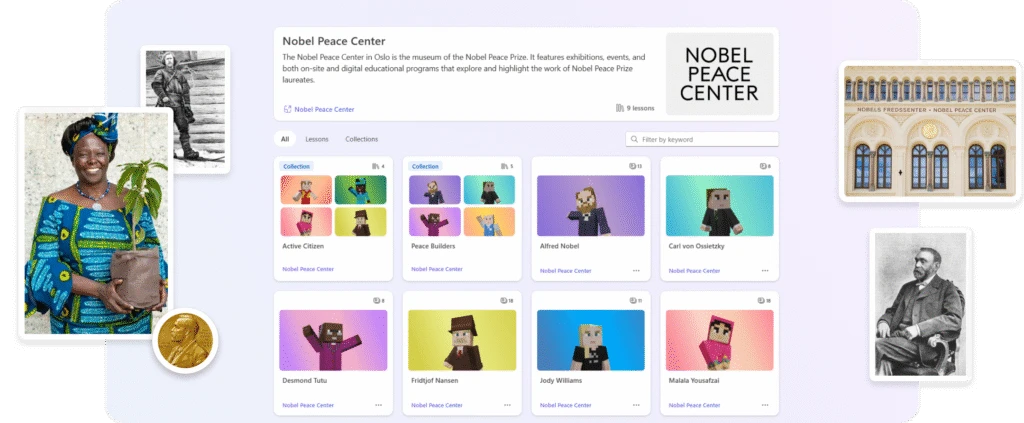
A unique feature of the Learning Zone is its reliance on a curated network of content partners. The app integrates resources from organizations such as NASA, the World Wildlife Fund (WWF), PBS NewsHour, and OpenStax. A notable addition to this library is the Nobel Peace Center lesson collection, which allows students to explore themes of justice and human rights through the biographies of laureates like Malala Yousafzai. These lessons are further enriched through companion activities in Minecraft Education, demonstrating a multidisciplinary approach to global citizenship.
The technical architecture of the Learning Zone also emphasizes accessibility and scalability. While it currently supports English and Spanish, Microsoft has confirmed that Portuguese, French, and German will be added in 2026. Furthermore, while the app currently integrates with Microsoft Teams, the company plans to introduce broader Learning Management System (LMS) integration later in 2026, ensuring that the tool can be used within a variety of institutional frameworks.
Bridging the Gap Between Academia and Career Readiness
Recognizing the economic pressures facing higher education students, Microsoft has introduced a limited-time offer providing eligible students with 12 months of free access to Microsoft 365 Premium and LinkedIn Premium Career. This dual-subscription model is designed to support the full lifecycle of a student’s academic journey, from research and presentation development to internship hunting and professional networking.
In the higher education sector, the AI Skills Navigator and the Microsoft Student Ambassadors program continue to serve as conduits for technical literacy. By providing faculty with ready-to-use "Microsoft Official Courseware" through the Microsoft Learn for Educators program, the company is facilitating the rapid integration of AI topics into university curricula. This is particularly vital as the labor market increasingly demands "AI-fluent" graduates across all sectors, from engineering to the humanities.
Institutional Governance and the IDC Blueprint for AI-Ready Schools
As schools integrate AI, concerns regarding data privacy, security, and ethical implementation remain at the forefront of the conversation. To provide a roadmap for administrators, Microsoft has released the "Microsoft Education Security Toolkit." This resource offers practical guidance on cybersecurity posture, strategic planning, and compliance, helping institutions defend against the growing threat of cyberattacks in the education sector.
Accompanying this toolkit is a new IDC White Paper titled "A Blueprint for AI-Ready Schools: Strategies from the Front Lines of K-12 Education." This research, sponsored by Microsoft, analyzes the early adoption strategies of several global school districts, including Brisbane Catholic Education in Australia, Broward County Schools in the United States, and the Coquitlam School District in Canada. The paper identifies several key success factors for AI integration:
- Phased Implementation: Successful districts tend to pilot AI tools in small groups before a system-wide rollout.
- Teacher-Centric Design: AI tools are most effective when they are viewed as assistants to the teacher rather than replacements.
- Data Sovereignty: Maintaining strict control over student data is paramount to maintaining public trust.
Global Context and Future Implications
The timing of these announcements coincides with the upcoming Bett UK 2026 conference, scheduled for January 21–23 in London. As one of the world’s largest education technology exhibitions, Bett UK serves as the primary stage for Microsoft to demonstrate these innovations to an international audience of policymakers and educators.
The broader implications of Microsoft’s strategy suggest a shift toward "verticalized" AI—AI that is not just a general assistant but is deeply embedded in the specific workflows of a profession. By creating tools like Teach and the Study and Learn Agent, Microsoft is positioning itself as the foundational layer for the "AI-ready" school.
However, the success of these initiatives will depend on more than just technological capability. The "digital divide" remains a significant hurdle; while Copilot+ PCs offer advanced on-device AI, many schools globally still struggle with basic internet connectivity and hardware procurement. Microsoft’s decision to offer many of these AI tools at no additional cost for existing Microsoft 365 Education customers is a strategic move to lower the barrier to entry, but the hardware requirements for the most advanced features suggest that the benefits of AI education may initially be concentrated in well-resourced districts.
Conclusion
Microsoft’s latest suite of educational offerings reflects a sophisticated understanding of the challenges facing 21st-century classrooms. By balancing high-end hardware-driven AI with accessible, free-to-use software agents and professional development programs, the company is attempting to create an inclusive path forward for global education. As these tools move from announcement to implementation throughout 2026, the focus will shift to how effectively they can reduce educator burnout and improve student outcomes in a rapidly changing world. The commitment to skilling 20 million people and the launch of the Elevate for Educators program mark a significant milestone in the effort to ensure that the AI era is defined by empowerment rather than displacement.