

In a historic gesture designed to bridge two and a half centuries of American history, the America250 Commission will officially bury a state-of-the-art time capsule at Independence National Historical Park in Philadelphia on July 4, 2026. This ceremony, marking the 250th anniversary of the signing of the Declaration of Independence, serves as the cornerstone of the nation’s Semiquincentennial celebrations. The repository, engineered to remain sealed until July 4, 2276, contains a curated collection of artifacts representing the breadth of American achievement, culture, and natural heritage. Designed in collaboration with the National Institute of Standards and Technology (NIST), the capsule is a marvel of modern preservation science, built to withstand the environmental rigors of the next 250 years.
The burial ceremony is scheduled to commence at 8:30 a.m. EDT at the site where the United States Constitution and the Declaration of Independence were debated and signed. For those unable to attend the festivities in the City of Brotherly Love, a global livestream will provide a front-row seat to this symbolic interment. The event features a distinguished roster of speakers, including Philadelphia Mayor Cherelle Parker, U.S. Semiquincentennial Commissioners Reginald Browne and Cathy Gillespie, America250 Executive Vice President Jennifer Condon, and Independence National Historical Park Superintendent Thomas Caramanico.
Engineering for the Tercentenary: The NIST Design
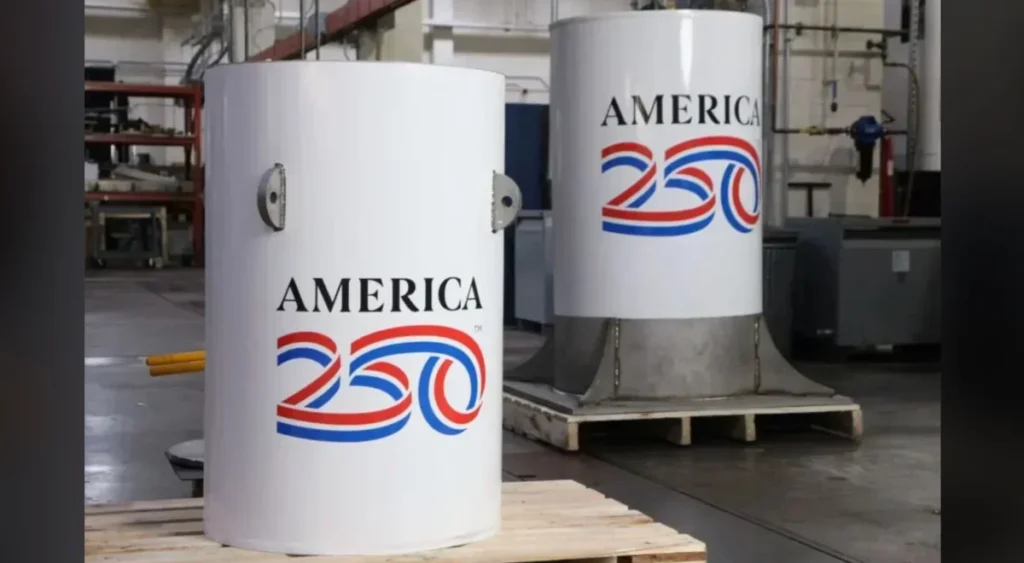
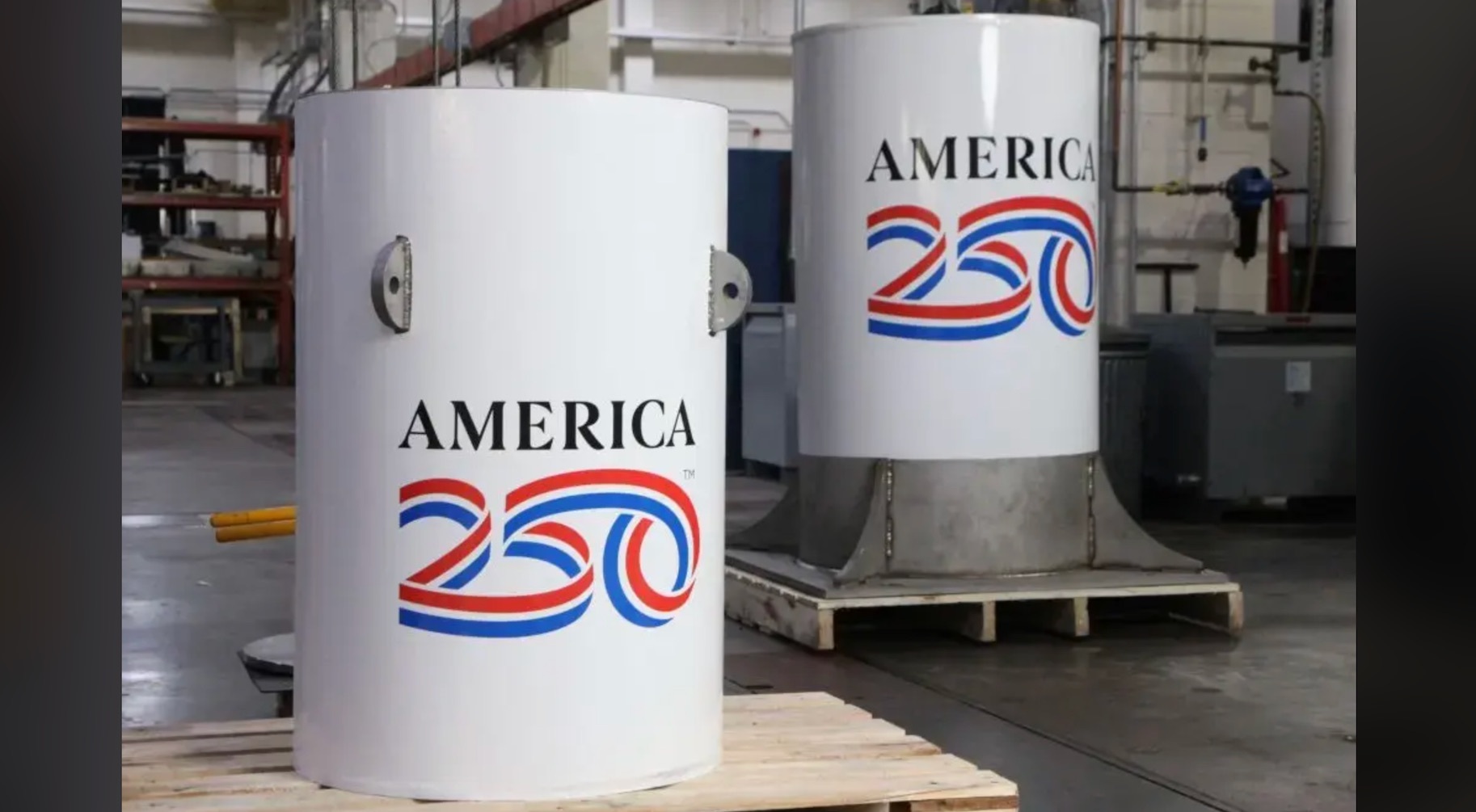
The preservation of physical artifacts for a quarter-millennium presents a formidable engineering challenge. To ensure the integrity of the contents, America250 partnered with the National Institute of Standards and Technology (NIST), the federal agency responsible for maintaining the nation’s physical standards. The resulting vessel is a dual-layered stainless steel structure designed to neutralize the threats of moisture, oxidation, and seismic shifts.
The primary containment unit is a tube-shaped canister manufactured from high-grade, corrosion-resistant stainless steel. This inner vessel houses the diverse array of items contributed by all 50 states, the District of Columbia, and five U.S. territories. However, the true innovation lies in the secondary protective layer: a large, bell-jar-like device that fits over the primary capsule.
This design utilizes the physical principle of an air pocket, similar to the mechanics of a diving bell. By trapping a volume of air within the inverted outer shell, the engineers have created a fail-safe against water ingress. Even if the burial site were to experience significant flooding or rising groundwater levels over the next two centuries, the air pressure within the bell jar would prevent water from reaching the inner capsule. This "zombie-proof" designation, a colloquialism used by the project’s proponents, underscores the extreme durability and redundant safety features integrated into the system.
A Mosaic of American Identity: The Capsule Contents
The selection of items for the America250 time capsule was a multi-year endeavor aimed at capturing the complexity of the American experience in the early 21st century. Unlike previous time capsules that often focused on mundane daily objects, this collection emphasizes pivotal moments in history, scientific breakthroughs, and the nation’s natural environment.
Among the most historically significant items is a fragment of fabric from the Wright Brother’s original Flyer, the aircraft that ushered in the age of powered flight in 1903. This is joined by a feather from a bald eagle that reportedly served as a mascot during the American Civil War, linking the Semiquincentennial to the nation’s struggle for unity and abolition.
The natural world is represented by a bone from a North Atlantic right whale, a species that currently faces the threat of extinction. Its inclusion serves as both a biological record and a somber reminder of the environmental challenges of the current era. From the realm of sports and culture, the capsule holds an Olympic gold medal, symbolizing American athletic excellence on the global stage.
In a nod to the rapid pace of technological evolution, the collection includes an Apple iPhone 17 Pro Max. While the device will almost certainly be obsolete by 2276, its inclusion provides future historians with a snapshot of the primary communication and computing tool of the 2020s. The challenge of digital preservation was a key consideration for the Library of Congress, which consulted on the project to ensure that any recorded media or hardware was stored in a manner that maximizes the chances of eventual recovery.
The Chronology of the America250 Initiative
The burial of the time capsule is the culmination of a decade of planning. The U.S. Semiquincentennial Commission was established by Congress in 2016 (Public Law 114-196) to facilitate the 250th anniversary of the founding of the United States.
The timeline for the time capsule project included:
- 2021–2023: Coordination with state governors and territorial leaders to solicit representative items.
- 2024: Finalization of the technical designs by NIST and the commencement of the fabrication process in Gaithersburg, Maryland.
- 2025: Public unveiling of the capsule design and a nationwide tour of selected contents.
- July 4, 2026: The formal burial ceremony at Independence National Historical Park.
- 2026–2276: The "Sealed Period," during which the National Park Service and the Independence Historical Trust will oversee the maintenance of the burial site.
- July 4, 2276: The scheduled reopening of the capsule during the United States Tercentennial.
Official Responses and Civic Impact
The project has garnered widespread support from federal, state, and local leaders, who view the capsule as a testament to national resilience. Mayor Cherelle Parker emphasized the symbolic weight of Philadelphia as the permanent home for the repository.
"Philadelphia is where the American story began," Mayor Parker stated in a briefing leading up to the event. "By burying this capsule here, at the foot of Independence Hall, we are sending a message to the Americans of 2276 that we remained committed to the ideals of democracy, even in a time of great global change."

Superintendent Thomas Caramanico of the National Park Service highlighted the logistical feat of placing a high-tech monument within a sensitive historical site. "Our mission is to preserve the past, but with America250, we are also preserving the present for the future. This installation has been carefully integrated into the landscape of Independence National Historical Park to ensure it does not disturb the hallowed ground of our founders, while remaining accessible for the generations to come."
The partnership with the Library of Congress was also pivotal. Librarians and archivists provided expertise on "slow-aging" materials, advising against the inclusion of certain plastics or acidic papers that could degrade and off-gas, potentially damaging other items within the sealed environment.
Analysis: The Significance of Physical Preservation in a Digital Era
In an age where the majority of human communication is ephemeral and digital, the America250 time capsule represents a deliberate return to the tangible. Historians note that the "digital dark age"—the potential loss of records due to evolving file formats and hardware obsolescence—makes physical repositories more vital than ever.
The inclusion of the iPhone 17 Pro Max serves as a fascinating case study in this regard. While the data on the phone may be inaccessible to 23rd-century citizens without significant forensic effort, the physical object itself—its glass, titanium, and silicon—will stand as an artifact of 21st-century manufacturing. By contrast, the Wright Brothers’ fabric and the whale bone are "low-tech" items that require no interface to be understood, providing a direct physical link across the centuries.
Furthermore, the decision to bury the capsule for exactly 250 years mirrors the age of the nation at the time of burial. This creates a symmetry of time: the capsule will have been underground for as long as the United States had existed as a sovereign nation at the moment it was sealed.
Looking Toward the Tercentennial
As the capsule is lowered into the earth this July 4, it carries with it the hopes and anxieties of a nation at a crossroads. The America250 project is not merely a celebration of the past, but a time-delayed communication to a future society.
The world of 2276 is impossible to predict, yet the America250 Commission and its partners have taken every scientific precaution to ensure that when the citizens of the Tercentennial gather in Philadelphia, they will find a perfectly preserved window into the world of their ancestors. For now, the "zombie-proof" vessel remains a silent sentinel, waiting for a date two and a half centuries away, holding the essence of the American spirit in a vacuum-sealed chamber of steel and air.