


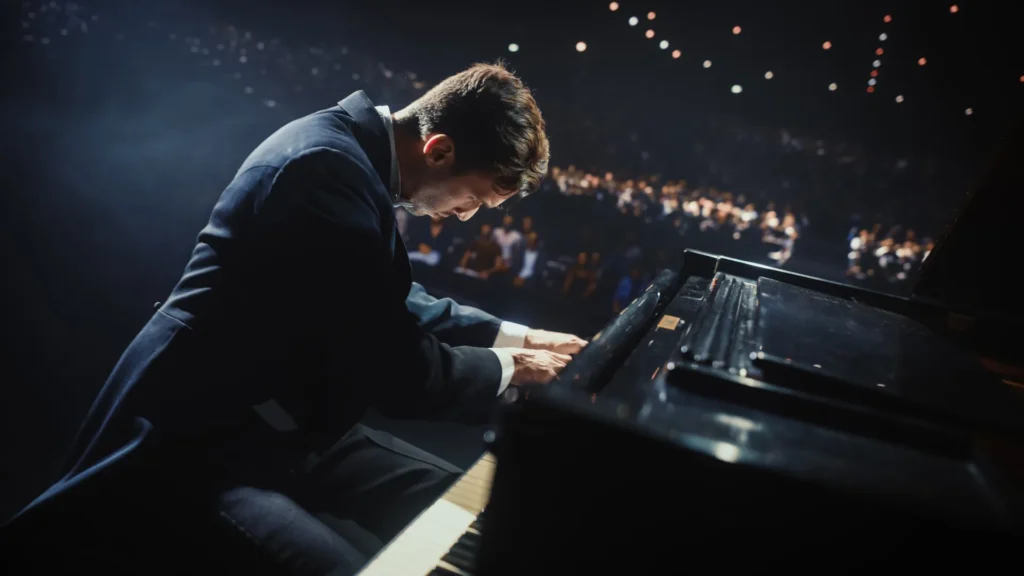
For generations, pianists and music teachers have passionately asserted that a performer’s touch can fundamentally alter the character of a piano’s sound, imbuing notes with qualities such as warmth, brilliance, or weight. This artistic conviction, however, often clashed with scientific skepticism, which largely argued that once a piano hammer strikes a string, the resulting tone is almost entirely predetermined by the instrument’s physics. Now, a groundbreaking scientific study has delivered some of the most compelling evidence to date, unequivocally demonstrating that pianists possess the remarkable ability to sculpt a piano’s timbre through the nuanced application of touch alone, validating a long-held artistic intuition with empirical data.
A Century of Debate: The Elusive "Pianist’s Touch"
The question of whether pianists could truly manipulate timbre beyond mere changes in loudness (dynamics) and timing (rhythm) has been a subject of fervent discussion since the early 20th century. While virtuosos like Franz Liszt and Sergei Rachmaninoff famously spoke of achieving a "singing tone" or a "golden sound," describing notes with rich, evocative adjectives like "warm," "dark," "bright," or "heavy," many scientists believed these perceived differences were primarily psychological, subjective interpretations, or simply artifacts of variations in volume, tempo, or articulation rather than intrinsic changes to the sound’s quality.
Acousticians and physicists, grounded in the principles of wave mechanics, often posited that a piano string, once struck, vibrates in a manner largely dictated by its material, tension, and length. From this perspective, the "touch" of the pianist was seen as merely controlling the hammer’s velocity, which in turn determines the loudness of the note. The spectral content – the mix of fundamental frequency and overtones that defines timbre – was thought to be a fixed characteristic of the instrument, influenced by the hammer’s mass and hardness, but not by the subtle pre-impact maneuvers of a pianist’s fingers. This reductionist view, while scientifically sound in its isolated parameters, struggled to account for the profound expressive capabilities observed in master pianists. The lack of sufficiently precise measurement tools further entrenched this divide, making it nearly impossible to isolate and quantify the subtle physical actions that might underlie such delicate tonal control.
Unveiling the Mechanisms: High-Speed Sensing Technology
The breakthrough came from researchers led by Dr. Shinichi Furuya of the NeuroPiano Institute and Sony Computer Science Laboratories, Inc. Their team harnessed cutting-edge ultra-high-speed sensing technology to delve into the microscopic movements that underpin expressive piano playing. Their pivotal findings, meticulously peer-reviewed and published in the prestigious Proceedings of the National Academy of Sciences (PNAS), illuminate how the most minute and seemingly imperceptible motions of a pianist’s fingers and hands profoundly influence how listeners perceive complex sonic qualities such as brightness, heaviness, and clarity in musical notes.
To achieve this unprecedented level of detail, the research team developed a custom-built noncontact sensing system dubbed "HackKey." This innovative system was engineered to record the movements of all 88 piano keys with extraordinary precision, capturing data at an astonishing rate of 1,000 frames per second and with microscopic spatial accuracy. The noncontact nature of HackKey was crucial; it allowed for the observation of key movements without introducing any physical interference that could alter the natural playing mechanics or introduce measurement artifacts. This technological leap effectively overcame one of the primary hurdles that had plagued previous attempts to scientifically investigate the pianist’s touch.
The Experiment: Precision and Perceptual Validation
For the experimental phase, the researchers enlisted twenty internationally acclaimed pianists. The selection of such high-caliber musicians was deliberate, ensuring that the participants possessed a finely tuned motor control system and a deep understanding of expressive intent, capable of consistently producing the desired tonal variations. These expert pianists were tasked with playing individual notes while intentionally striving to produce contrasting tonal qualities. Specifically, they were asked to generate sounds perceived as "bright" versus "dark," and "light" versus "heavy." This experimental design was critical because it allowed the researchers to correlate specific motor actions with distinct, subjectively perceived timbres, moving beyond mere anecdotal observation.
The data gathered from HackKey, combined with subsequent perceptual listening tests, provided irrefutable evidence. The results unequivocally showed that listeners, regardless of their musical background, consistently recognized the intended timbres. This was a significant finding; even individuals with no formal musical training were able to discern the differences between, for example, a "bright" note and a "dark" note played by the same pianist on the same instrument. Moreover, professional pianists who participated in the listening tests demonstrated an even higher degree of sensitivity, confirming their expert ability to identify these subtle tonal nuances. This robust perceptual validation, spanning both musically trained and untrained ears, strongly supported the hypothesis that the pianists were indeed altering the sound’s character through their touch, not merely through volume or duration.
Revealing the "How": Micro-Movements Shape Timbre
The true scientific revelation emerged when the researchers correlated the observed key movements with the perceived timbral changes. They discovered that only a select handful of extremely precise movement features were strongly and consistently connected to the variations in perceived timbre. These critical features included minute variations in acceleration before and during the hammer’s contact with the string, subtle differences in the timing of finger actions, and precise synchronization between the hands when playing chords or rapid passages.
For instance, producing a "bright" tone might involve a slightly faster, more percussive acceleration of the key just before the hammer strikes, potentially influencing the exact point of impact on the string or the duration of contact. Conversely, a "darker" tone might be linked to a more controlled, sustained pressure profile. The study’s ability to pinpoint these specific, measurable kinematic parameters provided the much-needed scientific "how" behind the artistic "what." It showed that the artistry behind piano tone is not merely metaphorical or subjective but is grounded in quantifiable physical actions that are executed with extraordinary precision by skilled performers.
A Causal Link: Beyond Volume and Timing
One of the most important findings from the study was the demonstration that altering even a single, isolated movement feature could reliably change how listeners described the sound. This provided direct, causal evidence that touch itself plays a primary role in shaping timbre, rather than merely accompanying other musical effects like loudness or tempo. Previous studies often struggled to disentangle the effects of touch from other variables; for example, a "warm" tone might also be played more softly or with a slightly different articulation. The rigor of the HackKey system and the experimental design allowed Dr. Furuya’s team to isolate these variables, proving that the minute movements themselves directly affected the perceived tonal quality. This causal link is a monumental step in resolving the century-old debate.
The study described these subtle gestures as part of a "shared motor skill" developed through years of advanced piano training. This implies that the ability to shape timbre is not an innate, unteachable talent but a highly refined, learned motor program that expert pianists cultivate through countless hours of practice and deliberate control. It suggests that the expressive capacity of a pianist is deeply embedded in their motor system, allowing them to manipulate the instrument in ways that produce specific, desired acoustic outcomes that transcend simple volume control.
Validation for Artistic Intuition
As Dr. Furuya explained, this research serves to bridge the gap between a long-standing artistic intuition and the realm of empirical science. "The findings support what many pianists have believed for decades, while also offering a clearer understanding of how skilled movement creates emotional and aesthetic experiences in music," he stated. For generations of pianists and music educators, this study represents a profound validation. It confirms that their pursuit of specific tonal colors, their discussions of "weight" and "attack," and their emphasis on the subtleties of finger and hand movements are not merely abstract concepts but are rooted in tangible physical realities that directly impact the sound produced. This scientific affirmation could usher in a new era of understanding and appreciation for the intricate artistry involved in piano performance.
Transforming Music Education and Pedagogy
The implications of these findings extend far beyond the concert hall, particularly for music education. Currently, music teachers often rely on metaphorical language to convey expressive techniques, using phrases like "play warmer," "use a lighter touch," or "make it sing." While effective for experienced students, these instructions can be vague and challenging for beginners or those struggling to translate abstract concepts into precise physical actions.
The research suggests a paradigm shift. Future music education systems could be revolutionized by incorporating technology that visualizes the exact physical movements associated with specific tonal qualities. Imagine a digital tutor that shows a student, in real-time, the precise acceleration profile, timing nuances, and hand synchronizations required to produce a "bright" versus a "dark" tone. This data-driven approach could make expressive techniques far easier to teach, learn, and master, potentially accelerating skill acquisition and enhancing the effectiveness of practice. It could move pedagogy from subjective interpretation towards objective, measurable technique, without diminishing the artistic spirit. This could also help address issues of consistency and provide personalized feedback tailored to a student’s specific motor patterns.
Broader Horizons: Neuroscience, Robotics, and Rehabilitation
The significance of this study resonates across several scientific and technological domains, including rehabilitation science, neuroscience, robotics, and human-computer interaction. By meticulously documenting how advanced motor control shapes auditory perception, the research offers invaluable clues about how the brain integrates complex movement patterns with sensory experiences. Neuroscientists can now explore the neural correlates of these subtle motor commands and their perceptual outcomes, shedding light on the intricate brain mechanisms involved in skilled artistic performance and aesthetic appreciation.
In rehabilitation science, understanding the precise motor control required for musical expression could inform new therapeutic strategies. For individuals recovering from stroke or other neurological conditions affecting motor skills, musical practice, informed by these precise movement parameters, could become a highly targeted and engaging form of therapy to improve dexterity, coordination, and fine motor control.
For robotics and human-computer interaction, the findings open avenues for developing more expressive digital instruments and more sophisticated human-robot interfaces. Current digital pianos, while advanced, often struggle to replicate the nuanced timbral control of acoustic instruments. By modeling the precise physical gestures identified in this study, engineers could design algorithms and hardware that enable digital instruments to reproduce subtle expressive nuances with unprecedented realism. Similarly, robots designed for delicate manipulation or human interaction could benefit from an understanding of how minute motor variations communicate intent and emotion, leading to more natural and intuitive interactions. Researchers in related fields are already exploring technologies inspired by expressive musical performance, focusing on modeling timbre, generating realistic piano motion, and building systems that can reproduce subtle expressive nuances in performance.
The "Dynaformics" Revolution: Understanding Performance Science
This study also makes a substantial contribution to a burgeoning scientific effort to understand creativity itself, particularly within the domain of music. For decades, research on music perception largely concentrated on easily quantifiable elements such as pitch, loudness, and rhythm. Timbre, however, has proven far more elusive to study due to its complex nature, involving higher-level sensory interpretation and profound emotional responses. By precisely identifying the physical actions linked to timbre perception, the researchers have unlocked a new pathway for investigating how artistic expression emerges from the dynamic interplay between the body, the brain, and the resulting sound.
This work is part of a broader, interdisciplinary movement sometimes referred to as "dynaformics," the science of music performance. Dynaformics seeks to comprehensively understand the biomechanical, neurological, and psychological aspects of musical performance, moving beyond the purely acoustic analysis of sound. Supporters believe that this holistic approach could eventually help musicians train more efficiently, optimize their technique to avoid injury, and overcome physical limitations that often accompany years of intense practice. By providing objective data on the mechanics of expressive playing, dynaformics empowers musicians with scientific insights to refine their craft and prolong their careers.
The excitement surrounding these findings stems from more than just solving a long-standing musical mystery. It illuminates a profound aspect of human creativity and communication, revealing that some of the most emotionally resonant power of music may originate from movements so small they are nearly invisible to the naked eye, yet precise and impactful enough for human listeners to instinctively feel the difference. It stands as a testament to the intricate connection between the physical and the aesthetic, confirming that the "soul" of a musical performance is, in part, a marvel of exquisitely controlled motor skill.