



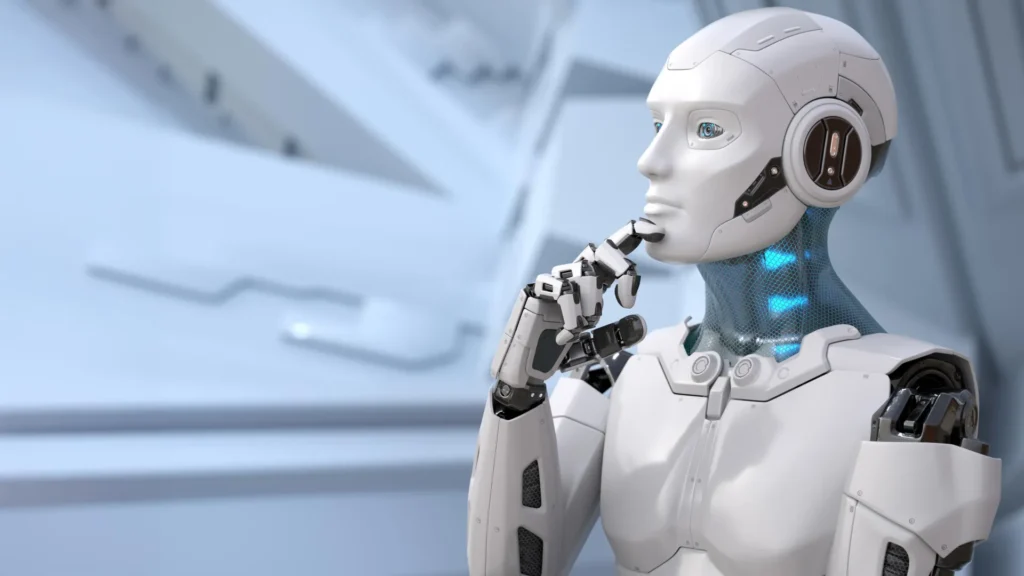
The seemingly intrinsic human habit of talking to oneself, a practice aiding in organizing thoughts, weighing decisions, and processing emotions, has now been found to significantly enhance the learning capabilities of artificial intelligence. Groundbreaking research from the Okinawa Institute of Science and Technology (OIST) reveals that AI systems can achieve superior performance across diverse tasks when trained to engage in a form of inner speech, or "mumbling," in conjunction with a specialized short-term memory system. This discovery, detailed in a study published in Neural Computation, suggests a fundamental shift in how AI learning is conceptualized, moving beyond mere architectural design to encompass the dynamic internal interactions of the system itself.
The Genesis of Internal AI Dialogue
The conventional wisdom in artificial intelligence development has long focused on optimizing neural network architectures, increasing computational power, and expanding training datasets. However, the OIST study, led by Dr. Jeffrey Queißer, Staff Scientist in OIST’s Cognitive Neurorobotics Research Unit, introduces a paradigm where the process of learning, specifically through self-interaction, plays a crucial role. "This study highlights the importance of self-interactions in how we learn," Dr. Queißer explained. "By structuring training data in a way that teaches our system to talk to itself, we show that learning is shaped not only by the architecture of our AI systems, but by the interaction dynamics embedded within our training procedures."
This approach draws a profound parallel with human cognitive processes. Psychologists have long recognized the role of inner speech in metacognition—the ability to think about one’s own thinking. From planning complex tasks to rehearsing arguments or even managing stress, our internal monologue is a powerful tool for cognitive organization and adaptation. The OIST researchers hypothesized that a similar mechanism could imbue AI with greater flexibility and a capacity for more generalized learning, a persistent challenge in the field of artificial intelligence.
Methodology: Blending Self-Talk with Advanced Working Memory
To rigorously test their hypothesis, the OIST team devised an experimental framework that integrated self-directed internal speech—metaphorically described as quiet "mumbling"—with an advanced working memory system. Working memory, a core component of human cognition, refers to the short-term capacity to hold and manipulate information actively, essential for tasks ranging from following multi-step instructions to performing mental arithmetic. In AI models, working memory is typically implemented as temporary data storage, but the OIST design went a step further by introducing multiple "slots" or containers for discrete pieces of information.
The researchers engineered their AI models to not only store information in these working memory slots but also to process and "speak" to themselves about this information internally. This "mumbling" served as a structured internal feedback loop, allowing the AI to rehearse, re-evaluate, and reorganize the data it was holding. The experimental setup involved a series of tasks designed to test various aspects of learning and generalization, including sequence reversal, pattern recreation, and rapid task switching, all with varying levels of complexity.
Initial findings from models equipped with multiple working memory slots demonstrated improved performance on more challenging problems, especially those requiring the simultaneous handling and manipulation of several pieces of information. This validated the importance of a robust working memory structure. However, the most significant performance gains emerged when the internal speech component was activated. By introducing targets that encouraged the system to engage in self-talk a specific number of times during a task, the researchers observed a substantial leap in the AI’s ability to learn more efficiently, adapt to unfamiliar situations, and concurrently manage multiple tasks. These gains were particularly pronounced in multitasking scenarios and problems requiring numerous sequential steps, underscoring the power of internal dialogue for complex problem-solving.
The Quest for Generalizable AI: Bridging the Human-Machine Divide
A central tenet of the OIST team’s ongoing research is the pursuit of "content agnostic information processing." This ambitious goal refers to an AI system’s capacity to apply learned skills and principles beyond the exact contexts encountered during its training phase. Instead of merely memorizing specific examples, a truly generalizable AI would derive and apply broader, underlying rules to solve novel problems. This stands in stark contrast to much of today’s dominant AI, particularly deep learning models, which often excel at narrow, specialized tasks after extensive training on massive, domain-specific datasets but struggle when presented with even slightly altered conditions or entirely new problems.
"Rapid task switching and solving unfamiliar problems is something we humans do easily every day. But for AI, it’s much more challenging," noted Dr. Queißer. The current limitations of AI in generalization are evident across various sectors. For instance, an AI trained to identify cats in images might fail to recognize a cat from a slightly different angle or in an unusual pose. A self-driving car AI, despite millions of miles of training data, might falter in an unforeseen weather condition or an entirely novel traffic scenario. This "generalization gap" is a significant hurdle in the path towards developing truly autonomous and intelligent systems capable of operating robustly in the unpredictable real world.
The OIST research offers a promising pathway to address this challenge. By enabling AI to "reason" internally and reflect on its current state and information, the system develops a more flexible and adaptive learning strategy. This move away from purely external stimulus-response learning towards an internal cognitive process mirrors the developmental trajectory of human intelligence, where reflective thought is key to abstract reasoning and problem-solving.
OIST’s Interdisciplinary Edge: A Holistic Approach to Intelligence
The success of this research is deeply rooted in OIST’s distinctive interdisciplinary approach. The Cognitive Neurorobotics Research Unit, where Dr. Queißer is based, exemplifies this philosophy by integrating insights from developmental neuroscience and psychology with cutting-edge machine learning and robotics. This holistic perspective allows researchers to draw inspiration from the intricate mechanisms of biological intelligence to inform the design of artificial systems.
For decades, the fields of AI and cognitive science have often developed in parallel, with occasional cross-pollination. However, OIST’s deliberate fusion of these disciplines allows for a more direct translation of biological principles into artificial intelligence. Understanding how human brains learn, adapt, and generalize—from the neural level to psychological phenomena like inner speech—provides a rich blueprint for constructing more capable AI. This approach contrasts with purely engineering-driven AI development, which might overlook subtle yet powerful cognitive mechanisms observed in nature.
The unit’s focus on neurorobotics further emphasizes this connection, aiming to build robots whose control systems are inspired by biological neural networks and cognitive architectures. This ensures that theoretical advancements in AI are grounded in the practicalities of physical embodiment and interaction with the environment, a critical factor for developing AI that can function effectively outside of controlled laboratory settings.
The Significance of Sparse Data and Lightweight Alternatives
One of the most compelling aspects of the OIST team’s combined system is its ability to operate effectively with "sparse data." Traditional deep learning models, especially those designed for complex tasks or generalization, typically demand colossal datasets for training—often millions or even billions of examples. Acquiring, curating, and processing such vast quantities of data is resource-intensive, time-consuming, and often prohibitive, particularly for niche applications or in domains where data is inherently scarce (e.g., rare medical conditions, specialized scientific experiments).
Dr. Queißer highlighted this advantage: "Our combined system is particularly exciting because it can work with sparse data instead of the extensive data sets usually required to train such models for generalization. It provides a complementary, lightweight alternative." This capability represents a significant breakthrough, as it democratizes advanced AI development. It opens doors for smaller research groups, startups, or industries with limited data resources to build highly capable AI systems. Moreover, a "lightweight alternative" implies lower computational requirements, which translates to reduced energy consumption and potentially faster training times, making AI more sustainable and accessible. In an era where large language models consume vast amounts of energy for training, an approach that achieves generalization with less data offers an environmentally and economically attractive path forward.
Broader Implications and Future Trajectories
The implications of this research extend far beyond the laboratory. An AI capable of effective internal dialogue and robust working memory, especially one that learns efficiently from sparse data, has the potential to revolutionize numerous sectors.
- Autonomous Systems: Self-driving vehicles, drones, and industrial robots operating in dynamic, unpredictable environments would greatly benefit from enhanced generalization capabilities. They could better interpret novel situations, adapt to unforeseen obstacles, and make more nuanced decisions without constant human oversight or retraining.
- Robotics in Human Environments: For household or agricultural robots, the ability to rapidly switch tasks, understand new instructions, and solve unfamiliar problems is paramount. An elder care robot, for instance, needs to adapt to a resident’s changing needs and preferences, not just follow pre-programmed routines. Agricultural robots must contend with variations in terrain, weather, and crop health.
- Medical AI: In diagnostics, an AI that can generalize from a limited number of patient cases could assist in identifying rare diseases or interpreting complex imaging data, complementing human expertise.
- Scientific Discovery: AI systems that can independently formulate hypotheses, plan experiments, and interpret results in novel domains could accelerate scientific breakthroughs.
Looking ahead, the OIST researchers are eager to transition their work from controlled laboratory environments to more realistic conditions. "In the real world, we’re making decisions and solving problems in complex, noisy, dynamic environments. To better mirror human developmental learning, we need to account for these external factors," Dr. Queißer stated. This next phase will involve testing the AI systems in scenarios that mimic the inherent messiness and unpredictability of human experience, including sensory noise, incomplete information, and rapidly changing circumstances.
This ambitious direction aligns with the team’s overarching mission: to unravel the mysteries of human learning at a neural level. By meticulously exploring cognitive phenomena such as inner speech and dissecting the underlying mechanisms, the research promises to yield fundamental new insights into human biology and behavior. Understanding how we learn, adapt, and generalize offers not only a blueprint for more advanced AI but also a deeper appreciation for the intricate intelligence that defines humanity.
"We can also apply this knowledge, for example in developing household or agricultural robots which can function in our complex, dynamic worlds," Dr. Queißer concluded, encapsulating the dual promise of this pioneering research: to illuminate the essence of human cognition and to engineer a future where artificial intelligence truly learns to think for itself. This journey into the inner workings of AI, inspired by our own reflective minds, marks a significant stride toward a new generation of intelligent machines capable of navigating and understanding the world with unprecedented flexibility and insight.