


Arizona State University, in collaboration with visionary artist and entrepreneur will.i.am, has launched an experimental course that is reshaping the landscape of artificial intelligence education and its human implications. Titled "The Agentic Self," the program, initiated in 2025, places students at the forefront of developing AI-powered "personas" designed to reflect and amplify individual beliefs, passions, and concerns. The core of this initiative is a unique learning environment, reimagined by will.i.am and ASU faculty, that fosters deep collaboration and critical thinking about the future of human-AI interaction.
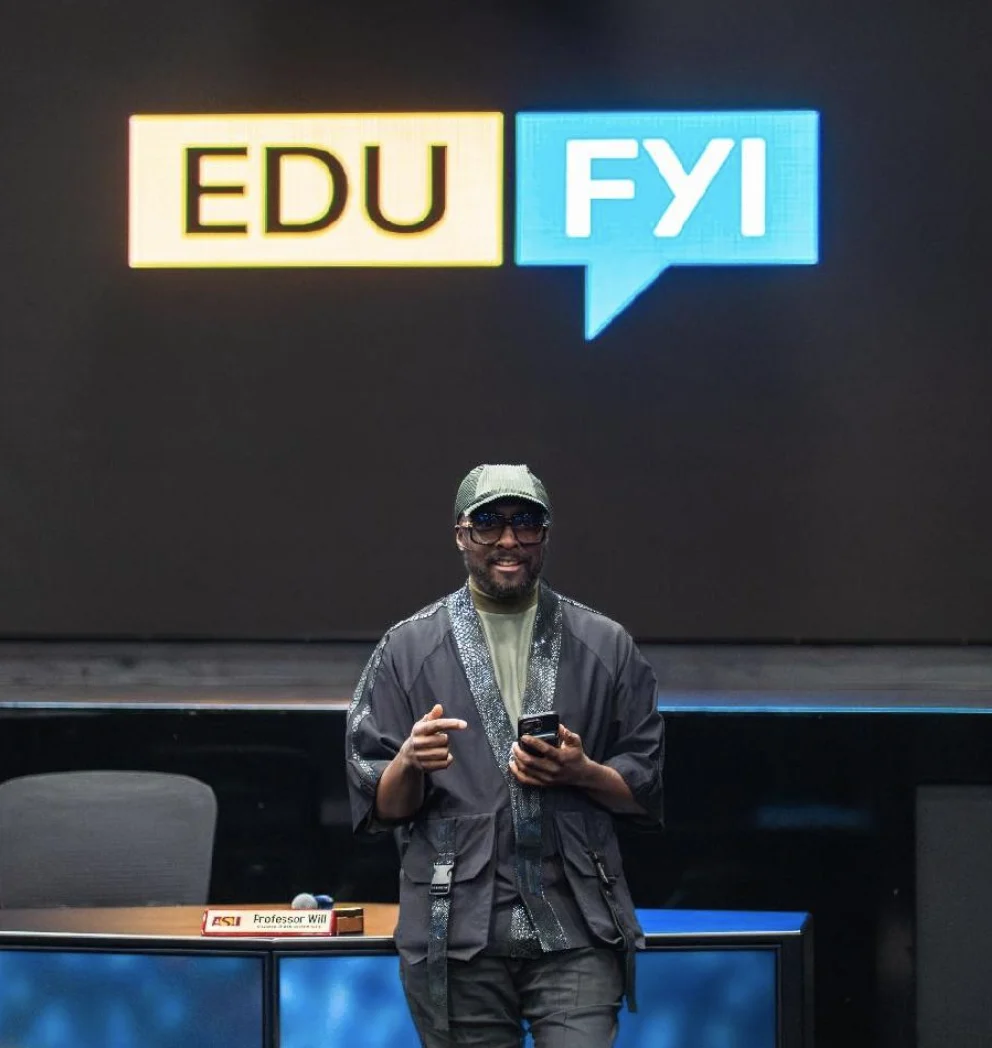
The course’s genesis can be traced back to will.i.am’s vision of an "FYI campus" in Hollywood, conceived as a vibrant hub for creative output and technological innovation. This campus, described by participants as a "magical hip-hop version of Willy Wonka’s factory," extends beyond product creation to empowering individuals to navigate and build within the burgeoning AI world with a focus on improving the real world. The learning space itself, meticulously designed in a U-shaped configuration mirroring the United Nations, underscores the program’s commitment to inclusive dialogue, equipping each participant with individual microphones to ensure their voices are heard, even in virtual exchanges.
Within this immersive environment, students are challenged to explore the profound implications of agency, curiosity, and maintaining a human-led approach in an increasingly AI-driven society. The curriculum encourages participants to view AI not merely as a tool for efficiency but as a catalyst for personal and societal transformation. The central question that emerges from this experience is whether organizations can cultivate similar conditions for their employees, fostering an environment where exploration and human-led innovation can thrive.
The Genesis of "The Agentic Self"
The concept of "The Agentic Self" was officially introduced in 2025, a period marked by widespread discussion of large language models (LLMs) like ChatGPT, primarily focused on their potential to enhance productivity. However, will.i.am and ASU faculty recognized a deeper potential: the capacity of these AI tools to revolutionize how individuals learn, practice, and prepare for complex conversations and challenges.
will.i.am articulated this vision in an interview with NBCLA, stating, "Agentic self is you claiming your data and now putting it to work for you by creating an agent that reflects your beliefs, your concerns, your passions, your interests." This philosophy forms the bedrock of the course, emphasizing individual ownership of data and its application in creating personalized AI entities.
A Journey of Iteration and Discovery
The learning journey within "The Agentic Self" course is designed to illustrate the power of iterative development and environmental context in shaping innovative ideas. Participants are encouraged to understand that an initial spark of an idea rarely reaches its full potential without exposure to diverse environments and feedback loops.
The course structure itself facilitates this exploration. As one participant, a learning innovation professional, detailed their experience, the process began with a personal project rooted in the belief that AI could transform skill development. This initial concept was a conversational skill builder, envisioned as a platform for practicing real-world scenarios, receiving immediate, personalized feedback, and engaging in guided reflection for lasting improvement.
The initial exploration of this concept occurred on ChatGPT. This foundational step allowed for the validation of the core interaction and its utility. It represented the crucial transition from abstract idea to tangible application, demonstrating that the concept had practical merit.
Evolution Across AI Platforms: A Case Study
The evolution of this conversational skill builder exemplifies the course’s pedagogical approach. The idea was subsequently iterated and tested across multiple AI platforms, each offering unique insights and capabilities:
- ChatGPT: Served as the initial proving ground, allowing for low-stakes testing of the core concept and its effectiveness in facilitating practice and feedback for difficult conversations. This phase focused on validating the fundamental user experience and the efficacy of AI-driven dialogue for learning.
- Copilot Studio (at Providence St. Joseph Health): As a manager of learning innovation within a large healthcare system, the focus shifted to enterprise-scale deployment. This stage involved addressing the complex challenges of authoring and implementing AI solutions within organizational constraints, including governance, compliance, and strategic alignment. The experience highlighted the friction points and complexities inherent in scaling innovative ideas within established corporate structures.
- Acolyte: Working with a small AI startup, the focus moved to the ease of authoring multimodal experiences. This platform enabled the integration of avatars and richer sensory elements, significantly enhancing the learning experience by creating more engaging and immersive scenarios. This demonstrated the potential for AI to deliver more dynamic and interactive learning content.
- FYI Campus: This final stage represented a significant transformation. The platform offered a user-friendly interface with advanced tools and capabilities, enabling the idea to transcend its initial role as a skill builder. It evolved into a personalized, guided, and action-based learning experience. The key insight here was the identification of a crucial middle ground in AI-driven learning: an adaptive, scaffolded support system that guides without over-constraining, providing both structure and freedom for the user. This contrasts with the open-ended nature of basic AI prompts or the rigidity of traditional static learning materials.
This progression from a simple skill builder to the concept of "AI-guided mastery" underscored a core principle: the environment in which an idea is cultivated profoundly influences its ultimate form and impact. The journey confirmed that the same initial spark can blossom into something far more expansive when exposed to the right contexts and tools.
The "FYI Campus" Learning Environment
The physical and conceptual space of the FYI campus, particularly the dedicated learning room, plays a pivotal role in fostering this transformative experience. Described as a space designed for learning and collaboration, its U-shaped layout, inspired by the United Nations, promotes an egalitarian and interactive atmosphere. Each participant’s dedicated chair and microphone symbolize the emphasis on individual voice and collective participation, crucial for discussions involving both on-site and virtual participants.
Professor Will, as he is known to students, has meticulously curated this environment. His approach blends technological innovation with a deep understanding of human psychology and creative expression. The campus itself is a testament to this blend, where AI development is intertwined with artistic and cultural influences, creating a unique ecosystem for learning and creation.

The "Agentic Self" and Human Agency
A central theme of "The Agentic Self" course is the concept of human agency in the age of AI. The course challenges the notion that AI will inherently diminish human roles, instead positing that it can be leveraged to amplify human capabilities and decision-making. The development of personalized AI personas is framed not as an abdication of control but as an active assertion of an individual’s data and intentions.
This focus on "claiming your data" and putting it to work reflects a growing awareness of data ownership and its potential for empowerment. By creating agents that reflect their values and interests, individuals can actively shape their digital interactions and ensure that AI serves their personal and professional goals.
Implications for Leadership and Organizational Design
The insights gleaned from "The Agentic Self" course carry significant implications for organizational leaders, founders, and executives. The concept of "best fit" for an idea is paramount; an idea that meets the right environment is more readily adopted, easier to use, and more impactful within the workflow. Conversely, a mismatch between an idea and its operational context can lead to stagnation, even for potentially strong concepts.
This emphasizes the critical importance of the human element in technological adoption. The success of any AI initiative hinges not only on the technology itself but also on the people who engage with it, their perspectives, and the community built around its implementation. The FYI campus, with its emphasis on human-first AI work, exemplifies this principle.
Bridging the AI Readiness Gap
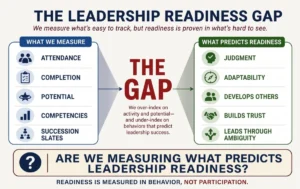
Recent industry research indicates that many organizations have progressed beyond the initial stages of AI adoption, with tools licensed and governance frameworks established. However, a persistent gap remains: a small cohort of early adopters thrives while a larger segment of the workforce expresses caution or uncertainty regarding AI integration into their roles and responsibilities. The challenge has thus shifted from merely providing access to AI to ensuring workforce readiness.
This readiness is not a technical problem but a human one. "The Agentic Self" course suggests that true readiness is fostered not by access alone but by environments that actively encourage exploration. This involves creating spaces where individuals are permitted to test ideas, transfer them across different contexts, and build capabilities through curiosity rather than mandated compliance. Organizations aspiring to cultivate an AI-ready workforce must design learning cultures that nurture the "agentic self" and provide the psychological safety and structural support necessary for exploration, experimentation, and iterative learning.
Brad Bigelow, founder of Acolyte AI, a technology partner involved in some of these explorations, observes, "What I observe most often is organizations that have invested heavily in AI access while underinvesting in the structures that help people use it with confidence and purpose. The gap is rarely technical… it is typically cultural or architectural. Leaders who close that gap are not simply rolling out tools; they are deliberately designing environments where people feel supported to explore, guided to apply, and given room to build real capability over time. The distinction between being equipped and being ready is what defines which organizations will lead and which will follow."
The successful navigation of governance processes and subsequent enterprise-wide deployment of a similar AI-driven learning initiative at Providence St. Joseph Health underscores the practical application of these principles. This transition from concept to widespread organizational reality is a testament to the power of iterative development and strategic environmental design.
A Transformative Personal and Professional Impact
The experience within "The Agentic Self" course has profoundly impacted participants, extending beyond intellectual development to shaping their approach to work and collaboration. The course fosters a broader understanding of the evolving AI landscape and the individuals driving these changes. This leads to more intentional development, continuous exploration of new tools and methodologies, and a conscious choice to associate with individuals and communities that prioritize ethical AI development and the expansion of human agency.
The adage that "the company you keep matters" resonates deeply within this context. The selection of environments, communities, and collaborators significantly influences the trajectory of one’s professional journey and the nature of the work undertaken. "The Agentic Self" provides a powerful framework for individuals to discern and engage with work that aligns with their values and aspirations in the evolving AI era.
The Invitation to Explore
The overarching message from "The Agentic Self" initiative is an invitation to embrace exploration and continuous learning. It is about redefining agency, service, and personal coherence in a world increasingly shaped by artificial intelligence. The course has catalyzed a shift in perspective, expanded possibilities, fostered a belief in what can be achieved, and ultimately, transformed behavior.
The fundamental question posed to individuals and organizations is: What creative spark are you nurturing, and what environment can help it flourish? In a rapidly changing world, the willingness to explore is not an optional luxury but an essential component of remaining human-led and ensuring that learning becomes the driving force for progress. As individuals and organizations navigate the complexities of AI, fostering environments that encourage curiosity, experimentation, and human-centered innovation will be critical to shaping a future where technology amplifies, rather than diminishes, our collective potential.