The report, titled Free to Think 2026, serves as a sobering diagnostic of the global state of higher education. Between July 1, 2025, and June 30, 2026, the document cataloged 382 distinct attacks on university communities across 59 countries and territories. These incidents range from the systematic suppression of student protests to the targeted intimidation of faculty members and the legislative dismantling of institutional independence. The findings suggest that the infrastructure of higher education, long considered a bedrock of democratic society, is facing its most significant erosion in decades.
A Global Climate of Repression
The scope of the crisis is truly international. In nations such as India, Bangladesh, and Iran, military and security forces have been deployed to quell student-led demonstrations, often resulting in severe injuries, mass detentions, and long-term psychological trauma for the academic community. Meanwhile, in regions such as Afghanistan, the state has moved beyond policing speech to the wholesale prohibition of literature and the blacklisting of entire academic institutions, effectively erasing them from the intellectual landscape.
In more extreme cases, the danger has turned lethal. The SAR report highlights a disturbing trend of targeted assassinations of university leaders in Guatemala and Pakistan, signaling that administrative roles in academia have become high-risk positions in volatile political environments. In Russia and China, the state continues to leverage the judicial system to wrongfully imprison scholars, using criminal charges as a tool to silence dissent and force intellectual conformity.
Robert Quinn, the executive director of Scholars at Risk, underscores that these actions are not isolated incidents but part of a coherent, spreading pattern. "Attacks on higher education remain a global phenomenon, and they are spreading, as they have been over the last several years, including in previously safe places in a number of democracies," Quinn stated.
The Statistical Decline of Academic Liberty
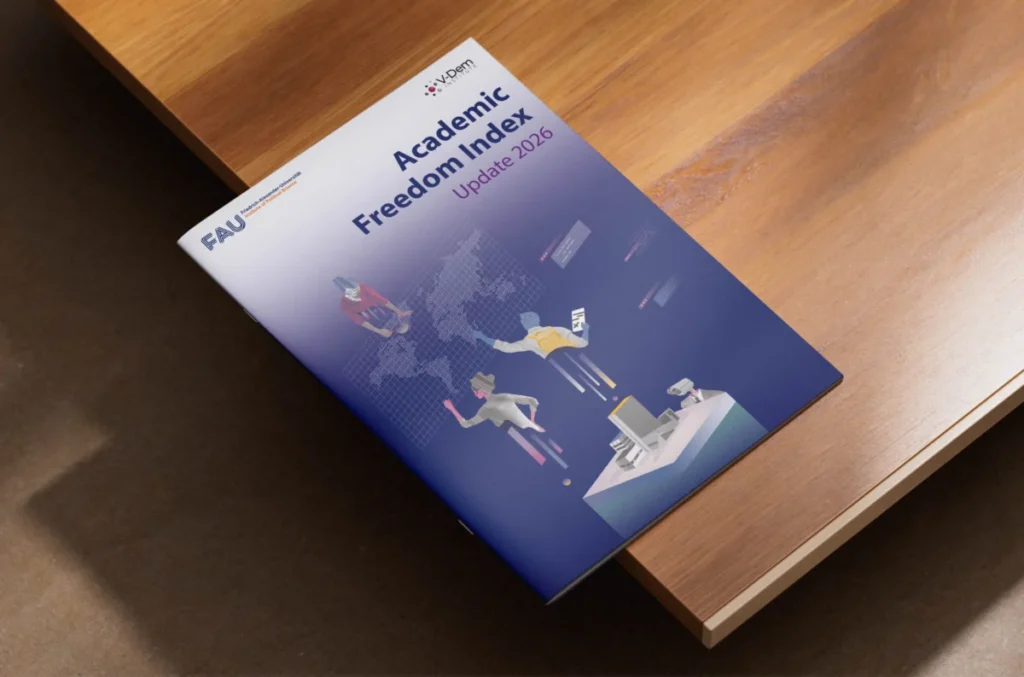
The empirical foundation for these findings is rooted in the Academic Freedom Index (AFI). The index, which tracks variables such as institutional autonomy, freedom of research, and the integrity of campus environments, reveals a stark downward trajectory. Over the past decade, academic freedom has declined significantly in 50 of the 170 countries analyzed, while showing measurable improvement in only nine.
Perhaps most concerning to policy analysts is the collapse of institutional autonomy. Twenty-one countries—many of which were classified as bastions of academic freedom in 2015—have seen their scores plummet. The trend is particularly pronounced in Europe and North America, where the traditional "arm’s length" relationship between the state and the university is being replaced by direct political oversight.
The Erosion of the American Campus
The United States, once considered a global benchmark for university independence, has become a focal point of the report. Of the 382 documented attacks, 40 occurred on American soil. The AFI characterizes the decline in the U.S. as both "steep" and "rapid," noting that the deterioration of autonomy has accelerated significantly over the last twelve months.
The report explicitly links this decline to the policy shifts under the second administration of President Donald Trump. Key moments in this timeline include:
- October 2025: The introduction of the "Compact for Excellence in Higher Education." This policy mandated that universities align with the administration’s political priorities to qualify for priority access to federal research grants, effectively weaponizing funding to enforce ideological compliance.
- May 2026: The Office of Management and Budget proposed new regulatory frameworks that would grant senior political appointees the authority to override expert peer-review panels. This undermines the established meritocratic process of scientific research, replacing objective assessment with political scrutiny.
- Ongoing: The implementation of stringent travel bans and the frequent cancellation of visas for international students and scholars have created an environment of precarity, leading to the detention of academics by immigration officials and a broader climate of fear.
The AFI report explicitly compares the U.S. trajectory to that of "autocratizing" nations like Hungary, India, and Turkey. The speed of this decline—concentrated within a six-year window—demonstrates how quickly administrative pressures can dismantle the safeguards that protect academic inquiry.
Canadian Considerations and the Question of Transparency
While the U.S. faces federal-level intervention, the challenges in Canada manifest differently, often through opaque administrative decisions. The report cites the November 25, 2025, cancellation of the People’s Conference for Palestinian Solidarity at the University of Guelph. Four days before the event, the administration cited "new information" regarding security concerns as the justification for the cancellation.
Organizers and civil liberties advocates argued that the university failed to provide transparent evidence for the security risk, leading to accusations that the institution used "public safety" as a pretext to suppress controversial speech. Robert Quinn noted that while security concerns are legitimate, the lack of transparency is a red flag. "Without transparent communication, the institution gives indicators of attempting to silence a particular kind of expression," Quinn remarked.
Furthermore, Canada is facing a broader challenge regarding its reputation as a safe harbor for international scholars. As the government tightens immigration barriers and shifts its strategy regarding international student enrollment, the country risks losing its status as a global destination for academic talent.
The Need for a Coordinated Response
The implications of these findings extend far beyond the ivory tower. Academic freedom is a prerequisite for evidence-based policymaking, technological innovation, and a functioning public square. As traditional defenders of these freedoms retreat, the burden of protection shifts.
Quinn suggests that European and Canadian leaders can no longer wait for the United States to reclaim its role as a defender of these norms. He calls for three specific, actionable paths:
- Accelerated Legal Protections: Legislators must codify academic freedom into law, ensuring that institutions are protected from political whims and that researchers have clear legal recourse when their autonomy is violated.
- Robust Training: Universities must implement mandatory training for administrators and faculty regarding the fundamental principles of academic freedom and how to resist encroachment from both state and corporate actors.
- Public Engagement: There is an urgent need for universities to communicate the value of their work to the public. If the public does not understand that academic freedom is essential to their own interests—such as medical breakthroughs, economic analysis, and historical truth—then the political mandate to protect it will remain weak.
Conclusion: The Future of the Open University
The 2026 Scholars at Risk report serves as a warning that the "open" university is not a permanent feature of human society. It is a fragile, historical achievement that requires constant vigilance. As governments around the world test the limits of how much they can control higher education, the silence of the academic community—or the complacency of the public—only emboldens those who seek to turn universities into instruments of the state.
"Academic freedom is far too important for us to leave its protection to vague statements of principles," Quinn concluded. "We have to accelerate legal protection and substantially increase dialogue with the public so that the public understands why this matters to them." The data from the past year suggests that the time for such action is rapidly narrowing. Without a concerted effort to decouple academic inquiry from political agendas, the global intellectual landscape will continue to shrink, leaving behind a version of higher education that is less innovative, less critical, and less free.