



The physical foundation of the American public education system is facing an unprecedented crisis of deterioration, leaving millions of students and educators to navigate classrooms defined by crumbling infrastructure, toxic mold, extreme temperatures, and active water leaks. According to a sweeping new report released by the Government Accountability Office (GAO), school districts nationwide allocated approximately $214 billion—representing roughly 22 percent of their collective operational budgets—toward facility maintenance, capital improvements, and bond interest expenses during the 2024-25 school year. Despite these massive financial outlays, local educational agencies find themselves falling dangerously behind the curve, constrained by shrinking tax bases, inadequate state funding formulas, and an overwhelming backlog of deferred maintenance that threatens both academic achievement and the health of school communities.
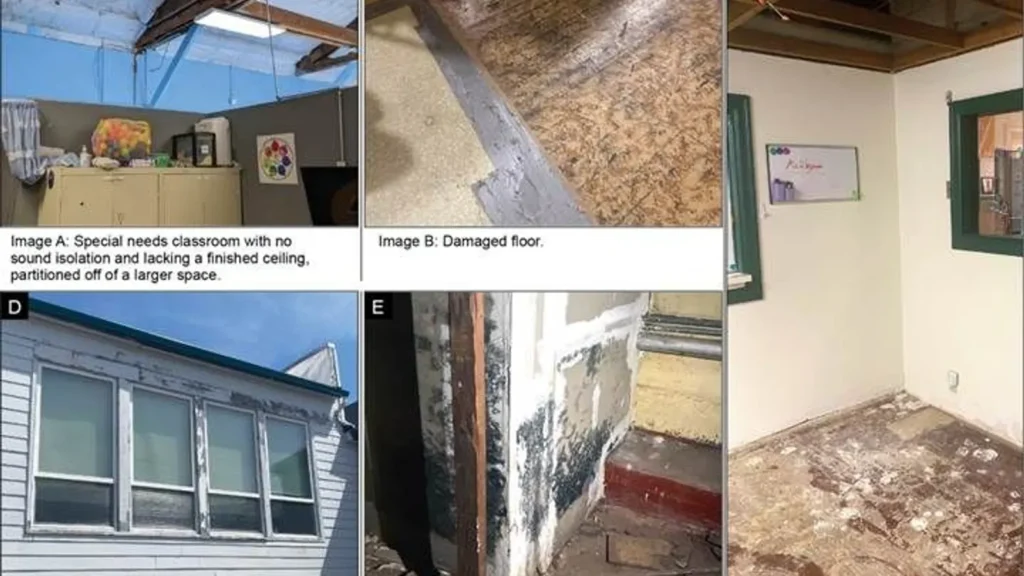
The GAO findings, which draw upon a comprehensive analysis of U.S. Census Bureau data alongside field visits and stakeholder interviews across geographically diverse states including Oregon, Maine, and Alabama, paint a stark portrait of systemic neglect. More than half of all school districts in the United States report that their operating and capital budgets are fundamentally insufficient to meet basic maintenance and repair requirements. This widening fiscal gap is not merely a bookkeeping challenge; it has manifested as a daily impediment to learning, transforming standard classrooms into hazard zones characterized by peeling lead paint, buckling hardwood floors, faulty electrical systems, and environments ill-equipped to support modern educational standards.
The Roots of the Crisis: A Chronology of Underinvestment
To understand how the American public school infrastructure reached this critical juncture, observers must examine decades of compounding fiscal pressures. Historically, public school construction and maintenance have been funded primarily through local property taxes and municipal bonds. This decentralized funding model worked reasonably well during periods of stable suburban expansion in the mid-twentieth century, but it laid the groundwork for deep inequities as economic shifts transformed the national landscape.
During the 1970s and 1980s, suburbanization and industrial flight began to erode the local tax bases of urban and rural municipalities alike. As factories closed and property values stagnated or plummeted, the revenue generated by local property taxes shrank correspondingly. Concurrently, state legislatures increasingly assumed a larger role in funding general instruction, yet capital funding for facilities was frequently left as an exclusively local responsibility.
The turning point for many districts arrived with the 2008 Great Recession. State budgets contracted sharply, prompting widespread austerity measures. School districts slashed capital improvement projects, deferred routine roof replacements, and postponed mechanical system upgrades to preserve classroom instruction and staffing levels. What was initially conceived as a temporary emergency measure hardened into a permanent operating procedure. Over the subsequent decade and a half, these deferred maintenance tasks multiplied exponentially. By the time the COVID-19 pandemic swept the nation in 2020, bringing federal relief dollars through the Elementary and Secondary School Emergency Relief (ESSER) fund, millions of schools were already operating with antiquated HVAC systems, compromised building envelopes, and decades of accumulated wear and tear. While ESSER funds provided a temporary lifeline—enabling many districts to upgrade ventilation systems and address immediate health concerns—those federal dollars were finite and expired, leaving districts to confront a post-pandemic economic reality marked by high inflation, rising construction costs, and depleted capital reserves.
Financial Bottlenecks: Local Tax Bases and State Funding Limitations
The GAO report underscores that the mechanisms traditionally relied upon to fund school infrastructure are increasingly broken. Chief among these structural barriers is the heavy reliance on local property tax bases to secure bond proceeds. For districts located in economically disadvantaged or rural areas, issuing municipal bonds is an uphill, often impossible battle.
An estimated 55 percent of school districts report that a low local tax base severely hinders their ability to finance critical facility needs. This challenge falls disproportionately upon rural school districts, which lack the commercial and residential density necessary to generate substantial bond revenue without imposing punishing tax burdens on local residents. When a rural community’s primary economic driver—such as agriculture, mining, or manufacturing—declines, the taxable value of property drops, locking the local school district out of the capital markets just as its buildings require urgent structural interventions.
Compounding the problem at the local level is the inadequacy of state-level funding support. Approximately 73 percent of surveyed districts stated that limited state formula funding for facilities restricted their capacity to maintain safe and modern buildings. Unlike instructional funding formulas, which typically account for student enrollment demographics and special education needs, state capital funding mechanisms are frequently erratic, highly competitive, or non-existent. Districts must often navigate cumbersome grant application processes, matching-fund requirements, and bureaucratic red tape that favors wealthier districts with dedicated grant-writing staff over under-resourced systems struggling to keep the lights on.
Meanwhile, the federal government remains a marginal player in daily facility maintenance. Federal funding streams are typically narrow, restricted to specific categorical programs or emergency recovery efforts, and subject to rigid expiration timelines. Consequently, school administrators find themselves trapped in a perpetual cycle of short-term fixes for long-term structural liabilities.
Daily Realities: Water Intrusion, Thermal Stress, and Health Hazards
The human cost of this infrastructural deficit is immediate and pervasive. The GAO report reveals that just under half of all school districts are grappling with chronic facility issues, with water intrusion from roof leaks and extreme thermal fluctuations in classrooms serving as the most prevalent operational failures.
Because replacing a commercial roof can cost millions of dollars—an expenditure that might consume a smaller district’s entire capital budget for years—school leaders are routinely forced to choose triage over remediation. Roofs are patched rather than replaced, leading to a cumulative deterioration of the building envelope. During heavy rainstorms, water infiltrates ceilings and walls, fueling the rapid growth of mold and mildew, rotting wooden structural supports, and short-circuiting electrical grids.
During site visits, investigators documented severe water damage across multiple facilities. In one particularly poignant account, a teacher described how heavy rainfall routinely produced a literal "little waterfall" inside her classroom, creating an acoustic and visual distraction that severely disrupted instruction while posing electrical shock hazards to students and staff.
Thermal regulation represents an equally critical failure point. Outdated, poorly maintained HVAC systems struggle to cope with extreme weather events driven by shifting climatic patterns. Classrooms frequently swing wildly in temperature, soaring above 90 degrees Fahrenheit during heatwaves or plunging below 60 degrees during winter storms.
The educational and physiological consequences are profound. Extreme heat compromises cognitive function, reduces attention spans, and accelerates fatigue among students and teachers alike. When indoor temperatures peak, districts are forced to improvise evacuation strategies. Educators report relocating entire classes to cooler communal spaces such as cafeterias or auditoriums. In some instances, teachers attempt to hold classes outdoors, though administrators note that the logistical disruption often outweighs the thermal relief.
Beyond academic disruption, the physical environment is directly impacting the health and safety of school personnel. The GAO report notes that 13 percent of districts experience chronic problems with students and staff reporting physical discomfort linked to indoor environmental conditions. The report highlighted severe medical incidents, including a teacher who suffered heat exhaustion severe enough to require emergency hospitalization, and another educator whose chronic respiratory conditions were severely exacerbated by extensive mold growth and poor ventilation within an aging school building.
Strategic Innovations and Cost-Saving Countermeasures
Despite the pervasive gloom of the infrastructure report, the GAO analysis also identified pockets of resilience, highlighting districts that have successfully managed to maintain their facilities through proactive management and strategic investment. The common denominator among these successful systems is a shift away from reactive emergency repairs toward rigorous, data-driven preventive maintenance.
In one notable case study highlighted by the report, a district facilities director spearheaded a multi-year initiative, backed by the chief financial officer, to install sophisticated utility and environmental monitoring systems across all campus buildings. This technological upgrade enabled the maintenance team to optimize energy consumption in real-time and detect mechanical anomalies before they escalated into catastrophic failures. While the initial capital outlay required significant upfront investment, the long-term efficiencies saved the district hundreds of thousands of dollars annually, freeing up capital for other pressing needs.
Furthermore, school leaders emphasized the vital importance of developing internal technical expertise. Navigating the complex market of commercial construction and energy retrofitting requires specialized knowledge to protect public funds from predatory contracting practices. District officials warned of unscrupulous vendors targeting school systems with aggressive sales pitches for energy-efficiency upgrades and building-control packages backed by dubious promises of immediate cost savings. By fostering knowledgeable in-house facility management staff, districts were better positioned to vet vendor proposals, separate realistic engineering projections from marketing hyperbole, and ensure that every taxpayer dollar was allocated toward genuine, high-yield infrastructure investments.
Broader Implications for the Future of Public Education
The revelations of the GAO report arrive at a critical juncture for American public education. As school districts nationwide grapple with declining post-pandemic enrollments, looming fiscal cliffs following the exhaustion of federal relief funds, and heightened academic recovery demands, the deteriorating state of physical infrastructure threatens to undermine broader educational reform efforts.
When students are forced to learn in sweltering, freezing, or mold-infested classrooms, the foundational equity promise of public education is compromised. The geographic divide highlighted by the report—where rural and economically disadvantaged districts bear the heaviest burden of infrastructural failure—suggests that physical decay is actively exacerbating educational inequality. Students in wealthy, high-tax-base suburbs may enjoy modern, climate-controlled, technologically integrated facilities, while their peers a few counties away navigate leaking roofs and failing heating systems.
Addressing this national crisis will require a fundamental reassessment of how school construction and maintenance are financed. Policy experts and educational advocates increasingly argue that incremental local property tax adjustments and piecemeal state grants are wholly inadequate to meet the scale of the challenge. A sustainable solution will likely demand coordinated legislative action at both state and federal levels, including the creation of dedicated, long-term capital funding streams designed to equalize facility quality across geographic and socioeconomic boundaries.
Until such systemic reforms are enacted, school administrators will continue to walk a precarious tightrope, balancing the immediate instructional needs of students against the silent, steady erosion of the very buildings designed to house their future.