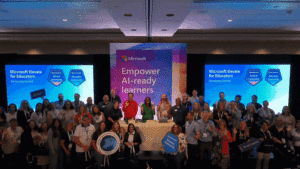



The transformation of artificial intelligence from a novel technological novelty into an institutionalized pillar of modern pedagogy took center stage as thousands of educators, instructional leaders, librarians, and educational technology innovators converged upon the Orange County Convention Center in Orlando, Florida, for ISTELive 2026. Against a backdrop of rapid digital evolution, this year’s conference marked a critical inflection point for the K-12 education sector. Rather than focusing on the initial novelty of generative AI tools that dominated headlines in previous years, the discourse at ISTELive 2026 centered firmly on sustainable, scalable, and research-backed implementation.
Organized by the International Society for Technology in Education (ISTE), the annual conference serves as the premier global gathering for education professionals seeking to align emerging technologies with sound instructional practices. As educational institutions worldwide grapple with post-pandemic learning recovery, shifting workforce demands, and the integration of automated systems into daily curricula, the events and announcements in Orlando provided a timely roadmap for systemic technology adoption.
Background Context and Event Chronology

The journey toward institutional AI integration has accelerated rapidly over the past several years. Following the widespread public introduction of generative AI in late 2022, schools initially responded with a mix of prohibition, caution, and fragmented experimentation. By 2024 and 2025, individual teachers began utilizing various platforms for lesson planning, administrative efficiency, and localized student tutoring. However, ISTELive 2026 highlighted that the education sector has officially transitioned into a phase of coordinated, system-wide governance.
The multi-day conference opened with keynote addresses that underscored the necessity of moving past isolated classroom trials. Throughout the week, the Orange County Convention Center buzzed with hundreds of structured sessions, interactive hands-on labs, and collaborative panels designed to address the operational realities of school districts. Major technology providers, academic researchers, and policy advocates utilized the platform to release new frameworks, empirical reports, and purpose-built digital environments aimed at embedding AI directly into the fabric of daily instruction.
Among the most notable institutional releases was Microsoft’s comprehensive suite of updates, which shifted the focus from raw processing speed to deep, measurable learning impact. By unveiling resources such as the AI in Education Report, the "Teach" platform, enhanced assignment guidelines, the Learning Zone, and the specialized Study and Learn Agent, industry leaders aligned their product development pipelines with the core demands of educational practitioners.
Shifting from Fragmented Trials to System-Wide Governance

One of the predominant themes emerging from the conference floor was the urgent necessity for educational institutions to transition away from ad-hoc, individual teacher experimentation toward coherent, district-wide strategies. Historically, educational technology adoption has suffered from a bottom-up fragmentation model, where enthusiastic educators deploy tools independently without institutional oversight or standardized data governance.
At ISTELive 2026, school administrators and instructional leaders engaged in rigorous discussions regarding institutional priorities, digital equity, and pedagogical alignment. The release of the Microsoft AI in Education Report provided empirical backing to these discussions, synthesizing data from institutions on current usage patterns, prevailing security concerns, and existing capability gaps. Analysts noted that as districts face increasing pressure to justify technology expenditures, leadership teams are demanding tools that feature robust privacy protections, clear compliance standards, and verifiable educational outcomes.
Furthermore, events like the Instructional Leadership Exchange (ILX) offered a dedicated forum for superintendents, principals, and curriculum coordinators to share best practices regarding professional development. Participants emphasized that the success of AI integration relies heavily on comprehensive educator training rather than mere software procurement. By coupling technological deployment with structured capacity-building resources, educational institutions aim to mitigate risks related to data privacy, algorithmic bias, and academic integrity.
Bridging Learning Science and Practical Application
A critical analytical takeaway from the Orlando conference was the deliberate convergence of cognitive learning science with software architecture. For decades, educational technology frequently prioritized feature richness over pedagogical soundness, often leading to superficial student engagement. To counter this trend, industry stakeholders and academic researchers at ISTELive 2026 emphasized the importance of grounding artificial intelligence in established theories of human learning.
In conjunction with the event, the release of the white paper titled "Learning by design" outlined the cognitive foundations supporting tools such as the Study and Learn Agent. This document details how automated systems can be engineered to support productive struggle, scaffolding, and iterative feedback—core tenets of effective pedagogy. Rather than doing the cognitive heavy lifting for the student, modern AI applications demonstrated at the conference are designed to prompt critical thinking, foster collaborative problem-solving, and provide personalized coaching tailored to individual learning paces.
Educational specialists observing the conference noted that this pedagogical anchoring represents a mature evolution in the edtech marketplace. By aligning software design with how the human brain builds knowledge and retains information, developers are providing teachers with instruments that genuinely enhance instructional efficacy rather than serving as mere digital distractions.
Fostering AI Literacy and Computational Thinking

Preparing students for a workforce increasingly shaped by automation requires a fundamental shift in digital literacy. Addressing this imperative, Minecraft Education utilized the ISTELive 2026 platform to announce the upcoming launch of the Velocity Prize—a global skills challenge slated to open in October 2026. Designed for students aged 13 to 16, the competition challenges participants to apply computational thinking and AI-assisted strategies within a gamified environment, translating abstract technological concepts into tangible, creative outputs.
Alongside the competition announcement, Minecraft Education introduced expanded AI foundations resources aimed at demystifying artificial intelligence for students, educators, and families. These resources include classroom toolkits, professional development modules, and animated guides designed to foster responsible technology use from an early age.
Industry analysts observing these initiatives pointed out that gamified platforms serve as highly effective entry points for digital literacy. By lowering the barrier to entry, these tools allow young learners to transition safely from passive consumers of technology to active creators and critical evaluators of digital systems.
Redefining Metrics: From Screen Time to Learning Time

A persistent debate among educators and parents has centered on the quantity of time children spend interacting with digital displays. However, discussions at ISTELive 2026 successfully reframed this narrative, pivoting the educational community’s focus from mere "screen time" to the qualitative value of "learning time."
Educators argued that measuring student technology use solely by minutes spent behind a display fails to account for the nature of the engagement. High-value learning time involves active creation, critical analysis, peer collaboration, and personalized feedback loops. Conversely, passive consumption yields diminishing cognitive returns. By implementing AI tools that encourage active participation and critical inquiry, teachers are demonstrating that digital devices can be leveraged to deepen conceptual understanding while safeguarding student well-being and emotional health.
Global Community and Collaborative Capacity Building
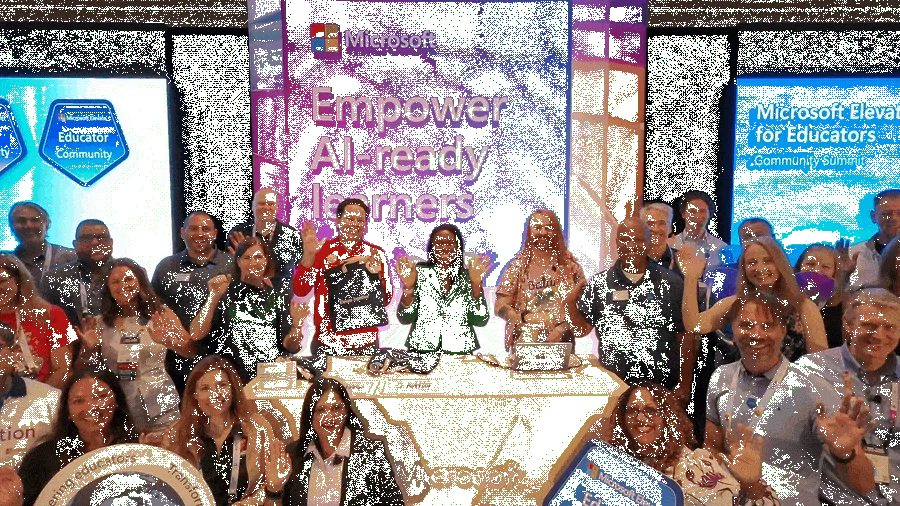
The human element of educational technology remained a central pillar throughout the week in Orlando. The Microsoft Elevate for Educators community, representing a global network of over 43,000 teachers and instructional leaders, hosted networking receptions and collaborative workshops to celebrate progress and share practical classroom strategies.

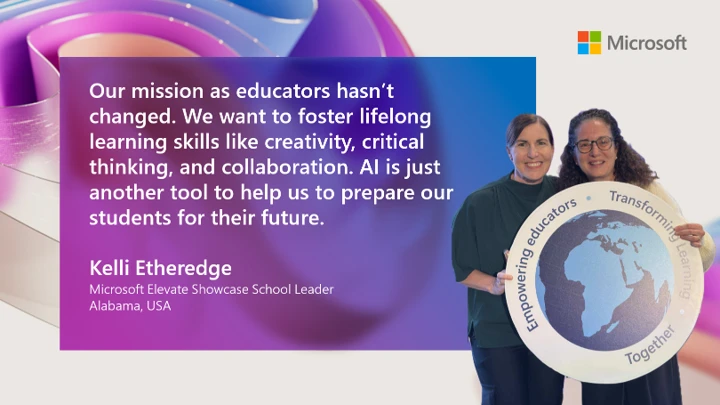
During the community events, educational leaders highlighted the irreplaceable value of human pedagogy in an increasingly automated world. As noted by institutional advocates during the conference, advanced algorithms and machine learning models are designed to augment, rather than replace, the nuanced judgment, empathy, and mentorship provided by professional educators. Strengthening the capacity of the existing teaching workforce through shared credentials, peer collaboration, and continuous support networks was universally recognized as the most vital prerequisite for successful technological transformation.
Implications and Future Outlook
The conclusion of ISTELive 2026 marks the beginning of an intensive implementation period for school districts preparing for the upcoming academic year. The prevailing sentiment emerging from Orlando is one of pragmatic optimism. The education sector has moved past the initial phase of speculative wonder and is now rigorously evaluating the long-term systemic impacts of artificial intelligence.
As districts review the data reports, utilize the newly released frameworks, and integrate pedagogical tools into their curricula, the ultimate measure of success will be determined by student outcomes. The empirical insights, governance models, and collaborative networks established at ISTELive 2026 provide a robust foundation for educational institutions seeking to navigate the complexities of the digital age while keeping student learning and well-being at the forefront of policy and practice.